
The Pharaoh They Keep Digging Up
Early 2026. Middle Egypt. A team of archaeologists hauls something out of the wet mud at El Ashmunein that no one has seen whole in over a thousand years: the upper half of a colossal statue of Ramesses II.
Here’s the wild part. The bottom half has been sitting there since 1930. For 96 years, everyone knew the pharaoh was lying around in pieces. They just couldn’t find the rest of him.
That’s Ramesses II in a nutshell, honestly. The man refused to be forgotten — and 3,200 years later, we’re still literally putting him back together.
So who was Ramesses II? And why does everyone call him “the Great”?
✍️ Write YOUR Name in Real Hieroglyphics
See how the ancient Egyptians would have written your name — free interactive tool.
Try It Now →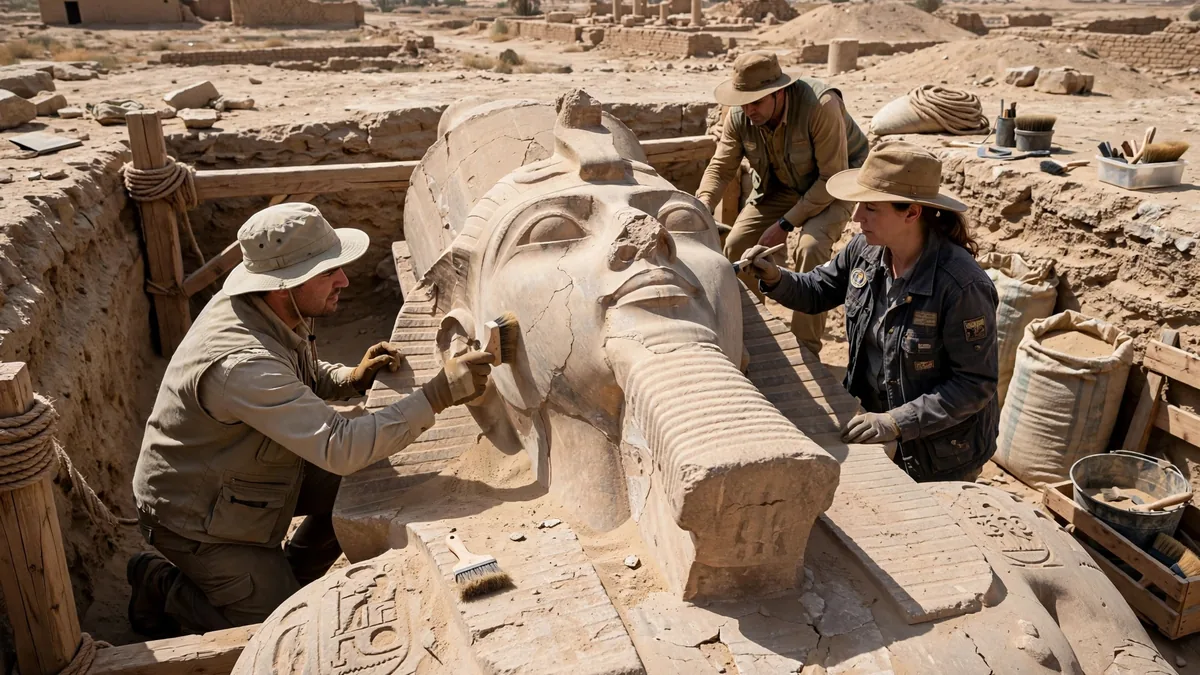
Who Was Ramesses II, Really?
Forget the textbook version for a second. Here’s the short list:
- Ruled: c. 1279–1213 BCE — 66 years, 19th Dynasty, New Kingdom
- Family: Son of Seti I, grandson of Ramesses I
- Capital: Pi-Ramesses, a brand-new city in the Nile Delta
- Claim to fame: The Battle of Kadesh, the temples of Abu Simbel, and the first peace treaty in recorded history
- Personal life: Married to Nefertari (among others), father of more than 100 children
- Died: Around age 90 — ancient, by ancient standards
- Today: His mummy lies in the National Museum of Egyptian Civilization in Cairo
66 Years on the Throne — Let That Sink In
Ramesses II took power in his mid-twenties and didn’t let go for 66 years. That’s one of the longest reigns in all of recorded history. Most Egyptians who died during his rule had never known another king. Their grandparents hadn’t either.
And he used every one of those years. While other pharaohs built a temple or two, Ramesses II built everywhere — temples, statues, obelisks, entire cities — and stamped his name and face on all of it. Travel anywhere in his kingdom and you’d run into him. That wasn’t vanity, or not only vanity. It was policy: you couldn’t forget who was in charge, because his face was the landscape.
He also celebrated something no pharaoh had managed before: 14 sed festivals, the royal jubilees marking decades of rule. Fourteen. He kept outliving the celebrations thrown in his honor. If you want to understand how Egypt’s geography made such a long, stable reign possible, start with our map of ancient Egypt — the Nile did most of the heavy lifting.
Ramesses II at Kadesh: History’s Biggest Chariot Battle
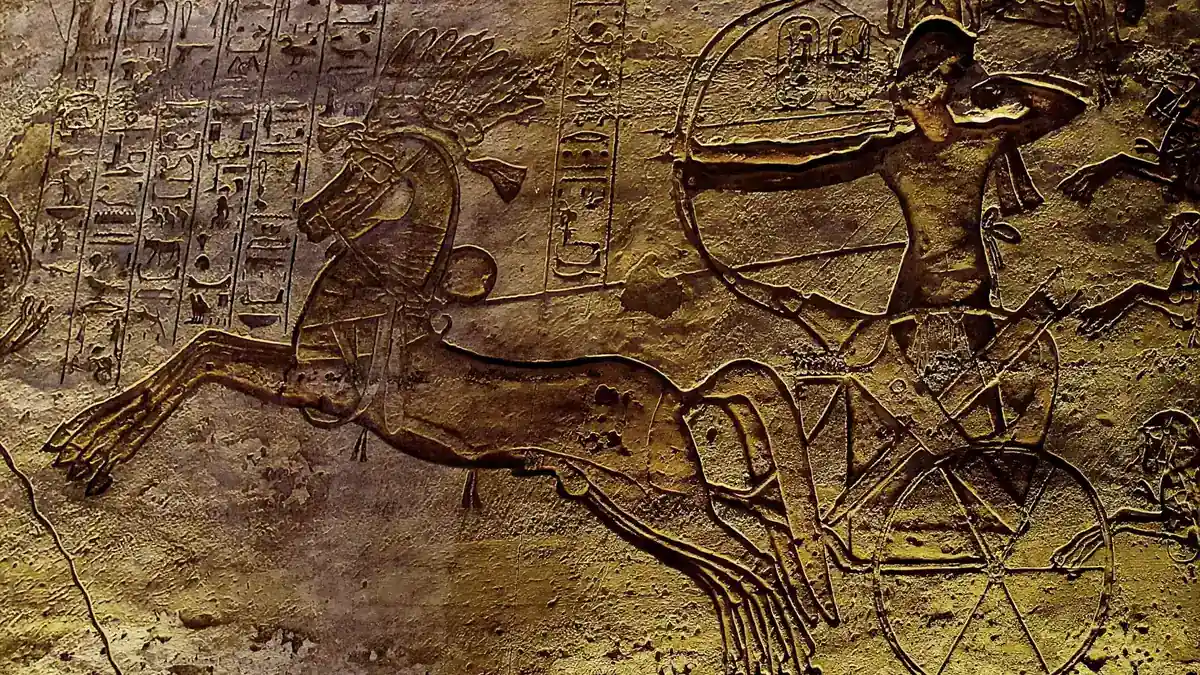
Around 1274 BCE, still early in his reign, Ramesses II marched north to face the Hittite Empire at Kadesh, in what’s now Syria. What happened next was one of the largest chariot battles ever fought — somewhere around 5,000 to 6,000 chariots on the field — and one of the boldest pieces of spin in ancient history.
Go read the temple walls and you’d think Ramesses charged the entire Hittite army single-handedly after an ambush, saved by his courage and the god Amun. The Hittite records, awkwardly, describe a draw. Modern historians side with the Hittites on this one.
But here’s what nobody disputes: what came after.
The World’s First Peace Treaty (Yes, Really)
Roughly fifteen years after Kadesh, Egypt and the Hittites sat down and did something no one had ever done: they signed a formal peace treaty. Silver tablets, clay copies, the works — ending decades of war, sealing it with a royal marriage, and promising to defend each other.
It was around 1259 BCE, and it remains the earliest known peace treaty in human history. A copy of it hangs in the United Nations headquarters in New York to this day. Think about that: a pharaoh’s diplomacy, 3,200 years old, on display in the building where the modern world tries to make peace.
Abu Simbel: He Carved a Mountain Because He Could
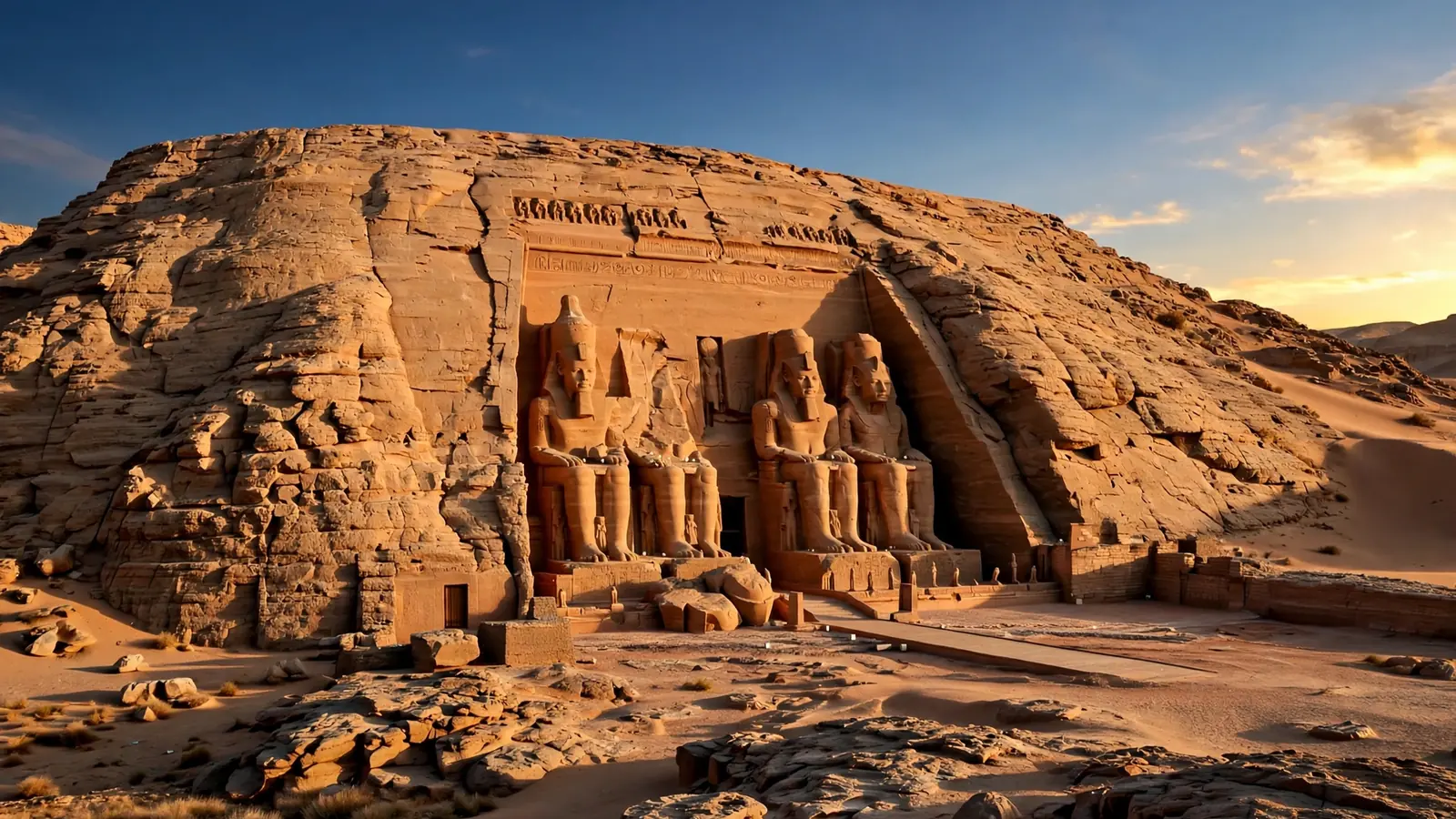
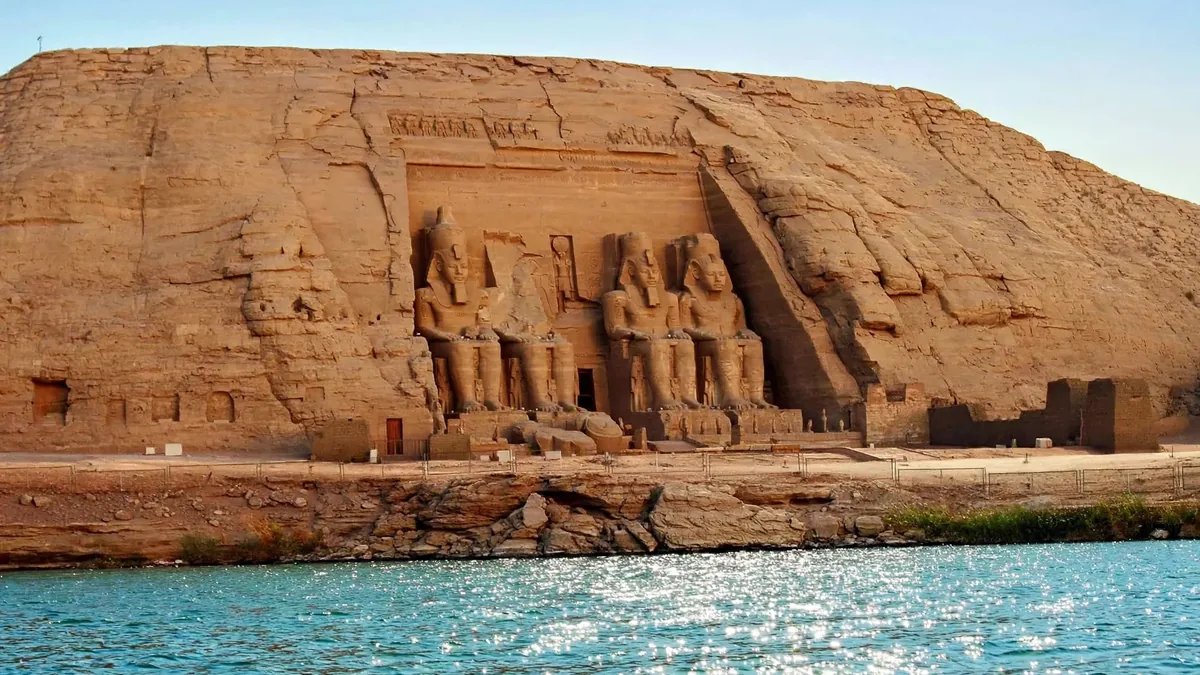
If one place is Ramesses II, it’s Abu Simbel. Down in Nubia, on the Nile’s west bank, he had two entire temples cut straight into a sandstone cliff. The Great Temple — for himself and the gods — fronts four seated colossi of the king, each about 20 meters tall. Beside it, a smaller temple for his queen, Nefertari.
And then there’s the trick of light. Twice a year, the rising sun fires 60 meters down the temple’s axis and lands on three of the four gods in the inner sanctuary. The fourth — Ptah, god of darkness — stays in shadow. Every time. Astronomy, architecture, and theater, all in one.
In the 1960s the whole thing nearly drowned under Lake Nasser behind the new Aswan Dam. So UNESCO did something insane: they sliced the entire mountain into blocks and rebuilt it on higher ground. One of the great engineering rescues of the 20th century — performed to save the ego-trip of a man dead 3,000 years. It worked.
Pi-Ramesses: The Capital That Vanished
Ramesses II didn’t just build temples; he built a capital from scratch. Pi-Ramesses — “House of Ramesses” — rose in the Delta with palaces, temples, harbors, and workshops, and at its peak may have held 100,000 people. It was also a military machine: chariot workshops and barracks staring down the northern frontier.
Then the Nile shifted, the branches moved, and the city faded. Later pharaohs carted its stones away for their own projects. Today archaeologists are still tracing its footprint under Delta farmland — a metropolis hiding beneath fields, waiting its turn like everything else he built.
Nefertari and a Hundred Kids
Nefertari wasn’t window dressing. Ramesses II gave her own temple at Abu Simbel — almost unheard of — and her tomb in the Valley of the Kings (QV66) is still one of the most beautiful ever painted. But this was a pharaoh, so the household was large: more than 100 children are recorded, sons and daughters listed on monuments across the country.
He outlived most of them. His thirteenth son, Merneptah, was around 60 years old when the throne finally came to him. Imagine waiting six decades for a promotion.
The Mummy That Needed a Passport
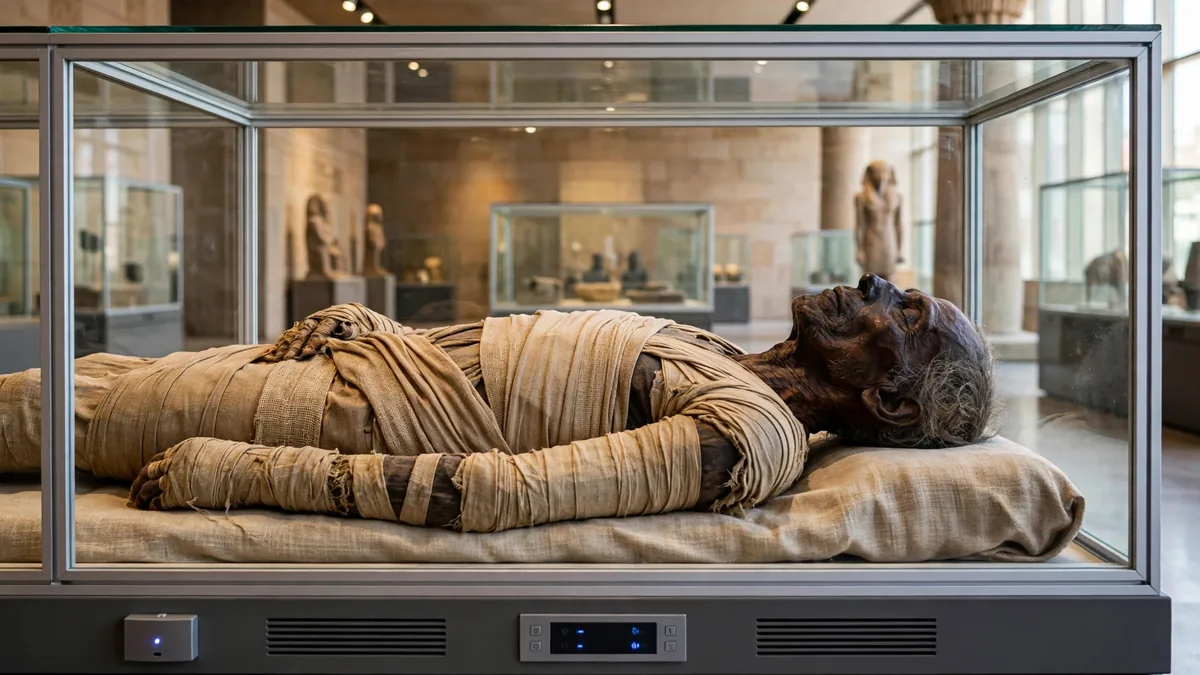
Ramesses II died at about 90 — likely worn down by arthritis — and his body was hidden by priests in a secret cache at Deir el-Bahari, safe from robbers. It was found there in 1881, one of the great archaeological moments of the 19th century.
Now the part nobody believes until they check: in 1976, the mummy flew to Paris for emergency conservation, and French law required a passport. So Egypt issued one. Occupation listed as “King (deceased).” It’s the most famous anecdote in archaeology, and honestly, it fits him — the man needed travel documents 3,000 years after death.
His mummy now rests at the National Museum of Egyptian Civilization in Cairo, carried there in the 2021 Pharaohs’ Golden Parade. Curious how a body survives three millennia? Our guide to ancient Egyptian mummification breaks down exactly how they did it.
Why Do We Call Ramesses II “the Great”?
Not because every story he told was true — Kadesh was, let’s say, creatively edited. He gets the title because of scale. Sixty-six years of stability. Monuments on every horizon. The first peace treaty. A capital conjured out of farmland. Nine later pharaohs took his name, which tells you what the job market thought of him.
His statues got recycled and re-carved for a thousand years. For much of history, when anyone said “pharaoh,” the face they pictured was his.
2026: Ramesses II, Made Whole Again
Back to El Ashmunein — ancient Hermopolis, city of Thoth. In the 1930s, German archaeologist Günther Roeder dug up the lower half of a giant seated statue of Ramesses II there. The top half? Gone. For 96 years the statue stood headless and half-finished, a very patient jigsaw puzzle.
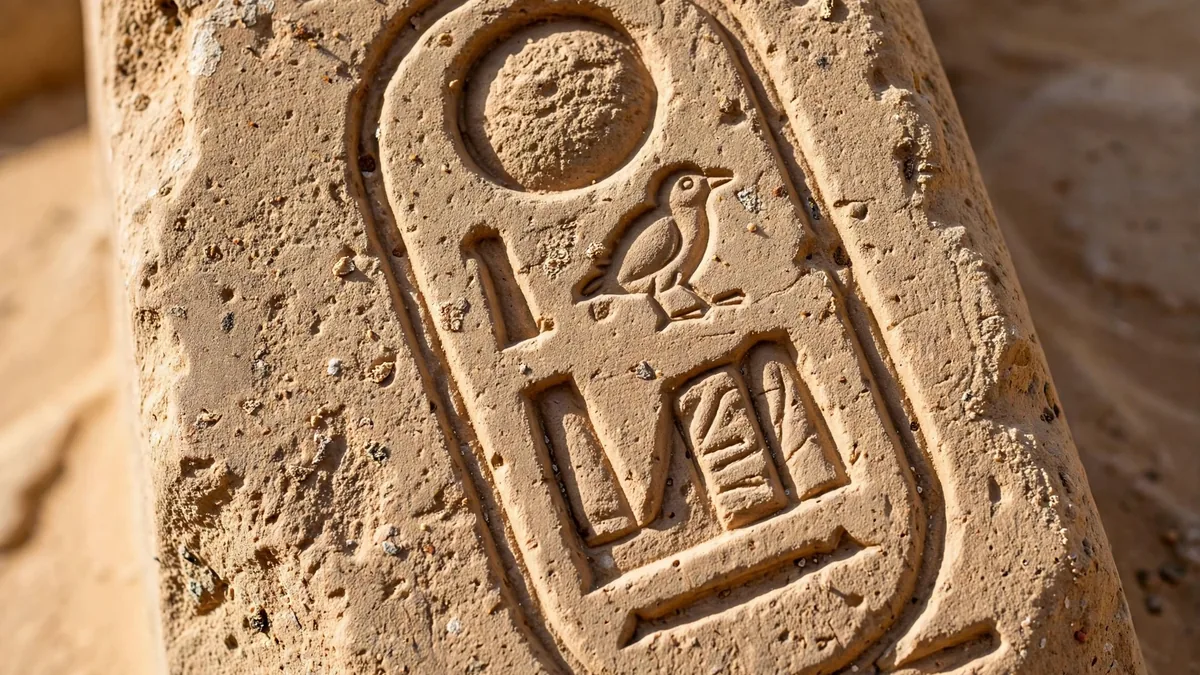
Then, in early 2026, the joint Egyptian-American team of Basem Gehad and Yvona Trnka-Amrhein found it — the upper torso, face-down in damp soil, with flecks of its original paint still clinging to the limestone. After three thousand years, surviving paint is practically a miracle. The inscriptions on the back pillar sealed it: the titles of Ramesses II, matching the 1930 fragment exactly.
Put together, the colossus stands nearly 7 meters — about 23 feet — tall. The first complete look at it in over a millennium. He spent a lifetime making sure he’d never be forgotten, and in 2026, we’re still assembling him, piece by piece.
Questions People Actually Ask
How long did Ramesses II rule?
About 66 years, c. 1279–1213 BCE — one of the longest reigns of any monarch in the ancient world.
Why is Ramesses II called “the Great”?
For the sheer scale of it all: a 66-year reign, Kadesh, the first peace treaty, Abu Simbel, and more building projects than any pharaoh before or since. Nine later kings took his name.
What happened at the Battle of Kadesh?
Around 1274 BCE, Ramesses II fought the Hittites near Kadesh (Syria) in one of history’s largest chariot battles. It was effectively a draw — and it led, fifteen years later, to the world’s first peace treaty.
Where is the mummy of Ramesses II now?
In the National Museum of Egyptian Civilization (NMEC) in Cairo, moved there in the 2021 Pharaohs’ Golden Parade. It was discovered in 1881 in a hidden royal cache at Deir el-Bahari.
What was found in 2026?
At El Ashmunein (ancient Hermopolis), archaeologists found the missing upper half of a colossal Ramesses II statue — the lower half had been known since 1930. After 96 years, the monument is whole again.
Did Ramesses II really have red hair?
His mummy’s hair looks reddish, but that’s almost certainly henna dye, which was common. His natural color was probably dark.
The Man Who Built Eternity
Ramesses II figured out something simple: stone outlasts memory — unless you carve the memory into the stone. He covered Egypt with his face so completely that three thousand years of wind, war, floods, and tomb robbers still haven’t finished the job.
Want more of his world? Walk the Valley of the Kings where his successors were buried, meet the era’s most famous queen in our Nefertiti story, or read about the woman who took the throne as pharaoh herself — Hatshepsut.