
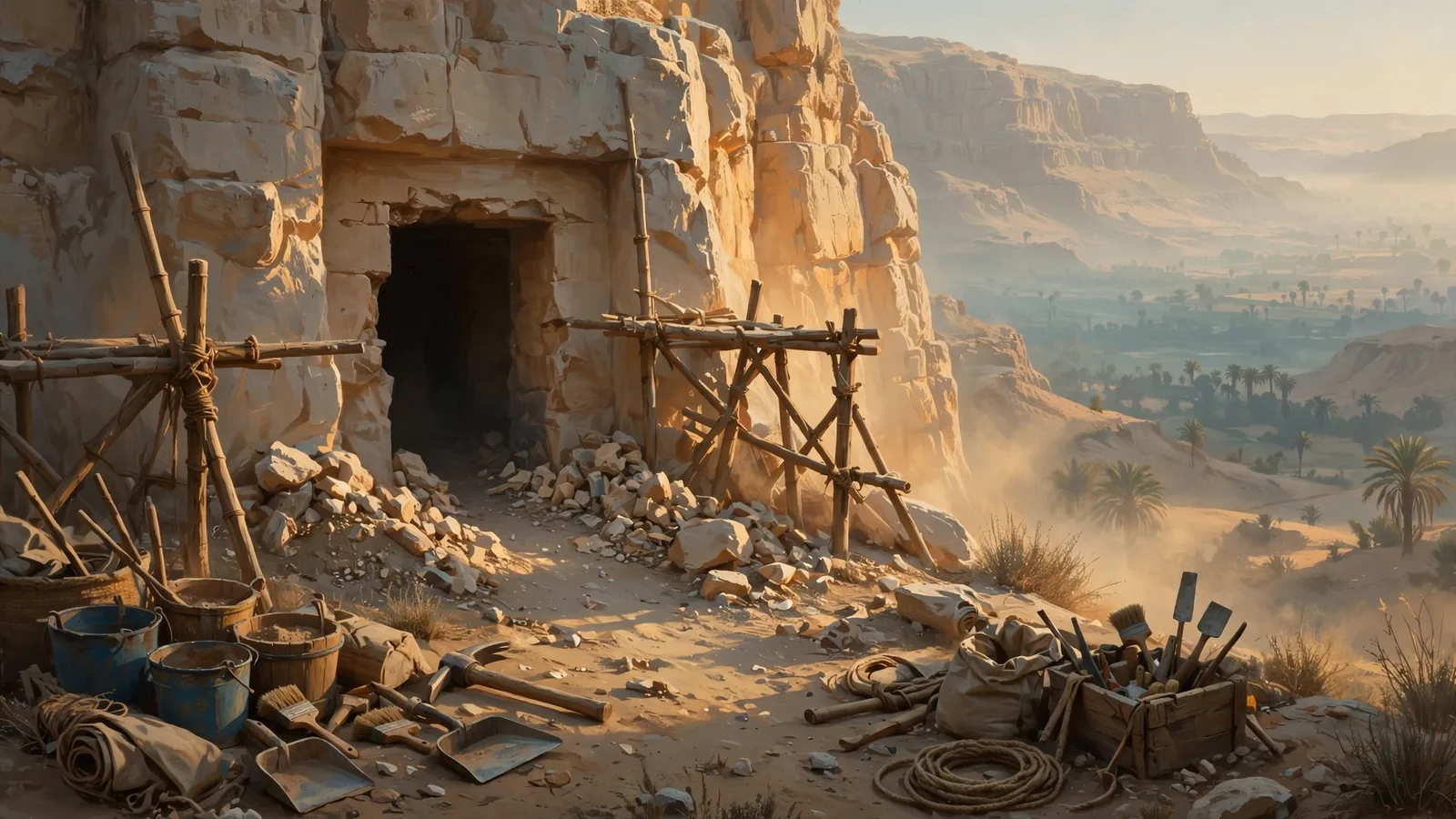
On July 12, 2026, Egypt’s Ministry of Tourism and Antiquities announced a Luxor tomb discovery archaeologists dream about: a previously unknown, 3,000-year-old tomb near Luxor, its painted walls still bright with color. The tomb belonged to a man named Paser. It had sat quietly in the cliffs of the Theban necropolis while the modern world walked right past it.
If you searched for news about a Luxor tomb discovery this year, this is almost certainly the find you were looking for. But 2026 was genuinely unusual — Paser’s tomb wasn’t even the only one. Here is what archaeologists actually found, what it tells us, and what they still don’t know.
The Luxor Tomb Discovery: What Was Announced in July 2026
A Dutch archaeological mission from Leiden University made the find. Dr. Karina van den Hoeven led the team at a site called Jabanat el-Qurna. It sits in the Sheikh Abd el-Qurna necropolis on Luxor’s West Bank. This sprawling cemetery lies across the Nile from modern Luxor. New Kingdom nobles carved their tombs into its limestone hills some 3,000 years ago.
The tomb lies just east of Theban Tomb No. 45. The Leiden team has worked this area with Egypt’s Supreme Council of Antiquities since 2018. Their long-term project does two jobs at once. It excavates, and it runs conservation and risk-management programs to protect the archaeological landscape. This was no lucky stumble on a weekend dig. Ultimately, it was the payoff of years of systematic work in one of the densest burial grounds on earth.
Who Was Paser?
Honest answer: we don’t fully know yet. Anyone who tells you otherwise is guessing.
The inscriptions give us his name — Paser — repeated across the surviving decoration. Specialists dated the tomb to the Ramesside period, the era of the 19th and 20th dynasties. Instead, they based this on the artistic style of the inscriptions, not on one single decisive text. That puts it roughly 3,000 years ago, in the golden age of Theban tomb-building.
Dr. Hisham Al-Leithy, Secretary-General of the Supreme Council of Antiquities, says the team will keep studying the tomb. Their goal: identify the people buried inside and reconstruct their identities. The announcement marked the start of the research, not the end. So treat confident online biographies of Paser with healthy skepticism until the Leiden team publishes its findings.
Inside the Tomb: What the Luxor Discovery Revealed
The tomb follows the classic plan of an elite private tomb at Thebes. An open courtyard leads into a rock-cut chapel with a T-shaped layout. Burial chambers lie carved into the rock below.
The courtyard survived in good shape. Archaeologists found mudbrick walls with a niche built to hold a funerary stela. A staircase flanked by sloping ramps leads to the tomb entrance. These unglamorous details show specialists how the tomb worked as a place of the cult of the dead — not just a hole for a body.
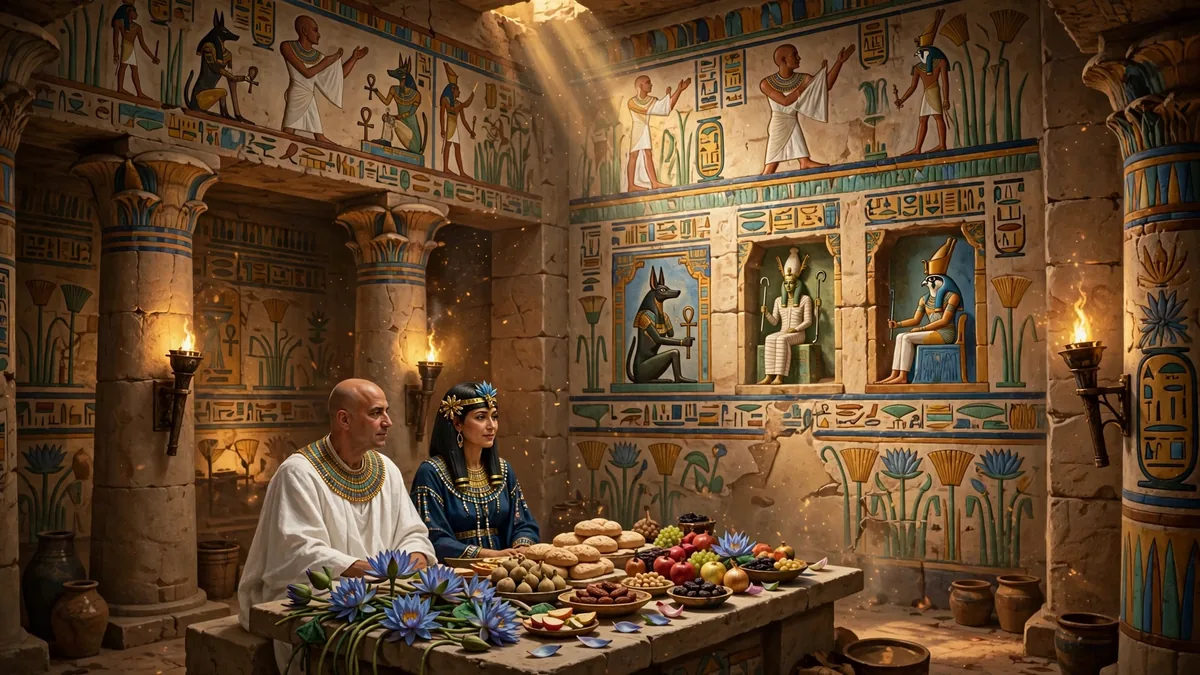
Above all, the paintings are the real prize. Surviving scenes show Paser worshipping before several deities in shrine settings. Another scene shows something deeply human: Paser seated beside his wife before an offering table heaped with food. The offering-table motif appears in many Theban tombs. It symbolized food and drink for the afterlife. Yet seeing it fresh after three millennia never feels routine. Sediment still covers parts of the decoration. More scenes may emerge as conservators do their work.
Dr. van den Hoeven says the mission will start structural stabilization in future seasons. The team will also conserve and restore the painted decorations. Painted plaster can survive 3,000 years underground, then turn shockingly fragile once it meets air, light, and Luxor’s temperature swings. The slow, careful phase matters more than the dramatic discovery moment.
Paser’s Tomb Wasn’t 2026’s Only Luxor Discovery
Here is the part most coverage skipped. While everyone read about Paser, Egyptian archaeologists announced a second major batch of finds. In fact, these may be even older.
Tombs at Deir al-Bahri (September 2026)
In September 2026, the Zahi Hawass Foundation for Antiquities and Heritage unveiled new discoveries. The team worked with the Supreme Council of Antiquities at the causeway of Queen Hatshepsut‘s funerary temple at Deir al-Bahri, also on Luxor’s West Bank. The headline finds:
- Rock-cut tombs and burial shafts around 3,600 years old. One belonged to Djehuti Mes, an official at the court of Queen Tetisheri. It dates to the reign of King Ahmose I (about 1550–1525 BCE).
- A wooden coffin holding a young child, sealed since its burial 3,600 years ago.
- Bronze coins stamped with the image of Alexander the Great. The team also found children’s clay toys, funerary masks, winged scarabs, and amulets.
- Archery bows, which point to a military background for some tomb owners.
- Part of a Ptolemaic necropolis, built directly over the remains of Hatshepsut’s temple.
Zahi Hawass said the finds could help “reconstruct history.” He meant they shed light on ancient temple rituals and burial customs. A single site spanning the Middle Kingdom to the Ptolemaic period is a gift for anyone who reads layers of earth like pages.
Coffins at Dra Abu el-Naga (May 2026)
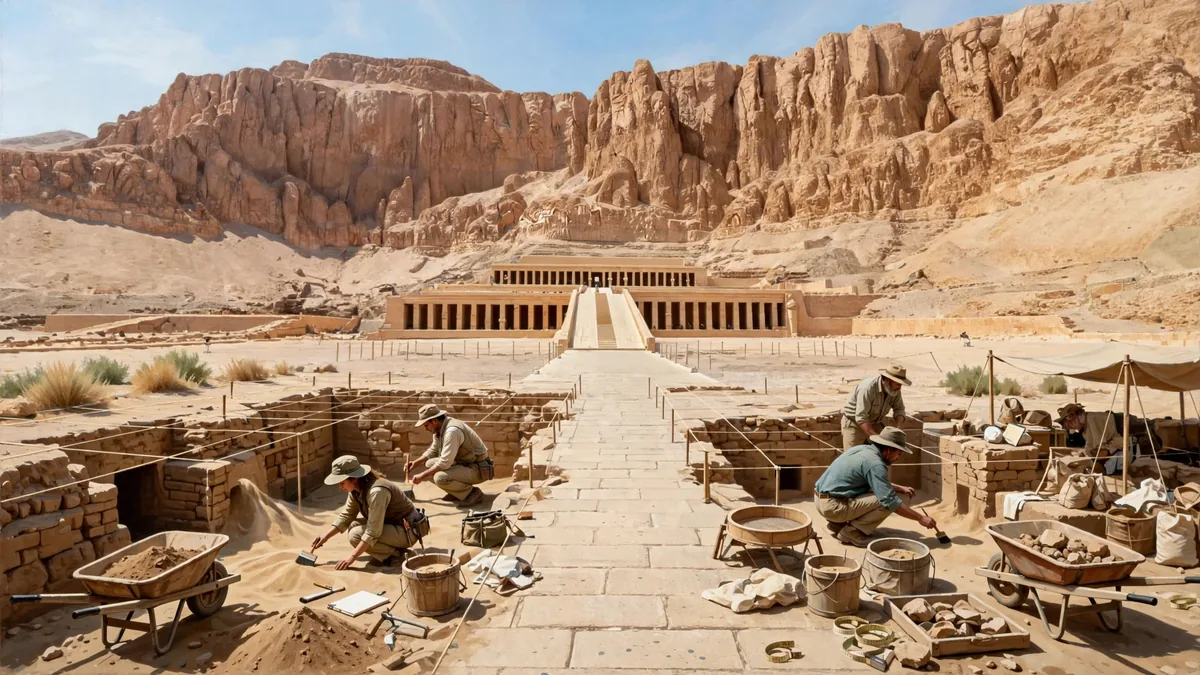
A third 2026 discovery deserves attention. In May, an Egyptian mission at Dra Abu el-Naga closed its eighth excavation season. The team cleared debris left by 19th-century expeditions and reached structures hidden for over 150 years.
The haul: ten wooden coffins from a burial shaft in the courtyard of a tomb belonging to a man named Baki. Four date to the 18th Dynasty. One names Merit, a “singer of the god Amun.” Another, from the Ramesside period, names Padi-Amon, a priest of the Temple of Amun. The rest belong to the Late Period. Researchers think someone moved these coffins into the shaft as a secondary hiding place, probably to protect them.
Three separate tomb discoveries around Luxor in one year. That fact sets up the next question.
Why Does Luxor Keep Producing New Tombs?
It feels like nothing should remain. People have dug — and looted — around Luxor for two centuries. But the Theban necropolis is enormous, and “excavated” does not always mean “properly recorded.” The Dra Abu el-Naga finds came from clearing the mess of digs from 150 years ago.
Numbers matter too. Thebes served as the religious capital of an empire during the New Kingdom. Its elite built hundreds of tombs across the West Bank hills. Many were modest or uninscribed. Later construction buried others — a Ptolemaic cemetery sits right on top of Hatshepsut’s temple, for example. Systematic survey, better mapping, and long-term projects like Leiden’s (active since 2018) do the slow archaeology that finds what treasure-hunters missed. For the royal side of the West Bank story, see our guide to the Valley of the Kings.
Therefore, Luxor is not running out. If anything, 2026 shows we are getting better at finding what was always there.
What Happens Next
The press release is day one of a process that takes years. That is the unglamorous truth about a Luxor tomb discovery. For Paser’s tomb, documentation comes first: photographing, drawing, and translating every inscription. After that, the team stabilizes the structure and conserves the paintings. Only then starts the deeper historical work. Who were Paser and his family? How does this tomb fit the growth of the Lower Sheikh Abd el-Qurna cemetery? What does it add to our picture of Ramesside Thebes?
Tourism plays a role, and Egypt is open about it. Minister of Tourism and Antiquities Sherif Fathy praised the missions working across the country. He noted that finds like these reveal new facets of ancient Egyptian civilization. They also strengthen Egypt’s standing as a world archaeological destination. New tombs eventually join the West Bank itinerary — after conservators finish, as they should. When Howard Carter opened Tutankhamun’s tomb in 1922, it took years of cataloguing before the treasures toured the world. Paser’s tomb will follow the same patient path.
Planning a Luxor trip and hoping to walk into Paser’s tomb? Be patient. The paint needs its conservators first.
Sources
Further reading from archaeology publications and news outlets covering the 2026 discoveries:
HeritageDaily — New discovery at Sheikh Abd el-Qurna reveals tomb of Ancient Egyptian official
The Media Line — Egypt Unveils 3,600-Year-Old Tombs and Artifacts Near Luxor
La Brújula Verde — Tomb of the Purification Priest of the Temple of Amun and 10 Other Figures Discovered in Luxor