
How were ancient Egyptian tomb workers paid? For some skilled crews, the evidence points to recorded provisions—especially grain—along with other goods. These were not modern cash paychecks, and no single arrangement applied to every worker or every period. Records from Deir el-Medina, the village of royal tomb builders, let us see both the system and what happened when deliveries failed.
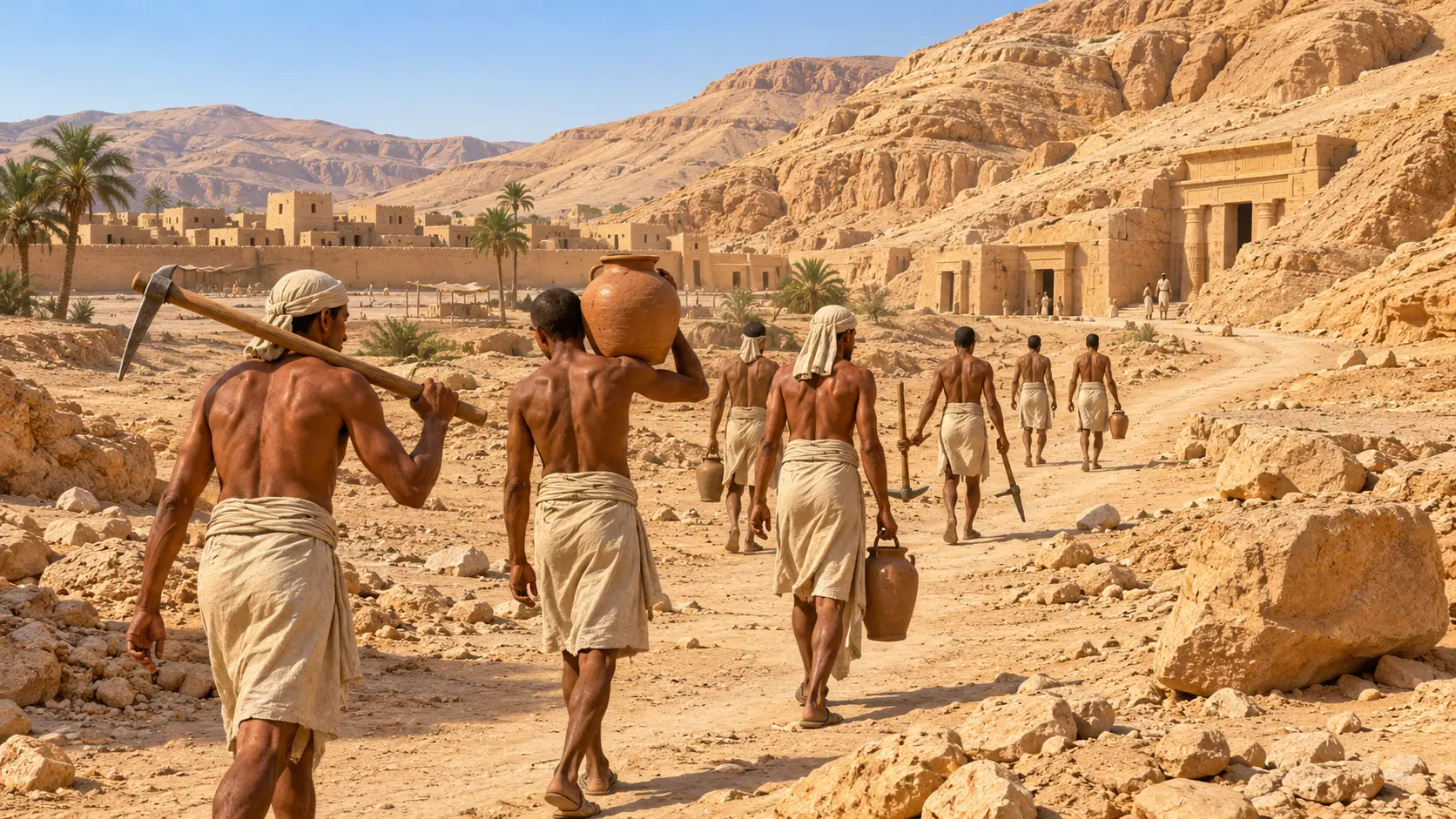
The short answer: workers received provisions, not a modern paycheck
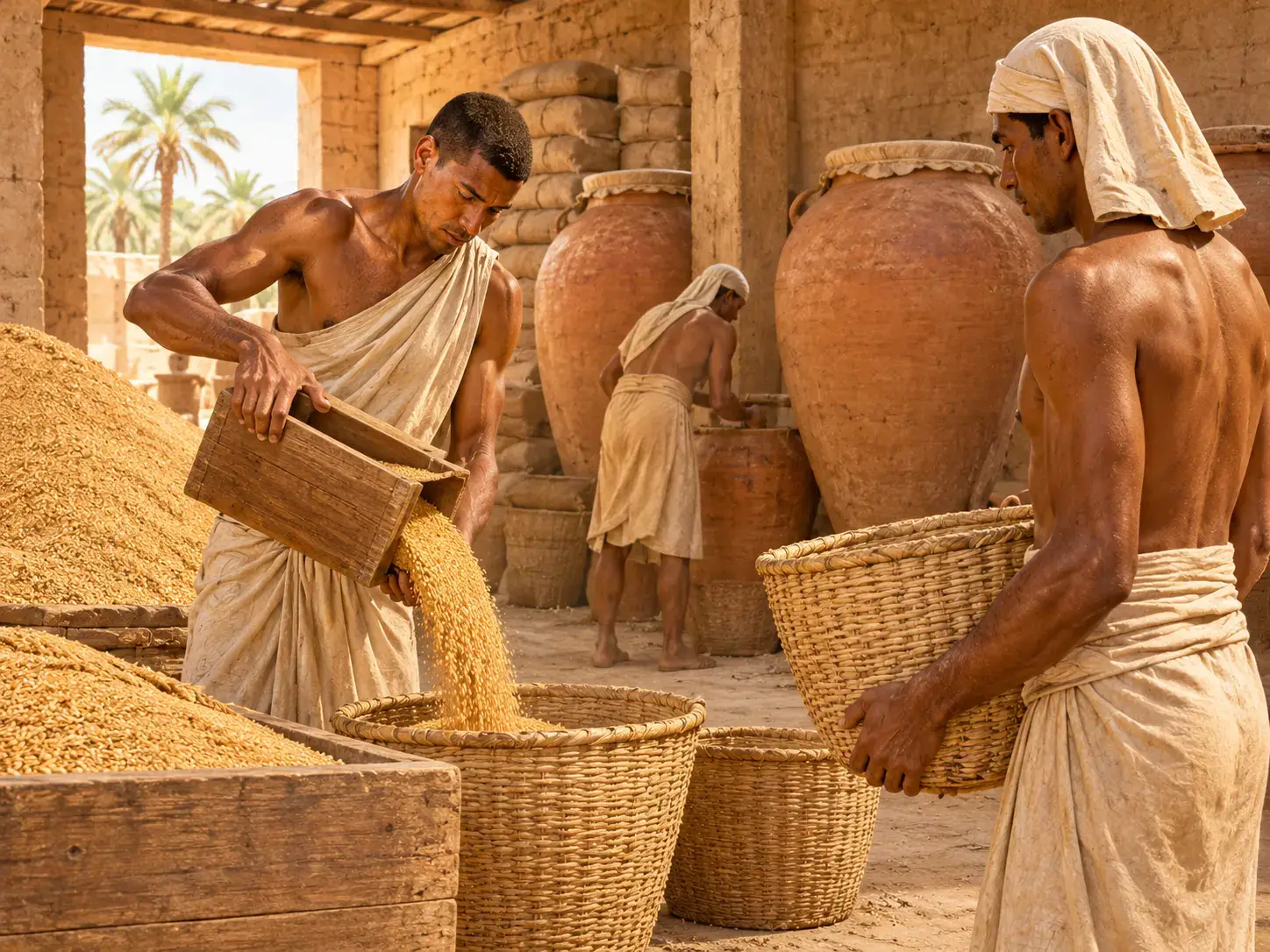
In records from ancient Egypt, compensation could take the form of measured grain and other supplies. Grain mattered because it could feed a household and serve as a practical unit in administration and exchange. The surviving evidence does not give us one universal “wage chart”: a worker’s role, rank, period, and employer all mattered.
That distinction matters. The tomb builders at Deir el-Medina were a specialized, state-supervised workforce, not a sample of every farmer, laborer, or craft worker in Egypt. Their unusually rich paper trail helps historians answer questions that the evidence for many ordinary workers cannot answer as clearly.
What do the records say about grain rations?
A papyrus in the Metropolitan Museum of Art’s collection records daily quantities of grain and dates supplied as salaries. The museum dates it to Egypt’s Middle Kingdom, around 1961–1917 BCE. It is a useful reminder that payment in provisions appears in evidence from a different period than the famous New Kingdom strike at Deir el-Medina; the two documents should not be treated as one account of a single system.
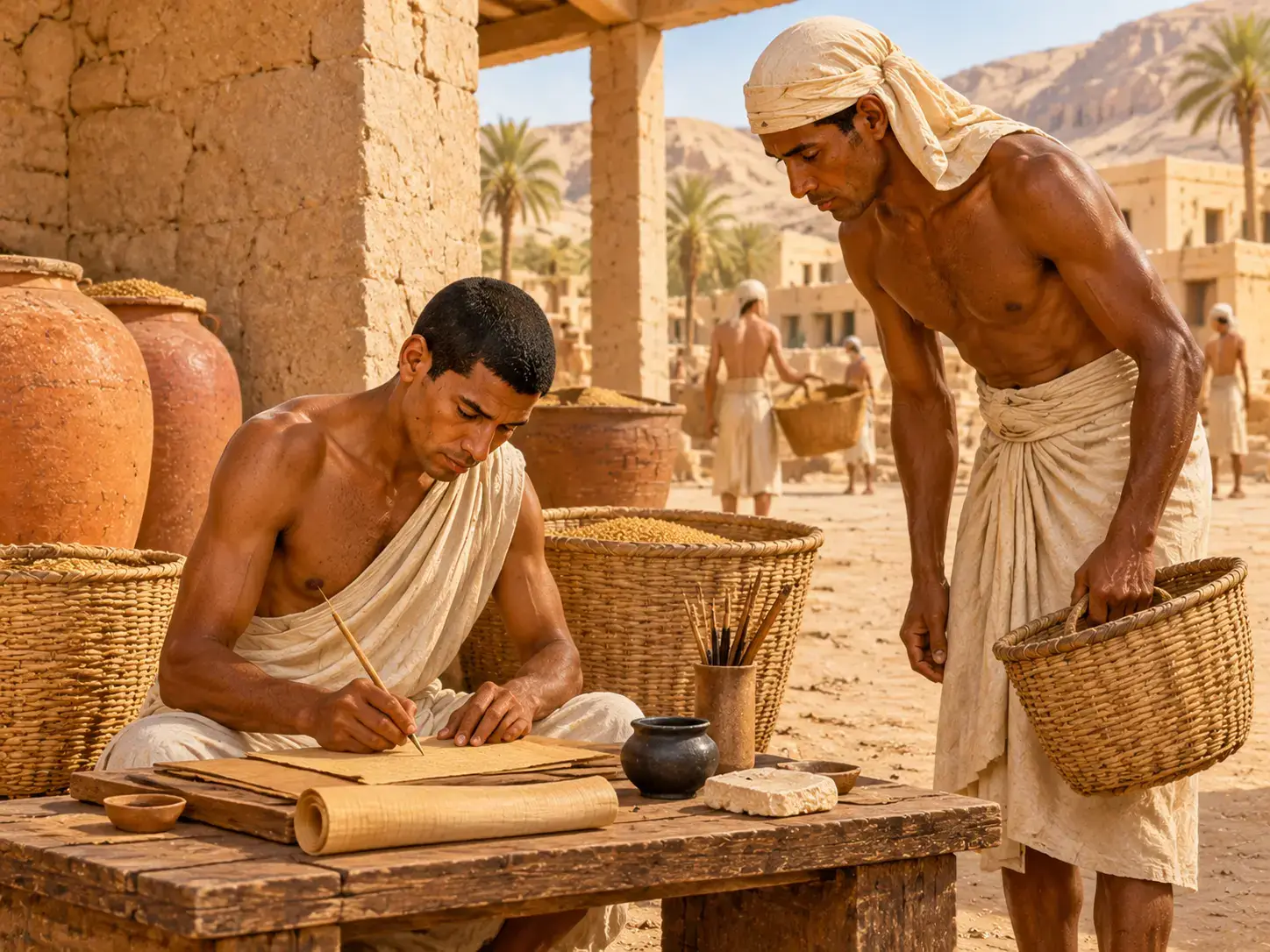
New Kingdom administrative records add more detail. A papyrus record in the Museo Egizio collection, from the reign of Ramesses IX, lists deliveries of rations to Deir el-Medina workmen from royal storehouses and temples. Its accounts mention food and other supplies, including clothing, oil, and papyrus. A related entry describes a draughtsman receiving a donkey and foal in settlement of grain lent earlier. That example shows how real-life accounts could include debts and goods as well as routine provisions.
So “grain ration” does not mean every worker simply collected an identical sack and went home. Administrators tracked deliveries, and the surviving accounts show a broader world of supplies, lending, and repayment. The records are administrative snapshots, not a complete payroll for every household.
The Deir el-Medina strike: what happened when rations fell behind?
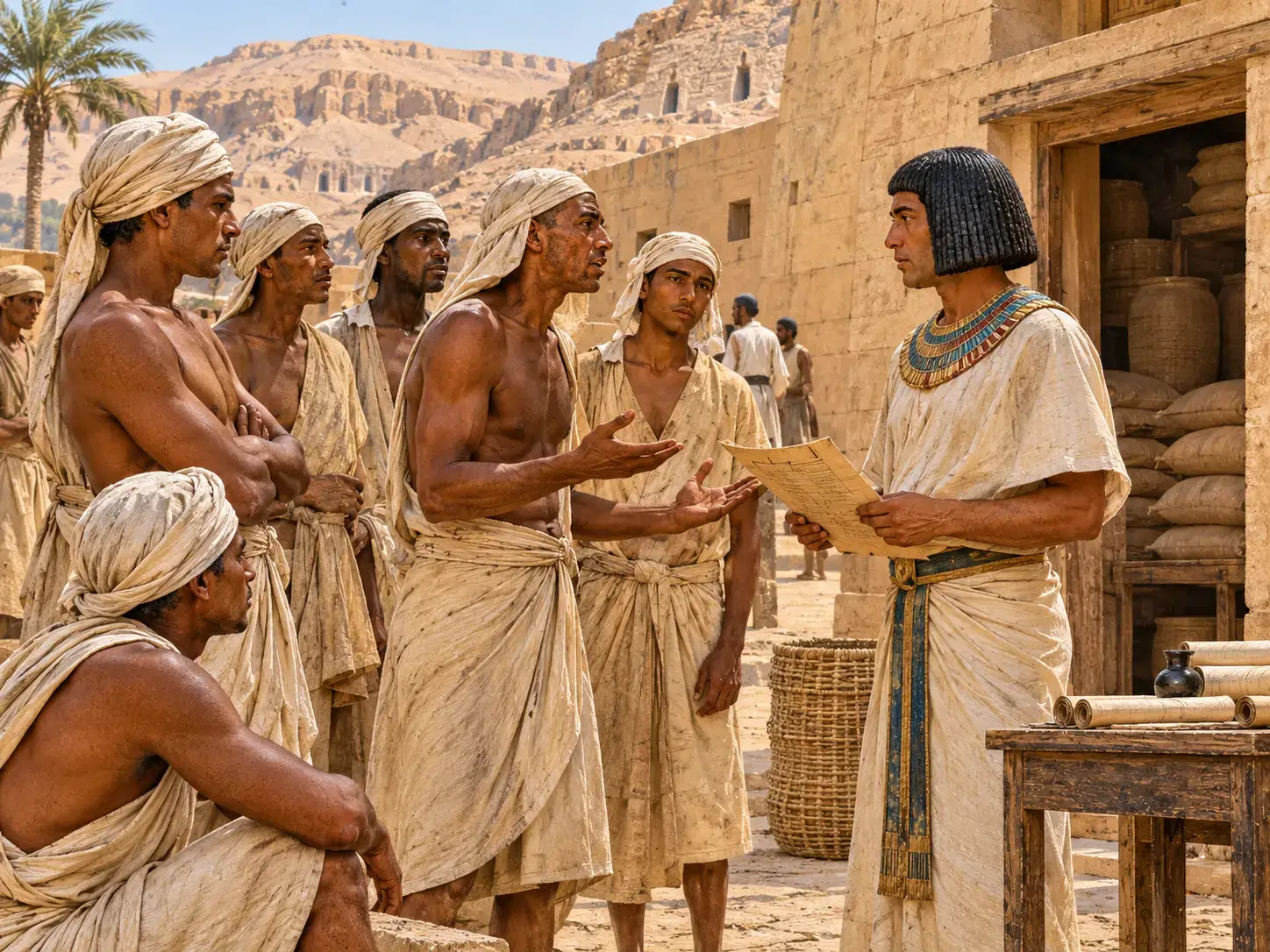
The Turin Strike Papyrus describes a work stoppage during the reign of Ramesses III, more than a century before the Ramesses IX ration journal discussed above. The Museo Egizio identifies the papyrus as an administrative report written by Amunnakht, a tomb scribe. It says that delayed or suspended rations left the workmen demanding grain that was owed to them.
The workers stopped work and gathered at religious and administrative sites while pressing officials to deliver provisions. The papyrus also records a later return to protest after grain had been paid, this time with complaints about poor conditions and shortages of other goods. The account names items such as fish, greens, and ointments, which helps show that workers’ concerns went beyond one grain delivery.
This is often called the earliest documented labor strike. A careful description is that it is one of the earliest well-documented work stoppages known from surviving written records: earlier protests may have happened without leaving a record that survives today.
Why could workers make a collective complaint?
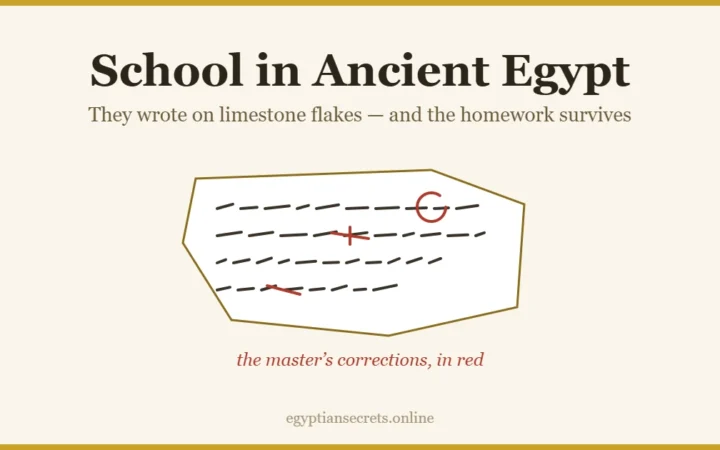
Deir el-Medina housed workers and their families near the royal necropolis at Thebes. The crew built and decorated royal tombs under state supervision, and scribes recorded work and village business. Papyrus and limestone flakes—often called ostraca—preserve practical notes about daily life, deliveries, and administration.
Those records make the strike especially informative. The workers knew what they were owed, could describe the delay, and approached officials as a group. The story is not just about an ancient paycheck; it is about a government-supported crew, the supply chain that sustained it, and workers using a stoppage to make their needs heard.
What this does—and does not—tell us
- It does show that some Egyptian workers received recorded grain provisions and other goods.
- It does show that officials and scribes tracked deliveries, debts, and supplies.
- It does show that Deir el-Medina workmen protested when provisions were delayed and conditions were poor.
- It does not show that every Egyptian worker received the same ration, or that every period used the same pay system.
- It does not prove that no earlier labor protest occurred; the papyrus is evidence of what was recorded and preserved.
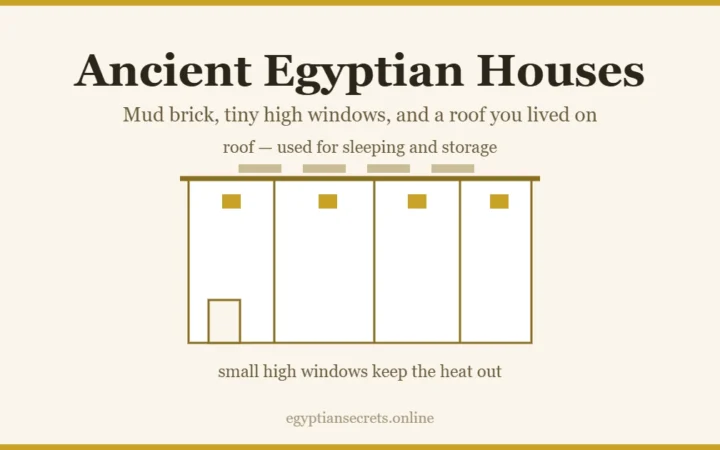
For more context on daily needs, see our guides to what ancient Egyptians ate and what their homes were like. Those topics help put work provisions in the setting of household life.
Sources for further reading
- Museo Egizio: Turin Strike Papyrus — the Ramesses III work stoppage and the scribe Amunnakht’s report.
- Museo Egizio: Necropolis Journal and ration records — deliveries and accounts from the reign of Ramesses IX.
- The Metropolitan Museum of Art: Accounts of workforce salaries — a Middle Kingdom papyrus recording grain and dates supplied as salaries.
- UCL Digital Egypt: Deir el-Medina ostraca — background on the workers’ village and its everyday written records.