
The Pharaoh Everyone’s Suddenly Searching For
Something odd has been happening on Google. Searches for Amenhotep III — a pharaoh dead for over 3,300 years — have been climbing hard. Not the movie-driven kind of spike, either. The real kind: people typing his name into a search box because they genuinely want to know who he was.
And honestly? It’s about time. Amenhotep III ruled Egypt at the single most glittering moment in its entire history. While other pharaohs get the fame — Tutankhamun gets the gold mask, Ramesses gets the movies — Amenhotep III got the golden age itself. He didn’t inherit greatness. Instead, he manufactured it, decorated it, married into it, and mailed it to foreign kings on clay tablets.
Then, in October 2025, Egypt reopened his tomb in the Valley of the Kings after more than twenty years of restoration. You can walk down into it right now. That’s probably why his name is everywhere again.
So let’s do this properly. Who was Amenhotep III?
✍️ Write YOUR Name in Real Hieroglyphics
See how the ancient Egyptians would have written your name — free interactive tool.
Try It Now →Who Was Amenhotep III, Really?
First, the short version, before we get into the good stuff:
- Ruled: c. 1390–1352 BCE — about 38 years, 18th Dynasty, New Kingdom
- Family: Son of Thutmose IV; father of Akhenaten; grandfather of Tutankhamun
- Wife: Queen Tiye — not royal by birth, powerful by every other measure
- Claim to fame: Egypt’s golden age — peace, enormous wealth, and a building program that covered the kingdom
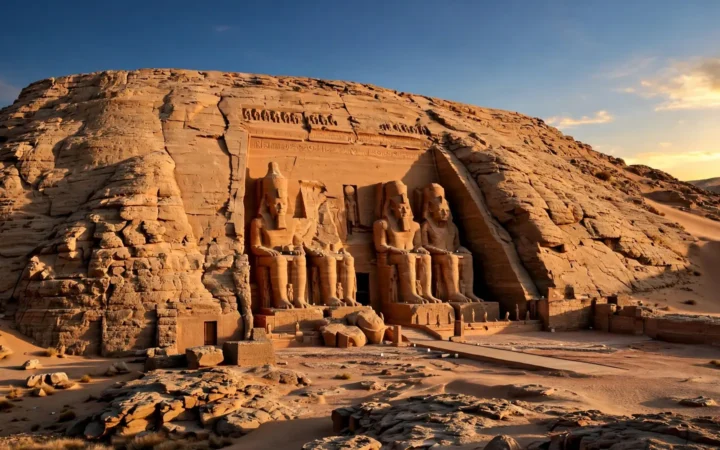
- Signature monuments: The Colossi of Memnon, Luxor Temple’s inner sanctuary, his palace-city at Malqata
- Signature discovery: The Lost Golden City of Aten, found in 2020–21, was his
- Died: Around age 50, probably worn down by illness and a very rich diet
- Today: His mummy rests among the royal mummies in Cairo; his tomb WV22 reopened to visitors in October 2025
Amenhotep III’s Golden Age: 38 Years of Peace and Gold
Here’s the thing about Amenhotep III’s reign: almost nothing dramatic happened — no epic battles, no invasions, no civil wars. And that was the whole point.
Egypt under Amenhotep III was the richest, most stable, most internationally respected power on earth. Gold flowed in from Nubia in quantities that genuinely shocked foreign kings. One of them wrote to him, practically begging, that gold in Egypt was “as dust” — as common as dirt. Imagine being so rich that other monarchs think your dust is made of money.
Instead, he spent 38 years turning that wealth into stone. And here’s a detail that tells you everything: more statues survive of Amenhotep III than of any other pharaoh in Egyptian history. Hundreds of them. He didn’t just build big — he built everywhere, constantly, for decades.
But he wasn’t a warrior king, and he didn’t pretend to be one. His idea of power was different: if everyone is too busy admiring your temples and marrying your daughters to fight you, you’ve already won.
Queen Tiye: The Commoner Who Became a Legend
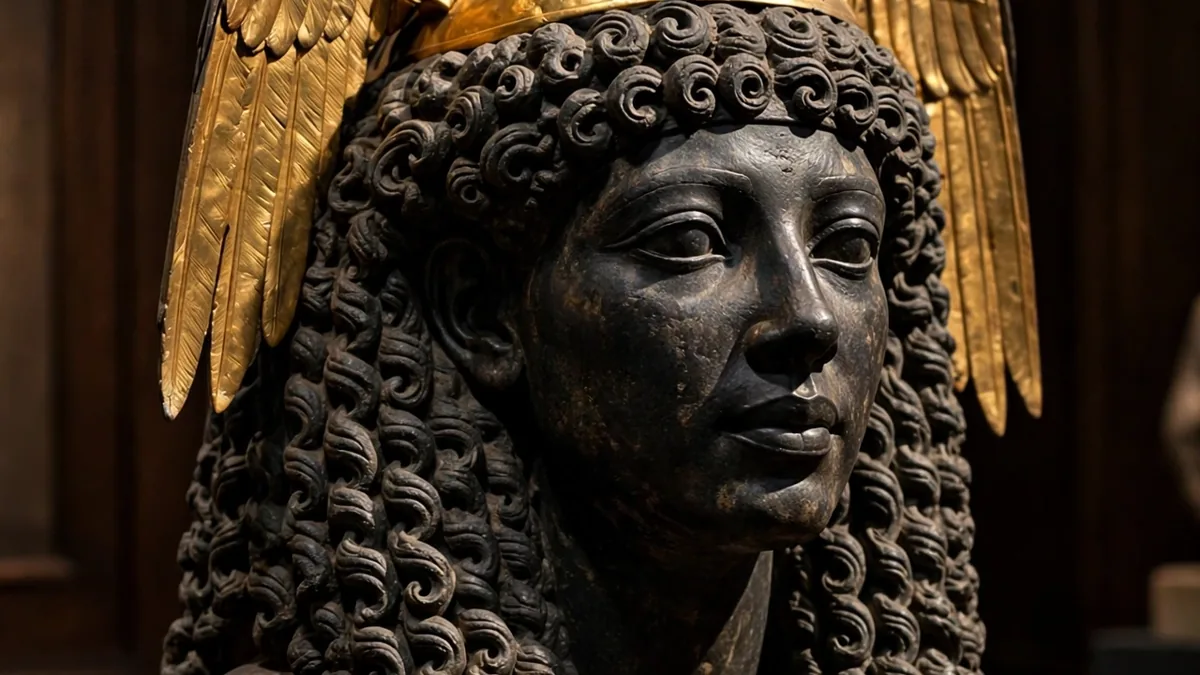
Most pharaohs married royalty. Amenhotep III married Tiye — the daughter of a military officer and a priestess, with no royal blood at all. He also put her name on official monuments right beside his own, issued special scarabs announcing the marriage to the whole kingdom, and let her appear at state ceremonies as something close to a co-ruler.
In fact, that’s not a love story — or not only a love story. It’s a power move. By elevating a non-royal wife, Amenhotep III made the throne itself the source of legitimacy — not bloodline, not the old priesthoods. Tiye became one of the most powerful women in Egyptian history, and foreign kings wrote to her directly, by name, after her husband’s death.
He even had an enormous artificial lake dug for her at his palace complex — and issued a scarab to brag about it. The man’s love language was infrastructure.
The Lost Golden City: Aten, Frozen in Time
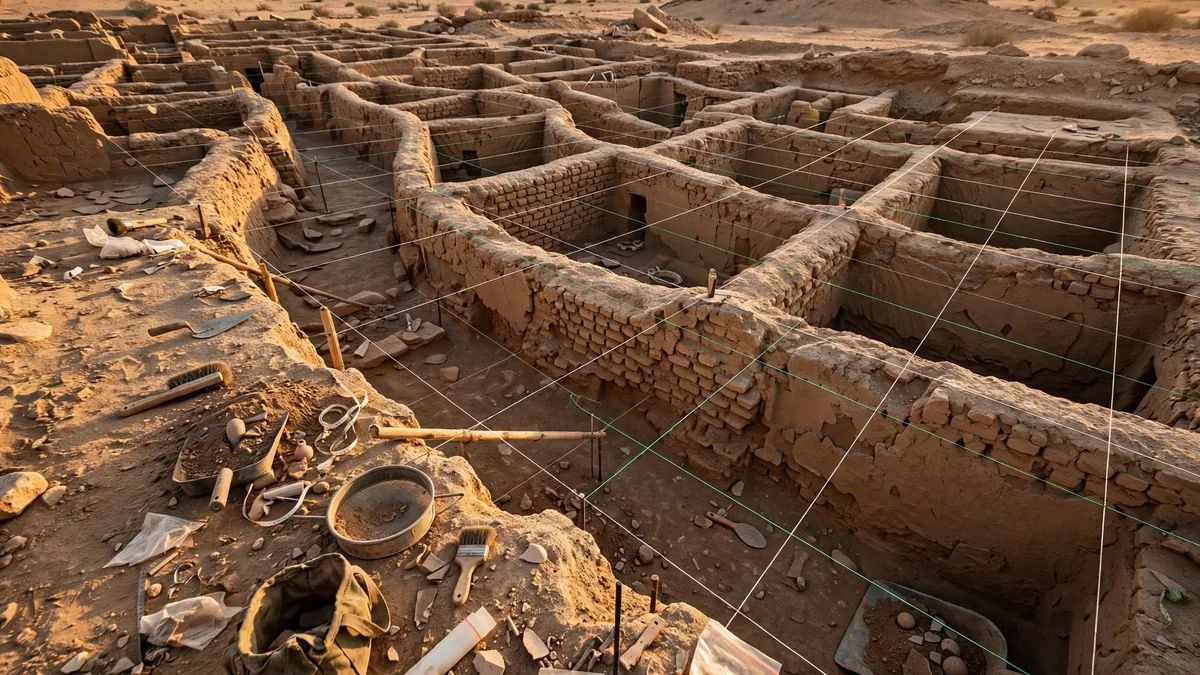
In late 2020, Zahi Hawass’s team started digging near Luxor looking for Tutankhamun’s mortuary temple. What they found instead was a nearly complete ancient city — mudbrick walls preserved meters high, bakeries, workshops, residential quarters — dating squarely to the reign of Amenhotep III. They called it the Rise of Aten; the press, meanwhile, called it the Lost Golden City.
Why does it matter? Because most ancient Egyptian cities were built over for centuries until nothing remained. This one wasn’t. It was abandoned and left alone, which means archaeologists can walk its streets almost as they were 3,400 years ago — the streets of the richest city on earth, at the richest moment in Egyptian history.
The city was industrial, not ceremonial: bread production on a massive scale, meat processing, mudbrick making — the supply chain behind Amenhotep III’s endless building projects. It’s the backstage of the golden age. And it was his.
The Builder: Luxor Temple, Karnak, and Temples in Nubia
Amenhotep III’s building program is hard to overstate. For example, at Karnak he raised the great third pylon. In Nubia, he built the temple at Soleb — and a smaller one at Sedeinga dedicated to Queen Tiye herself, worshipped there as a goddess. Think about that for a second: a temple to your wife, as a goddess, while she’s still alive.
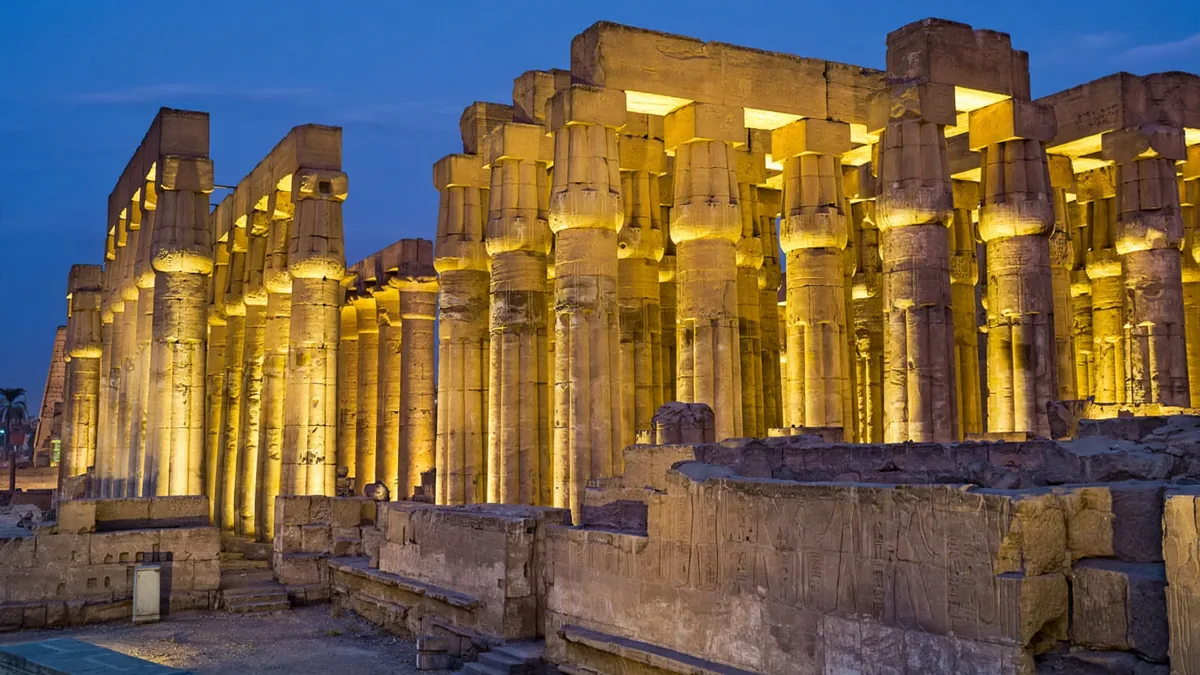
But his masterpiece in Thebes was Luxor Temple. He built its inner sanctuary and the great colonnade court — the forest of towering papyrus-bud columns that still stops visitors cold today. The temple was dedicated to the Theban triad and to the Opet Festival, the great annual procession that renewed the pharaoh’s divine power.
Walk through Luxor Temple at night, floodlit gold against the dark, and you’re walking through Amenhotep III’s idea of what eternity should look like.
The Colossi of Memnon: All That Remains of His Greatest Temple
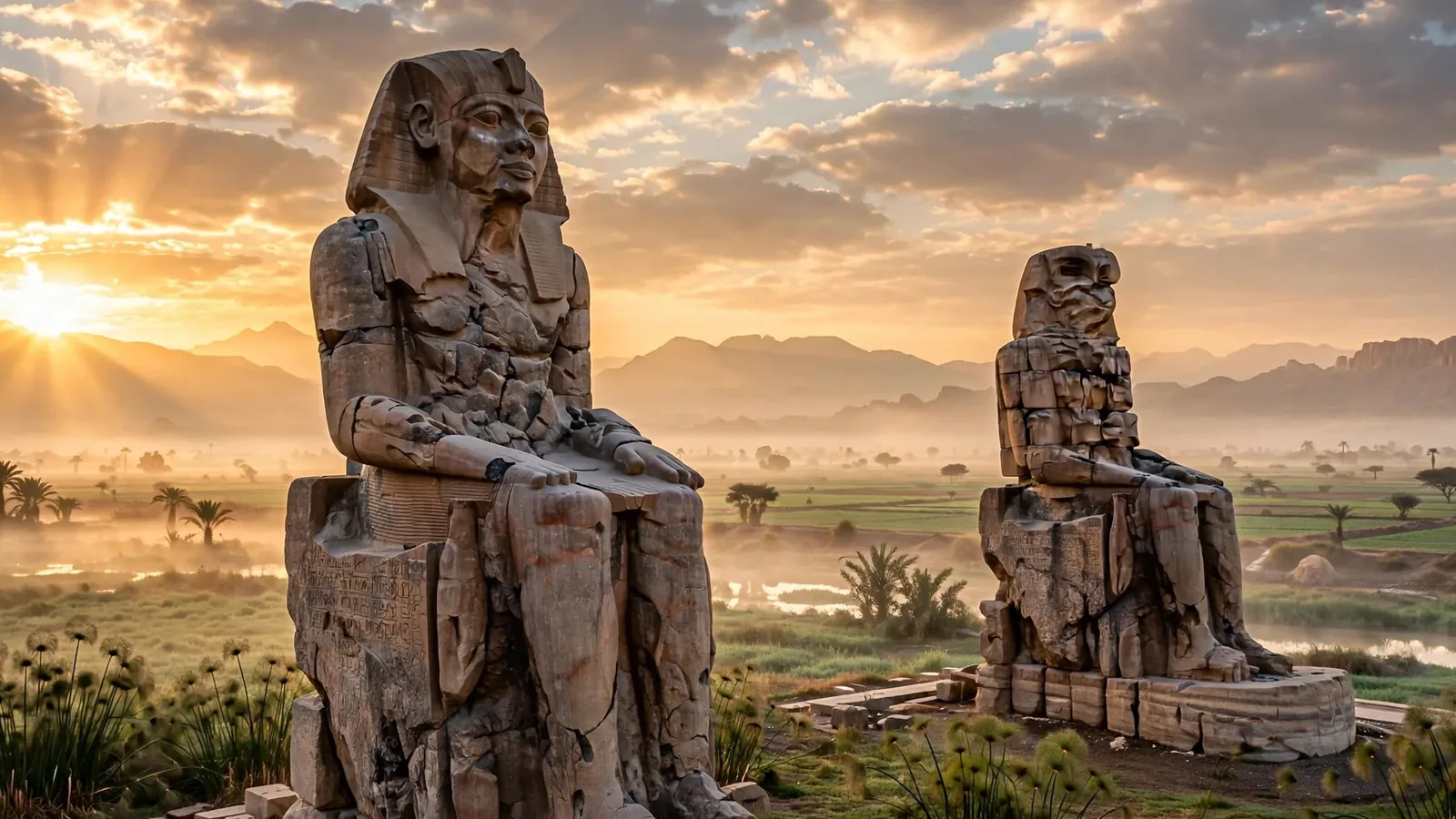
His mortuary temple on the Nile’s west bank — the ancient Egyptians called it the Temple of Millions of Years — was the largest and most lavish of its kind. Then, around 1200 BCE, an earthquake flattened it. Today, almost all that stands are two colossal seated statues of the king at the entrance: the Colossi of Memnon, each around 18 meters tall with its base.
They got their Greek name from travelers who mistook the pharaoh for Memnon, the Trojan War hero. And for a while, one of them sang. After a second earthquake in 27 BCE cracked the northern colossus, the stone would emit a strange ringing sound at dawn — probably air moving through the fractures as the rock heated. Romans flocked to hear it. When Septimius Severus had the statue repaired around 199 CE, the singing stopped forever.
Since the late 1990s, an Egyptian-German mission has been painstakingly reassembling the temple from its scattered pieces — and the announcements keep coming, including two colossal sphinx statues of the king unearthed at the site. His temple is being rebuilt, one fragment at a time.
Amenhotep III’s Letters: Running an Empire by Mail
My favorite thing about Amenhotep III? His inbox survived.
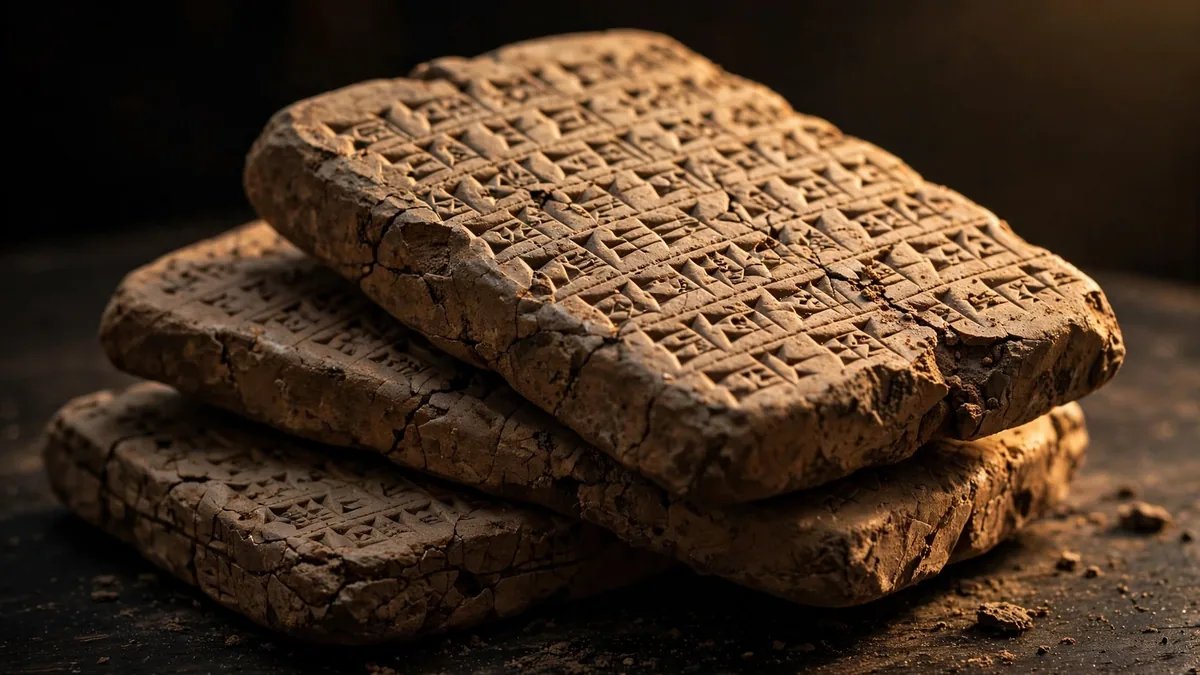
The Amarna Letters — nearly 400 clay tablets in cuneiform, the diplomatic language of the day — preserve the actual correspondence between the Egyptian court and the kings of Babylon, Assyria, Mitanni, and the Hittites. Moreover, much of it dates to his reign, and it reads like the world’s oldest diplomatic cable traffic.
The tone, for example, is astonishing. Foreign kings call him “brother.” They haggle over gold shipments. They arrange royal marriages — Amenhotep III married Mitanni and Babylonian princesses the way modern states sign trade deals. And they flatter him shamelessly, because Egypt was the superpower and everyone knew it.
You want to understand the golden age? In other words: don’t look at the statues. Read the mail. Nobody writes groveling letters to a weak king.
His Tomb in the Valley of the Kings (Reopened 2025)
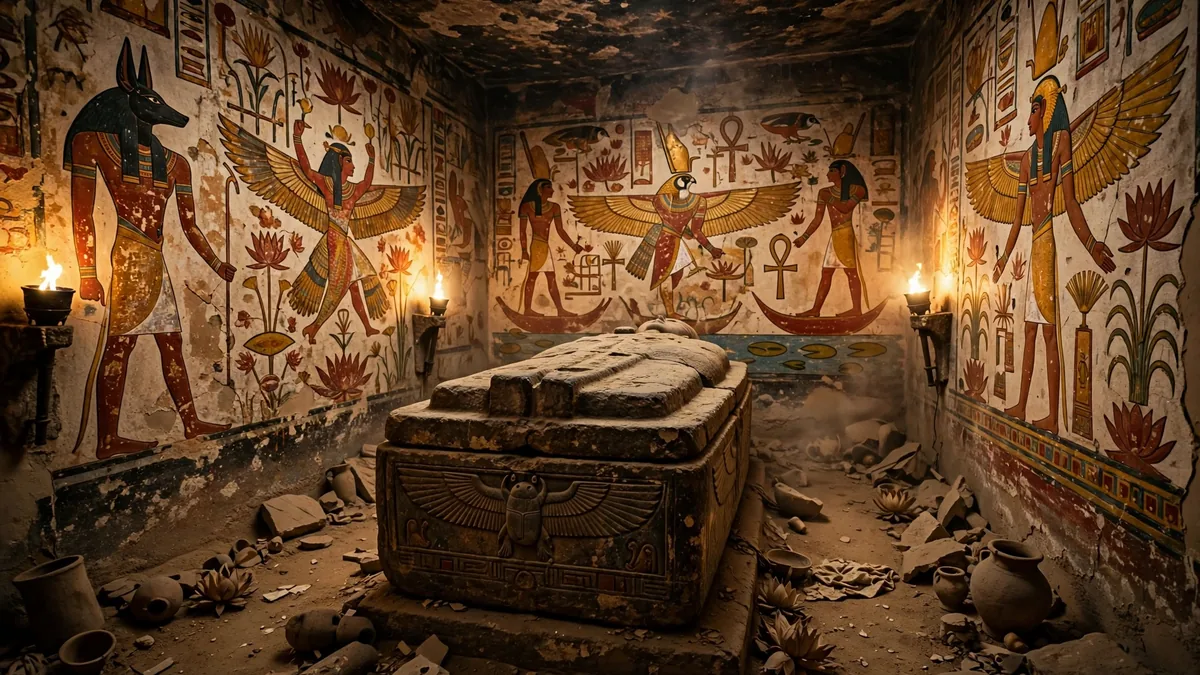
Amenhotep III’s tomb — WV22, in the Valley of the Kings — was found by Napoleon’s engineers in 1799 and excavated by Howard Carter in 1915. Looters had emptied it centuries earlier, but the walls still carry painted scenes meant to guide the king through the afterlife.
Then came the restoration: more than twenty years of it, in phases, with Egyptian, Japanese, and international teams conserving the damaged paintings. Finally, in October 2025 — timed just ahead of the Grand Egyptian Museum’s opening — Egypt reopened the tomb to visitors. You descend about 14 meters into the rock, past the Book of the Dead texts, to the burial chamber where his sarcophagus once stood.
It took two decades to make it safe to visit. He waited 3,300 years. What’s another twenty?
His mummy, by the way, was recovered from the KV35 royal cache — priests had hidden it there to save it from robbers — and it now rests among the royal mummies in Cairo. If the tomb is the house, the mummy finally came home too.
The Son Who Undid It All: Akhenaten
Here’s the tragedy. Amenhotep III’s son and successor — Amenhotep IV, who renamed himself Akhenaten — looked at his father’s golden age and decided to burn it down.
Akhenaten abandoned Thebes, built a new capital in the desert, elevated the sun disc Aten above all other gods, and had his father’s god Amun hacked out of monuments across Egypt — including Amenhotep III’s own. Consequently, the golden age ended in religious revolution, and within a generation the boy king Tutankhamun was desperately trying to put the old world back together.
But here’s the irony: Akhenaten could only afford his revolution because his father had made Egypt unimaginably rich. Every heretic needs an inheritance.
Questions People Actually Ask
When did Amenhotep III rule?
About 1390 to 1352 BCE — roughly 38 years, during the 18th Dynasty of Egypt’s New Kingdom.
Was Amenhotep III related to Tutankhamun?
Yes — he was Tutankhamun’s grandfather. Amenhotep III’s son Akhenaten was Tutankhamun’s father.
What is Amenhotep III famous for?
Presiding over Egypt’s golden age: 38 years of peace, enormous wealth, and a massive building program including Luxor Temple, the Colossi of Memnon, and the palace-city at Malqata.
Who was Queen Tiye?
Amenhotep III’s great royal wife — a non-royal woman he elevated to near co-ruler status, one of the most powerful queens in Egyptian history.
Can you visit Amenhotep III’s tomb?
Yes. His tomb (WV22) in the Valley of the Kings reopened to visitors in October 2025 after more than 20 years of restoration.
Why did the Colossi of Memnon “sing”?
After an earthquake in 27 BCE cracked one statue, temperature changes at dawn made the stone emit a ringing sound. Roman repairs around 199 CE silenced it for good.
Why Amenhotep III Still Matters
Notably, Amenhotep III never fought a famous battle. He never got a curse, a gold mask, or a Hollywood movie. What he did was harder: he took a kingdom and made it the center of the world — through wealth, diplomacy, building, and sheer, relentless self-confidence — and held it there for nearly four decades.
His statues outnumber every other pharaoh’s. In 2021, his city rose from the sand, and his tomb just reopened. Now his name is surging on Google. Three thousand three hundred years later, the golden age he built keeps refusing to stay buried.
Want more of his world? Descend into the Valley of the Kings where his tomb now welcomes visitors, meet his grandson in our story of Tutankhamun’s treasures, read about the son who tried to erase his gods in our Nefertiti story, or see how a body survives three millennia in our guide to ancient Egyptian mummification.
Sources
- CBS News — Egypt reopens Pharaoh Amenhotep III’s tomb in the Valley of the Kings
- Africanews — Pharaoh’s tomb reopened after more than 20 years of renovations (Oct 2025)
- Ahram Online — Zahi Hawass announces the 3,000-year-old “Lost Golden City” in Luxor
- National Geographic — What the Amarna Letters reveal about pharaonic diplomacy
- University of Pennsylvania (ORACC) — The Amarna Letters corpus
- British Museum — Amarna Letter in the collection