
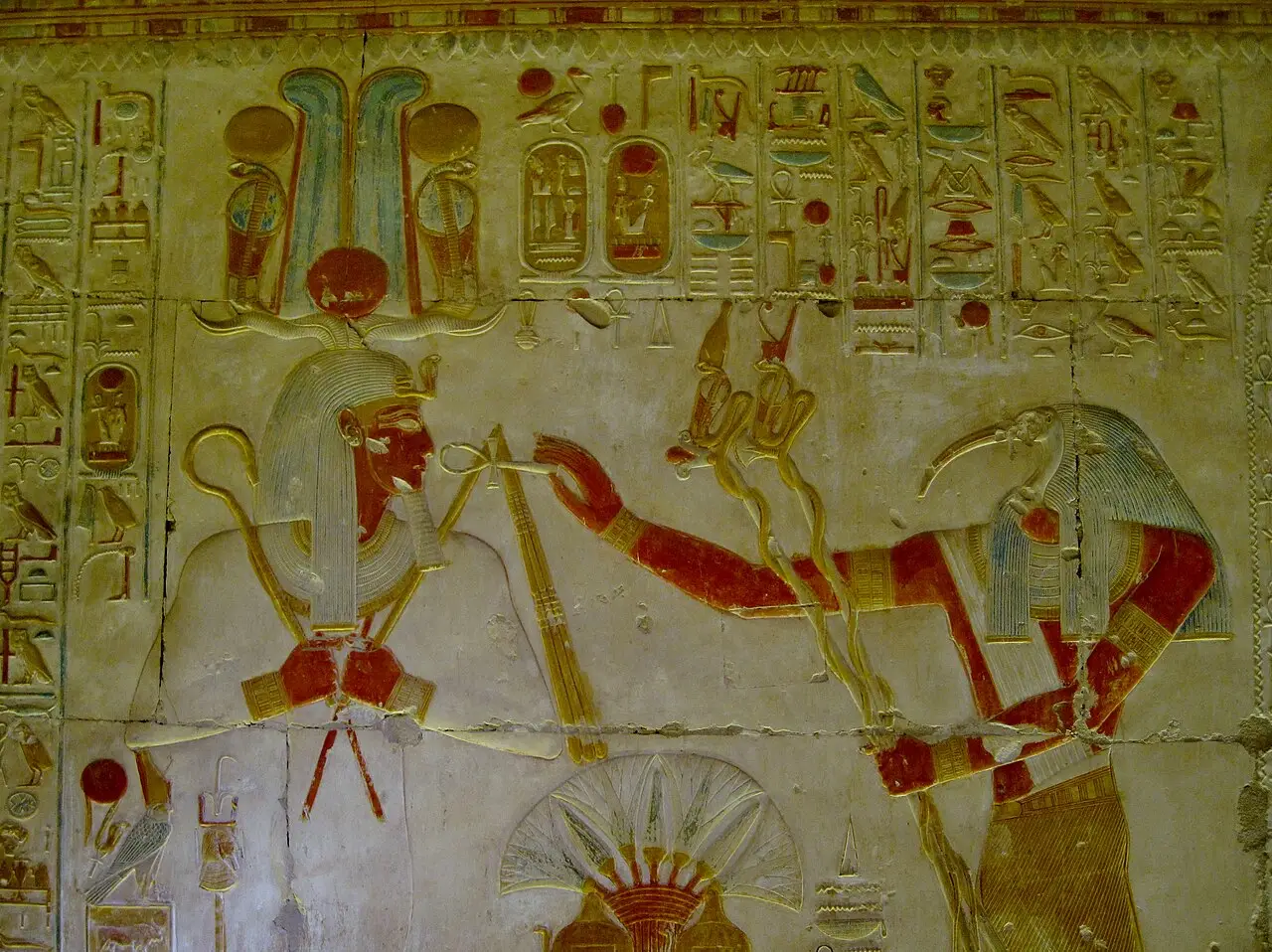
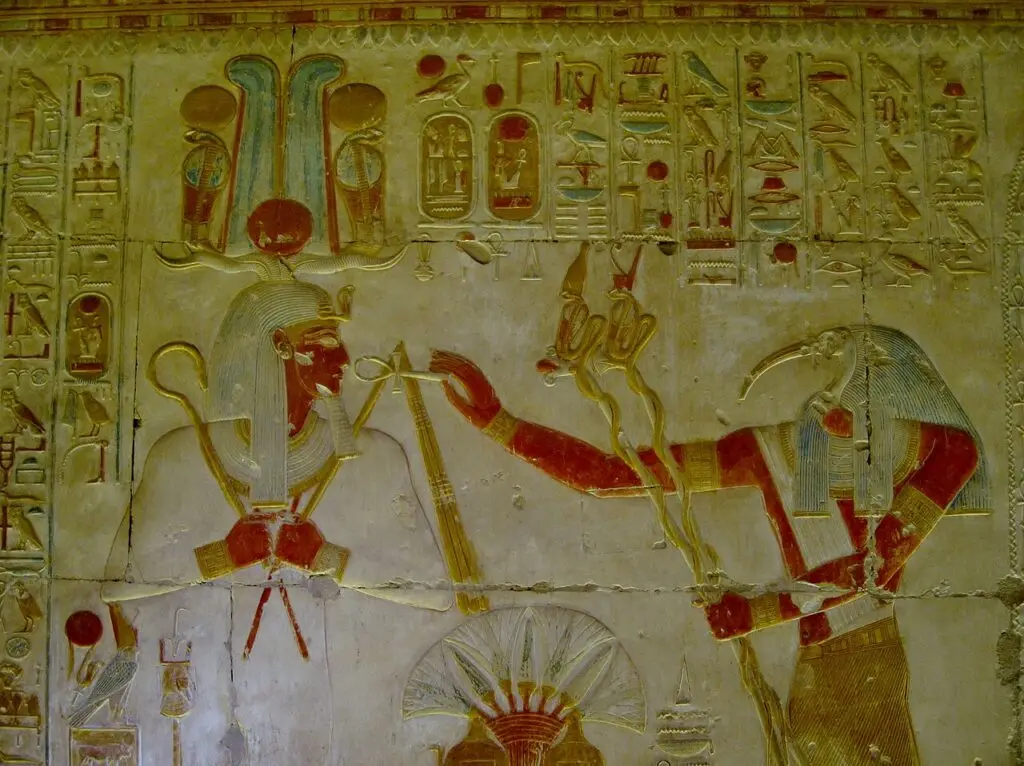
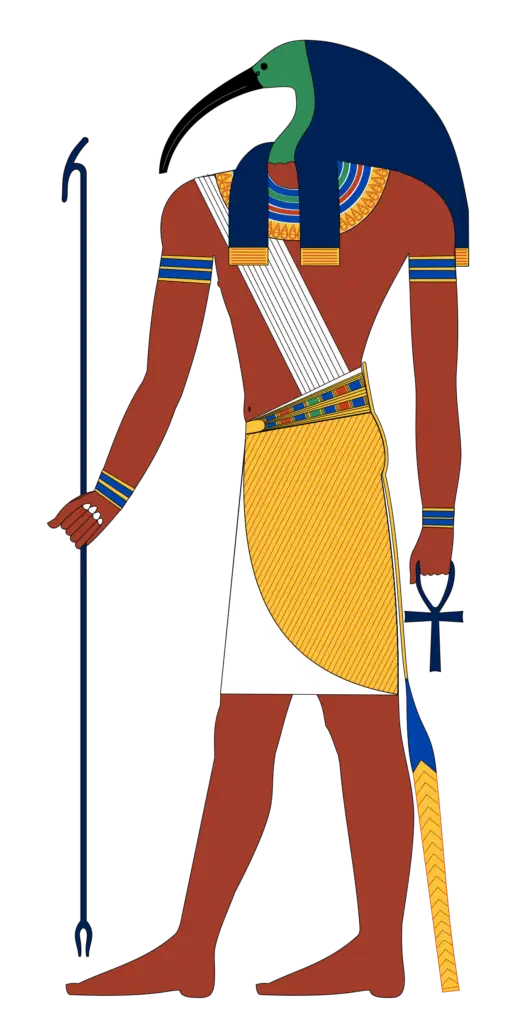
Every scribe in ancient Egypt had a patron, and he had the head of a bird. Thoth, the ibis-headed god, was believed to have invented writing, measured time by the moon, kept the records of the gods and written down the verdict when a dead person’s heart was weighed. If an Egyptian could read, count or calculate, Thoth was the god behind it.
He was also one of the most popular gods of Egypt’s later centuries. Pilgrims paid for millions of mummified ibises and baboons to be buried in his honor, and the Greeks who settled in Egypt were so impressed that they merged him with their own messenger god, Hermes. Here is who Thoth was, what he did, and why his name still turns up in modern books on magic.
Thoth at a Glance
- Egyptian name: Djehuty. “Thoth” is the Greek form.
- God of: writing, knowledge, the moon, time-keeping, mathematics, magic and judgement.
- Appearance: a man with the head of an ibis, or a baboon. Often wears a moon disc and crescent.
- Sacred animals: the sacred ibis and the hamadryas baboon.
- Main cult center: Khmunu, called Hermopolis by the Greeks (modern el-Ashmunein) in Middle Egypt.
- Female counterpart: Seshat, goddess of writing and measurement. Some texts call Ma’at his wife.
- Greek equivalent: Hermes, later “Hermes Trismegistus”, thrice-great Hermes.
Who Was Thoth?
Thoth was the god of knowledge in all its forms. Egyptians credited him with inventing hieroglyphs and the languages of the world, and with teaching people mathematics, astronomy and medicine. That made him the natural patron of scribes, the small, educated class who ran Egypt’s temples, tax offices and royal administration. Scribes kept statues of him near their work, and some of the finest statues of Egyptian officials show a scribe sitting cross-legged with a baboon of Thoth perched above him.
He was also the gods’ own secretary. In myths he acts as messenger, adviser and record-keeper for the sun god Ra, and he is often shown standing beside the sun god’s boat. Because he knew the right words for every situation, he was a master of magic too: Egyptian magic was largely about speaking the correct spell, and nobody knew more spells than the god who invented writing.
His name was important enough that kings adopted it. Thutmose, the name of four New Kingdom pharaohs, means “born of Thoth”.
Why Thoth Has the Head of an Ibis (and Sometimes Is a Baboon)
Thoth appears in two forms, and Egyptians saw no contradiction between them. Usually he is a man with the long, curved beak of a sacred ibis, a wading bird that once lived along the Nile. The ibis’s probing beak may have suggested a scribe’s reed pen, and the bird was closely tied to the moon. The sacred ibis no longer breeds in Egypt, but in ancient times it was everywhere. You can read more about it in our guide to the sacred birds of ancient Egypt.
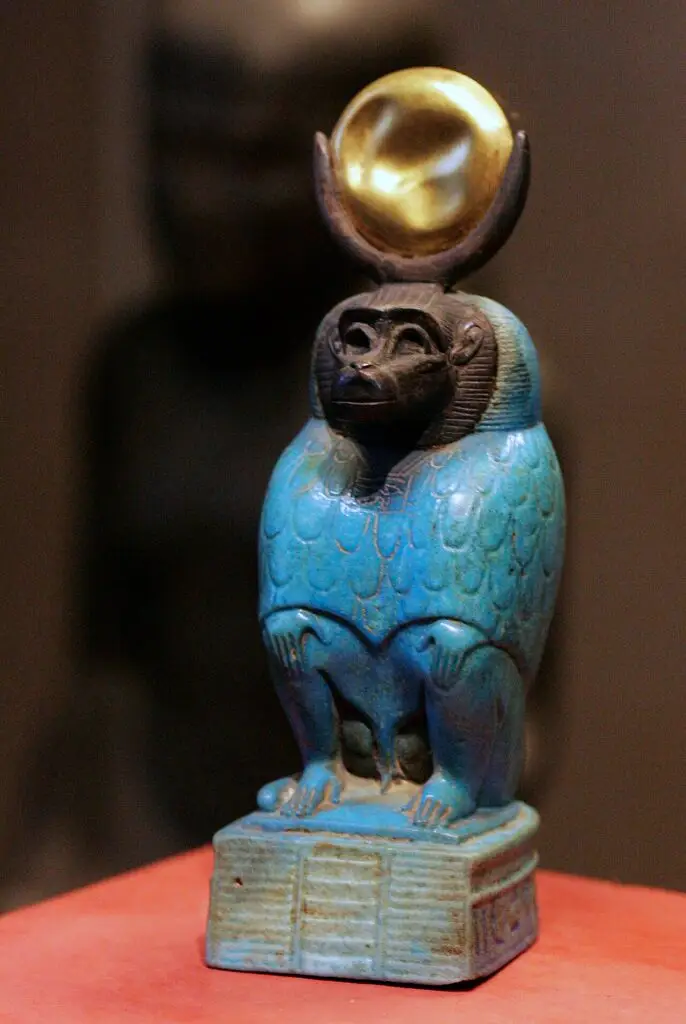
His other form is the hamadryas baboon. Baboons call out noisily at sunrise, which Egyptians read as worship of the sun, and baboon statues often wear the moon disc and crescent. As a baboon, Thoth is shown seated and calm, a picture of patient wisdom.
Thoth, the Moon and the Egyptian Calendar
The moon was Thoth’s clock. Its phases divided the month, so the god of the moon became the god of counting time. Egyptians called him the “reckoner of years”, and the first month of the Egyptian civil calendar was named after him. The month of Thout still opens the Coptic calendar used by Egypt’s Christians today.
One myth, preserved by the Greek writer Plutarch, explains why the Egyptian year had 365 days. The sky goddess Nut had been forbidden to give birth on any day of the 360-day year. Thoth gambled with the moon and won a seventy-second part of its light, enough to make five extra days outside the normal year. On those days Nut gave birth to Osiris, the elder Horus, Set, Isis and Nephthys. Egyptians celebrated those five days at the end of every year as the birthdays of the gods.
Thoth and the Weighing of the Heart
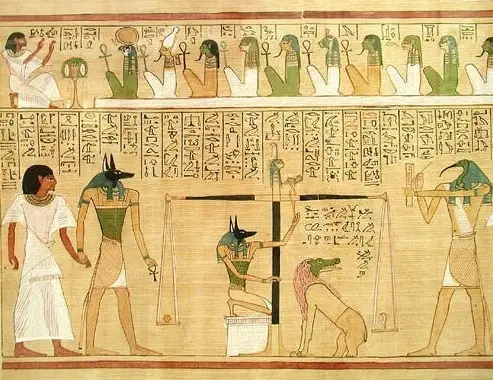
Thoth’s most famous job came after death. In the judgement scene of the Book of the Dead, the heart of the dead person is placed on a scale against the feather of Ma’at, truth. Anubis checks the balance. The monster Ammit waits to swallow the heart if it is heavy with wrongdoing. And Thoth, ibis-headed, stands with his scribe’s palette and writes down the verdict, which he then reports to Osiris and the divine judges.
His role was not to judge but to record accurately, which in Egyptian thinking was just as important. A truthful record was what made the verdict fair.
Thoth in the Myths of Osiris, Isis, Horus and Set
In Egypt’s central myth, Set murders his brother Osiris and fights Osiris’s son Horus for the throne. Thoth is the peacemaker of the story. He protects Isis while she is pregnant with Horus, and when Set tears out Horus’s eye in battle, Thoth heals it. The restored eye became the Eye of Horus, the famous symbol of protection and wholeness. During the long legal contest between Horus and Set, Thoth serves as the gods’ clerk and adviser, and in some versions his counsel helps settle the dispute in Horus’s favor.
This is typical of Thoth. Where other gods fight, he negotiates, writes things down and finds the formula that restores order.
Hermopolis: Thoth’s City
Thoth’s main cult center was Khmunu in Middle Egypt, which the Greeks called Hermopolis, “city of Hermes”. Its priests taught that creation began there, with eight primeval gods, the Ogdoad, rising from the waters of chaos. Thoth was the city’s great god, and its temple was one of the most important in the country.
Near Hermopolis, at Tuna el-Gebel, lie vast underground galleries packed with mummified ibises and baboons, and similar animal cemeteries exist at Saqqara near Memphis. Millions of animals were buried there in the Late and Ptolemaic periods, each mummy bought by a pilgrim as an offering to the god. Our guide to ancient Egyptian mummification explains how the process worked.

The Book of Thoth
Egyptian storytellers loved the idea of a secret book written by Thoth himself. In a demotic tale about Prince Setne Khamwas, the hero hunts down the Book of Thoth in an ancient tomb. Whoever read it would understand the language of animals and see the gods themselves, but the book brings Setne nothing but trouble, and he is glad to give it back. The tale is fiction, written as entertainment, but it shows how Egyptians thought of Thoth’s knowledge: powerful and dangerous in the wrong hands.
The name lived on. In the twentieth century the occultist Aleister Crowley titled his tarot book The Book of Thoth, and the phrase is still popular in modern esoteric writing. None of these modern books has any connection to an ancient Egyptian text.
Thoth and Hermes Trismegistus
When Greeks settled in Egypt after Alexander the Great, they recognized their messenger god Hermes in Thoth, since both were divine messengers linked to cleverness and writing. Egyptian texts sometimes praised Thoth as “great, great, great”, and from that came the Greek title Hermes Trismegistus, “thrice-great Hermes”. In Roman times a group of philosophical and mystical writings, the Hermetica, was attributed to him. Those works are Greek, not ancient Egyptian, but they kept a version of Thoth alive in European thought for centuries.
Thoth and Hieroglyphs
Egyptians called their own writing medu netjer, “the god’s words”, and the god they meant was Thoth. If you want to see how his invention worked, our guide to Egyptian hieroglyphs explains the system, and you can spell your own name with our free hieroglyphics translator.
Frequently Asked Questions About Thoth
What is Thoth the god of?
Thoth was the Egyptian god of writing, knowledge, wisdom, the moon, time-keeping, mathematics and magic. He was the patron of scribes and the recorder of the verdict at the judgement of the dead.
What does the name Thoth mean?
Thoth is the Greek form of the Egyptian name Djehuty. Its meaning is not certain; one common interpretation links it to the ibis, his sacred bird.
Why does Thoth have the head of an ibis?
The ibis was Thoth’s sacred animal, connected with the moon and possibly with the scribe’s reed pen. He could also appear as a baboon.
Is Thoth good or evil?
Thoth was a wholly positive god in Egyptian belief: a helper, healer and keeper of truth. He protected Isis, healed the Eye of Horus and made sure the judgement of the dead was recorded fairly.
Who is Thoth’s wife?
Seshat, goddess of writing and measurement, is often paired with him as a wife or daughter. Some texts name Ma’at, goddess of truth and order, as his consort.
Is Thoth the same as Hermes?
Not originally. The Greeks identified Thoth with their god Hermes after they settled in Egypt, and the combined figure became Hermes Trismegistus.
Thoth is one of dozens of gods in Egypt’s pantheon. Meet the rest in our complete guide to the ancient Egyptian gods, or explore how belief worked in practice in the religion of ancient Egypt.
Sources
- Encyclopaedia Britannica — Thoth
- The Metropolitan Museum of Art — Striding Thoth
- The Metropolitan Museum of Art — Statue of a scribe with a baboon
- World History Encyclopedia — Thoth
- Plutarch, On Isis and Osiris, chapter 12 (the five extra days)