
Beneath the desert at Saqqara there is a catacomb holding roughly eight million animal mummies. Almost all of them are canines, and a striking number are puppies that were only hours or days old when they died.
They were not pets. They were offerings, bought by pilgrims and left for a god who was expected to look after somebody’s dead relative in exchange.
That god was Anubis, and the scale of that catacomb tells you more about his place in Egyptian life than any temple wall does — partly because he never had a monumental temple of his own.
In brief: Anubis was the ancient Egyptian god of embalming and cemeteries, usually shown as a black canine or a man with a canine head. He oversaw mummification and weighed the heart at the judgement of the dead. He was not the ruler of the underworld — that role belonged to Osiris.
What Anubis Actually Did
Anubis is frequently called the Egyptian god of death. That is not quite right, and the distinction matters.
Egyptians did not have a single god of death the way later mythologies do. They divided the work. Osiris ruled the realm of the dead. Anubis handled the practical and dangerous part: preparing the body, guarding the cemetery, and conducting the dead to judgement.
His titles describe the job precisely. He was called Imy-ut, “he who is in the place of embalming,” and Neb-ta-djeser, “lord of the sacred land,” meaning the desert necropolis.
The three roles
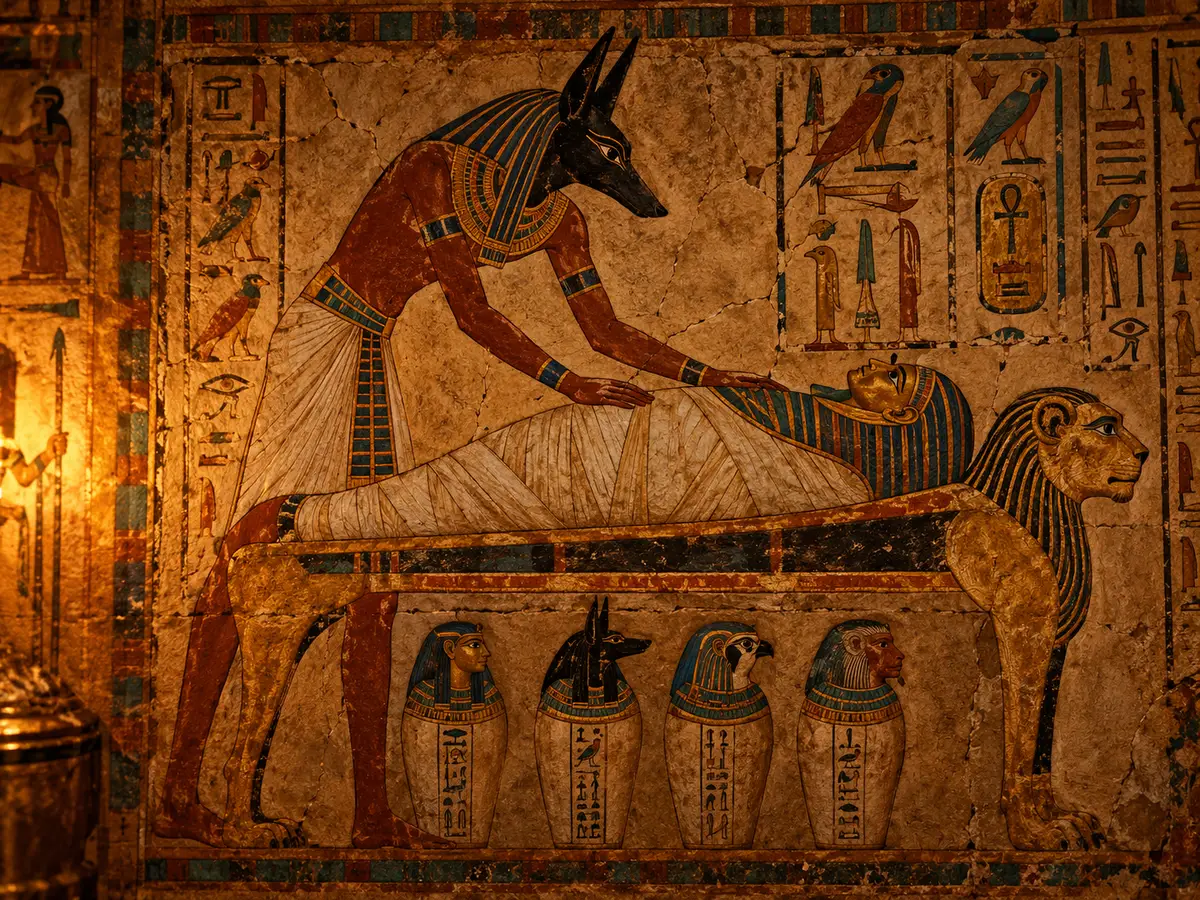
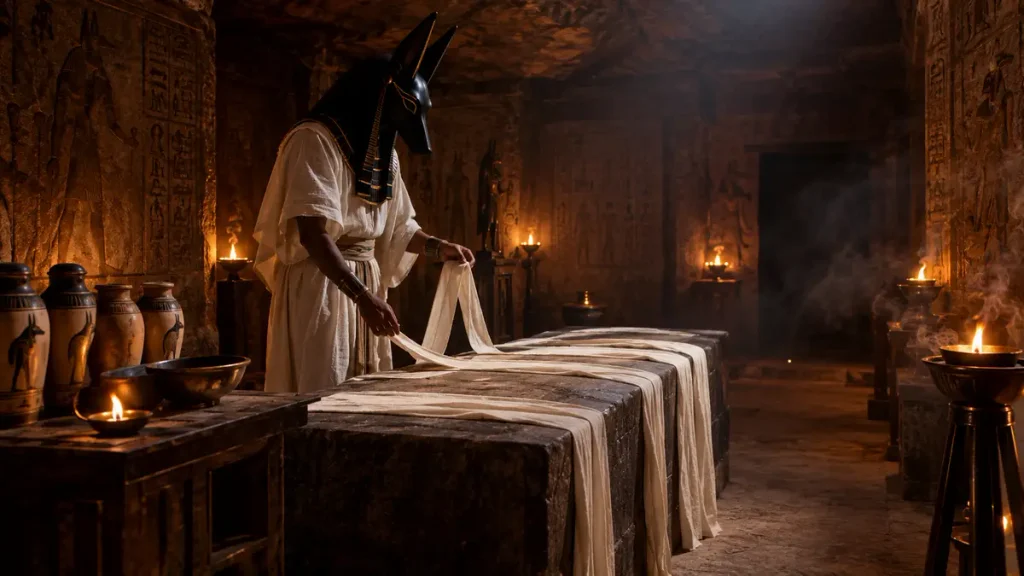
- Embalmer. Egyptian myth credited him with inventing mummification, having preserved the body of Osiris first. Priests conducting an embalming wore canine masks to take on his role.
- Guardian. He watched over tombs and cemeteries, and his image on a tomb entrance functioned as a warning.
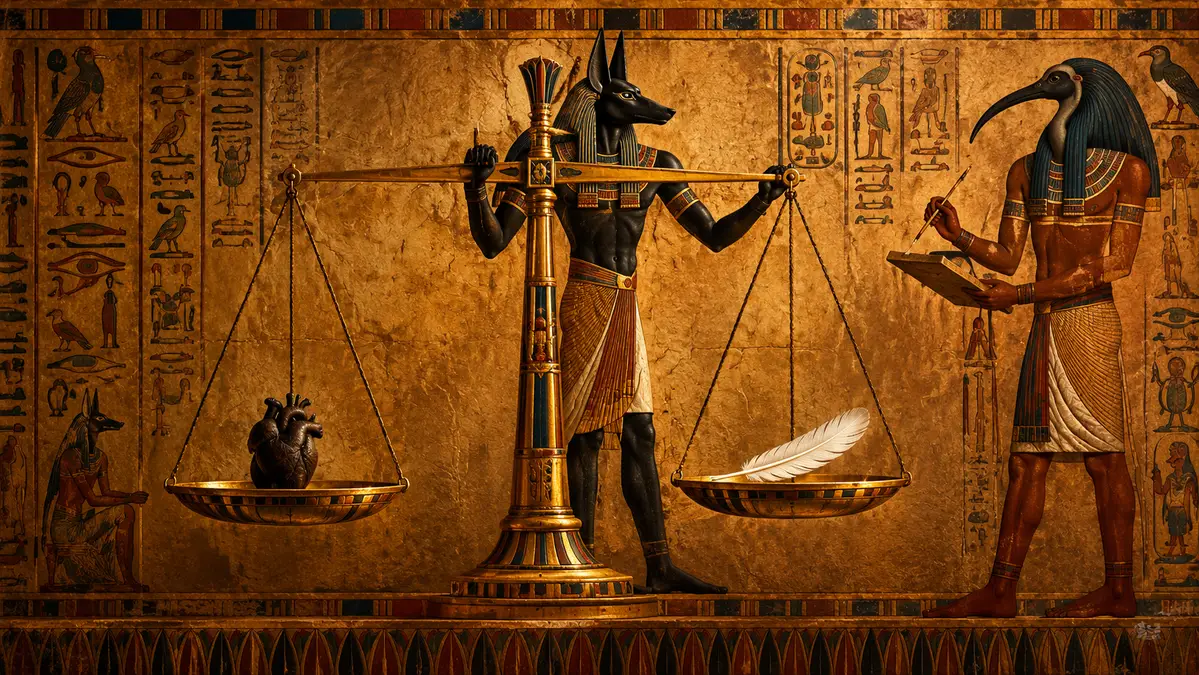
- Judge’s assistant. At the weighing of the heart he adjusted the scales, balancing the dead person’s heart against the feather of Maat.
The process he was believed to have invented is set out in our guide to ancient Egyptian mummification. The organs removed during it were placed under the protection of four other deities, described in our article on Egyptian funerary jars.
Anubis Probably Isn’t a Jackal
Every source calls him jackal-headed. It has been the standard description for two centuries.
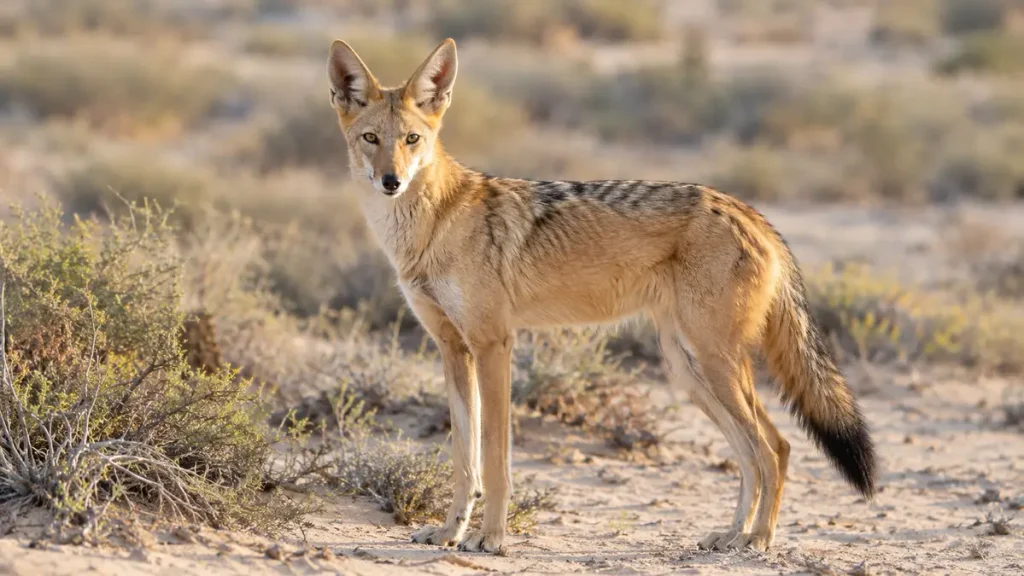
In 2015, genetic work established that the animal long classified as the African golden jackal is not a jackal at all. It is a wolf, and the species was renamed the African golden wolf.
That is the animal most archaeologists associate with Anubis. So the conventional label is, strictly speaking, wrong — though it is entrenched enough that it is unlikely to change.
There is a further complication. Egyptian artists were not doing taxonomy. The Anubis animal has an unnaturally long snout, a slim body and sharply upright ears, and may represent a generalised canine rather than any single species. The mummified animals recovered at Saqqara include jackals, domestic dogs and foxes together.
Why a canine at all?
The reasoning was observational. Wild canines scavenged around desert cemeteries and dug at shallow graves.
Egypt’s response was to turn the threat into the guardian. If the animal that disturbs graves is also the god who protects them, the danger is managed. It is the same logic that made a lioness into a goddess of healing — a pattern covered in our guide to the ancient Egyptian gods.
The black colour is not fur
Anubis is always painted black. Real jackals and golden wolves are sandy brown.
Black in Egyptian art meant the fertile silt the Nile deposited each year — the colour of soil that produced crops. It signalled regeneration, not death or darkness. Osiris is shown black or green for the same reason.
The Dog Catacombs at Saqqara
The most revealing evidence about the cult of Anubis is not textual. It is a hole in the ground.
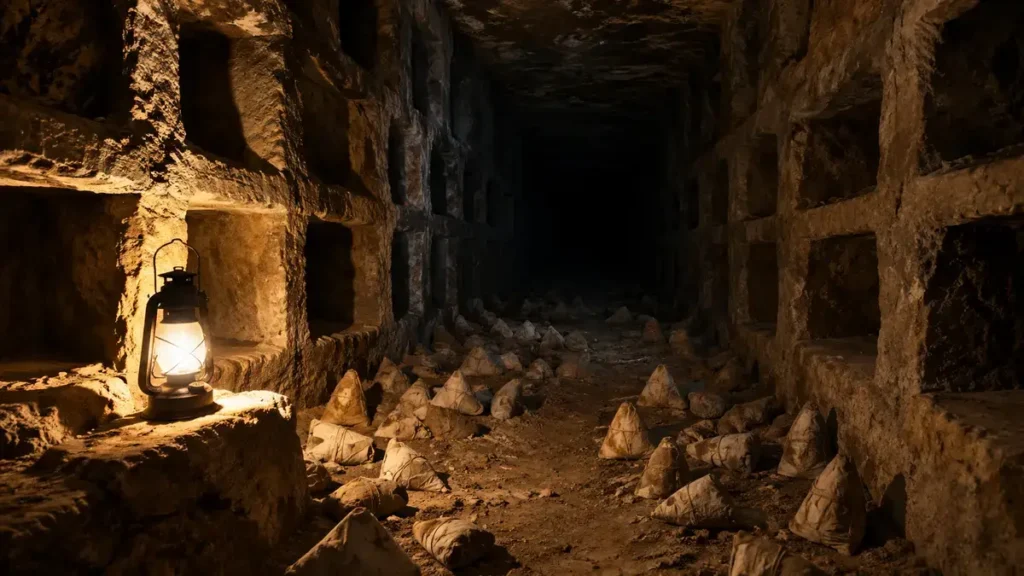
A team from Cardiff University led by Paul Nicholson, working with Salima Ikram of the American University in Cairo and Steve Mills, produced the first modern survey of the catacomb north-east of the Step Pyramid at Saqqara. The only previous plan dated to 1897 and turned out to contain major errors.
Their estimate: roughly eight million animal mummies, overwhelmingly canine, packed into galleries beneath the desert.
Where the animals came from
This is the uncomfortable part, and it is worth stating plainly.
Many of the mummified dogs were only hours or days old. Nicholson has concluded that these were bred for the cult — farmed, in his description — to supply pilgrims who wanted an offering to leave for Anubis.
Older animals received more careful burials and may have lived at the temple itself. But the bulk of the catacomb represents an industry, not a series of individual acts of devotion.
The Cardiff project also found that this was a working settlement — a permanent community of priests, breeders and craftsmen supported by the animal cult.
Why it happened when it did
The animal cults peaked late, roughly between 747 and 30 BC — long after Egypt’s great pyramid-building age.
The researchers suggest a reason beyond piety. This was a period of repeated foreign rule and heavy Mediterranean contact. Animal cults were distinctively Egyptian, and participating in them may have functioned as an assertion of national identity as much as an act of worship.
A 2025 Discovery at Athribis
Research published in 2025 by the Egyptologist Stefan Baumann examined a rock-cut complex in the mountain necropolis at Athribis in Upper Egypt.
The site’s known feature was a temple to the Greek healing god Asclepius. Baumann’s work established that it is not an isolated structure — it sits within a larger complex that includes a walled forecourt and a rock-cut sanctuary dedicated to Anubis.
Inside the complex is a chamber containing a stone bench with traces of mummification resin and linen still on it. This was a working embalming room.
Two things make it interesting. It gives a rare physical example of an Anubis sanctuary attached directly to a mummification facility, which is exactly the pairing his titles imply. And it shows Greek and Egyptian cults sharing ritual space — Asclepius was accompanied by a dog, and the association appears to have been enough to link the two.
He Was Demoted
In the earliest dynasties, Anubis appears to have outranked Osiris. His name is present in First Dynasty mastaba tombs, and for a period he was the principal funerary god of Egypt.
That changed. As the cult of Osiris expanded through the Middle Kingdom, Osiris took over as ruler of the dead and Anubis was reassigned — no longer the authority, but the one who performs the work.
Egyptian religion handled this without contradiction, as it handled most things. The myth was simply adjusted: Anubis had embalmed Osiris, which made him Osiris’s servant and explained the new hierarchy.
He kept his function and lost his rank. It is a very Egyptian solution.
Hermanubis
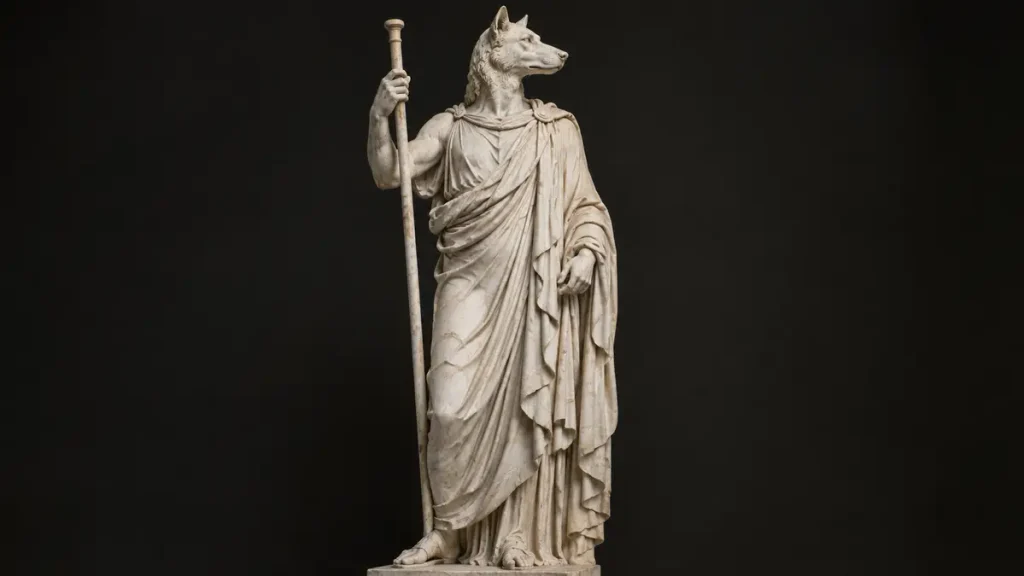
Under Greek rule he changed again. The Greeks identified Anubis with Hermes, who guided souls to the underworld, and produced a composite deity — Hermanubis, shown in Greek dress with a canine head.
The cult spread beyond Egypt and survived into the Roman period.
What We Know and What We Don’t
Established by evidence
- Anubis was worshipped from Egypt’s earliest dynasties onward
- His domain was embalming, cemeteries and the judgement of the dead
- He had no monumental temple; his cult centres were necropolises
- Millions of canine mummies were left as votive offerings at Saqqara
- Many of those animals were bred specifically to be offerings
- He was outranked by Osiris from the Middle Kingdom onward
- The Greeks merged him with Hermes as Hermanubis
Still unresolved
- Which canine species the Anubis animal represents, if any single one
- Whether the Saqqara catacomb extends further than surveyed
- How the animals were killed, and whether the process was ritualised
- Why he was displaced by Osiris rather than merged with him
- Whether his early prominence was national or regional
Frequently Asked Questions
What was Anubis the god of?
Embalming, cemeteries and the passage of the dead to judgement. He was not the god of death or ruler of the underworld — that was Osiris. Anubis performed the practical work of preserving and protecting the body.
Is Anubis a jackal or a dog?
Neither, strictly. The animal usually associated with him was reclassified in 2015 as the African golden wolf after genetic study showed it was not a jackal. Egyptian artists may also have depicted a generalised canine rather than one species.
Why is Anubis black?
Black represented the fertile silt left by the Nile flood, and therefore regeneration. It was not the colour of the animal, which is sandy brown. Osiris is shown black or green for the same symbolic reason.
How many dog mummies were found at Saqqara?
A Cardiff University survey estimated roughly eight million animal mummies in the catacomb dedicated to Anubis, the overwhelming majority of them canine. Many were very young animals bred to be sold as votive offerings.
Did Anubis have a temple?
No monumental temple of the kind built for Amun or Ptah has been found. His cult operated in cemeteries and embalming places. A rock-cut Anubis sanctuary attached to a mummification chamber was documented at Athribis in research published in 2025.
What is the weighing of the heart?
The judgement of the dead, in which the heart was balanced against the feather of Maat, representing truth and cosmic order. Anubis adjusted the scales; Thoth recorded the verdict.
Conclusion
Anubis is usually presented as a figure of menace — the black jackal, the god of death, the guardian of the tomb.
The evidence suggests something more mundane and more interesting. He was the god you called when there was work to be done: a body to preserve, a grave to protect, a heart to weigh. He was demoted and kept working. He was merged with a Greek god and kept working.
And eight million dogs were buried in the sand at Saqqara because ordinary people believed that arrangement was worth paying for.
Sources and Further Reading
- Cardiff University — the Catacombs of Anubis project, directed by Dr Paul Nicholson with Prof. Salima Ikram and Dr Steve Mills.
- Baumann, S. — research on the Anubis sanctuary and mummification workshop at Athribis, published 2025.
- Reporting on the Saqqara survey, including Nicholson’s assessment that many animals were bred for the cult.
- Nicholson, P. T., Ikram, S. and Mills, S., “The catacombs of Anubis at North Saqqara” (2015).