
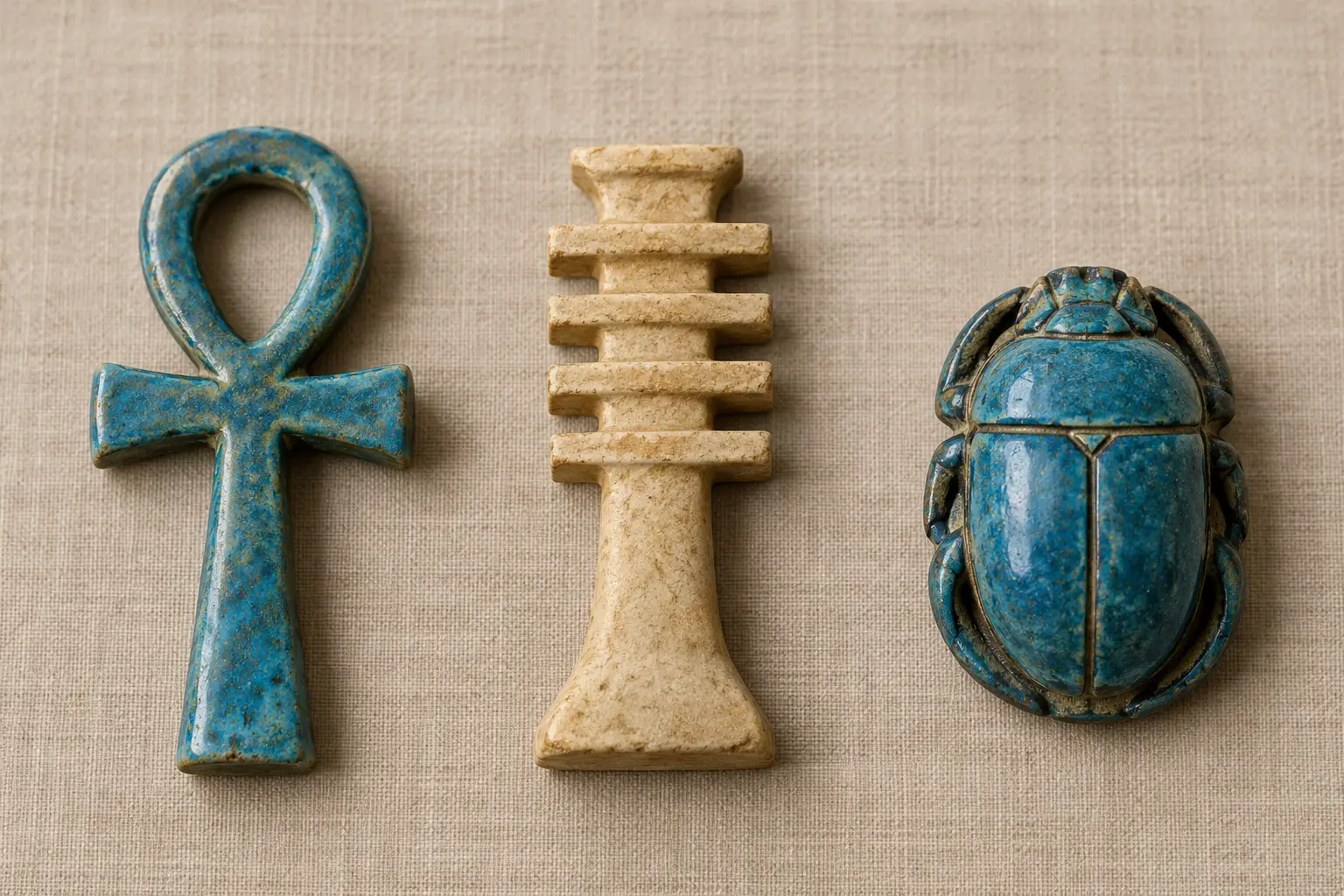
Looking at an ankh, a beetle-shaped amulet, or a symbol on a coffin? The short answer is that ancient Egyptians did not use one universal sign for immortality. Different symbols pointed to life, renewal, protection, stability, or a safe passage through the afterlife—and the object around a symbol helps explain what it was doing.
This guide is for readers who want to identify the most familiar ancient Egyptian symbols without treating every one as a generic “eternal life” sign. Use the quick chart first, then look at placement, inscriptions, and the object’s purpose.
Quick guide: what the symbols usually suggest
| What you see | Common association | Useful clue |
|---|---|---|
| Ankh: loop above a cross-shaped form | Life | Often held or offered by a god in art |
| Djed: pillar with stacked crossbars | Stability and endurance; linked with Osiris | May appear with the ankh or Isis knot |
| Scarab: beetle, often with a flat underside | Becoming, renewal, and rebirth | Read the underside too; it may carry a name or spell |
| Wedjat: stylized eye | Wholeness, healing, or protection | It is the restored Eye of Horus, not simply a “magic eye” |
| Tyet: looped knot or tied cloth shape | Protection associated with Isis | Its meaning is not identical to the ankh |
| Shen: rope loop with a short line at the base | Enclosure and what the sun encircles | It can appear in protective or royal imagery |
A better way to read an Egyptian symbol
Start with three questions: What is the object? Where was the sign placed? Are there words or other signs beside it? A pendant worn in life, a sign painted on a coffin, and a spell-bearing amulet placed on a mummy could use a familiar image for different purposes. Archaeologists and museum curators interpret the whole object, not just its outline.
That context matters because amulets were not only funerary. People wore or carried some in daily life, while others were placed on the body or between mummy wrappings. The Metropolitan Museum of Art notes that amulets could have more than one meaning and function; their material, shape, placement, and inscriptions all help with interpretation. Read the Met’s overview of ancient Egyptian amulets.
The ankh: “life” is the direct meaning
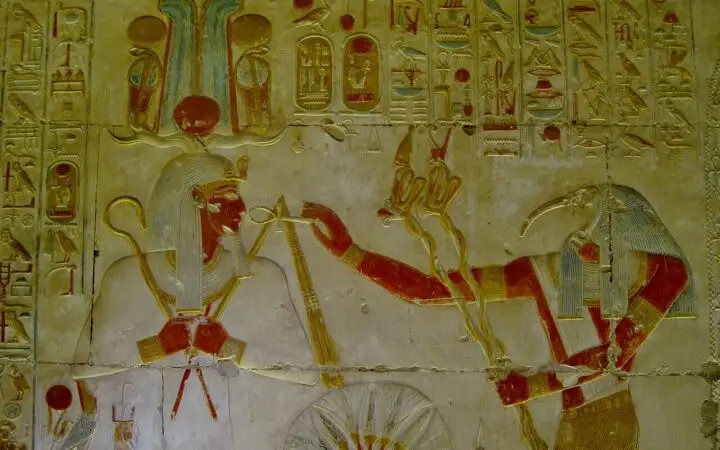
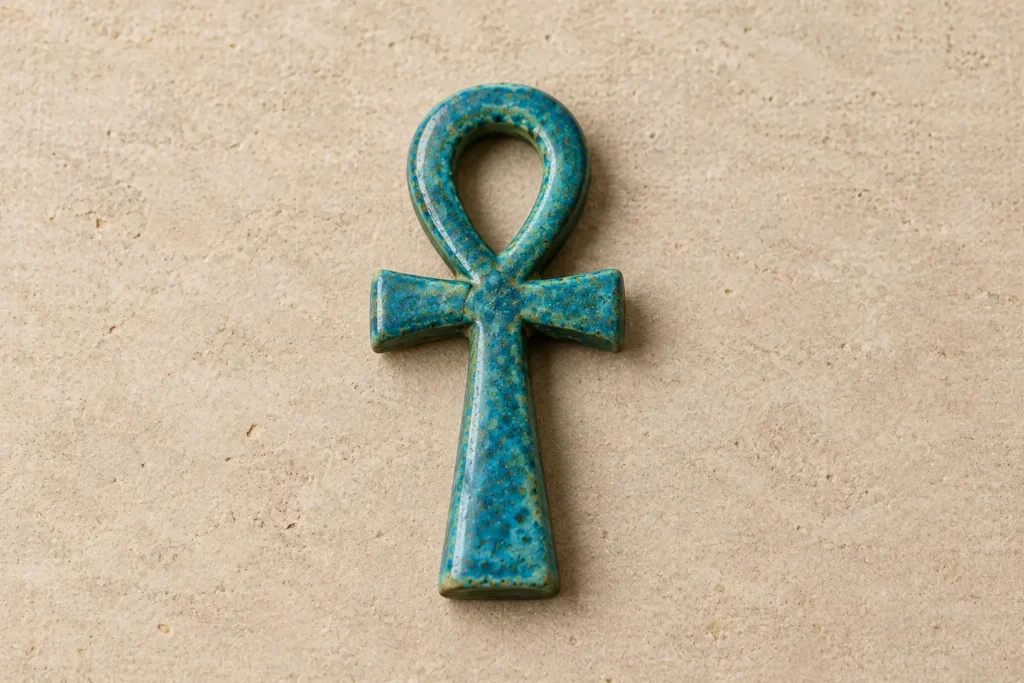
The ankh is the clearest answer when someone asks for an Egyptian sign meaning life. It appears in hieroglyphic writing and in images where gods hold or offer it. Because Egyptian beliefs included life after death, the ankh also fits funerary scenes. But its direct meaning is “life” or “to live”—not a one-word translation of every idea about immortality.
The Met’s educational guide lists the ankh as the sign for “life” and “to live.” If you see an ankh in a museum image, check who holds it and to whom it is offered; that scene can tell you more than the shape alone. See the Met’s guide to Egyptian art and hieroglyphs.
The djed: stability, not a promise of endless life
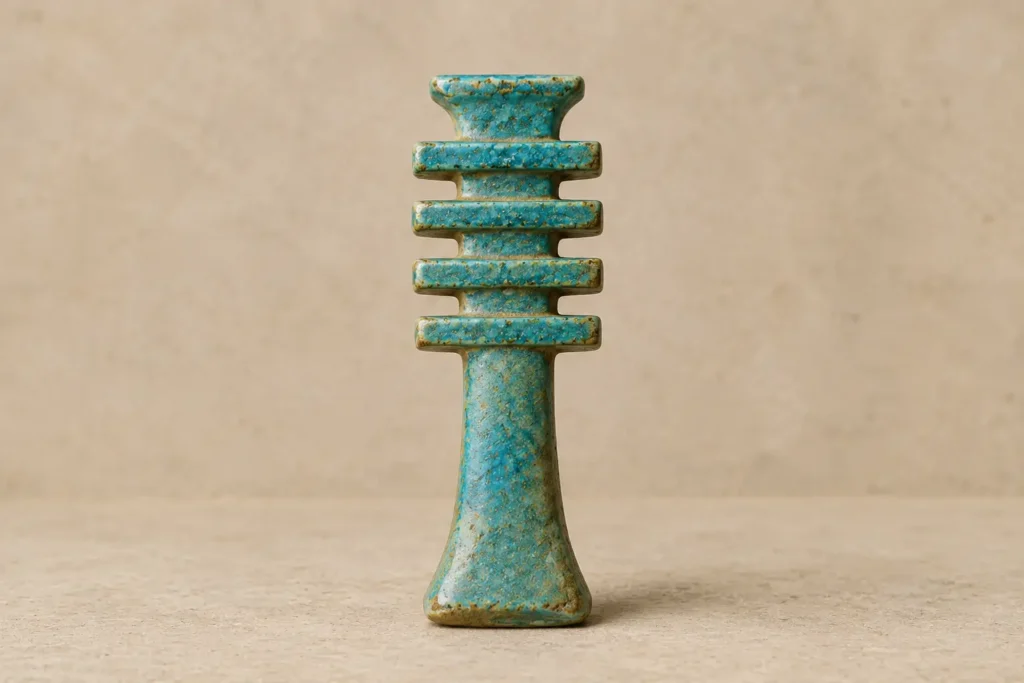
The djed looks like a short column with several bars near its top. It is associated with stability and endurance and became closely connected with Osiris. A djed on a funerary object can therefore express a wish for lasting stability for the deceased. It is more precise to describe the djed that way than to label it simply “the immortality symbol.”
Look for combinations. A Middle Kingdom scarab in the Met’s collection carries an ankh (life) beside a djed (endurance), along with other signs. The museum describes the combination as conveying protective support. That real object is a useful reminder: signs could work together, and the meaning of the group may be richer than a symbol list suggests. View the Met’s scarab with hieroglyphs.
The scarab: look underneath before you interpret it
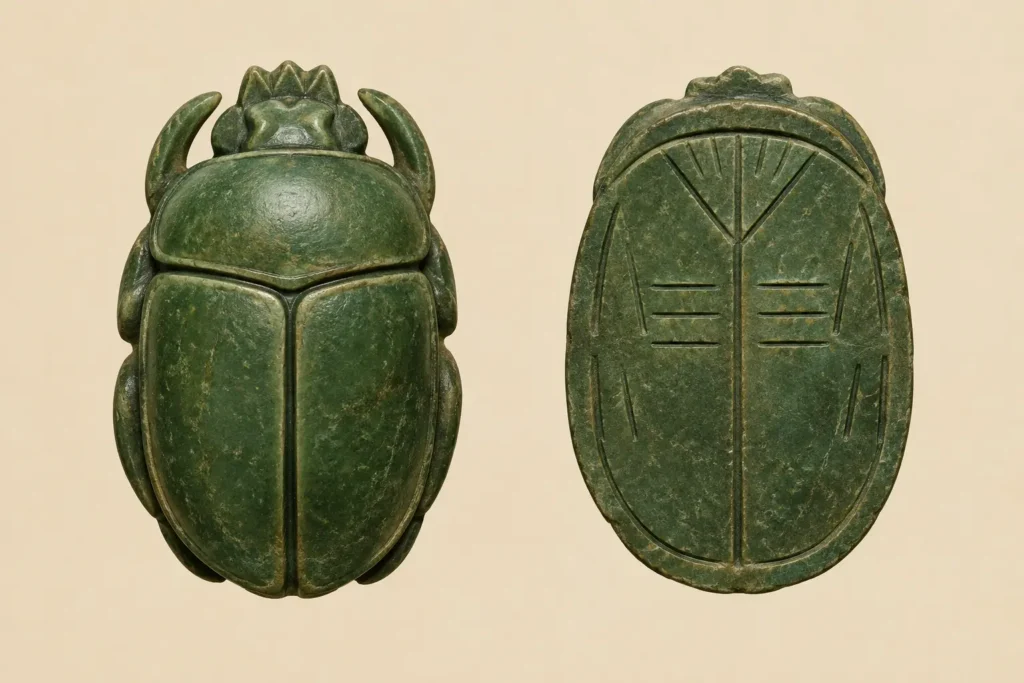
The scarab beetle was associated with becoming and renewal. The Met’s guide explains that the hieroglyph kheper, represented by a scarab, can mean “to become” or “to evolve,” and that scarabs served as amulets in life and death. Some have a decorated top and an inscribed flat base. That underside can hold a name, a protective formula, or a funerary text—details that change what a particular scarab tells us.
A heart scarab is a particularly clear example. It was placed on the chest of a mummy, and its underside could carry Spell 30B from the Book of the Dead. The spell asks the heart not to speak against its owner during judgment. In other words, this object was tied to a specific concern about the afterlife, not just a general wish to live forever. The Met’s heart scarab with a human head explains the role of the heart and the spell. The British Museum also documents a New Kingdom heart scarab made for a woman named Iuy, with the spell and a combination of djed, ankh, and Isis-knot signs on its base. See the British Museum’s heart scarab of Iuy.
The Eye of Horus and the Isis knot: protection and restoration
The wedjat, commonly called the Eye of Horus, refers to the eye of Horus after it was restored. It could serve as a protective amulet and evoke healing or restored wholeness. Its connection with renewal helps explain why it appears in funerary settings, but “immortality symbol” misses the more specific idea.
The tyet, or Isis knot, is another protective sign. It is often paired with the djed, but it does not simply mean the same thing as an ankh. The British Museum describes an example where the Isis knot appears alongside the djed and sign for life. On that object, the combination—and its placement on a heart scarab—provides important context.
The shen ring: what is enclosed?
The shen sign is a loop of rope. The Met’s guide says it represents what the sun encircles. It can suggest enclosure and protection, and it appears in royal imagery. If you see a loop around a royal name, notice that framing: the sign’s association with enclosing or surrounding helps explain why it fits there. It should not be confused with a general word for “eternity.”
A three-step checklist for reading museum objects
- Identify the object: Is it jewelry, a scarab, a coffin, a statue, or something placed with a mummy?
- Check its location: Was it worn, held by a deity, painted on a tomb, or placed on the body?
- Read the neighbors: Look for inscriptions and other signs. An ankh beside a djed can communicate a combination of ideas, while a scarab with a funerary spell has a more specific role.
These clues help answer the common question, “What is the Egyptian symbol of immortality?” The most accurate answer is that there was no single universal sign. The ankh means life; the djed points to stability; the scarab is linked with renewal; and other symbols can express protection or restoration. The object’s setting tells you how those ideas were being used.
For more background, explore our guides to ancient Egyptian religion, the Book of the Dead, and funerary jars and burial practices.
Frequently asked questions
What is the Egyptian symbol for immortality?
There is no single symbol that covers every Egyptian idea about life after death. The ankh means life, while the djed, scarab, wedjat, tyet, and shen are associated with ideas such as endurance, renewal, healing, or protection.
Does the ankh mean eternal life?
The ankh directly means life or to live. Its appearance in religious and funerary art connects it with continued life, but “life” is the clearest translation.
Why did Egyptians put scarabs on mummies?
Some scarabs were funerary amulets. Heart scarabs, often inscribed with Spell 30B, were associated with the heart’s role in judgment after death.
Were these symbols used only after death?
No. Amulets could be used by the living as well as the dead. Their purpose depended on the specific object, how it was used, and the words or images that accompanied it.
Sources and object records
- The Metropolitan Museum of Art, The Art of Ancient Egypt: A Resource for Educators
- The Metropolitan Museum of Art, “Ancient Egyptian Amulets”
- The Metropolitan Museum of Art, “Scarab with Hieroglyphs”
- The Metropolitan Museum of Art, “Heart Scarab with a Human Head”
- The British Museum, “Heart-scarab of Iuy”