
In the New Kingdom you could walk into a workshop and buy a Book of the Dead ready-made. The scribe had already written the spells and painted the illustrations. All that remained was a blank space where your name would go.
Surviving copies still carry those gaps — some filled in a visibly different hand, some never filled at all.
That detail undercuts most of what people assume about this text. It was not a sacred scripture. It was a practical product, sold at different price points, and what you got depended on what you could afford.
In brief: The Book of the Dead was a collection of around 200 funerary spells written on papyrus and buried with the dead in ancient Egypt. It was not a single fixed book — every copy was a different selection. Its Egyptian name means “Book of Coming Forth by Day,” and it was meant to help the dead reach the afterlife, not to describe hell.
The Name Is Wrong
Egyptians never called it the Book of the Dead. That title comes from the German Egyptologist Karl Richard Lepsius, who published a version in 1842 under the label Todtenbuch.
The Egyptian title was peret em heru — “coming forth by day.”
The difference is not cosmetic. Lepsius’s name suggests a book about death. The Egyptian name describes the goal: the dead person emerging into daylight, able to move freely, eat, drink, and travel with the sun.
The underworld the text describes is not a place of punishment. It is a passage — dangerous, full of gates and guardians and things that can go wrong, but something you pass through rather than end up in.
It Isn’t a Book
Around 192 distinct spells are known. No single surviving copy contains all of them, and no two copies are identical.
There was no fixed order, no canonical version, no official edition. A Book of the Dead is a selection — assembled for one person, out of a shared pool of material, according to what they wanted and what they paid.
Some are a few sheets. The Greenfield Papyrus in the British Museum runs to roughly 37 metres.
What the spells actually do
They are practical instructions for specific problems.
- How to answer a gate-keeper who demands to know your name
- How to avoid walking upside down
- How to stop your heart testifying against you
- How to turn into a falcon, a lotus, or a heron
- How to make a servant figure do your labour for you
- How to keep your mouth working so you can speak the other spells
The tone is closer to a technical manual than a prayer book. The dangers are specific, and so are the countermeasures.
Where It Came From
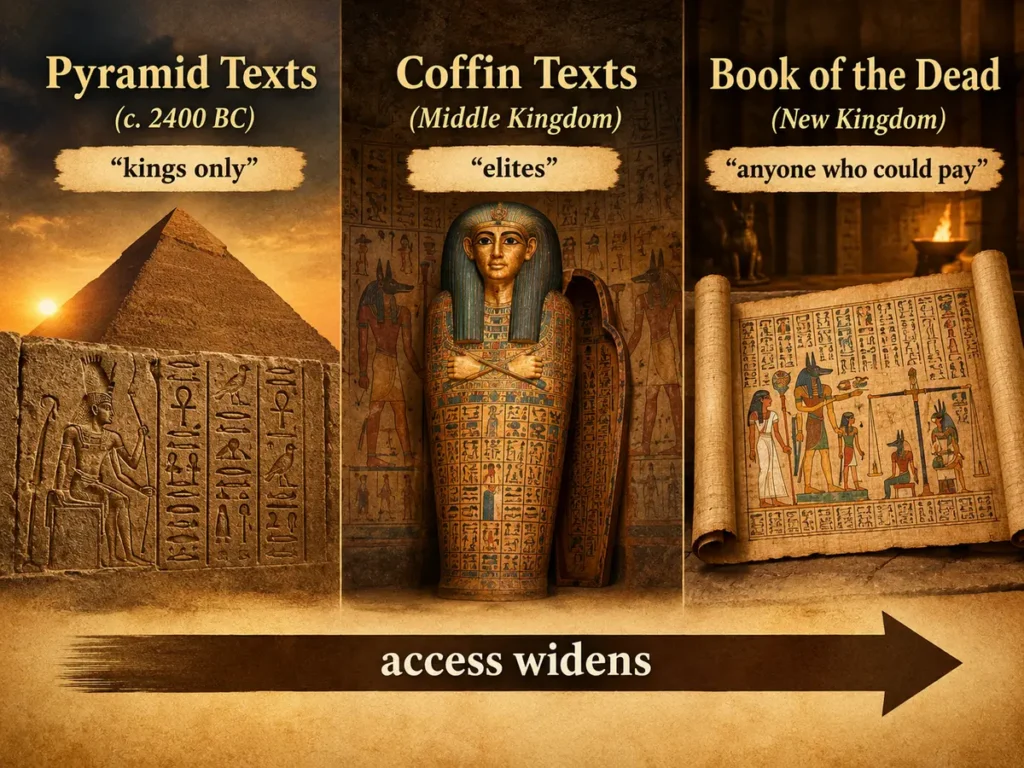
The Book of the Dead is the third stage of something much older, and the sequence tells you a great deal about Egyptian society.
Pyramid Texts — kings only
The earliest funerary spells were carved into the walls of Old Kingdom pyramid burial chambers, from around 2400 BC. They were exclusively royal. A king had an afterlife because he was a king; nobody else was in the text at all.
Coffin Texts — the rules change
After the Old Kingdom collapsed, the spells reappeared painted on the coffins of officials and wealthy private individuals.
This is one of the more striking shifts in Egyptian history. The afterlife stopped being a royal privilege. If you could afford a decorated coffin, you could have the spells that had once been reserved for pharaohs.
Book of the Dead — on papyrus
By the New Kingdom, from about 1550 BC, the material had moved to papyrus scrolls. Papyrus was cheaper than a decorated coffin and easier to produce in quantity, which widened access again.
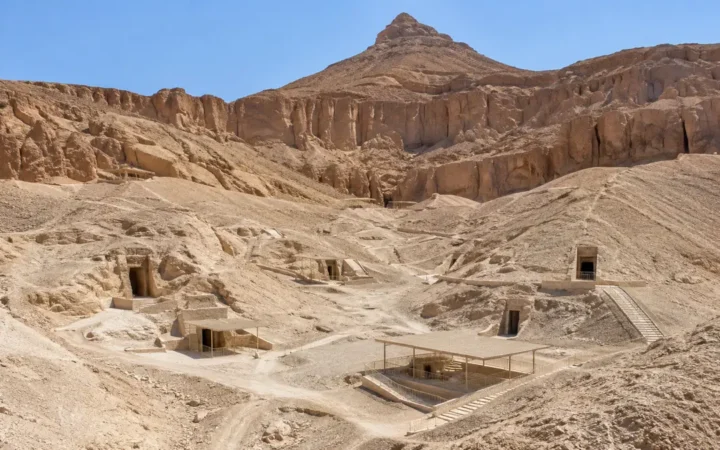
The trajectory across two thousand years runs steadily downward through the social scale: kings, then elites, then anyone with money. The tombs where these scrolls were placed are described in our article on the Valley of the Kings.
The Three Spells That Mattered Most
Spell 125 — the judgement
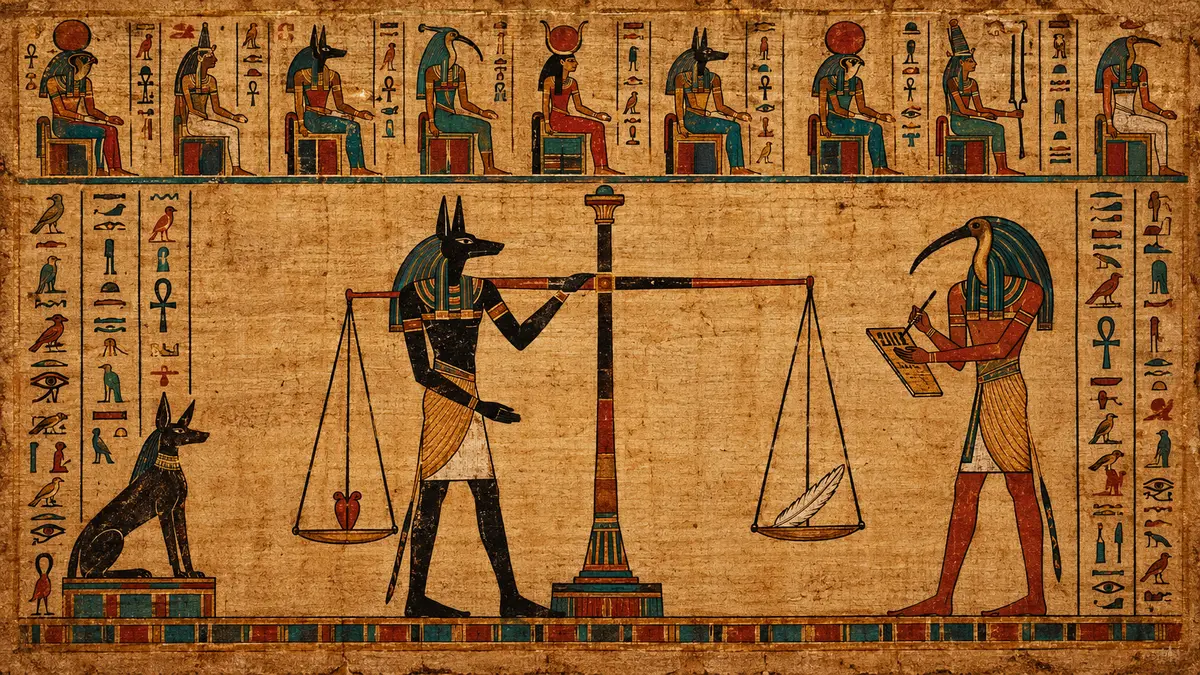
The most famous scene in Egyptian art comes from this spell: the heart weighed against the feather of Maat, with Anubis adjusting the scales and Thoth recording the verdict.
What it contains is a negative confession — a list of around forty offences the dead person declares they did not commit. Not “I was good,” but a specific inventory: I have not stolen, I have not killed, I have not lied about grain measures, I have not polluted the water.
It is a remarkable document of what Egyptians actually considered wrong, and much of it is unglamorous. Cheating on weights. Diverting irrigation. Being loud in a temple.
Spell 30B — silencing the heart
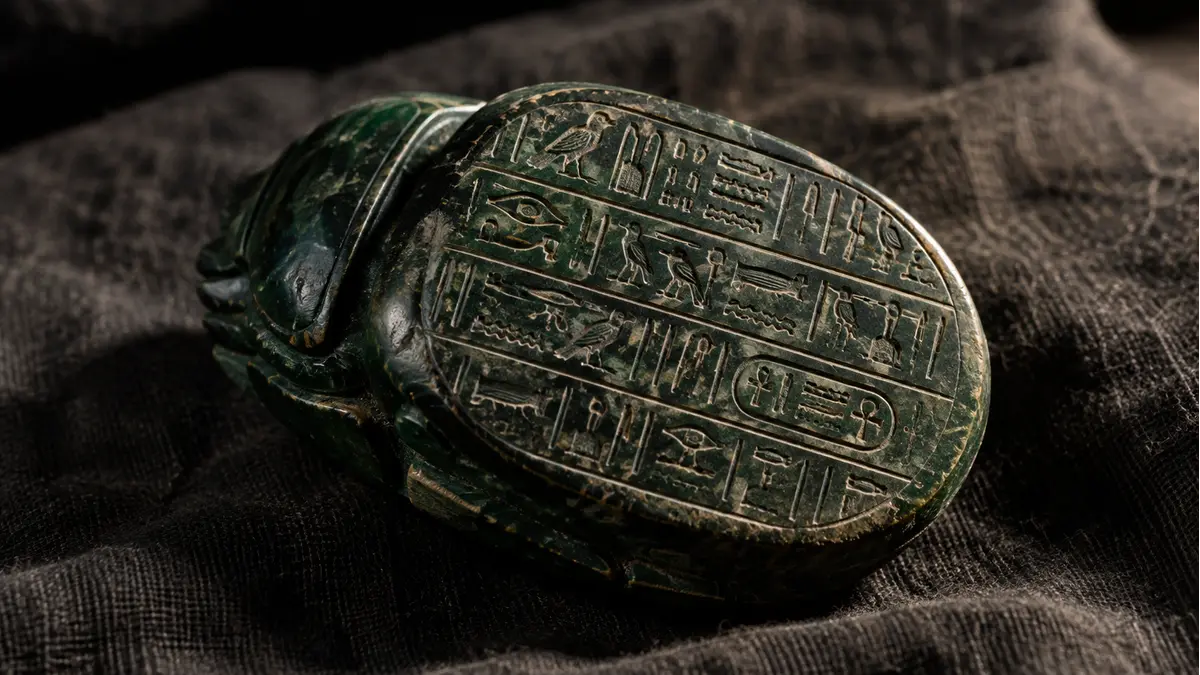
This one is uncomfortable when you notice what it is doing.
Egyptians believed the heart held the record of a person’s life, and that at judgement it could speak. Spell 30B instructs the heart not to testify against its owner — not to stand up as a witness for the prosecution.
It was inscribed on heart scarabs, stone amulets placed over the chest during wrapping. So the negative confession claims innocence, and the amulet underneath it hedges against the claim being checked.
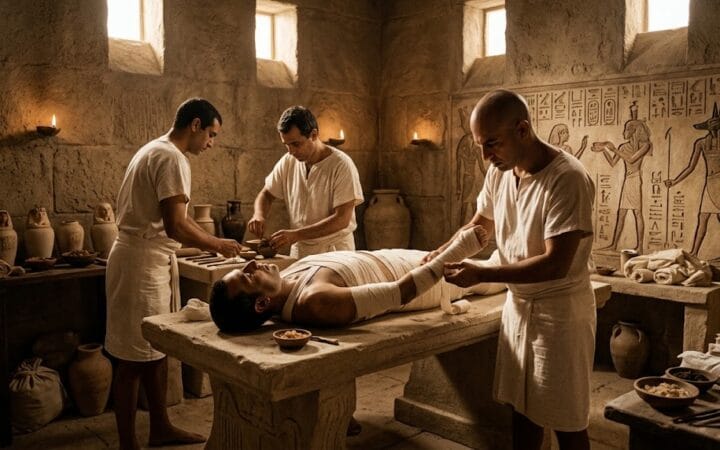
The wrapping stage where these were positioned is covered in our guide to ancient Egyptian mummification.
Spell 6 — getting out of work
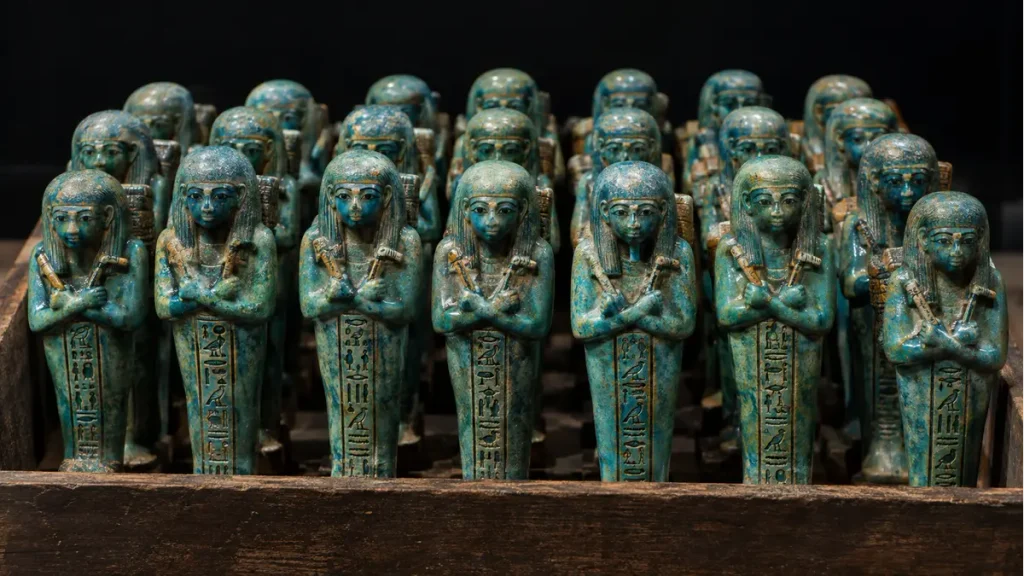
The Egyptian afterlife involved agricultural labour. Fields had to be worked there as here.
Spell 6 activates a shabti — a small mummiform figurine buried with the dead — so that when the dead person is called to work, the figurine answers and goes instead.
Wealthy burials contained 365 shabtis, one for each day of the year, plus overseers to supervise them.
How You Actually Got One
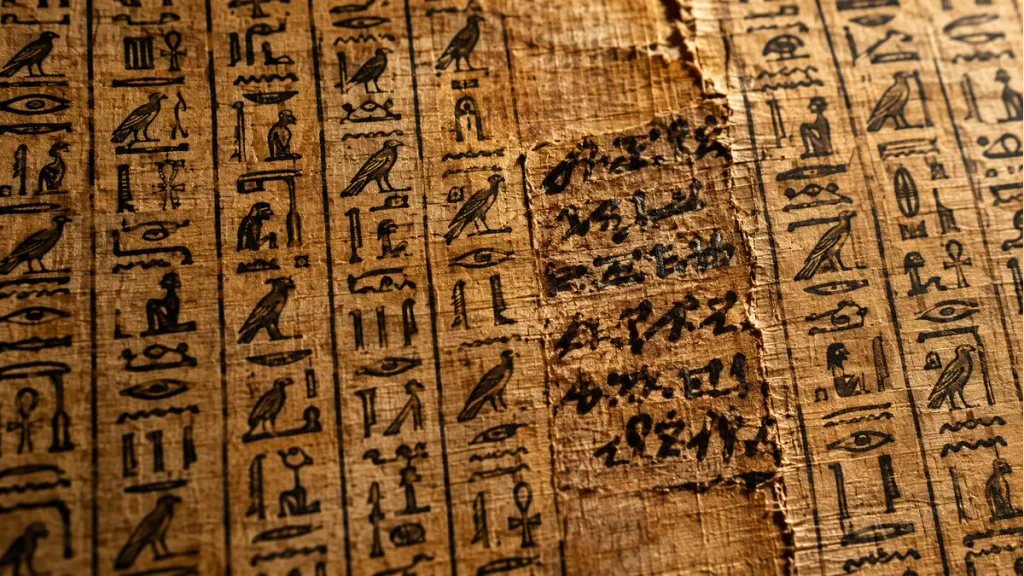
Two routes, and the difference is visible in the surviving copies.
Commissioned. A scribe wrote it for you personally, with your name and titles worked into the text throughout, and illustrations showing you and your family. Expensive.
Off the shelf. Pre-written with blank spaces at each point the name should appear, filled in when sold. Cheaper, faster, and much more common.
The evidence for the second is unambiguous. Some surviving papyri have names inserted in a cruder hand than the surrounding text. Some have the wrong name in one place and the right one elsewhere. Some have gaps that were never filled — the scroll went into the burial anonymous.
Quality varied accordingly. The Papyrus of Ani in the British Museum, made around 1250 BC for a Theban scribe, is a masterwork. Others are hasty, with muddled spells and illustrations that do not match the text beside them.
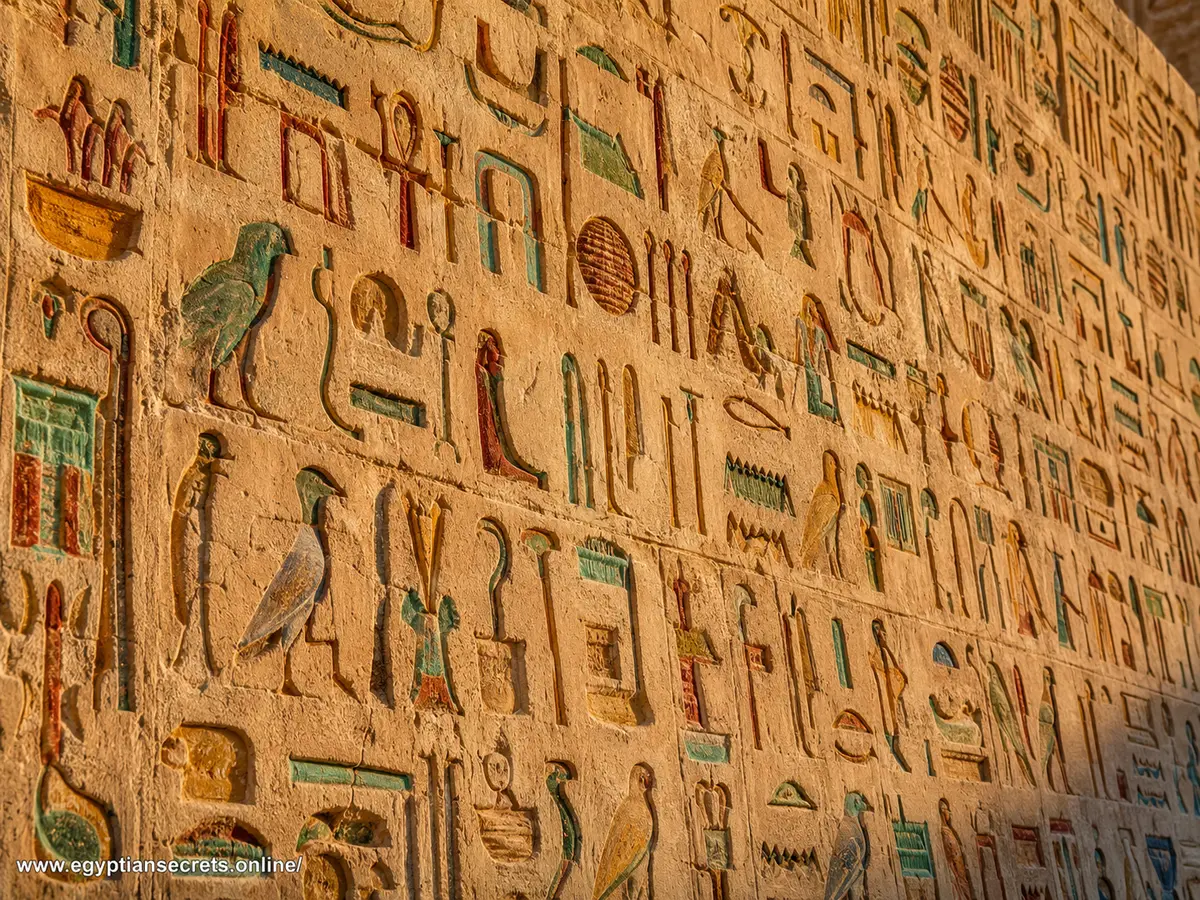
The scrolls were written in hieroglyphs or in hieratic, the cursive script scribes used for everyday work.
The Waziri Papyrus
In 2022, a team from Egypt’s Ministry of Tourism and Antiquities excavating at Saqqara, south of the Step Pyramid of Djoser, opened one of roughly 250 wooden caskets and found a papyrus scroll inside.
Initial measurement put it at nine metres. After restoration at the Egyptian Museum in Tahrir, the full length turned out to be 16 metres — around 52 feet.
It was the first complete Book of the Dead papyrus recovered at Saqqara in a century. It was announced on Egyptian Archaeologists’ Day in January 2023 by Mostafa Waziri, then Secretary General of the Supreme Council of Antiquities, and named the Waziri Papyrus after him — the first such scroll discovered by an Egyptian team and named for an Egyptian.
It dates to the Ptolemaic period, which makes it well over two thousand years old and considerably later than the classic New Kingdom copies.
Why a late copy matters
Fragments of funerary papyri turn up regularly. Near-complete scrolls in legible condition are rare, and that is what makes this one useful.
A full scroll shows which spells were chosen and in what order — information a fragment cannot give. Reported details include spell forms and imagery that do not match the standard pattern, which pushes against the assumption that later copies were simply repetitive.
Translation work is ongoing, moving from hieratic through hieroglyphic transcription. Until it is published in full, what it finally tells us remains open.
What We Know and What We Don’t
Established by evidence
- Around 192 distinct spells are attested; no copy contains all of them
- The Egyptian title means “coming forth by day,” not “book of the dead”
- It developed from the Pyramid Texts and Coffin Texts
- Access widened over time from kings to elites to anyone who could pay
- Pre-written copies with blank name spaces were sold ready-made
- Spell 125 contains the negative confession and the weighing of the heart
- A 16-metre scroll was recovered at Saqqara in 2022 and named the Waziri Papyrus
Still unresolved
- How buyers chose which spells to include, and who advised them
- Whether the spells were recited aloud at the funeral or simply buried
- How much ordinary Egyptians understood of texts many could not read
- What the Waziri Papyrus contains in full, pending publication
- Why certain spells fell out of use while others persisted for a thousand years
Frequently Asked Questions
What is the Egyptian Book of the Dead?
A collection of funerary spells written on papyrus and buried with the dead to help them reach the afterlife. It was not a fixed book — each copy was an individual selection from a shared pool of roughly 192 known spells.
What did Egyptians call the Book of the Dead?
Peret em heru, meaning “coming forth by day.” The modern title comes from the German Egyptologist Karl Richard Lepsius, who published a version in 1842 as the Todtenbuch.
How many spells are in the Book of the Dead?
Around 192 spells are known across all surviving copies, but no individual scroll contains them all. Some copies hold only a handful; the Greenfield Papyrus runs to roughly 37 metres.
Could ordinary Egyptians have a Book of the Dead?
Anyone who could afford one. Pre-written scrolls were sold with blank spaces for the buyer’s name, making them far cheaper than commissioned copies. Earlier versions of the same material had been restricted to kings, then to elites.
What is the negative confession?
A list in Spell 125 of around forty offences the dead person declares they have not committed — theft, murder, lying about grain measures, polluting water. It is a declaration of specific innocence rather than a general claim of virtue.
What was found at Saqqara in 2022?
A 16-metre Book of the Dead papyrus inside one of roughly 250 caskets near the Step Pyramid of Djoser. Named the Waziri Papyrus, it dates to the Ptolemaic period and is the first complete example found at the site in a hundred years.
Conclusion
The Book of the Dead is usually treated as Egypt’s sacred text, the equivalent of a scripture. It was not that.
It was equipment. A set of instructions for a journey Egyptians expected to make, sold at a range of prices, customised to budget, and buried in the coffin the way you would pack a map. The spells assume the reader will face specific obstacles and gives them specific things to say.
And the blank name spaces are the honest detail. Eternity was a market, and somebody had already written the text before they knew who would be using it.
Sources and Further Reading
- Live Science — reporting on the 16-metre Saqqara papyrus, including comment from Foy Scalf of the University of Chicago.
- The British Museum — the Papyrus of Ani, the best-known surviving copy.
- Taylor, J. H. (ed.), Journey Through the Afterlife: Ancient Egyptian Book of the Dead (British Museum Press) — the standard accessible treatment.
- Announcement of the Waziri Papyrus by Egypt’s Supreme Council of Antiquities, January 2023.