
The Tomb Everyone’s Still Looking For
In September 2025, National Geographic aired a documentary that made archaeologists sit up straight: Cleopatra’s Final Secret. It followed a team that had just announced a submerged ancient harbor off Egypt’s coast — stone buildings twelve meters underwater, Ptolemaic columns, anchors, and hundreds of coins stamped with one very recognizable face.
Searches for “has Cleopatra’s tomb been found 2026” promptly went through the roof. So here’s the honest answer first: no. As of 2026, Cleopatra’s tomb has not been found. Not in Alexandria. Not under the Temple of Taposiris Magna. Nowhere.
But the search for Cleopatra’s tomb is closer than it’s ever been. A woman most archaeologists once dismissed has spent two decades at a limestone hill forty-five kilometers west of Alexandria — and what she’s found is startling: a 4,265-foot tunnel cut through bedrock, a sunken port, golden-tongued mummies, and 337 coins bearing the queen’s own face.
So where is Cleopatra buried? Why has no one found her? And why does one archaeologist keep digging when everyone told her to stop?
✍️ Write YOUR Name in Real Hieroglyphics
See how the ancient Egyptians would have written your name — free interactive tool.
Try It Now →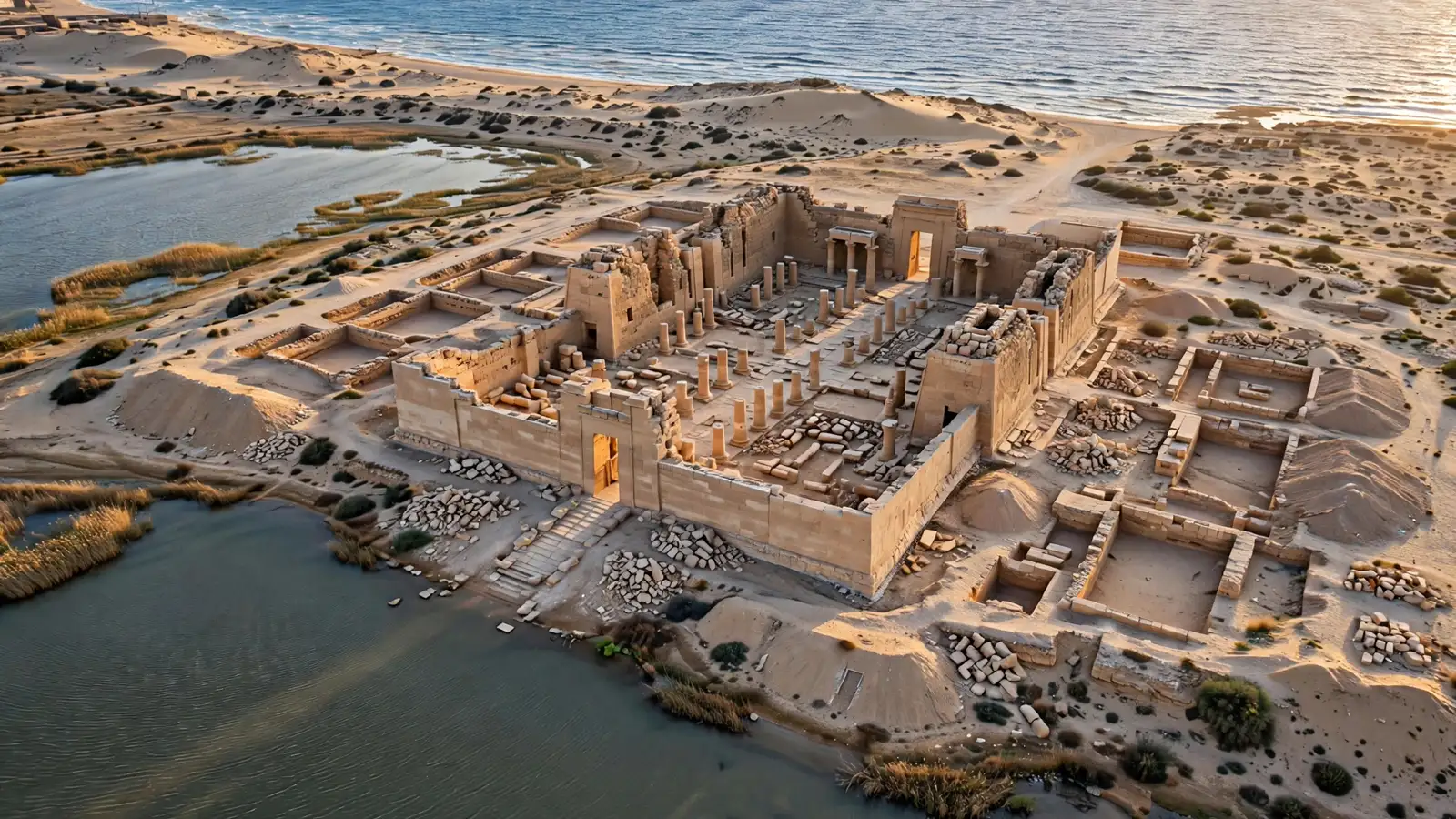
Latest Update — November 2026
Short answer: no. As of early November 2026, Egypt’s Ministry of Tourism and Antiquities has not announced the discovery of Cleopatra’s tomb, and no burial of Cleopatra or Mark Antony has been confirmed anywhere.
That matters because expectations were high going into this year. In a December 2025 interview, Kathleen Martínez said the find could come “at the start of 2026.” She described a newly traced tunnel about 25 meters (82 feet) underground, running from the Taposiris Magna area toward the sea, and said the Egyptian army had agreed to help with the underground search. Oceanographer Robert Ballard — the man who found the Titanic — has joined the underwater side of the project.
So the hunt is active and now runs on land and underwater at the same time. But a confident prediction is not a discovery. Most Egyptologists still think Cleopatra was buried in Alexandria, as ancient writers say. We’ll update this page as soon as anything official is announced.
Quick Facts: The Search for Cleopatra’s Tomb
- Died: August 30 BCE, in Alexandria — traditionally by snakebite
- Status: Cleopatra’s tomb undiscovered as of 2026
- Main theory: Buried at the Temple of Taposiris Magna, 45 km west of Alexandria, alongside Mark Antony
- Lead archaeologist: Kathleen Martínez, digging there since ~2005
- Biggest finds: A 4,265-foot bedrock tunnel (2022), a submerged Ptolemaic harbor (2025), golden-tongue burials, 337 coins with her image
- Rival theory: The tomb lies beneath modern Alexandria, possibly under the Eastern Harbor’s water
Cleopatra’s Tomb Vanished Within Decades
This is the part that baffles people. Cleopatra wasn’t some minor noble. She was the last active pharaoh of Egypt, a queen who held court with Julius Caesar and Mark Antony — and Octavian, the future Augustus, was desperate to capture her alive for his triumph in Rome. Her funeral was a state affair. He personally oversaw it.
And yet, within a generation, nobody could quite point to where she’d been laid to rest. Strabo, writing not long after her death, mentions a tomb she built near the Temple of Isis in Alexandria — a mausoleum in the royal palace quarter. Plutarch describes her barricading herself inside it with her treasure, threatening to burn it all. After her death, the Roman sources go quiet. No triumphal display of a body. No desecration. Just silence.
Which raises the obvious question: was Cleopatra’s tomb in Alexandria all along — and simply destroyed?
Alexandria Swallowed Her Palace Whole
If Cleopatra’s tomb stood in Alexandria’s royal quarter, finding it was never going to be easy. That part of Alexandria doesn’t exist anymore. It’s underwater.
The ground beneath the city has been sinking for millennia, and earthquakes and tsunamis finished the job. The great quake of 365 CE sent entire neighborhoods, including the palace quarter, sliding into the harbor. What remains of Ptolemaic Alexandria now lies on the seabed of the Eastern Harbor, silted over and scattered. Since the 1990s, underwater archaeologists have pulled colossal statues, sphinxes, and temple blocks out of that harbor — the ruins of the royal quarter, dumped on the seafloor by nature.
If the search for Cleopatra’s tomb means combing through a collapsed, silted, submerged city, you can see why two thousand years hasn’t been enough. But one woman looked at this impossible mess and decided the tomb was never in Alexandria at all.
The Lawyer Who Refused to Take No for an Answer
Kathleen Martínez is not who you’d expect to lead the most famous tomb hunt in archaeology. She’s a criminal lawyer from the Dominican Republic who became obsessed with Cleopatra as a teenager and, in the mid-2000s, walked into Egypt’s antiquities authorities with a theory she’d built from reading Plutarch and Strabo herself.
Her argument ran like this. Cleopatra didn’t think of herself as just a queen; she presented herself as the living embodiment of the goddess Isis. She and Antony staged their public image around the divine pair Isis and Osiris. And Taposiris Magna — west of Alexandria — was a temple dedicated precisely to Osiris and Isis, where the faithful hoped to be buried to join Osiris in the afterlife.
If you were Cleopatra, and you knew the Romans were coming, and you knew they’d desecrate any tomb they could find in Alexandria — wouldn’t you rest somewhere the Romans would never think to look? Somewhere sacred. Somewhere tied to your gods. The Egyptian authorities, remarkably, gave her a permit. That was around 2005. She has been digging at Taposiris Magna ever since.
The 4,265-Foot Tunnel Under the Temple
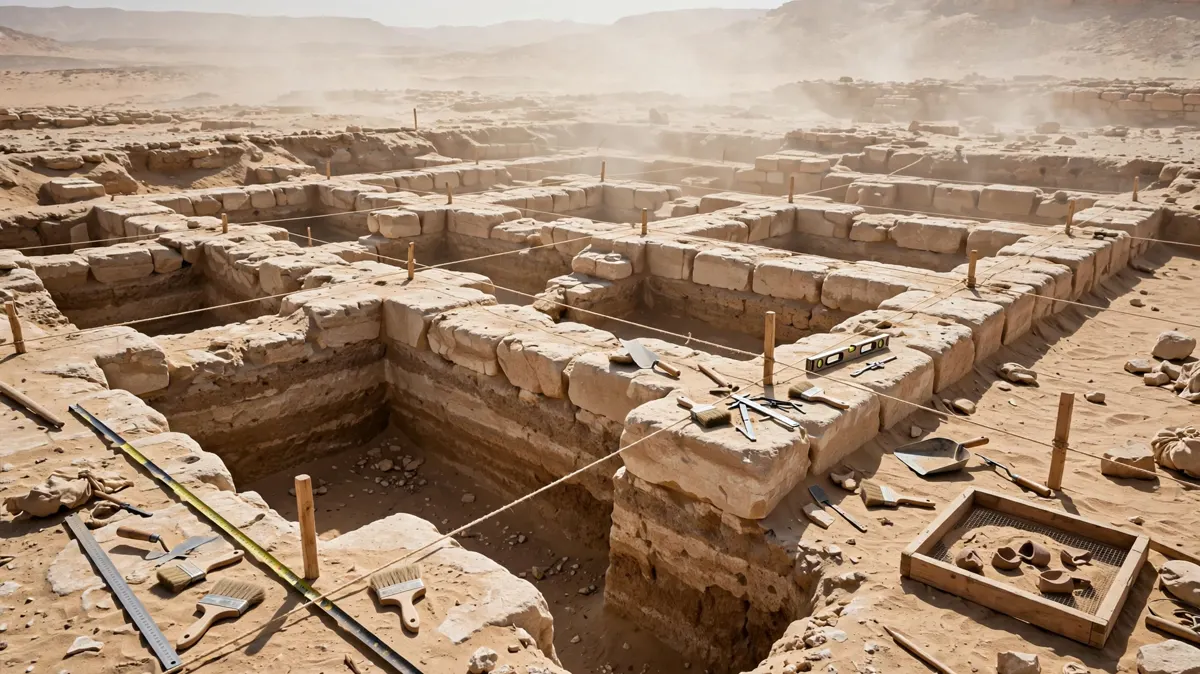
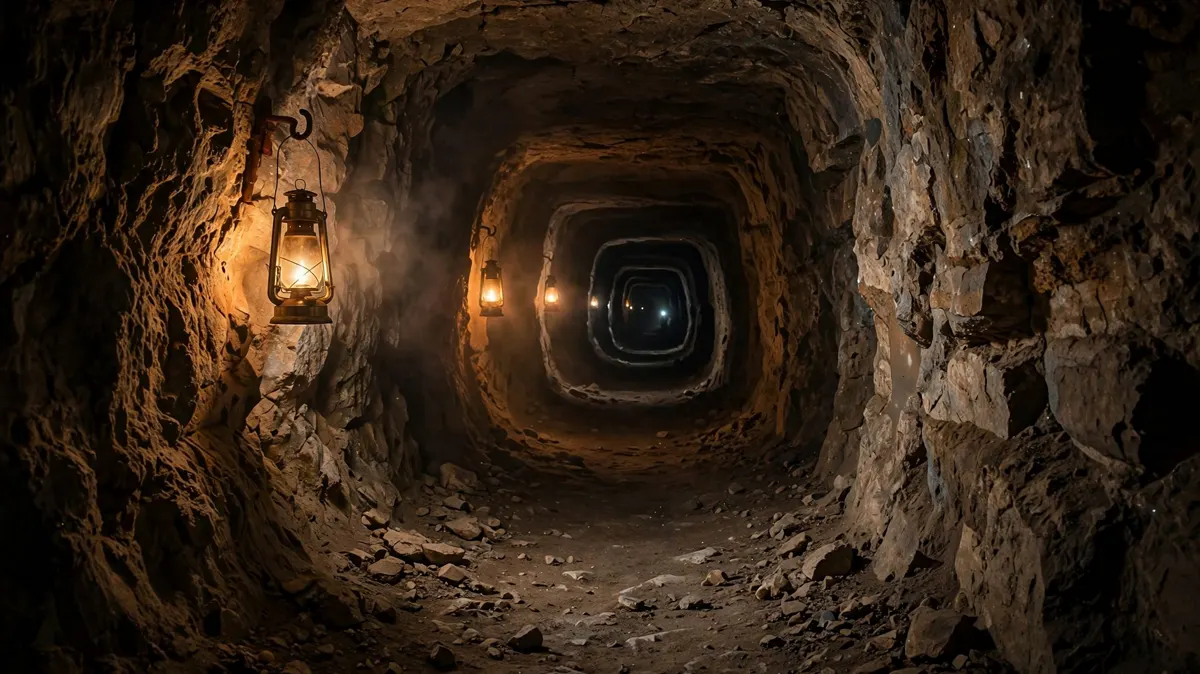
In 2022, the team announced something that changed the conversation: a tunnel, 4,265 feet long — roughly 1.3 kilometers — cut through solid bedrock, running about 13 meters beneath the temple. Inside: ceramic jars and pottery dated to the Ptolemaic period, Cleopatra’s era. Whatever this passage was built for, it was built with intent — a deliberate engineering project running from the temple toward the Mediterranean coast.
What was it for? Nobody knows yet. Ritual procession route? Secret escape? Part of a burial complex? Martínez’s own hypothesis has grown bolder: she believes Cleopatra’s body, after her death, may have been moved through that tunnel toward the sea, to a resting place the Romans would never find. And in 2025, the sea started giving up answers of its own.
A Sunken Harbor in Cleopatra’s Backyard
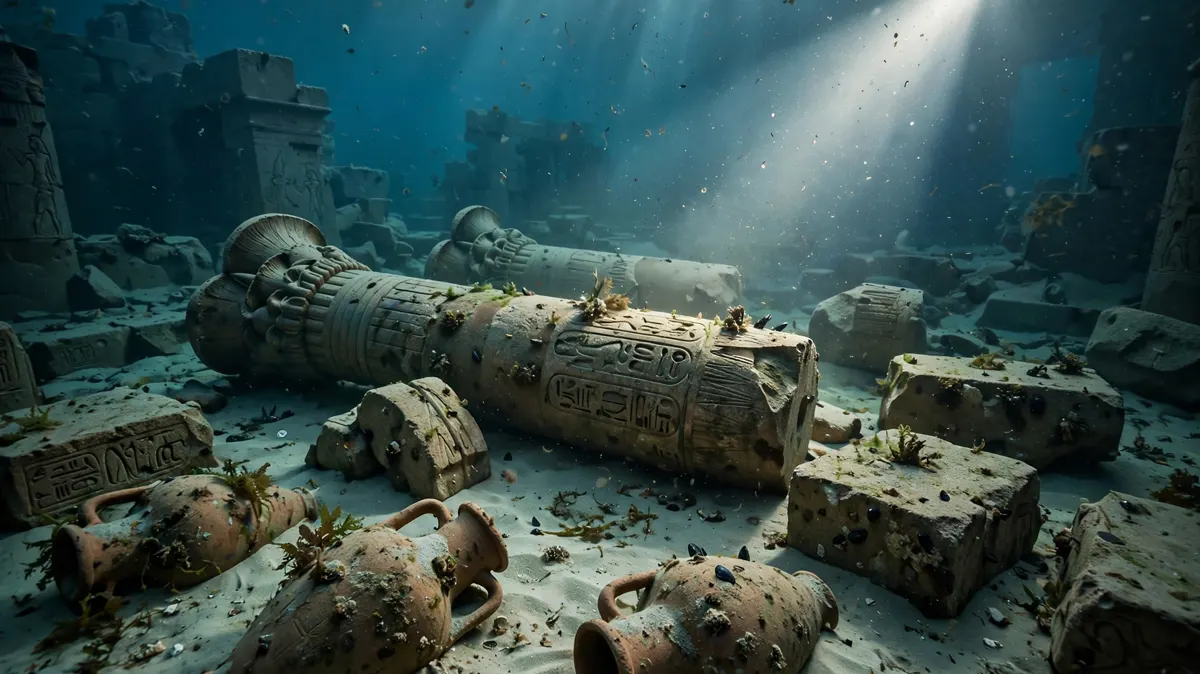
Martínez needed someone who could read the seafloor, so she called the heavy artillery: Robert Ballard, the oceanographer who found the Titanic. In September 2025, working with Ballard, the team announced a vast submerged port just offshore from Taposiris Magna — twelve meters down, stone buildings rising more than six meters off the seafloor, polished floors, columns, ship anchors, and storage amphorae, all dated to Cleopatra’s time.
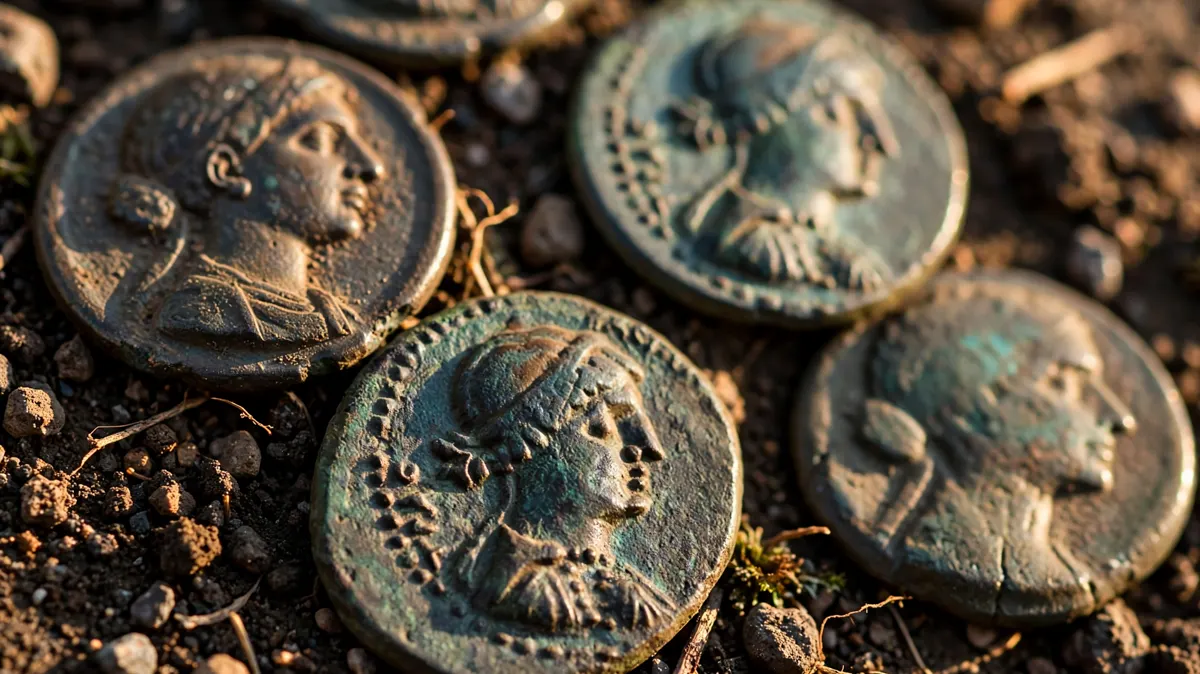
According to the Egyptian Ministry of Tourism and Antiquities, the expeditions also recovered 337 coins — many bearing Cleopatra’s image — plus a two-piece amulet inscribed “Ra’s Justice Has Shone,” a bronze ring dedicated to Hathor, and what could be the eighth known statue of Cleopatra in existence. No ancient source ever mentioned a harbor at this temple. Yet there it was: active during her reign, exactly where the tunnel seems to point.
But remember the honest answer from the top. A harbor is not a tomb. A tunnel is not a sarcophagus. And 337 coins, thrilling as they are, are not a body.
The Golden Tongues Near Cleopatra’s Tomb Hunt
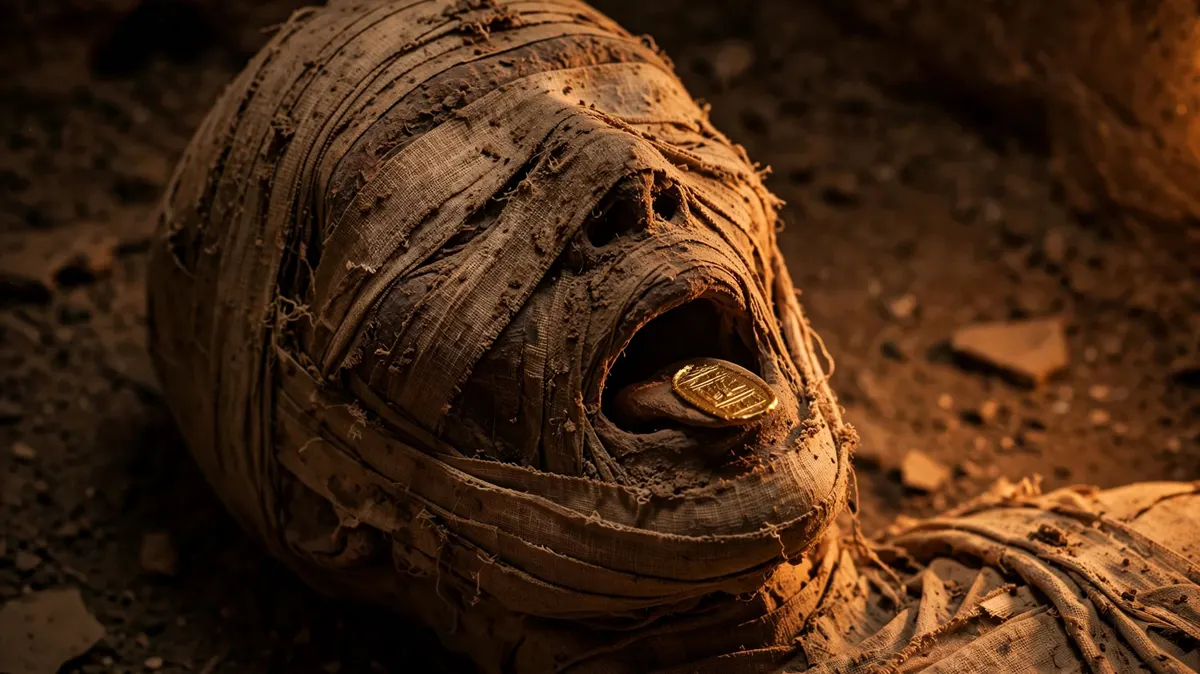
There’s one more thread, and it’s a strange one. Years before the tunnel and the harbor, Martínez’s team was finding mummies at Taposiris Magna with golden tongues — thin gold foil placed in the mouths of the dead, a rite meant to help the deceased speak in the afterlife. These were expensive, high-status burials, some oriented with their faces toward the temple’s inner sanctuary — a positioning tied to proximity to royalty.
The picture emerging is of a burial ground used by the elite, clustered around a temple of Isis and Osiris, in precisely Cleopatra’s era. It doesn’t prove she’s there. It proves the people buried there thought this was the best address in Egypt for the afterlife. We’ve written the full story of this eerie rite in our guide to the golden-tongued mummies of ancient Egypt.
What Did Cleopatra Actually Look Like?
One of the most popular rising searches in this story is also the most human: “what Cleopatra actually looked like,” up 1,650%. Because what most of us picture is Elizabeth Taylor.
The real evidence is unglamorous, which is why it’s trustworthy. Cleopatra put her own face on her coins — including ones very much like the 337 found at Taposiris Magna — and they show a woman with a prominent, hooked nose, a strong jaw, and a determined chin. Roman marble busts agree: intelligent, severe, regal. Not a Hollywood siren. A ruler.
That was the point. Her image was political propaganda, not a beauty campaign — a Macedonian queen ruling Egypt who needed to look powerful on coins that traveled across her kingdom. The hooked nose and strong features were her brand: the face of the living Isis. Exactly the face you’d want staring back from a tomb wall.
Mark Antony’s Missing Grave
One more rising search, up 80%: Mark Antony. After his defeat at Actium in 31 BCE, Antony fled to Alexandria. Believing Cleopatra already dead, he fell on his sword — then learned she was still alive. His men carried him, dying, to the mausoleum where she’d barricaded herself, and she hauled him up through a window with ropes. He died in her arms. Octavian allowed her to bury him, and the sources suggest she wanted to rest beside him — the Isis to his Osiris, together in death as in life.
Which is why Martínez believes Cleopatra’s tomb, if it exists at Taposiris Magna, holds two bodies, not one. Antony’s grave is every bit as lost as hers. If the tomb is ever found, the discovery of the century might actually be a double.
So… Has Cleopatra’s Tomb Been Found?
Time for the straight answer. No. As of 2026, Cleopatra’s tomb has not been found. Reputable reporting as recently as May 2026 describes her final resting place as undiscovered — and the Taposiris Magna theory remains one possibility among several.
But look at what has turned up: a 1.3-kilometer bedrock tunnel, a sunken Ptolemaic harbor, golden-tongued burials of the elite, hundreds of coins with her face, a possible eighth statue. Ground-penetrating radar has picked up anomalies beneath the temple — sealed chambers not yet opened.
Twenty years ago, the mainstream view was that Martínez was chasing a fantasy. Now the fantasy has a tunnel, a harbor, and 337 coins. When asked whether she’ll stop digging, her answer is simple: it’s a matter of time. Two thousand years is a long time to wait for a tomb — but Cleopatra always did know how to make an entrance.
Questions People Actually Ask
Has Cleopatra’s tomb been found?
No. As of 2026 it remains undiscovered. Kathleen Martínez’s excavations at Taposiris Magna have produced remarkable finds — a 4,265-foot tunnel, a submerged harbor, 337 coins with her image — but the tomb itself has not been located.
Where is Cleopatra buried?
Nobody knows for certain. The leading theory places Cleopatra’s tomb at Taposiris Magna, west of Alexandria, possibly alongside Mark Antony. The rival theory holds that she was buried in Alexandria’s royal quarter — now sunk beneath the Mediterranean.
Who is Kathleen Martínez?
A Dominican lawyer-turned-archaeologist excavating Taposiris Magna since ~2005, pursuing her theory that Cleopatra’s tomb lies at the temple of Osiris and Isis. She brought in oceanographer Robert Ballard — who found the Titanic — to investigate the submerged harbor offshore.
What is the Taposiris Magna tunnel?
A 4,265-foot (1.3 km) tunnel found in 2022, cut through bedrock ~13 meters beneath the temple. It held Ptolemaic-era pottery and runs toward the Mediterranean coast. Its purpose is unknown.
What did Cleopatra actually look like?
Her coins show a hooked nose, strong jaw, and determined chin — a political image of power, not the Hollywood beauty of legend. Roman marble portraits agree: she looked like a ruler, because looking like a ruler was the point.
Where is Mark Antony buried?
Also unknown. Octavian let Cleopatra bury him, and she likely intended to rest beside him. If Cleopatra’s tomb is ever found, it may hold both of them.
The Greatest Tomb Hunt on Earth
Every generation gets the Cleopatra hunt it deserves. Ours has sonar, ground-penetrating radar, and a lawyer from the Dominican Republic who read Plutarch and decided the experts were looking in the wrong place. Somewhere out there, under limestone or silt or twelve meters of Mediterranean water, the last pharaoh of Egypt is still waiting — patient as she always was — for someone clever enough to find her.
For more: our full story of Cleopatra, the golden-tongued mummies found at the site, how mummification worked, and the Book of the Dead spells she would have carried into the afterlife.
Sources
- National Geographic — The search for Cleopatra’s tomb and the sunken port at Taposiris Magna
- CBS News — Quest for Cleopatra’s lost tomb reveals a sunken ancient harbor
- Archaeology Magazine — Lost port discovery brings Cleopatra’s elusive tomb a step closer (Sept 2025)
- Prensa Latina — Martínez says the tomb could be found in 2026 (Dec 2025, Spanish)
- Overview: Tomb of Antony and Cleopatra