
The Instruments That Woke Up After 3,000 Years
Search interest in “tutankhamun ancient egyptian trumpets” just spiked more than 4,600% — and honestly? It’s earned. Forget everything you think you know about old musical instruments. These two little trumpets sat silent in a boy king’s tomb for over three thousand years… and then, in 1939, someone blew into one on live radio in front of roughly 150 million people.
The silver one shattered in rehearsal. The power went out right before the broadcast, so they played by candlelight. And a few months later, World War II broke out.
Coincidence? Probably. But it’s one hell of a story either way. Here’s the full tale of Tutankhamun’s trumpets — the oldest surviving metal trumpets on Earth.
✍️ Write YOUR Name in Real Hieroglyphics
See how the ancient Egyptians would have written your name — free interactive tool.
Try It Now →
Tutankhamun’s Trumpets: Quick Facts
- What they are: Two small ceremonial trumpets — one silver, one bronze (or copper) — among the 5,000+ objects buried with the boy king
- Age: Roughly 3,350 years old; placed in Tutankhamun’s tomb around 1323 BCE
- Superlative: The oldest surviving metal trumpets in existence anywhere on Earth
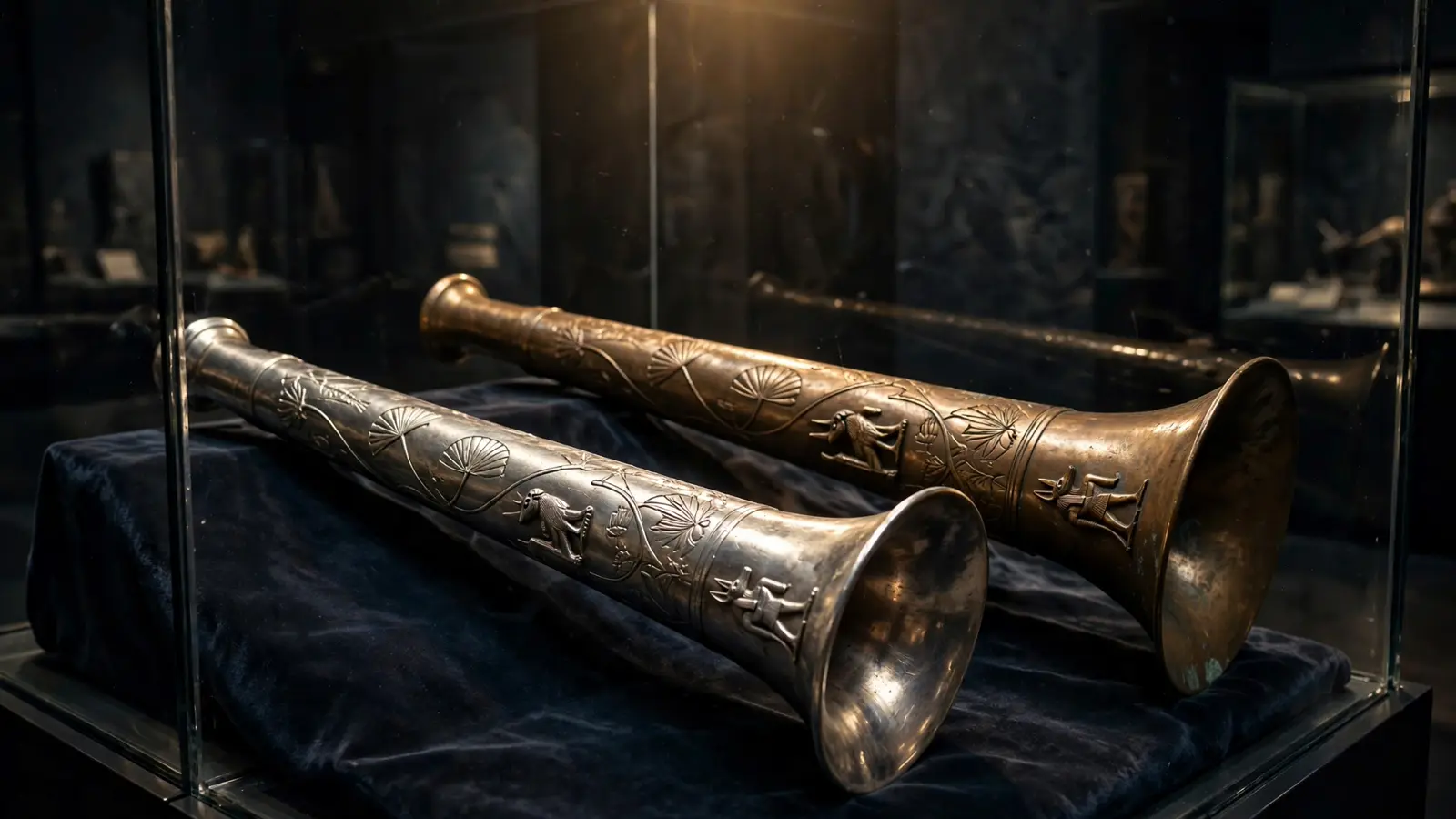
- Size: Each about half a meter long, with a flared bell decorated with floral motifs and Egyptian gods
- Famous for: A 1939 BBC radio broadcast heard by an estimated 150 million listeners — the only time they’ve been played in the modern era
- Where they are now: The Grand Egyptian Museum near Giza, in climate-controlled displays
The Oldest Metal Trumpets on Earth
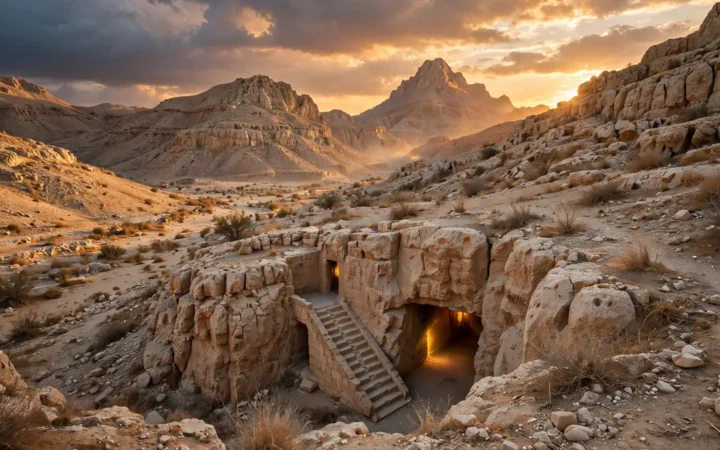
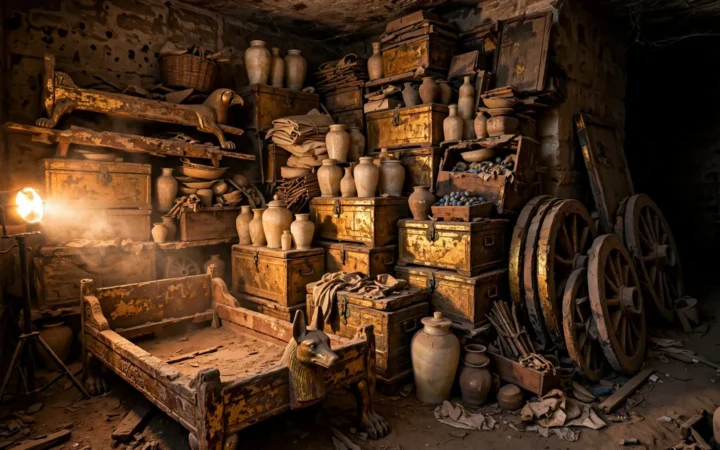
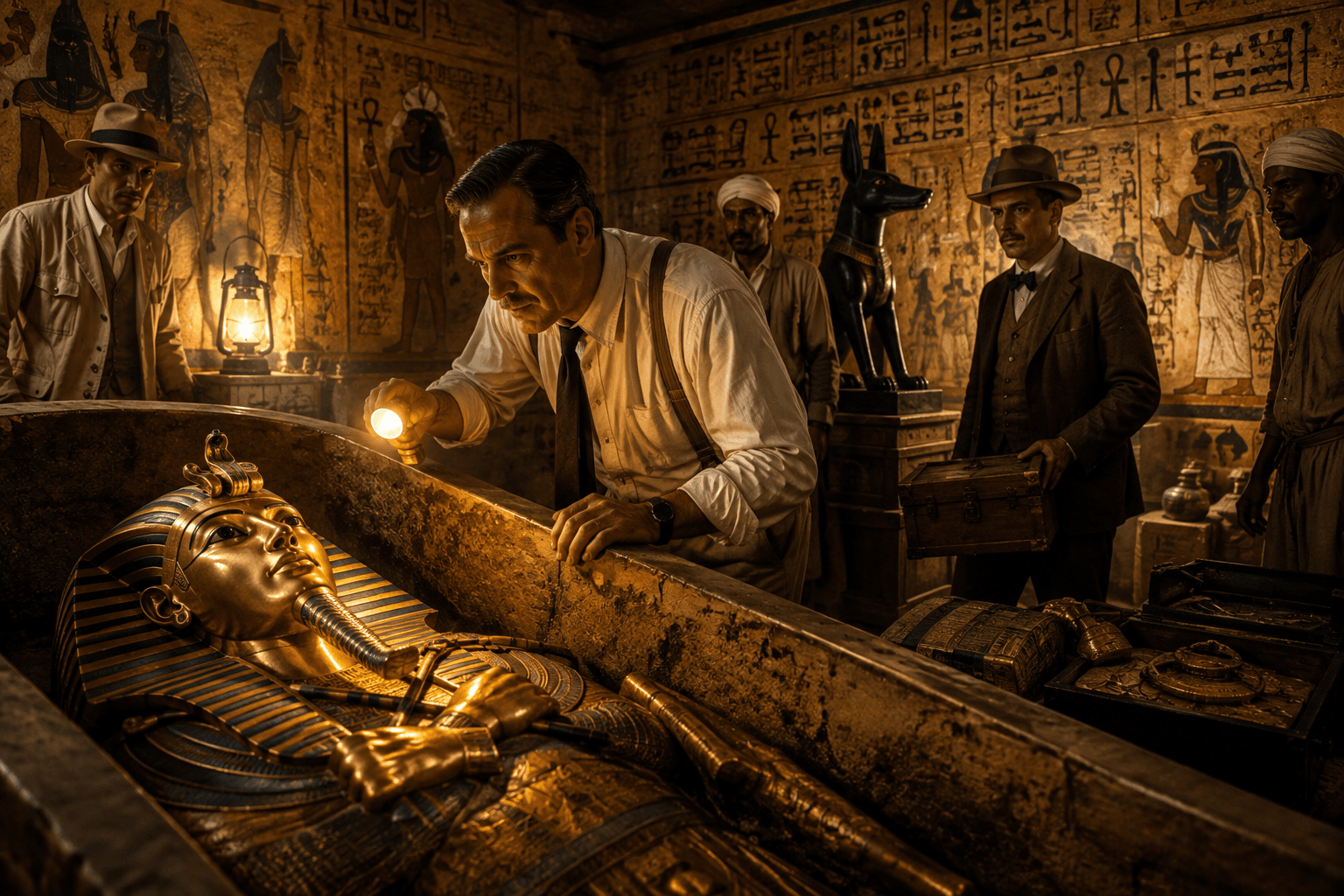
Howard Carter’s team found Tutankhamun’s trumpets in 1922, tucked among the tomb’s staggering haul of treasure. One — the bronze one — turned up in the antechamber; the silver one lay in the burial chamber itself, closer to the king. Both are short by modern standards, roughly half a meter each, but don’t let the size fool you. These weren’t toys.
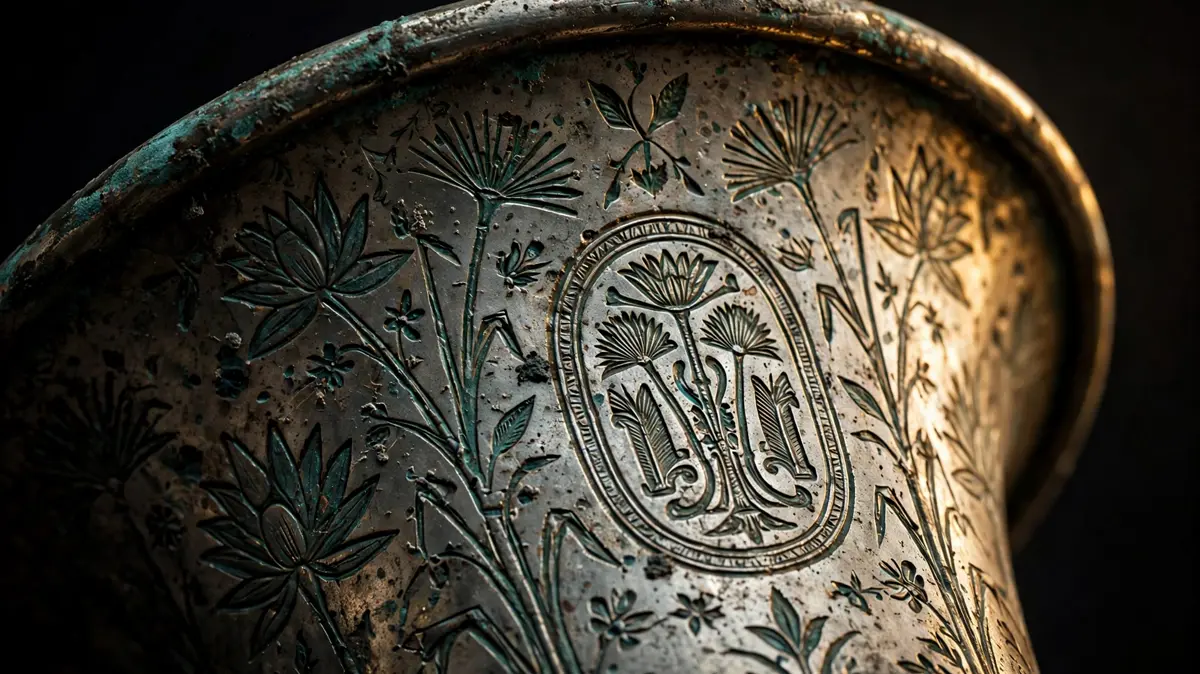
Look closely and you can see the work of serious craftsmen. The flared ends carry intricate imagery — floral designs and carved Egyptian gods. The silver trumpet bears the boy king’s own cartouches, his name sealed into the metal for eternity. And inside each instrument sat an original wooden core, put there to hold the metal’s shape for the journey to the afterlife.
Here’s what gets me: these trumpets were engineered to actually work. Not decorative props, not symbolic knock-offs — real, playable instruments, built by people who understood both metalwork and music. If you want to see just how much treasure surrounded them in that tomb, our walkthrough of Tutankhamun’s treasures puts the trumpets in context. They were the only musical instruments in the whole collection. Which raises the obvious question…
What Were Tutankhamun’s Trumpets Actually For?
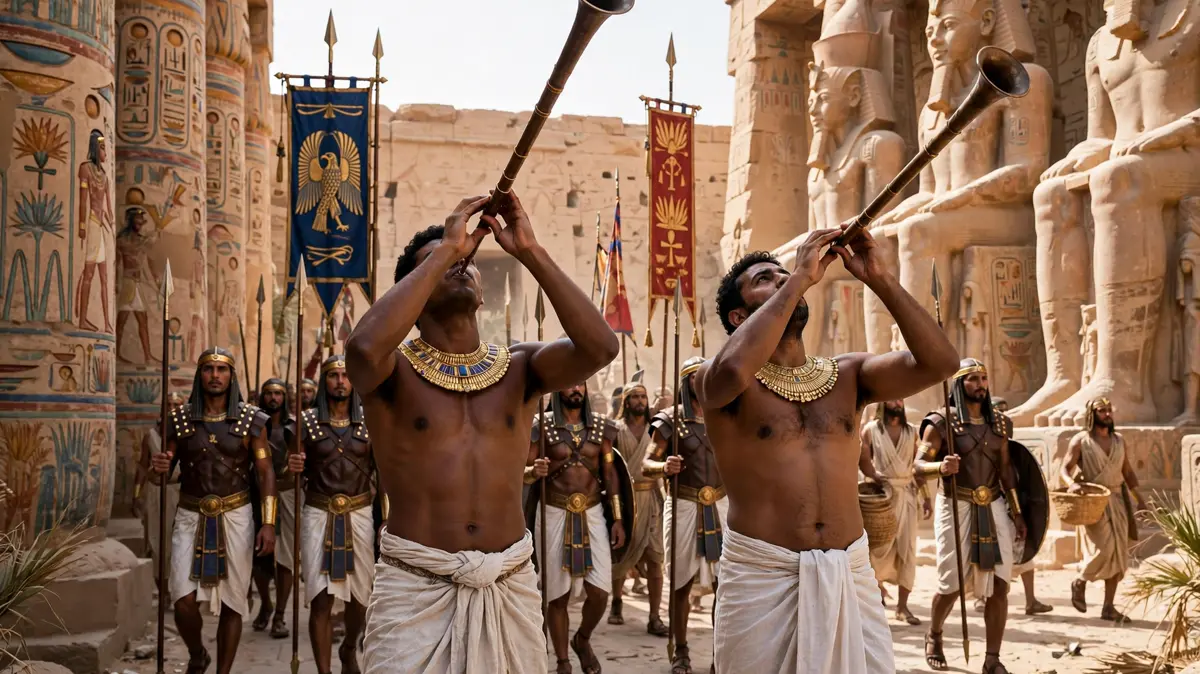
Nobody wrote down a user’s manual, so Egyptologists work from the art. Ancient Egyptian wall paintings and carvings show trumpets — called sheneb — being sounded at big moments: military parades, religious processions, royal ceremonies. As Salima Ikram, the Egyptology professor at the American University in Cairo, put it, Tutankhamun’s trumpets might “have been played in procession as the king came through.”
And then there’s the symbolism baked into the pair itself. One trumpet is brassy like the sun; the other is silver like the moon. Ikram suggests that pairing could represent the twelve hours of the day and the twelve hours of the night — the full cycle of Tutankhamun’s journey from this world to the next. The Egyptians took that journey seriously; the Book of the Dead is essentially a road map for it, and the gods carved on the trumpets’ bells were the travel companions.
So these weren’t concert instruments in any modern sense. They were fanfares — sharp, loud announcements that a god-king was coming through. A sonic “make way.” Which makes what happened three thousand years later even wilder: someone decided the whole world should hear one.
April 19, 1939: Tutankhamun’s Trumpets Play on the BBC
Picture it. An April evening in 1939. The BBC has arranged something nobody had ever attempted: the trumpets of Tutankhamun, sounded in the Egyptian Museum in Cairo and beamed out live to an estimated 150 million listeners around the globe.
The BBC announcer boomed the introduction — “The trumpets of the pharaoh Tutankhamun!” — and then a British army bandsman named James Tappern took a breath and blew into the oldest surviving metal trumpets in the world. For about a minute, a military-style fanfare that had been silent for 3,300 years traveled from Cairo across the airwaves of the world.
It must have been electric. Ikram calls that recording “an auditory and sensory bridge between the time of Tutankhamun and now,” and Tappern himself described “the intimacy” as “extraordinary.” Think about it: one minute you’re sitting by your radio in 1939, and the next you’re hearing the same blast of sound that announced a pharaoh in 1323 BCE.
But getting there nearly didn’t happen. Because before the broadcast, Tutankhamun’s silver trumpet broke.
The Silver Trumpet Shattered in Rehearsal
Here’s the part they don’t tell you in the highlight reel. During rehearsals, the team fitted a modern mouthpiece onto the silver trumpet and asked Tappern to give it a try. He blew — and the 3,000-year-old instrument shattered.
Alfred Lucas, the chemist who had worked on Howard Carter’s original excavation team and was standing right there, was reportedly hospitalized from the shock of it. Imagine that scene: three decades after helping uncover the tomb, the man watches one of its treasures crack apart in front of him.
They mended the trumpet and went ahead anyway — bold or reckless, depending on your view. Ikram’s verdict, decades later, was blunt: “In an ideal world, they would have made a replica, and then tried that. Of course, it’s never the same as the original. But I think doing that is quite dangerous and taught us a lesson.”
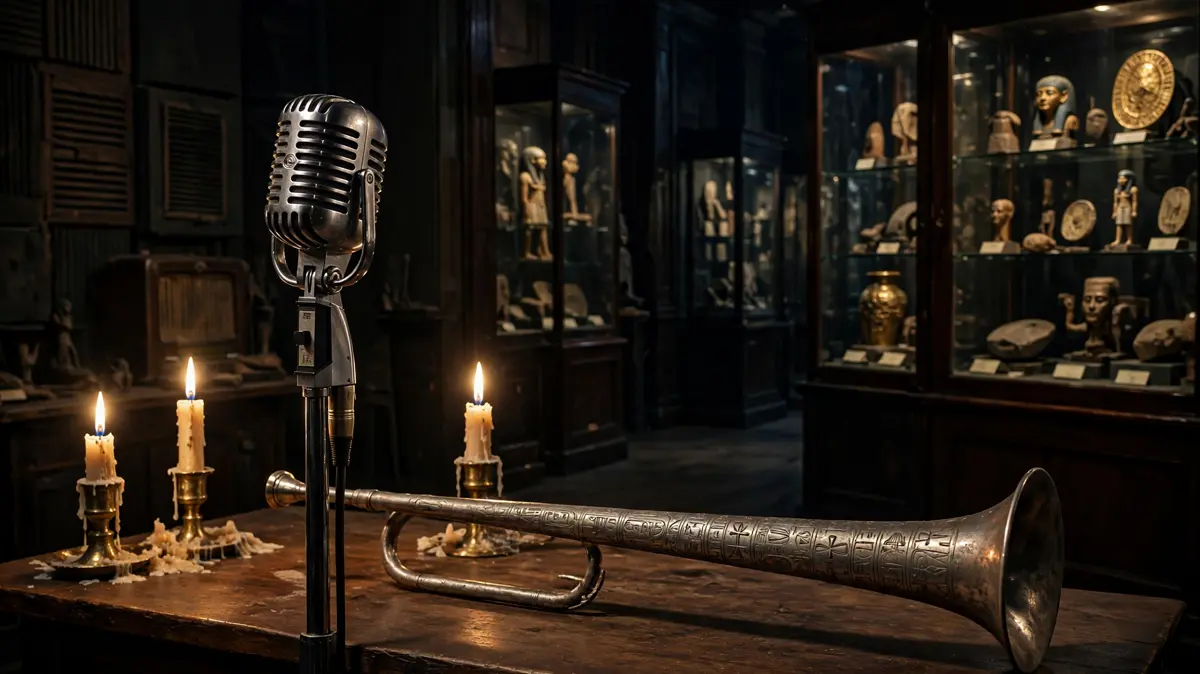
And the drama wasn’t over. Shortly before the broadcast, the power went out in the museum. The whole session was played by candlelight.
Candlelight, a Curse, and a World War
A shattered ancient trumpet. A museum gone dark. A fanfare played by candlelight for 150 million people. And then — a few months later — World War II broke out.
You can see why people talked about the curse. For some, the whole episode was confirmation of the fabled Tutankhamun curse, the doom supposedly waiting for anyone who disturbed the boy king. (We’ve got the full story of that legend in our piece on the curse of Tutankhamun — spoiler: the “curse” is mostly good storytelling.) Ikram dismissed the supernatural reading entirely.
Still. Even the BBC’s own record of the broadcast broke. Everything about that day seems touched by fragility — which is maybe the real lesson. As archaeologist-journalist Christine Finn has pointed out, the trumpets’ story is a reminder of how breakable the past actually is: trumpets cracking, lights failing, records snapping. “If everything is too pristine and glossy,” she said, “then it rather misses the point.”
Stolen in the Revolution, Found in a Metro Station
You’d think surviving 3,300 years underground would earn these instruments a quiet retirement. Not quite.
During the chaos of Egypt’s 2011 uprising, one of Tutankhamun’s trumpets was stolen from its display in the Egyptian Museum in Cairo. Looters broke into the museum during the unrest, and the trumpet vanished — along with other relics. It was recovered some weeks later, of all places, inside a bag at a Cairo Metro station. A priceless 3,300-year-old instrument, riding the subway in a bag.
That close call is part of why the trumpets’ current home was built the way it was.
Tutankhamun’s Trumpets’ New Home
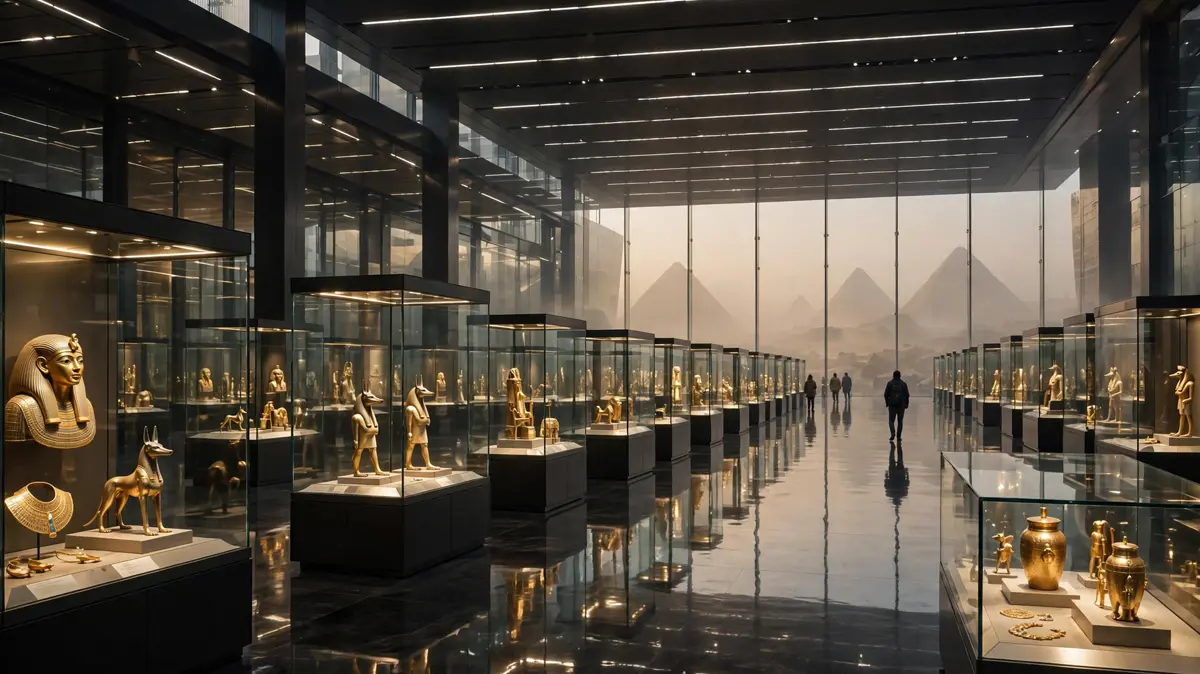
Today, Tutankhamun’s trumpets live in the Grand Egyptian Museum near Giza — the billion-dollar complex that opened its doors within view of the pyramids. They sit in climate-controlled displays held at a careful 18 to 22 degrees Celsius (64 to 71 Fahrenheit), because the cases have to preserve both metal and the original wooden cores still inside the instruments — and wood is organic, which makes the conservation math tricky.
Security is a whole different world from the old museum too. Not just guards on the building, but layered systems for each individual display — a direct answer to the 2011 theft.
And here’s the bittersweet coda: because of how fragile they’ve proven to be, Tutankhamun’s trumpets will almost certainly never be played again. The 1939 broadcast remains the one and only modern performance — and may stay that way forever. The sound, though, is safe. The BBC recording survives, and as Ikram’s phrase has it, it stays an “auditory bridge” between Tutankhamun’s world and ours.
A bridge you can still cross, any time you like, with two clicks.
Questions People Actually Ask
How old are Tutankhamun’s trumpets?
About 3,350 years. They were placed in Tutankhamun’s tomb around 1323 BCE and stayed there until Howard Carter’s excavation in 1922.
Have Tutankhamun’s trumpets ever been played in modern times?
Exactly once: the BBC radio broadcast on April 19, 1939, when bandsman James Tappern sounded them live from the Egyptian Museum in Cairo for an estimated 150 million listeners.
Did one of Tutankhamun’s trumpets break when it was played?
Yes — the silver trumpet shattered during rehearsals when a modern mouthpiece was fitted to it. It was repaired, and the broadcast went ahead anyway.
Can I hear the recording of Tutankhamun’s trumpets?
Yes. The 1939 BBC recording still exists and circulates online — a genuine blast of sound from a 3,300-year-old instrument.
Where are Tutankhamun’s trumpets today?
They’re displayed at the Grand Egyptian Museum near Giza, in climate-controlled, high-security cases set between 18 and 22°C.
Is there really a curse on Tutankhamun’s trumpets?
No evidence of one. The candlelight broadcast, the shattered trumpet, and the outbreak of WWII months later make for a spooky story — but Egyptologists, including Salima Ikram, dismiss the supernatural reading.
Why Tutankhamun’s Trumpets Still Matter
Here’s why I think 150 million people once tuned in, and why search interest is surging again: the trumpets do something almost no other artifact does. Most ancient objects sit there and look old. The trumpets speak — or at least, they did once, for one minute, in 1939, and the echo is still traveling.
They’re a fanfare from a civilization that ran on ceremony, a piece of engineering that still worked after three millennia, and a cautionary tale about how casually we can break what we claim to treasure. Every chapter of their story — the tomb, the broadcast, the theft, the new museum — is a different century colliding with the same two little instruments.
Want more from the boy king’s tomb? Start with the treasures of Tutankhamun, and if the eerie side of the story grabbed you, the curse of Tutankhamun is waiting. And if you’re curious about the gods carved on the trumpets’ bells, meet the gods of ancient Egypt — the audience those fanfares were really meant for.