
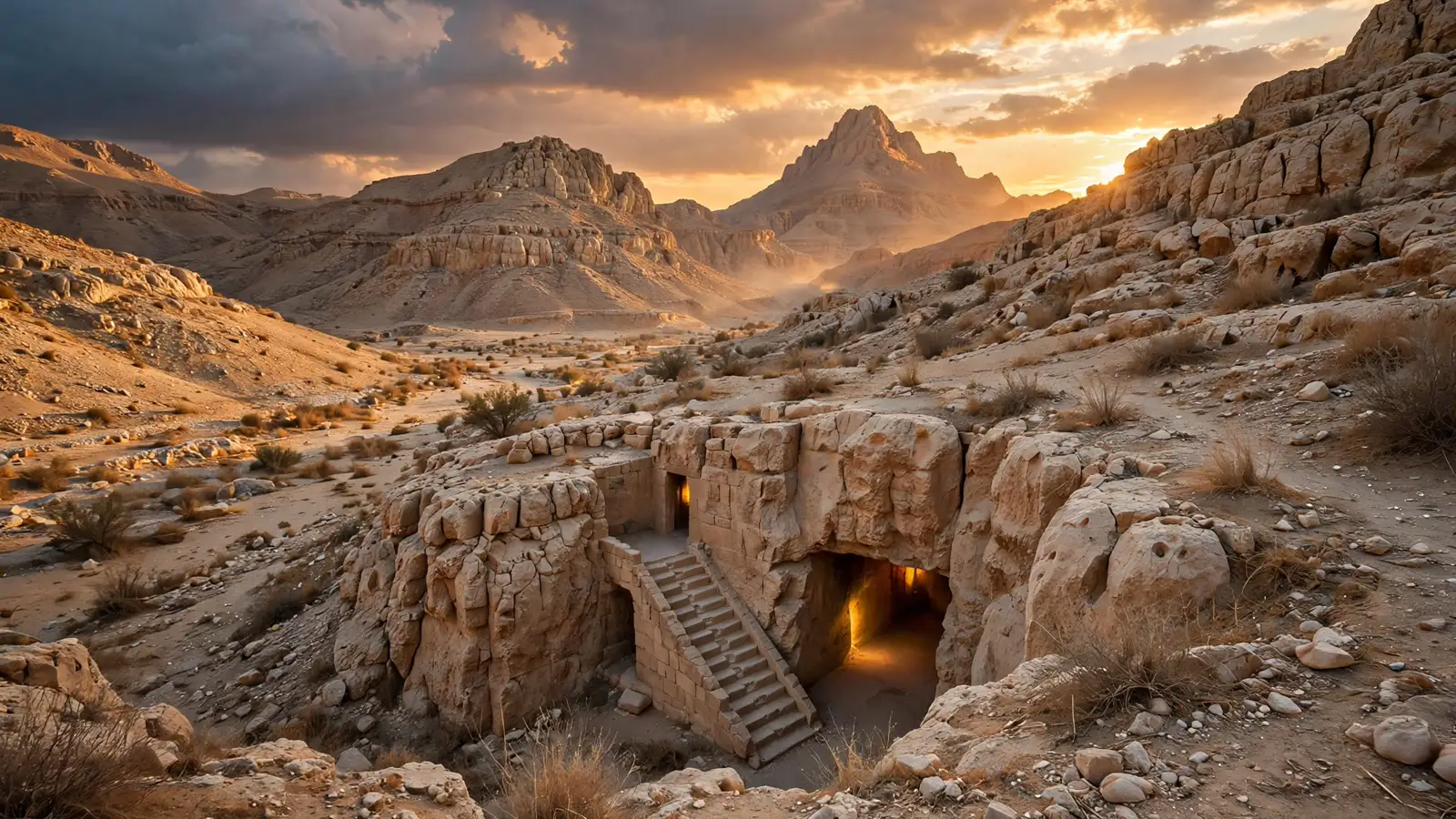
The Tomb That Might Be Twice as Big as We Thought
On September 17, 2026, Nature ran an exclusive that reopened archaeology’s wildest debate: hidden chambers behind the walls of Tutankhamun’s tomb — with stronger evidence than ever before.
Tutankhamun’s tomb is weird. Almost every royal tomb in the Valley of the Kings is a sprawling underground palace. His is four small rooms, thrown together in a panic. For a century, archaeologists have wondered why.
One answer has floated around since 2015: we’re only seeing half of it. A team led by former Egyptian antiquities minister Mamdouh Eldamaty just published a decade of survey data — radar, electrical resistivity, 1,200+ microgravity readings — pointing at hidden chambers in Tutankhamun’s tomb that earlier scans missed. Possibly even the lost burial of Queen Nefertiti.
Here’s what they found, what it doesn’t prove, and why Egypt might let someone drill into a 3,300-year-old painted wall as early as next month.
✍️ Write YOUR Name in Real Hieroglyphics
See how the ancient Egyptians would have written your name — free interactive tool.
Try It Now →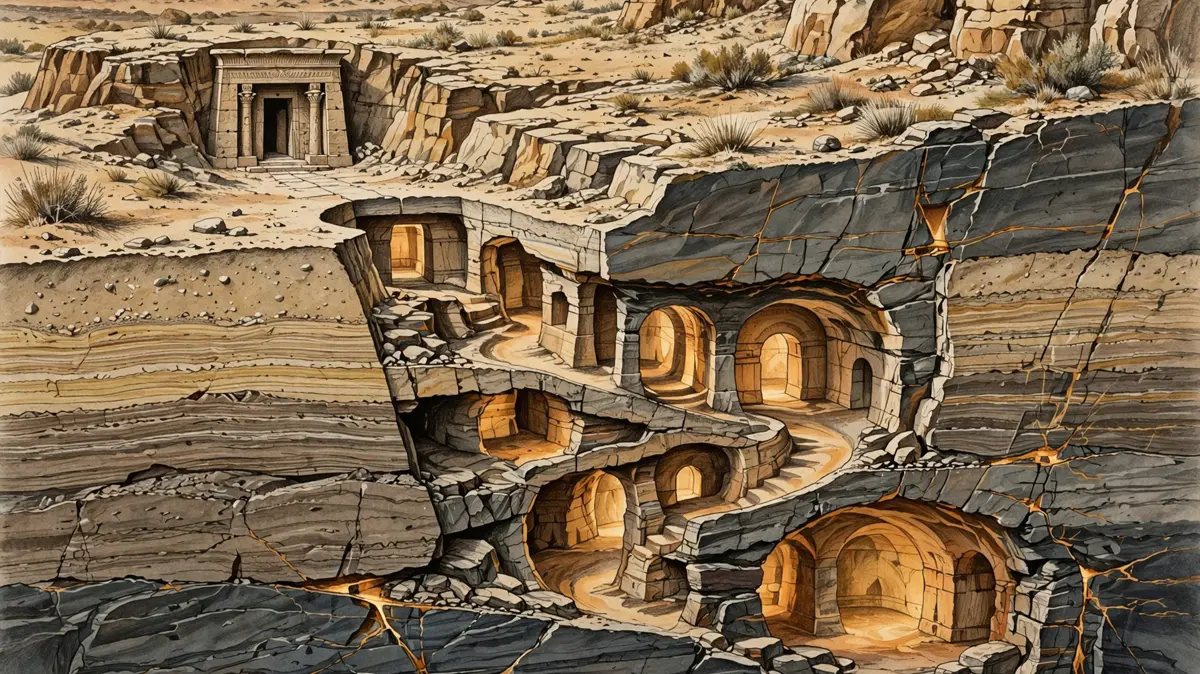
Tutankhamun’s Tomb Hidden Chambers: Quick Facts
- Where: KV62, Tutankhamun’s tomb in the Valley of the Kings — found by Howard Carter in 1922
- The mystery: Bizarrely small for a pharaoh; possibly only the outer rooms of a larger complex
- The new study: Published September 17, 2026 (Amarna Royal Tombs Project, Occasional Paper 8) by Eldamaty, Abbas, Ballard, and Reeves — a Nature news exclusive
- The methods: Seven field seasons since 2015 plus 2023–2024: ground-penetrating radar, electrical resistivity, 1,200+ microgravity readings, thermal imaging, architectural analysis
- What they found: Right-angled low-density structures behind the north wall, a ~2m rubble-packed corridor, anomalies 25–30m north, and “anomaly 7” — possibly a chamber holding objects
- What it doesn’t prove: Nefertiti. The authors call the evidence suggestive, not conclusive — remote sensing has reached its limits
- What happens next: The team asked Egypt’s Supreme Council of Antiquities to let them drill narrow boreholes and send in miniature cameras — possibly starting November 2026
Why Is Tutankhamun’s Tomb So Small for a Pharaoh?
Go stand in the Valley of the Kings and compare. Seti I’s tomb runs more than 100 meters into the rock. Tutankhamun’s — the boy king whose treasures filled museums worldwide — is a cramped handful of rooms you could walk through in a minute.
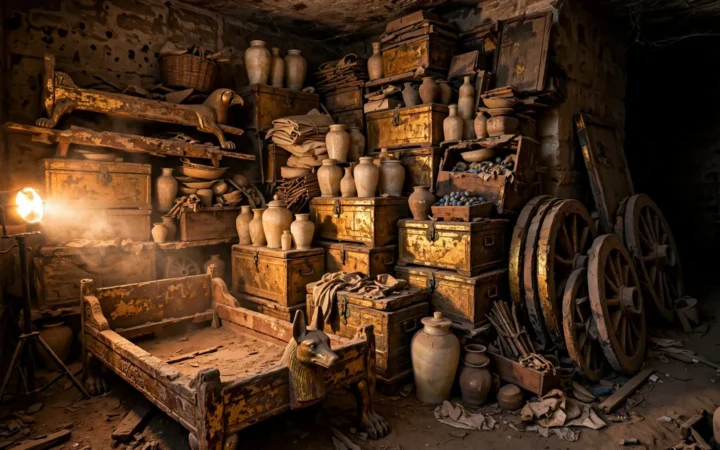
There’s a reason, and it’s a sad one. Tutankhamun died around 1323 BCE at about nineteen, suddenly. A pharaoh’s tomb was supposed to take decades; he didn’t have decades. So the priests adapted a small, possibly unfinished tomb in a rush — paint practically still drying — and squeezed the golden mask and nested coffins into rooms never designed for them. (See how much they crammed in there in our tour of Tutankhamun’s treasures.)
But here’s what’s nagged at Egyptologists for decades: the tomb doesn’t just look small. It looks wrong. The burial chamber sits at an odd angle, the decoration seems painted over older work, and the layout reads like the front rooms of something bigger — with the rest walled off and forgotten. Which is exactly what one British Egyptologist claimed in 2015.
2015: The “Phantom Doors” on the North Wall
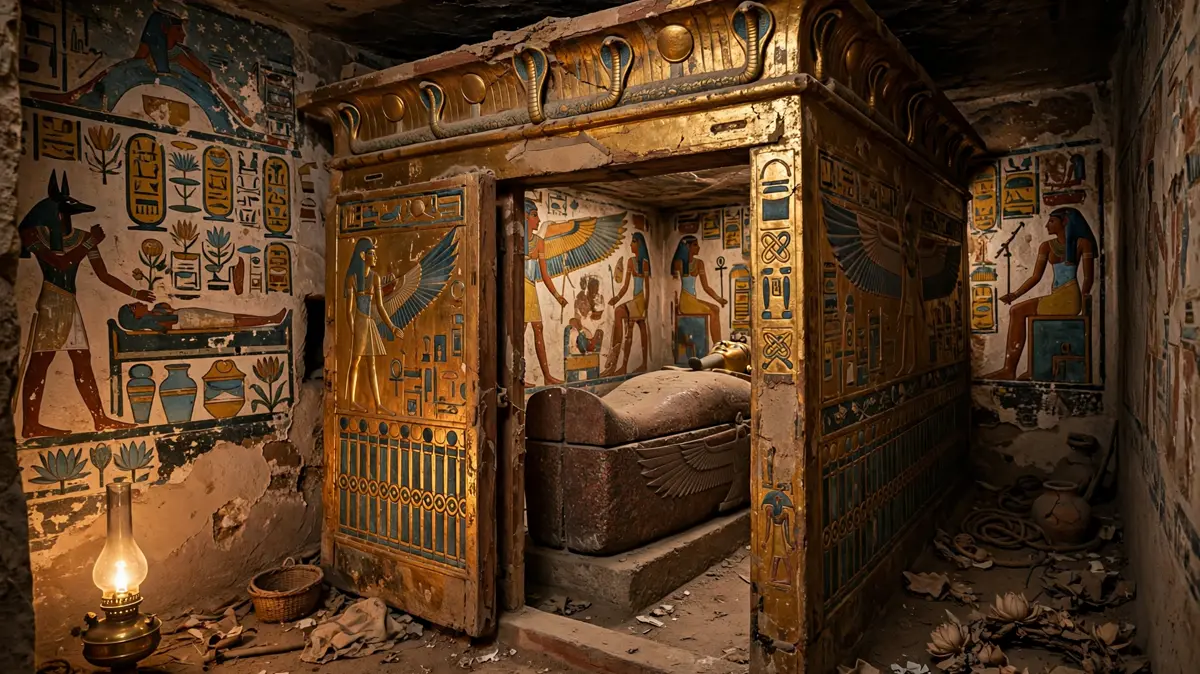
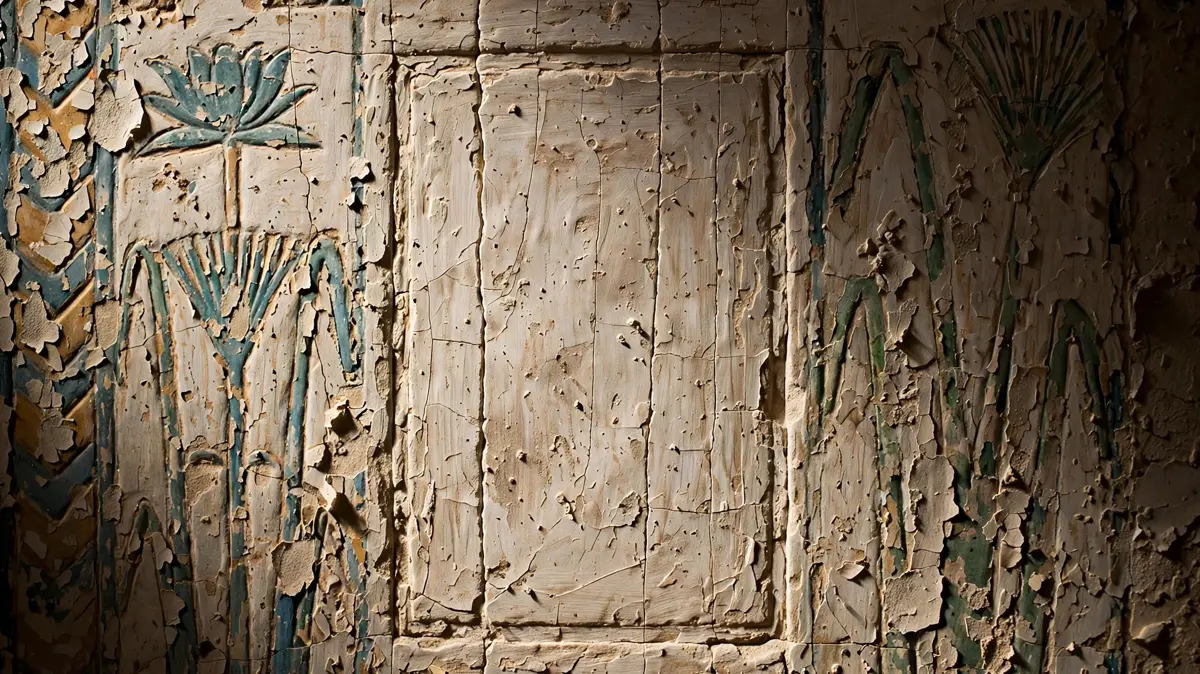
Nicholas Reeves is not a man who does quiet. In 2015, studying ultra-detailed 3D laser scans of the burial chamber’s painted walls, he spotted faint, straight lines and vertical fissures in the plaster on the north and west walls — to his eye, sealed doorways hidden under paint for 3,300 years.
His theory made headlines worldwide. KV62, he argued, wasn’t built for Tutankhamun at all — it was the outer suite of a larger royal tomb, and beyond the north wall lay the burial chamber of Nefertiti: wife of Akhenaten, Tutankhamun’s stepmother (possibly his mother), who may have ruled Egypt herself after Akhenaten’s death. Her burial has never been found.
The idea electrified the public and divided experts. Radar teams were invited in — and what followed was one of the messiest scientific food fights in modern Egyptology.
The Great Radar Disappointment of 2018
The first scans looked promising. In late 2015, a Japanese radar team announced roughly a “90 percent” chance of hidden chambers behind the walls. The world held its breath. Then follow-ups couldn’t confirm it — and in 2018, a comprehensive survey by the Polytechnic University of Turin delivered the verdict everyone still quotes: no open voids immediately adjacent to the painted plaster. Case closed, said the skeptics, led by former antiquities chief Zahi Hawass.
The skeptics had a point: every scan kept coming back inconclusive or negative. But Reeves never dropped it — and former antiquities minister Mamdouh Eldamaty of Ain Shams University had been quietly running his own investigation with geophysicists from Egypt’s National Research Institute for Astronomy and Geophysics and the GBG Group in Cambridge. Seven field seasons since 2015, then two more in 2023–2024 with the widest battery of instruments ever aimed at the tomb. On September 17, 2026, they published everything.
September 2026: The Survey That Reopened Everything
The new paper — An Archaeo-Geophysical Review and Assessment of the Structure and Morphology of Tutankhamun’s Tomb (KV 62), an Occasional Papers of the Amarna Royal Tombs Project review covered as a Nature exclusive — layers instruments instead of relying on one: radar fired from inside the tomb, electrical resistivity, thermal imaging, geological mapping — and, for the first time at this resolution in the Valley of the Kings, a microgravity survey: 1,200+ measurements of tiny gravitational variations across 35 square meters, mapping where the rock is less dense than it should be.
The key insight, from geophysicist George Ballard: earlier teams hunted the wrong thing — a big empty void behind the painted wall. What if the passages are packed with rubble and dense fill, the way ancient builders sealed things? A rubble-filled corridor wouldn’t show as a clean void; it would look exactly like the fuzzy anomalies the new survey found. The evidence for hidden chambers in Tutankhamun’s tomb is now stronger than ever.
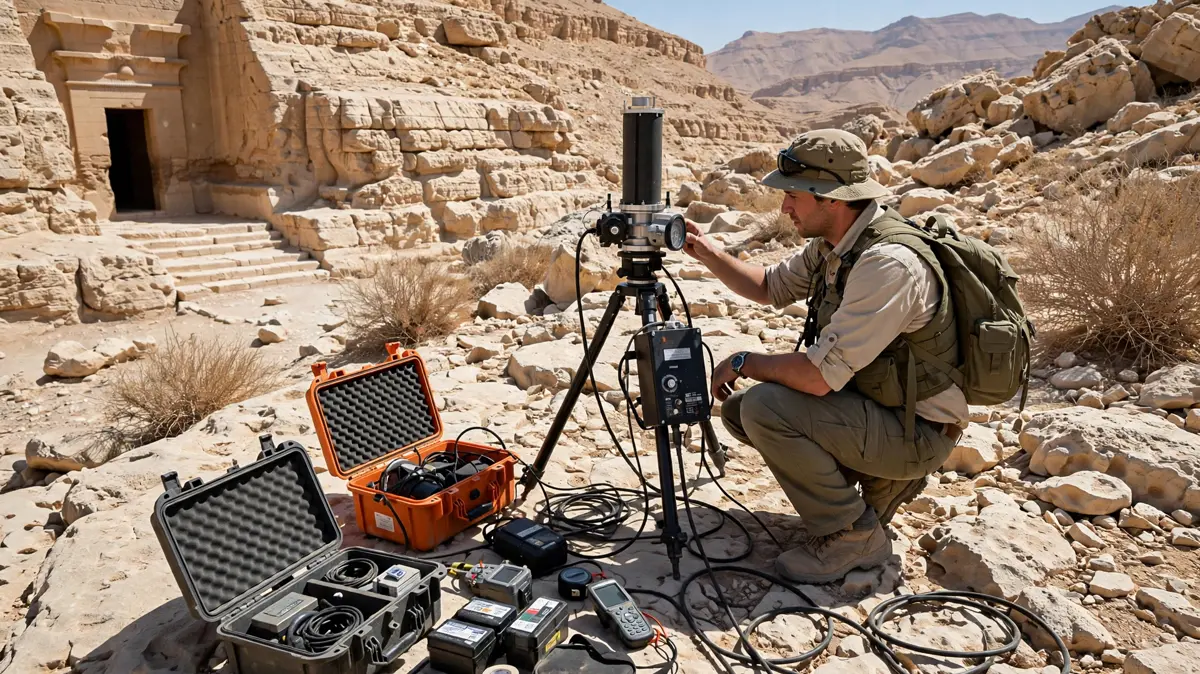
What the New Scans Say About Tutankhamun’s Hidden Chambers
So what do the scans tell us about hidden chambers in Tutankhamun’s tomb? Four findings stand out:
1. A rubble-packed corridor, ~2 meters wide. Radar picked up what looks like an ancient backfilled passage extending from the burial chamber — invisible to every earlier “empty void” hunt.
2. Right-angled structures behind the north wall. Microgravity revealed low-density zones with straight edges running parallel to the burial chamber’s north wall — the geometry of built spaces, not natural rock.
3. A troubled west wall. Vertical joints, stress cracks, and an outline suggesting a ceiling beyond the wall — plus a possible additional storage chamber on that side.
4. “Anomaly 7.” A low-density zone containing a roughly square patch of higher-density material — possibly a chamber still holding objects, though Ballard admits he’s at “the very limits of detection.”
Together, the model proposes a royal funerary extension beyond the north wall — a long corridor and five or six more chambers reaching 25–30 meters north — and argues KV62 predates Tutankhamun: part of a larger complex before the boy king was rushed into it.
Big claim, and the authors know it: suggestive, not conclusive, with geophysical methods at their limits. The only way to know what’s really there is to look inside.
Could the Hidden Chambers in Tutankhamun’s Tomb Be Nefertiti’s Burial?
Let’s be honest about the question everyone wants answered. Nefertiti — the queen with the famous painted bust, found in 1912 and now in Berlin — is ancient Egypt’s most famous missing person. Great Royal Wife of Akhenaten, Tutankhamun’s stepmother and possibly his mother, she may have ruled Egypt herself after Akhenaten died. Then she vanishes. No tomb. No mummy. Nothing.
Reeves has argued since 2015 that the hidden rooms could be hers — KV62’s odd layout reading as the front half of her tomb. The new study keeps that hypothesis alive without proving it: the anomalies are real features in the rock; whose tomb they are — if they’re tombs at all — is something scans can’t answer.
The skeptics have fair arguments too. Hawass has long maintained there’s nothing behind the walls; independent experts urge caution until there’s physical evidence, noting natural fissures and ancient construction fill can mimic built chambers. And the 2018 Turin study hasn’t been retracted — the new team’s answer is that Turin was hunting the wrong kind of emptiness.
The responsible version: the hidden chambers in Tutankhamun’s tomb are very probably real. What they are — storage rooms, a corridor, a sealed royal burial, Nefertiti herself — nobody knows.
The Decision Coming in November 2026
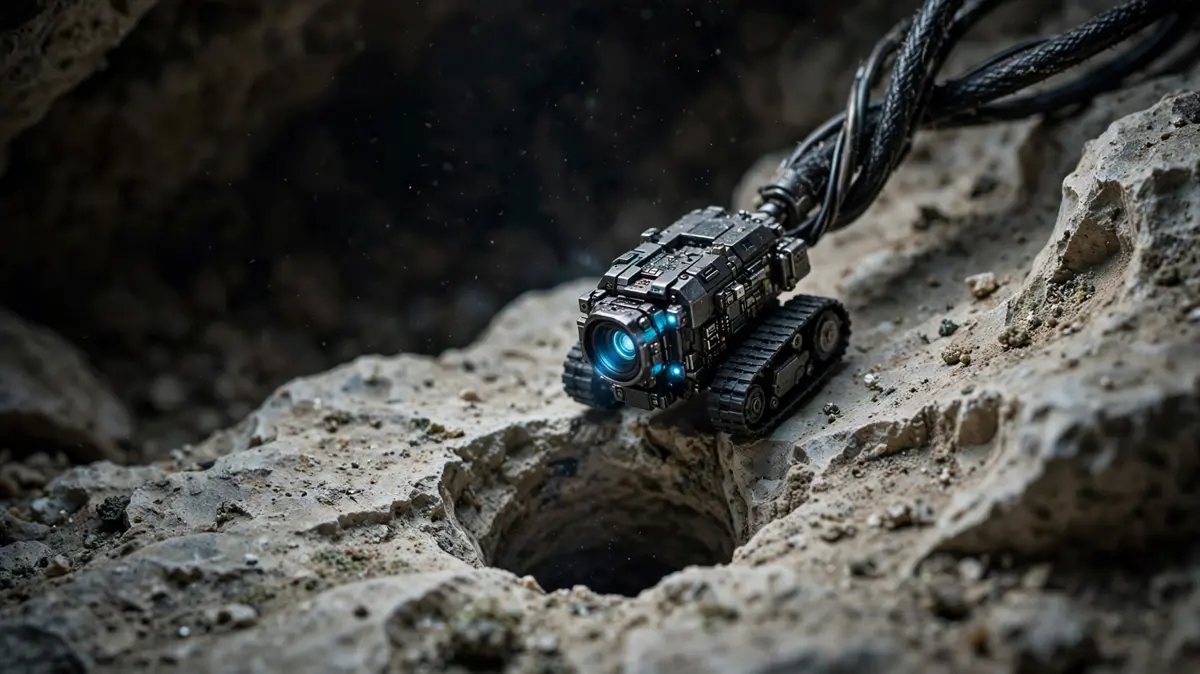
Here’s where it gets exciting — and delicate. The team has asked Egypt’s antiquities council for permission to drill a few 7–8 cm boreholes above the suspected complex and send in miniature camera-equipped tractors. If approved, work could start as early as November 2026 — next month.
Think about that. Eleven years of arguments — and the whole debate could be settled by a camera the size of a matchbox rolling through a thumb-sized hole. Either the feed shows rubble and bedrock, and the theory finally rests. Or it shows a corridor. A doorway. A room no one has entered in 3,300 years.
The council’s call isn’t trivial — drilling near KV62’s irreplaceable paintings makes conservators nervous, which is why the plan is designed to be minimally invasive. Whatever they decide, the 2026 study already forced everyone to take the question seriously again: the hidden chambers in Tutankhamun’s tomb went from fringe theory to peer-reviewed, multi-method, Nature-covered science.
Questions People Actually Ask
What are the hidden chambers in Tutankhamun’s tomb?
Possibly undiscovered rooms and corridors beyond KV62’s known walls. The September 2026 study found a rubble-filled corridor, right-angled low-density structures, and “anomaly 7” — suggesting a complex 25–30 meters north of the burial chamber. Nothing has been opened yet.
Who found evidence of hidden chambers behind Tutankhamun’s tomb?
A team led by Mamdouh Eldamaty (Ain Shams University, former Egyptian antiquities minister), with geophysicists Abbas Mohamed Abbas and George Ballard and Egyptologist Nicholas Reeves — published September 17, 2026, after seven field seasons since 2015.
Is Nefertiti buried behind Tutankhamun’s tomb?
Unknown — and the researchers say so themselves. Reeves has theorized since 2015 that the hidden rooms could be Nefertiti’s lost burial, but the study calls the evidence suggestive, not conclusive. The scans show anomalies in the rock; they can’t identify who used the spaces.
Will archaeologists drill into Tutankhamun’s tomb?
Maybe, soon. The team has asked Egypt’s Supreme Council of Antiquities for permission to drill 7–8 cm boreholes and deploy miniature camera tractors. If approved, work could begin in November 2026.
Didn’t earlier radar scans of Tutankhamun’s tomb find nothing?
A 2018 Turin Polytechnic study found no open voids behind the painted walls. The 2026 team’s answer: earlier surveys hunted empty chambers, while the new data points to rubble-filled passages, which look very different to radar.
The Biggest “What If” in Egyptology
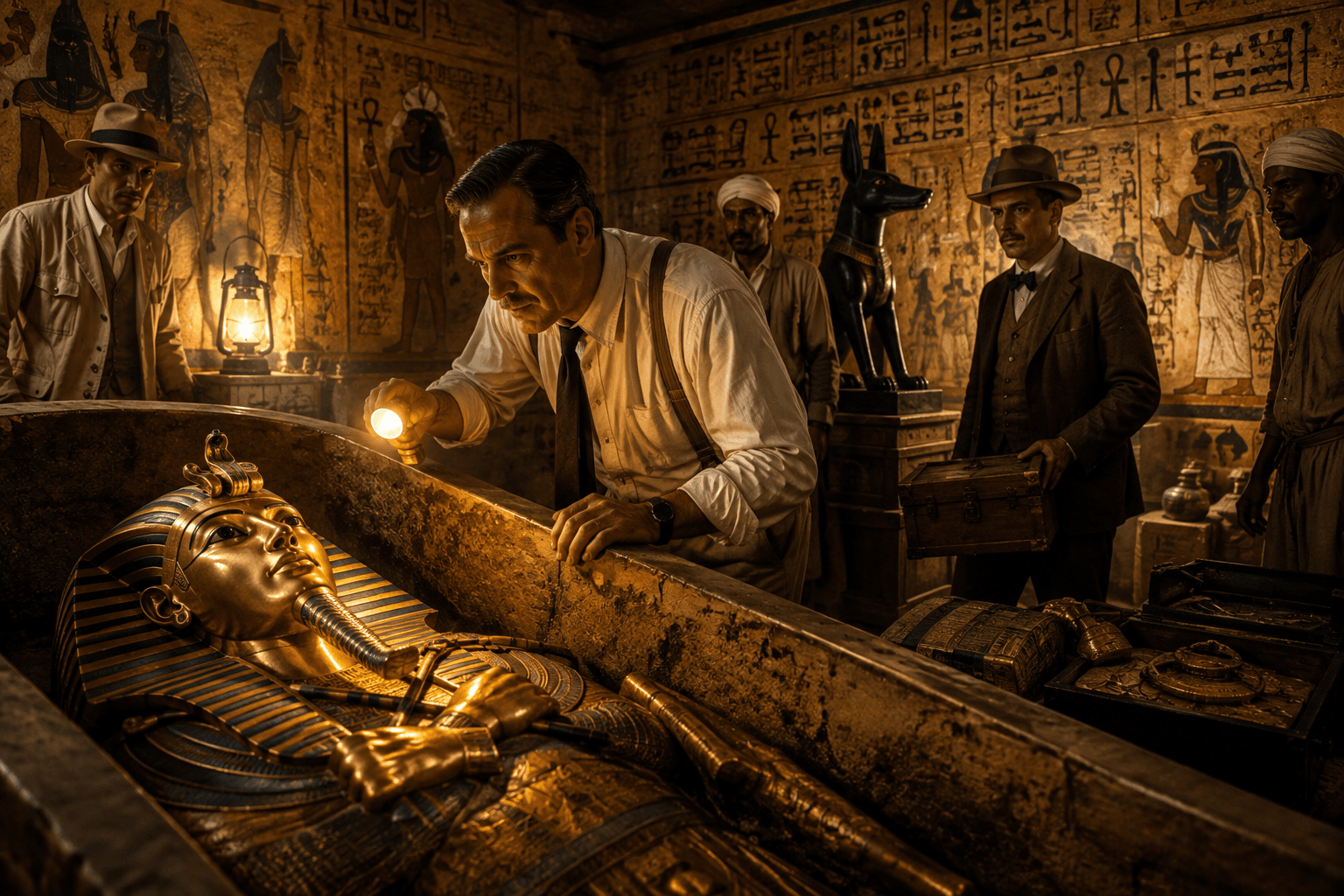
In 1922, Howard Carter peered through a hole in a sealed doorway and saw “wonderful things.” A century later, one small drill-hole might give us the same moment — rooms sealed since the Bronze Age, in the most famous tomb on Earth, possibly holding the most sought-after mummy in history.
Or it might be rubble. That’s archaeology: the most exciting sentence in the field is never “we found it.” It’s “we have to look.” And for the hidden chambers in Tutankhamun’s tomb, that look might be only weeks away.
Want the full backstory? Start with our Valley of the Kings guide, meet the queen at the center of the mystery in Nefertiti, and browse Tutankhamun’s treasures. If the eerie side grabbed you, the curse of Tutankhamun separates legend from fact — and the Book of the Dead is the Egyptians’ own roadmap to the afterlife.