
Explore the King Tut curse myth: was it real or media fiction? Discover the truth behind the 1922 narrative and what actually happened to tomb expedition members.
Introduction
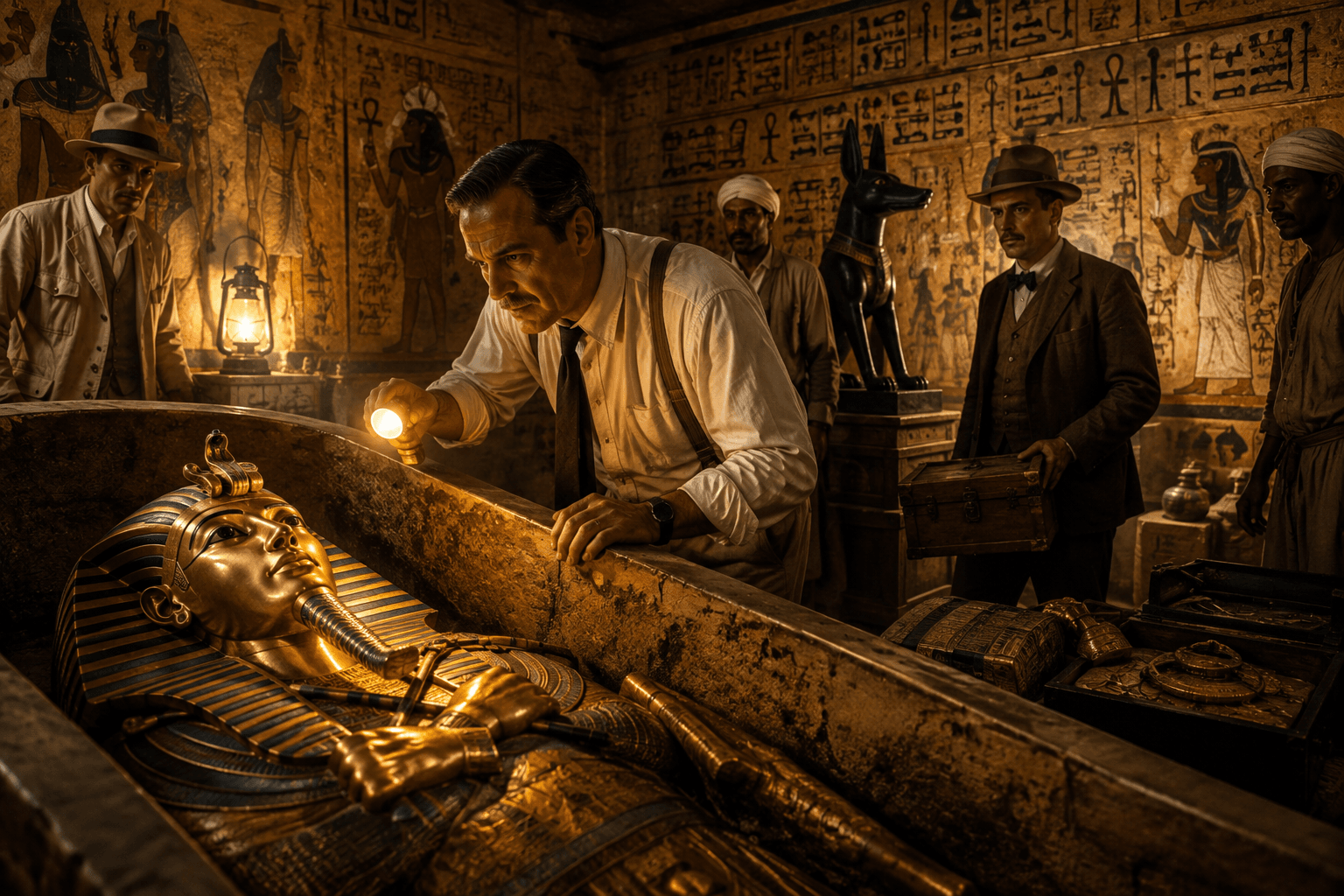
Here’s the narrative that captured global imagination in 1922: archaeologists opened King Tutankhamun’s tomb. Immediately, strange things started happening. People connected to the excavation began dying mysteriously. One by one, members of Howard Carter’s team fell victim to a supernatural curse—the Pharaoh’s Curse. Our guide to ancient Egyptian mummification explains what was actually done to the body.
It’s a compelling story. Ancient curse. Disturbing sacred tombs. Supernatural retribution. Hollywood couldn’t have written it better.
Except there’s one problem: it’s not true. The curse was entirely fabricated by newspapers for sensationalism and sales.
The “Curse of Tutankhamun” is one of history’s most famous myths. It’s believed by millions. It appears in movies, TV shows, and popular culture constantly. It’s been retold so often that many people assume it must be real.
But it’s not. It’s media fiction—created by 1920s journalists who needed a compelling story and knew that “ancient curse” sold more newspapers than “archaeologist finds interesting artifacts.”
What actually happened? Much more mundane. People lived normal lives. Some died of natural causes. Some lived long, healthy existences. No curse. No supernatural retribution. Just ordinary human existence.
Let me separate the myth from the reality and explain how one of history’s greatest scientific discoveries became tangled up with occultism and supernatural nonsense.
The Original Narrative: How the Curse Myth Was Created
When Howard Carter’s team opened Tutankhamun’s tomb in November 1922, it was front-page news worldwide. But initially, the coverage was straightforward: archaeologists discover pharaoh’s tomb, treasures are remarkable, Egypt becomes center of global attention.
The cursed narrative emerged gradually, building on several elements:
Lord Carnarvon’s Death (April 1923): The Encyclopaedia Britannica entry on the curse of the pharaohs traces how the story spread.
About five months after the tomb’s opening, Lord Carnarvon (Carter’s patron and financial backer) died in Cairo from complications related to blood poisoning. He had cut himself while shaving, the cut became infected, and he developed pneumonia. He was 56 years old—not young, but not remarkably old either for the era.
Carnarvon’s death was medically straightforward. In 1923, before antibiotics, minor infections could become serious. A shaving cut that became infected and led to pneumonia was a plausible cause of death.
But newspapers couldn’t resist the angle: “Lord Carnarvon Dies! Curse of the Pharaoh!”
The Media Frenzy:
Newspapers ran with the curse narrative. Each new death connected to the expedition was attributed to the curse. A writer who visited the tomb died? Curse! A member of the excavation team fell ill? Curse! The story sold newspapers.
The papers invented dramatic details. They quoted curse inscriptions on the tomb (which didn’t actually exist). They described supernatural phenomena (which never happened). They built a narrative of ancient vengeance and modern hubris.
The Supernatural Sells:
This was the Jazz Age. People were fascinated with the occult, spiritualism, and mysticism. Newspapers knew that curse narratives sold better than factual archaeology. So they amplified the supernatural elements and downplayed the mundane reality.
Also read:- Religion of Ancient Egypt: Gods, Beliefs, and Spiritual Practices Explained
The Reality: Deaths and Longevity in the Excavation Team
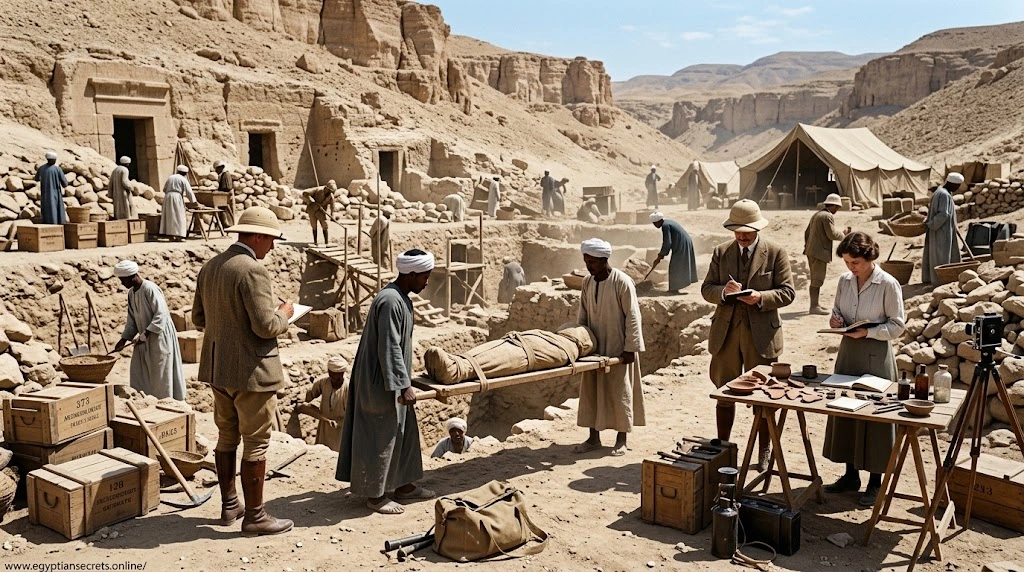
Let’s look at what actually happened to people connected to the tomb’s opening:
Howard Carter (Lead Archaeologist):
The person most directly involved in the tomb’s excavation. He spent months inside the sealed tomb, working daily with ancient objects, breathing the tomb’s air. Our guide to ancient Egyptian mummification explains what was actually done to the body.
If any curse existed, it should have targeted Carter most severely.
What actually happened? Carter lived to be 64 years old, dying in 1939—16 years after the tomb’s opening. He died of natural causes (Hodgkin’s lymphoma), which is medically unrelated to tomb disturbance. He enjoyed a long life by the standards of his era.
Lord Carnarvon (Financial Backer):
Death from blood poisoning, five months after the tomb opened. The narrative: curse. The reality: medically explainable infection from a minor cut.
Other Expedition Members:
Dr. Alan Gardiner (Egyptologist): Lived until 1963, age 85 (normal old age)
Dr. James Henry Breasted (Egyptologist): Lived until 1935, age 68 (normal lifespan)
Dr. Burton (photographer): Lived until 1940, age 61 (reasonable for the era)
Harry Burton (photographer): Worked extensively in the tomb for months, lived until 1940
The vast majority of people directly involved in the excavation lived normal lifespans. Many lived to old age. None experienced unusual or mysterious deaths.
Comparing to General Mortality:
Here’s the key comparison: among any group of people, some will die over time. Mortality statistics are predictable. If you take a group of 20-50 people connected to an archaeological expedition in the 1920s, you’d expect some to die within the following decade—simply from ordinary causes at normal rates.
The deaths that occurred among Carter’s team were completely consistent with normal mortality rates. There’s no statistical evidence of unusual mortality. There’s no pattern suggesting anything except ordinary human death.
Deaths Attributed to the Curse: The Actual Details
Newspapers attributed various deaths to the curse. Let’s look at what actually happened:
Death #1 – Lord Carnarvon (April 5, 1923):
Medical cause: Blood poisoning (sepsis) following a shaving cut, complicated by pneumonia. Age at death: 56 Explanation: Medically explainable infection
Death #2 – Arthur Mace (1928/1929)timeline uncertain):
Historical Context: Member of Carter’s team. Cause: Pneumonia Age: 54 Explanation: Pneumonia was common and could be deadly before antibiotics
Death #3 – Aubrey Herbert (1923):
Relationship: Related to Lord Carnarvon (visited tomb briefly) Cause: Peritonitis (abdominal infection from unknown source) Age: 42 Explanation: Peritonitis was serious pre-antibiotics, but could occur for many reasons
Deaths #4-6 and Beyond:
As years passed, other people remotely connected to the excavation died. Newspapers attributed all deaths to the curse. But these connections became increasingly tenuous:
- Someone who worked on the archaeological team? Curse!
- Someone who visited the tomb once? Curse!
- Someone who saw photographs of the treasures? Curse!
- Someone who attended a museum exhibition of Tutankhamun artifacts? Curse!
Eventually, “curse victims” included people with only the most remote connection to the tomb—people who never went to Egypt, never saw the tomb, simply heard about it.
Why the Curse Narrative Persisted

The curse narrative was so compelling that it persisted even as evidence contradicted it:
Human Preference for Stories Over Data:
Humans find narratives compelling. “Ancient curse kills thieves” is more interesting than “person died of natural causes consistent with life expectancy statistics.”
Confirmation Bias:
Once people believed in the curse, they interpreted new information through that lens. A death was attributed to the curse; when no death occurred, it wasn’t news. The successes were ignored; the “failures” were emphasized.
Media Incentive:
Newspapers made money from sensational stories. Factual reporting of archaeology sold fewer papers than “mysterious curse claims lives.”
Cultural Fascination with the Occult:
The 1920s were fascinated with spiritualism and the supernatural. The curse narrative aligned with cultural interests.
Lack of Fact-Checking:
Unlike modern times, verifying facts across international media was difficult in the 1920s. Once a narrative established itself, correcting it was nearly impossible.
The Curse: What the Tomb Actually Said
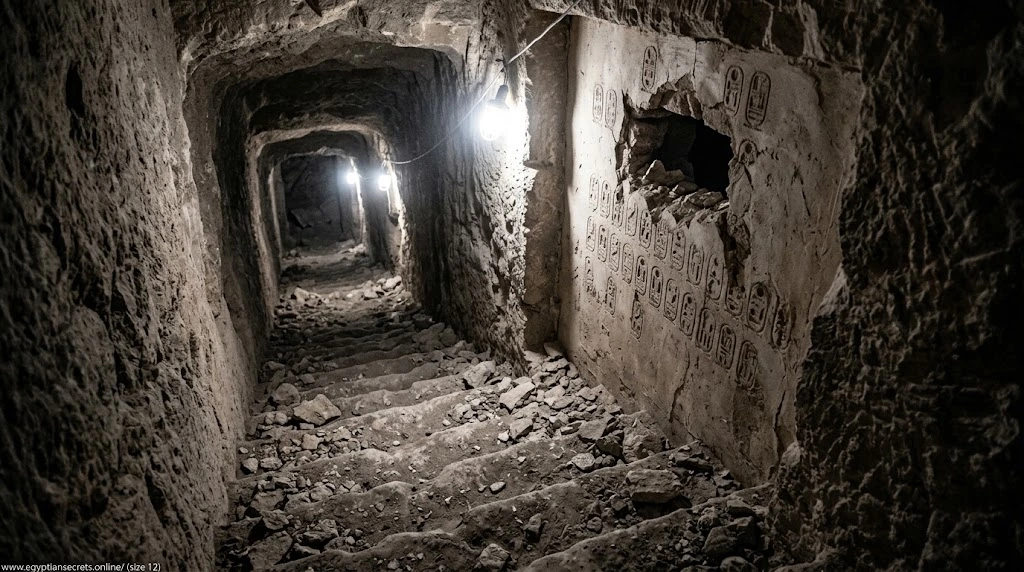
Interestingly, Tutankhamun’s tomb had no actual curse written on it.
Some tombs had protective spells or warnings—phrases meant to discourage tomb robbers or protect the sacred space. These weren’t literally cursed; they were spiritual protections or boundaries.
Tutankhamun’s tomb had standard religious inscriptions—prayers for protection, religious formulas, names and titles. But nothing that could be interpreted as a death curse.
Newspapers invented curse inscriptions that never existed. They quoted phrases that were never written on the tomb. They created a narrative of supernatural retribution that had no basis in the actual archaeological evidence.
Later Debunking: Modern Analysis
Eventually, scholars and archaeologists systematically documented what happened to expedition members. The results:
Statistical Analysis:
When historians compiled mortality data for the excavation team and associated people, death rates were completely normal. No statistical anomaly. No pattern suggesting anything but ordinary mortality.
Medical Analysis:
Deaths were reviewed by medical experts. All had straightforward medical explanations. No mysterious causes. No evidence of poisoning or supernatural intervention.
Chronological Analysis:
The timeline didn’t support curse narratives. Some “curse victims” died years after minimal contact with the tomb. Death rates didn’t spike immediately after the opening—they followed normal patterns.
Carter’s Longevity:
Most decisively: Howard Carter, the person most directly involved, lived 16 years after opening the tomb. If supernatural retribution was occurring, surely the person most responsible would be targeted first and most severely. He wasn’t.
Why Belief in the Curse Persisted Despite Evidence
Even as scholars debunked the curse, popular belief persisted:
Myth Persists Longer Than Facts:
Once established in culture, myths are remarkably persistent. The curse was cemented in popular imagination by dozens of books, movies, and retellings.
Media Continues Repeating Narrative:
Even modern documentaries sometimes present the curse narrative without adequate debunking. The story is too good to completely abandon.
Entertainment Value:
Entertainment media (movies, TV) benefit from curse narratives. Presenting facts wouldn’t be as compelling as presenting the supernatural storyline.
Human Psychology:
We prefer compelling narratives to mundane reality. “Ancient curse” is more interesting than “person experienced normal mortality.”
The Lasting Impact: How Myth Shaped Public Understanding
The curse myth had significant consequences:
Affected Archaeology’s Public Perception:
The curse narrative made archaeology seem romantic and dangerous—archaeology as adventure rather than scholarship. This changed how the public viewed archaeological work.
Influenced Tomb Preservation:
Fear of the curse (however irrational) led some to advocate for leaving tombs undisturbed. This actually had some positive effects—raising awareness about tomb preservation—but for the wrong reasons.
Created Tourism Industry:
Fascination with the curse (and King Tut generally) made Egypt a major tourism destination. This had economic consequences and influenced Egyptian cultural identity.
Set Precedent for Sensationalism:
The curse narrative established a template for media sensationalism around archaeological discoveries that persists today.
What Actually Killed Lord Carnarvon: The Medical Reality
Since Carnarvon was the “primary curse victim,” let’s examine his death in detail:
The Injury:
Carnarvon cut himself while shaving. A minor injury, minor wound.
The Infection:
The cut became infected—probably by bacteria (Staphylococcus or similar). In the 1920s, without antibiotics, minor cuts could become serious.
The Progression:
The infection spread (what doctors call cellulitis), leading to:
- Fever
- Swelling
- Systemic infection (sepsis)
- Respiratory complications
The Complication:
Sepsis led to pneumonia. His weakened immune system couldn’t fight the infection.
The Death:
He died from sepsis and pneumonia—a combination of complications from an initially minor cut.
This is medically explainable and completely normal for the era. It has nothing to do with ancient curses or supernatural intervention. It’s a tragic but ordinary story of pre-antibiotic medicine’s limitations.
Frequently Asked Questions (FAQ)
Q: Was there actually a curse written on Tutankhamun’s tomb?
A: No. The tomb had standard religious inscriptions but no actual curse. Newspapers invented curse inscriptions that never existed.
Q: Did multiple people on the expedition team die mysteriously?
A: Some people connected to the excavation died over the following years, but from natural causes and at normal mortality rates. No mysterious deaths occurred.
Q: Why did Lord Carnarvon die?
A: Blood poisoning (sepsis) following a shaving cut, complicated by pneumonia. Medically explainable and unrelated to tomb disturbance.
Q: Did Howard Carter die from the curse?
A: No. Carter lived 16 years after the tomb opening, dying at 64 from Hodgkin’s lymphoma (unrelated to the tomb).
Q: How many people actually died from the “curse”?
A: No one died from a curse. Some people connected to the excavation died from natural causes over the following decades—consistent with normal mortality statistics.
Q: Who created the curse narrative?
A: Primarily 1920s newspapers, seeking sensational stories. Some spiritualists and occultists promoted the narrative for their own reasons.
Q: Has the curse been scientifically disproven?
A: Yes. Statistical analysis of mortality rates, medical analysis of deaths, and chronological analysis all show no evidence of curse or supernatural intervention.
Q: Why do people still believe in the curse?
A: Myths persist in culture even after debunking. The curse narrative is compelling and entertaining, more so than factual analysis.
Conclusion: Separating Myth from History
The Curse of Tutankhamun is one of history’s greatest myths—completely fabricated by media sensationalism, yet believed by millions and reinforced through decades of retelling.
The reality is far more mundane: archaeologists discovered a pharaoh’s tomb. People connected to the excavation lived normal lives, with normal mortality patterns. Some died of natural causes (as all humans eventually do). Newspapers sensationalized the story for sales and entertainment value.
It’s a reminder of how media shapes understanding of reality. It’s a lesson in the power of narrative—how compelling stories can become accepted as truth despite contradicting evidence.
But it’s also an opportunity to appreciate the actual discovery—not as cursed or mysterious, but as a remarkable window into ancient Egyptian civilization. The real story of Tutankhamun—a boy pharaoh ruling during turbulent times, dying mysteriously, and being rediscovered 3,000 years later—is far more interesting than any fictional curse.
That’s what we should remember about King Tutankhamun: not the curse that never existed, but the remarkable life and death of a young pharaoh whose tomb ultimately taught us more about ancient Egypt than any other archaeological discovery.
Sources & References
- Reeves, C. N. (1990). The Complete Tutankhamun: The King, the Tomb, the Royal Treasure. Thames and Hudson.
- James, T. G. H. (1992). Howard Carter: The Path to Tutankhamun. Kegan Paul.
- Brier, B. (1997). The Murder of Tutankhamen: A True Story. Putnam.
- Wade, N. (2011). “King Tut’s Curse: You Won’t Be Surprised.” New York Times.
- Leek, S. J. (1969). The Leg of Tutankhamun: An Historical and Genealogical Study. Unpublished manuscript (University of Liverpool).

1 Comment