
The Question That Keeps Showing Up on Google
Here’s something I genuinely didn’t expect: one of the fastest-rising pyramid searches in America this year is “pyramids in florida.” Up 200%. Not “pyramids of Giza.” Florida.
And honestly? I get the curiosity. Because here’s the part school skips: Egypt never had a monopoly on pyramids. Not even close. Sudan built more of them than Egypt ever did. The biggest pyramid on the planet — measured by sheer volume, not height — isn’t in Egypt at all. It’s in Mexico, hiding under a church. And pyramids around the world went up in places that had never heard of the Nile, raised by people who never met an Egyptian.
So let’s take the tour. Because once you start looking beyond Giza, pyramids around the world tell a much stranger, much bigger story — and the Grand Egyptian Museum’s 2025 opening has a whole new generation staring at Giza and asking, “wait, where else did this happen?”
✍️ Write YOUR Name in Real Hieroglyphics
See how the ancient Egyptians would have written your name — free interactive tool.
Try It Now →Which Country Has the Most Pyramids?
Sudan. Sudan has at least 230 ancient pyramids, and some counts reach about 255. Egypt has roughly 120 to 140. Sudan’s pyramids were built by the kings and queens of Kush, mostly at El-Kurru, Nuri and Meroë, between about 750 BC and AD 350. They are smaller and steeper than Egypt’s, but there are far more of them. Guinness World Records lists Sudan as the country with the most ancient pyramids.
Countries with ancient pyramids
- Sudan — about 230–255 (El-Kurru, Nuri, Meroë)
- Egypt — about 120–140 (Giza, Saqqara, Dahshur and more)
- Mexico — Cholula, Teotihuacán, Chichén Itzá; Cholula is the largest pyramid on Earth by volume
- Guatemala, Belize, Honduras and El Salvador — Maya temple-pyramids such as Tikal
- Peru — adobe and stone pyramids at Caral and the Moche Huacas
- Iraq and Iran — stepped ziggurats, such as Ur and Chogha Zanbil
- United States — earthen platform mounds, such as Monks Mound at Cahokia
- Italy — the Pyramid of Cestius in Rome, a Roman tomb copied from Egyptian and Nubian models
Who were the kings buried under Sudan’s first pyramids? They were the 25th Dynasty, the “black pharaohs” who ruled Egypt in the 8th and 7th centuries BC.
Quick Facts: Pyramids Around the World
- Which country has the most pyramids? Sudan — roughly 255, more than double Egypt’s ~120–140.
- The largest pyramid by volume is Mexico’s Great Pyramid of Cholula (~4.45 million cubic meters vs. Giza’s ~2.6 million).
- The tallest ancient pyramid is still the Great Pyramid of Giza (originally ~146 meters).
- Independent inventions: pyramid-building arose separately in Egypt, Sudan, Mesopotamia, and the Americas.
- Are there ancient pyramids in Florida? No — but the US Southeast has real pyramid mounds (Cahokia, Emerald Mound).
Pyramids Around the World: The Egyptian Originals
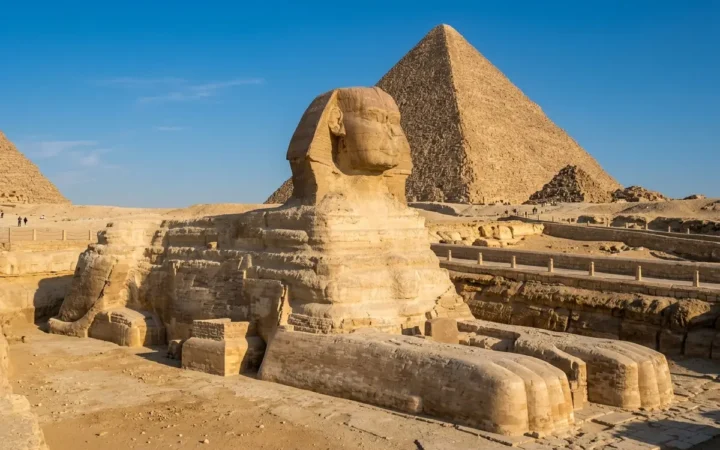
Start where everyone starts: Giza. Around 2560 BCE, Pharaoh Khufu’s builders stacked some 2.3 million stone blocks into a mountain 146 meters tall — and held the title of the world’s tallest human-made structure for more than 3,800 years. Egypt’s pyramids were tombs, pure and simple: stairways and machines for getting a dead king to the afterlife, as we’ve covered in our guide to how the pyramids were built.
Egypt built somewhere between 118 and 140 pyramids over about a thousand years, from Djoser’s famous Step Pyramid at Saqqara (c. 2670 BCE) to the smooth-sided giants of Giza. But here’s the twist that makes pyramids around the world so fascinating: Egypt’s neighbors were watching. And one of them decided to out-build the teacher.
Sudan’s Forgotten Pyramids: More Than Egypt Ever Built
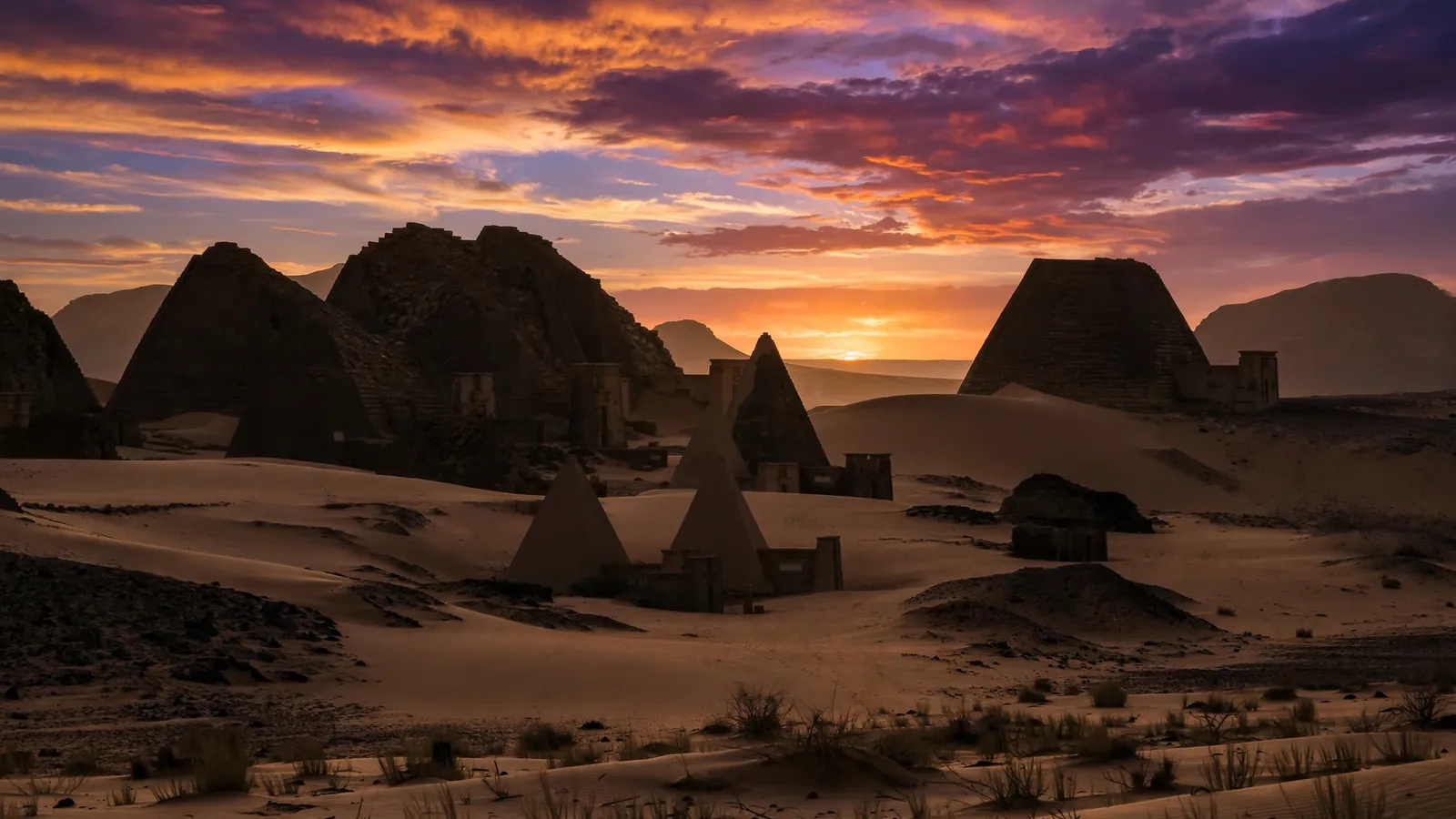
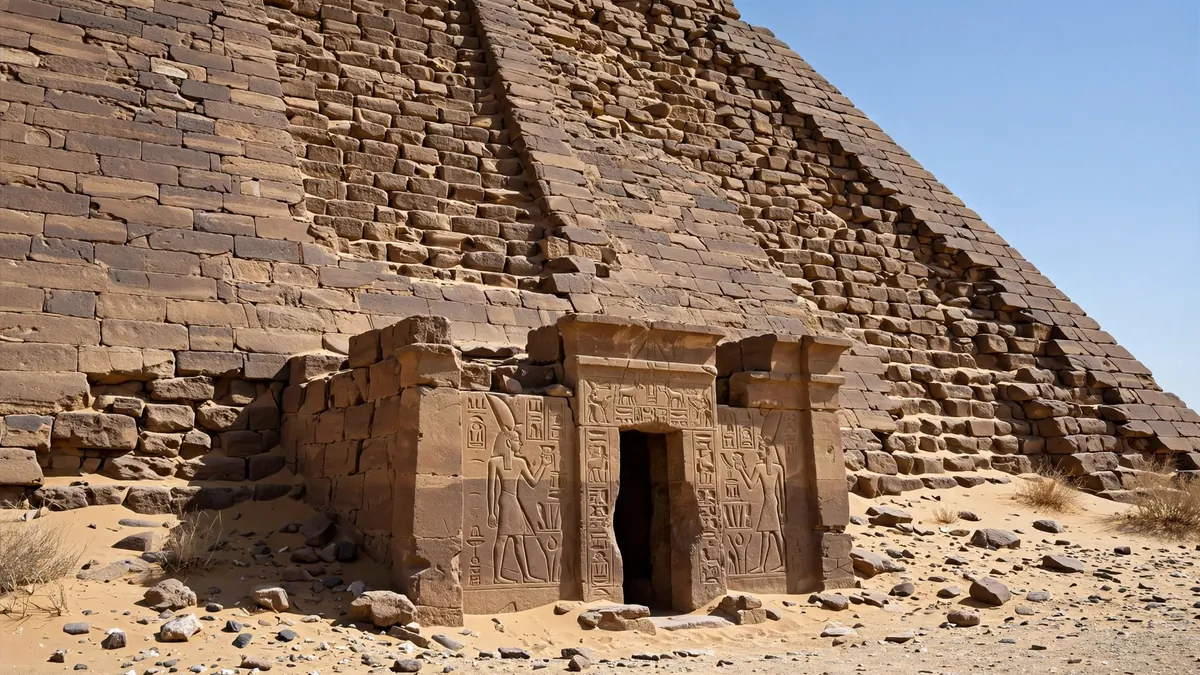
Say “pyramids” and nobody pictures Sudan. They should. The desert north of Khartoum holds roughly 255 pyramids — more than twice Egypt’s total — built by the Kingdom of Kush between about 700 BCE and 350 CE.
You can spot a Nubian pyramid instantly. They’re steep — dramatically steeper than Giza, with slopes around 70 degrees — narrow, and packed in tight clusters like a forest of stone arrowheads. Meroe alone, the Kushite capital and now a UNESCO World Heritage site, holds over 200 of them. The tallest barely reach 30 meters, so no single one competes with Khufu. But as a tradition? As a sheer number of pyramids? Sudan wins, and it isn’t close.
And these weren’t copycats. The Kushites had conquered Egypt itself in the 700s BCE, ruling as the 25th Dynasty — the famous “Black Pharaohs.” They took the pyramid idea home and made it their own, with burial chambers tucked beneath the structure instead of inside it, and chapels covered in relief carvings. For a thousand years, pyramids around the world meant Sudan just as much as Egypt — we just forgot to mention it in the textbooks.
The World’s Oldest Pyramid Towers: Mesopotamia’s Ziggurats
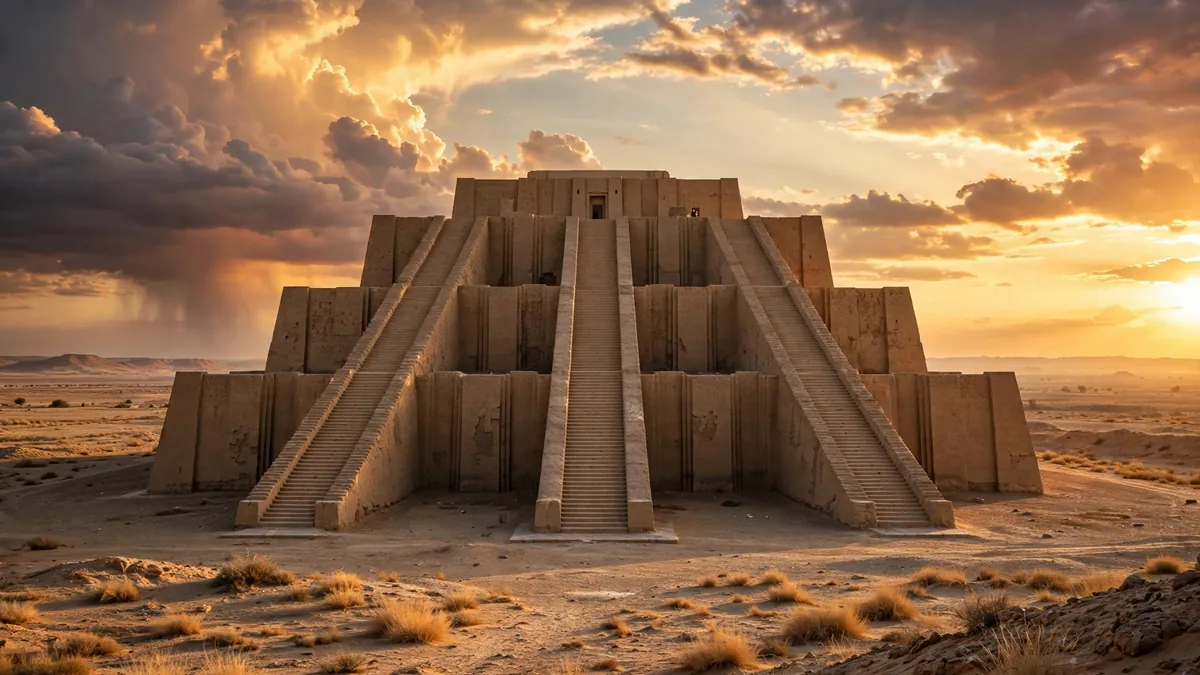
Now jump east, to Iraq, and back even further in time. Around 2100 BCE, King Ur-Nammu raised the Ziggurat of Ur: a massive stepped platform of mud-brick, with three staircases climbing to a temple at the top. It wasn’t a tomb at all — it was a stairway for the gods to come down, and for priests to climb up.
The Mesopotamians built dozens of these ziggurats, including Etemenanki in Babylon — the “foundation of heaven and earth” — a tower so enormous that many scholars think it inspired the story of the Tower of Babel. Same instinct as Egypt, completely different purpose: pyramids around the world weren’t always about the dead. In Mesopotamia, they were about reaching the divine while still alive.
Pyramids Around the World: The Biggest Pyramid Is in Mexico
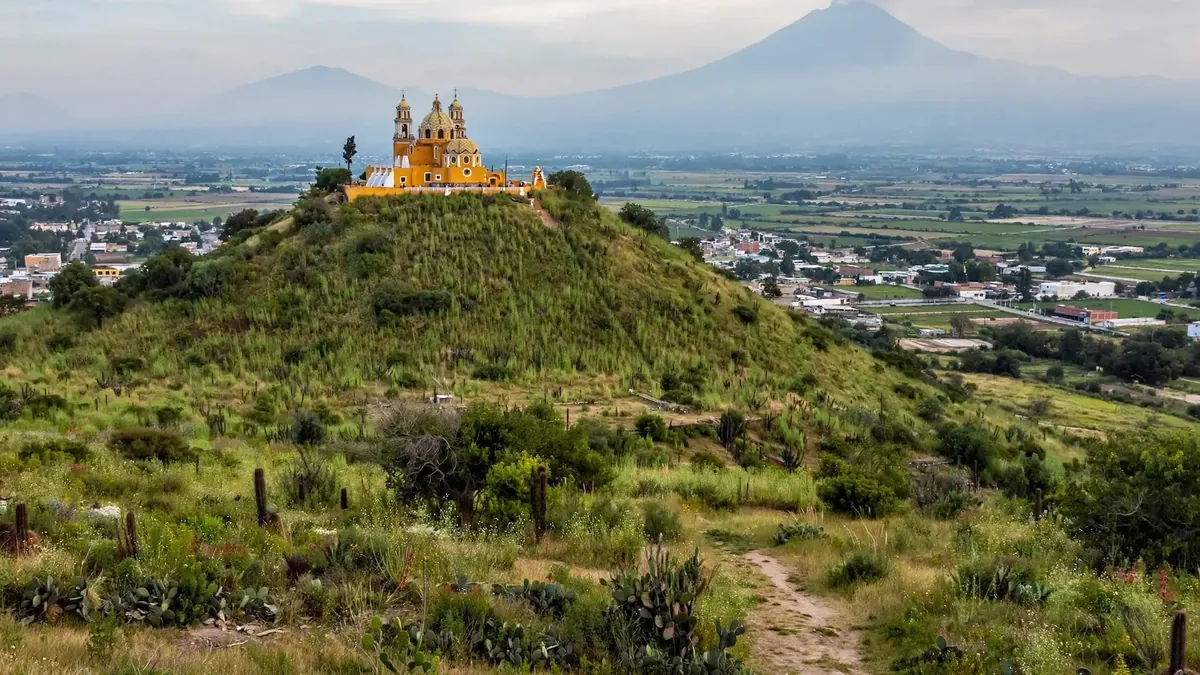
Okay, deep breath, because this one breaks brains: the largest pyramid in the world by volume is not in Egypt. It’s the Great Pyramid of Cholula in Puebla, Mexico — and most people walk right past it, because for centuries it looked like a hill.
The numbers are absurd. Cholula holds roughly 4.45 million cubic meters of material, against the Great Pyramid of Giza’s roughly 2.6 million. Its base spreads about 300 by 315 meters — dwarfing Giza’s footprint. It’s just… short. Only about 25 meters of it rises above the plain today, because the Spanish built a church (the Iglesia de Nuestra Señora de los Remedios) right on top of it in the 1500s, and vegetation did the rest.
The locals even had a name for it: Tlachihualtepetl — “man-made mountain.” Construction ran in layers from around the 3rd century BCE to the 8th century CE, with each generation building a new temple over the last. Cortés marched through Cholula in 1519 and never realized the hill in the middle of town was the biggest pyramid on Earth. Pyramids around the world love hiding in plain sight.
Teotihuacán: The City Where the Gods Were Made
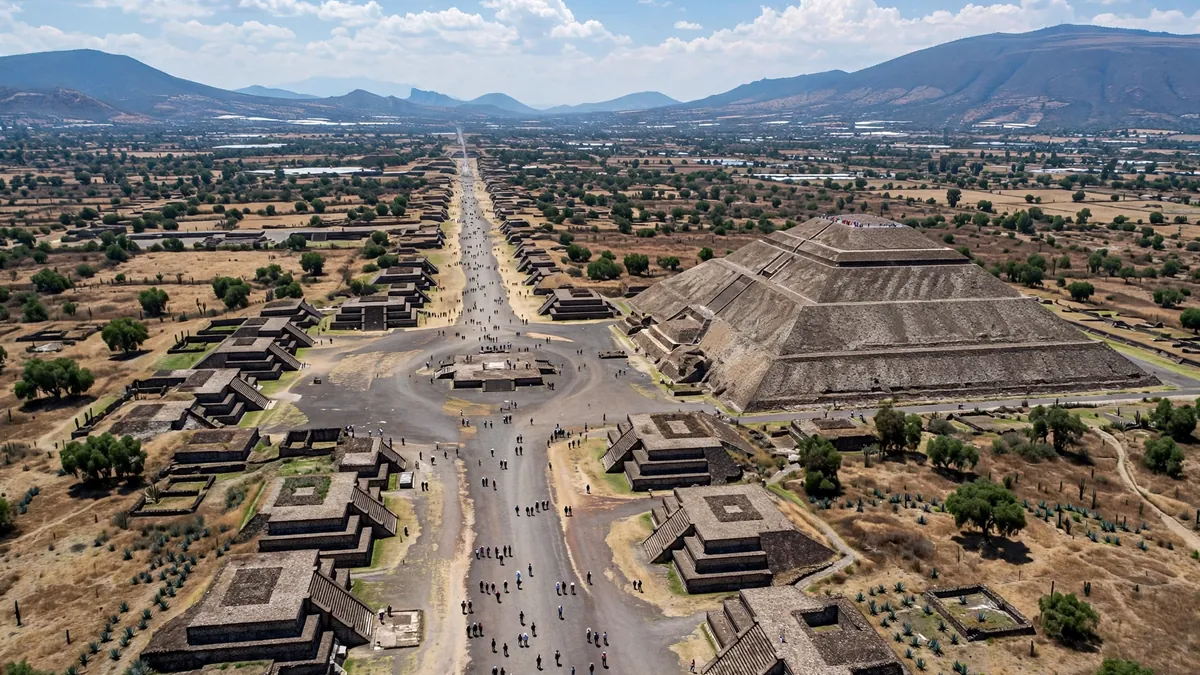
North of modern Mexico City, another civilization built something almost as staggering — and we don’t even know their name. Teotihuacán’s Pyramid of the Sun went up around 200 CE, rising 65 meters over the Avenue of the Dead. At its peak around 500 CE, the city around it held over 100,000 people, making it one of the largest cities on the planet.
“Teotihuacán” is a Nahuatl name given centuries later by the Aztecs, meaning roughly “the place where the gods were made” — or, in the more poetic translation, “the place where men become gods.” The Aztecs found the ruins already ancient and assumed only gods could have built them. Nobody knows why the city fell around 550 CE. The pyramids just… stayed.
The Maya Built Pyramids Too — With a Darker Purpose
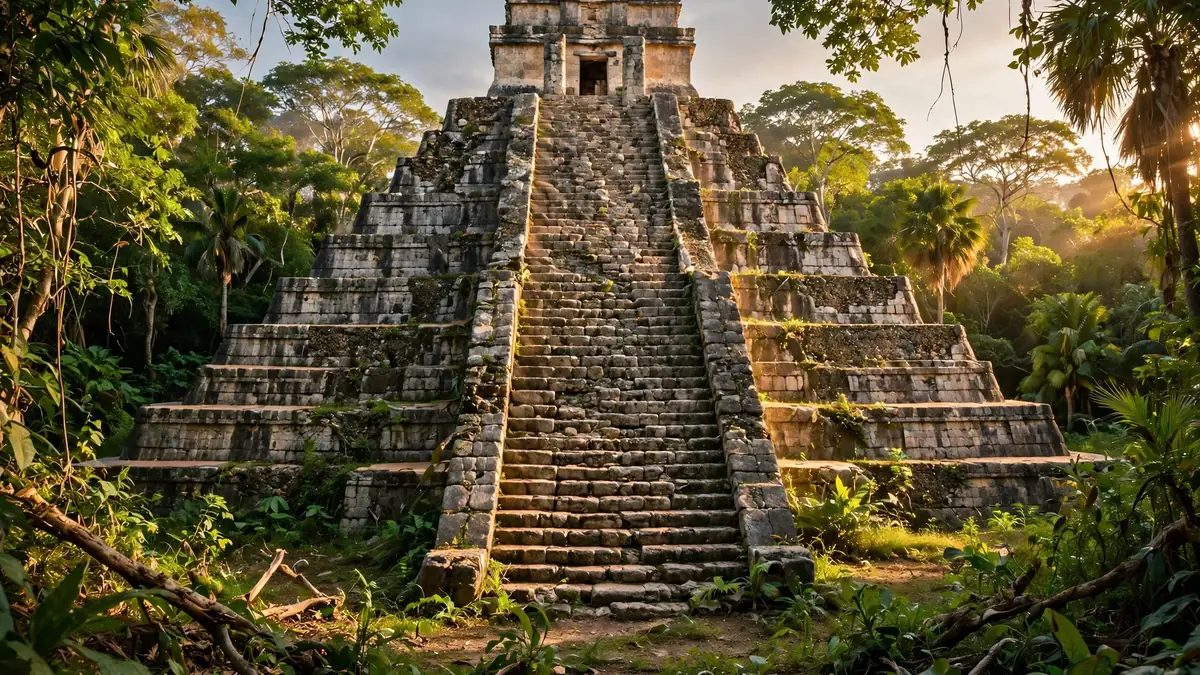
Further south, the Maya raised their own pyramids across the Yucatán and Central America from about 600 BCE to 900 CE. If Egyptian pyramids were tombs and ziggurats were god-staircases, Maya pyramids were stages: steep, stepped platforms topped with temples where rituals — including human sacrifice — played out before crowds.
The most famous is El Castillo at Chichén Itzá, the Temple of Kukulcan. On the spring and autumn equinoxes, the afternoon sun hits its staircase at exactly the right angle to throw a rippling, serpent-shaped shadow down the steps — the feathered serpent god descending to earth. That’s not decoration. That’s astronomy, architecture, and theater engineered into stone a thousand years ago. When people talk about pyramids around the world, the Maya ones are the show-offs.
So… Are There Really Pyramids in Florida?
Let’s answer the question that started this whole article. No — there are no ancient pyramids in Florida. Whoever’s Googling it (and there are a lot of you) can rest easy: no lost civilization raised a Giza in the Everglades.
But here’s the thing: the instinct isn’t wrong. The American Southeast genuinely has pyramid mounds. Monks Mound at Cahokia, Illinois — built by the Mississippian culture around 1000 CE — is a terraced earthen pyramid about 30 meters tall with a base bigger than Giza’s. Emerald Mound in Mississippi is one of the largest. They’re made of earth, not stone, and flat-topped rather than pointed, but they’re pyramids in every way that matters: monumental platforms for temples and elites, raised by hand, basket of dirt by basket of dirt.
So no Florida pyramids. But a day’s drive north? The US has its own pyramid tradition. Pyramids around the world really do include America — just not the state the searchers were hoping for.
Why Did Everyone, Everywhere, Build Pyramids Around the World?
This is the question that keeps archaeologists up at night. Egypt, Sudan, Iraq, Mexico, Guatemala, Peru, Indonesia, even ancient Greece and Rome — cultures with no contact, no shared religion, no shared language, all converging on the same shape. Coincidence? Aliens? (No. It’s never aliens.)
The honest answer is engineering. If you want to build really, really tall with stone, mud-brick, or packed earth — no steel, no arches, no concrete — the pyramid is the answer physics gives you. A wide base spreads the crushing weight; each layer sits on the one below. It’s the most stable way to pile mass toward the sky, and every civilization that wanted to impress the gods, honor the dead, or overawe the neighbors independently discovered it.
But engineering is only half of it. A pyramid is also the simplest picture of a mountain — and mountains, everywhere, were where the gods lived. Build your own mountain and you bring heaven down to the plaza. That’s why pyramids around the world kept appearing for 4,000 years: they’re the shape that ambition takes when it wants to touch the sky.
Questions People Actually Ask
Which country has the most pyramids?
Sudan, by a wide margin — roughly 255 pyramids, more than double Egypt’s ~120–140. Most cluster at Meroe, Nuri, and El-Kurru, built by the Kingdom of Kush.
What is the largest pyramid in the world?
By volume: the Great Pyramid of Cholula in Mexico (~4.45 million cubic meters). By height: the Great Pyramid of Giza (~146 meters originally). It depends how you measure “largest.”
Did ancient Egyptians build the pyramids in Mexico?
No. The Mexican pyramids were built by Mesoamerican civilizations (Teotihuacanos, Maya, and others) thousands of years later, with no contact with Egypt. Similar shape, completely independent invention.
Why are pyramids shaped like triangles?
Structurally, it’s the most stable way to build tall with stone or earth — the wide base carries the weight. Symbolically, many cultures saw them as artificial mountains linking earth and sky.
Can you visit the pyramids of Sudan?
Yes — the Meroe pyramids are a UNESCO World Heritage site. Check current travel advisories before planning, and expect far fewer crowds than Giza.
What’s the oldest pyramid in the world?
Usually credited to Djoser’s Step Pyramid at Saqqara, Egypt (c. 2670 BCE) — the oldest large-scale cut-stone structure. Mesopotamian temple platforms may be older in origin, but the Step Pyramid is the oldest surviving stone pyramid.
Egypt Was Just the Beginning
There’s nothing wrong with starting at Giza — the Great Pyramid earned its fame. But the full story is so much better: a forgotten forest of pyramids in Sudan, a god-staircase in Babylon, the biggest pyramid on Earth hiding under a Mexican church, serpent shadows in the Yucatán, and earthen giants in the American Midwest.
Want the Giza deep-dives? Step inside the Great Pyramid with us, meet the Great Sphinx guarding the plateau, or see where it all fits on our map of ancient Egypt. And if this tour gave you pyramid fever, our guide to how the pyramids were built explains the engineering that made all of it possible.