
When did Egypt get horses? Horses reached Egypt during the Second Intermediate Period, roughly 1700–1550 BC, most likely through contact with the Hyksos rulers of the Nile Delta. The earliest evidence is a few horse bones from Avaris and a horse skeleton at Buhen, though the Buhen date is disputed. By the start of the New Kingdom, around 1550 BC, horse-drawn chariots had become the core of Egypt’s army.
The Horse That Got a Soldier’s Funeral
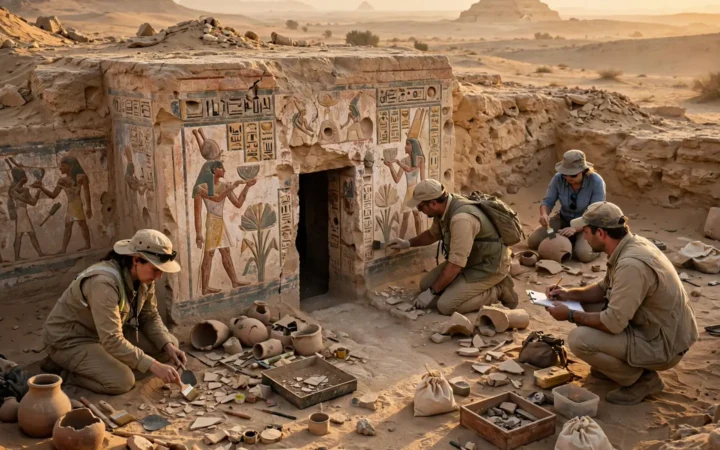
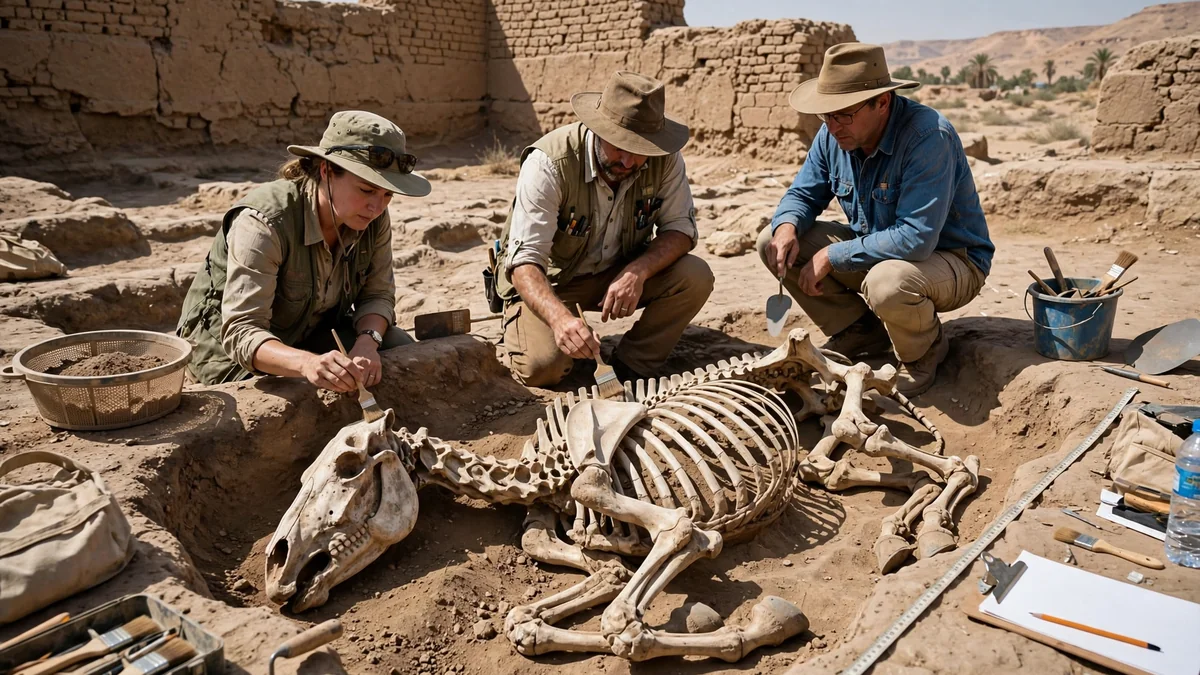
September 2026. A dig team in the mudbrick ruins of a 3,000-year-old fortress in Egypt’s Nile Delta brushes dirt off something that stops everyone cold. It is a complete horse skeleton, laid out with care, head deliberately positioned — with an alabaster chariot harness resting nearby.
In fact, this wasn’t a horse that died and got tossed in a pit. This was a horse that got a funeral.
He was young and male. According to the first studies, he was a medium-sized animal built for speed and agility — the kind you’d hitch to a war chariot. When he died some three thousand years ago inside the border fortress of Tell el-Abqain, somebody buried him like he mattered.
It raises a question most people never think to ask. What did horses in ancient Egypt actually mean to the people who owned them? The answer involves invaders, the largest chariot battle in human history, and a pharaoh who named his horses like royalty. Let’s get into it.
✍️ Write YOUR Name in Real Hieroglyphics
See how the ancient Egyptians would have written your name — free interactive tool.
Try It Now →Quick Facts: Horses in Ancient Egypt
- Native to Egypt? No — horses arrived with the Hyksos around 1650 BCE; before that, Egypt had donkeys, not horses.
- First real use: War chariots in the New Kingdom (c. 1550–1070 BCE) — fast, light, two-horse teams.
- Biggest moment: The Battle of Kadesh, c. 1274 BCE — roughly 5,000 to 6,000 chariots, the largest chariot battle ever fought.
- 2026 discovery: A young male warhorse given a ceremonial burial inside the fortress of Tell el-Abqain, Beheira province, Nile Delta.
- Status symbol: Owning chariot horses put you near the top of Egyptian society — just under the pharaoh himself.
- Famous names: Ramesses II’s own chariot team at Kadesh was called Victory in Thebes and Mut is Satisfied. Yes, really.
Horses in Ancient Egypt: Latecomers to the Party
Here’s what surprises people. For the first two thousand years of pharaonic civilization — pyramids, Sphinx, all of it — Egypt had no horses at all. The Old and Middle Kingdoms ran on donkeys and human muscle.
Then, around 1650 BCE, everything changed. A people called the Hyksos swept into the Delta from the Levant. They brought something Egypt had never seen: the horse, and the chariot it pulled. As a result, Egypt’s foot soldiers suddenly faced a fast, mobile enemy they couldn’t catch.
So they did what great powers do. They stole the idea.
Then Ahmose I drove the Hyksos out around 1550 BCE and founded the New Kingdom. By then, Egypt had its own chariot corps — and it never looked back. Eventually, the chariot went from foreign terror weapon to the backbone of the Egyptian army. Not bad for an import.
The Chariot: A 3,000-Year-Old Sports Car
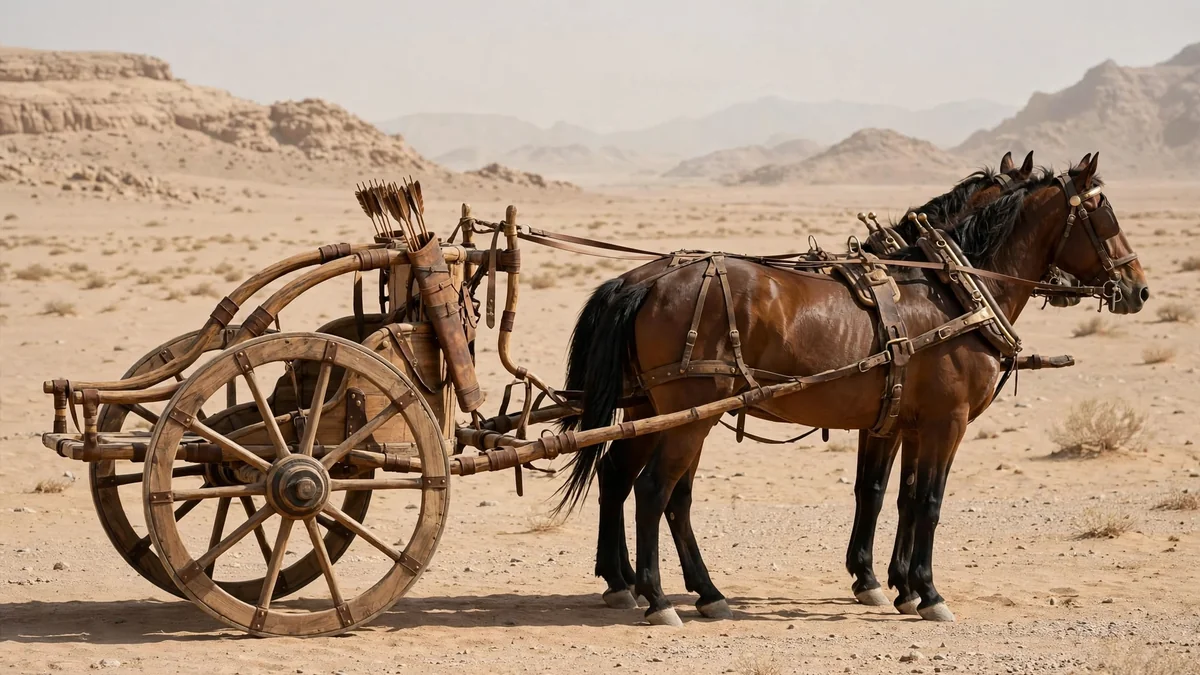
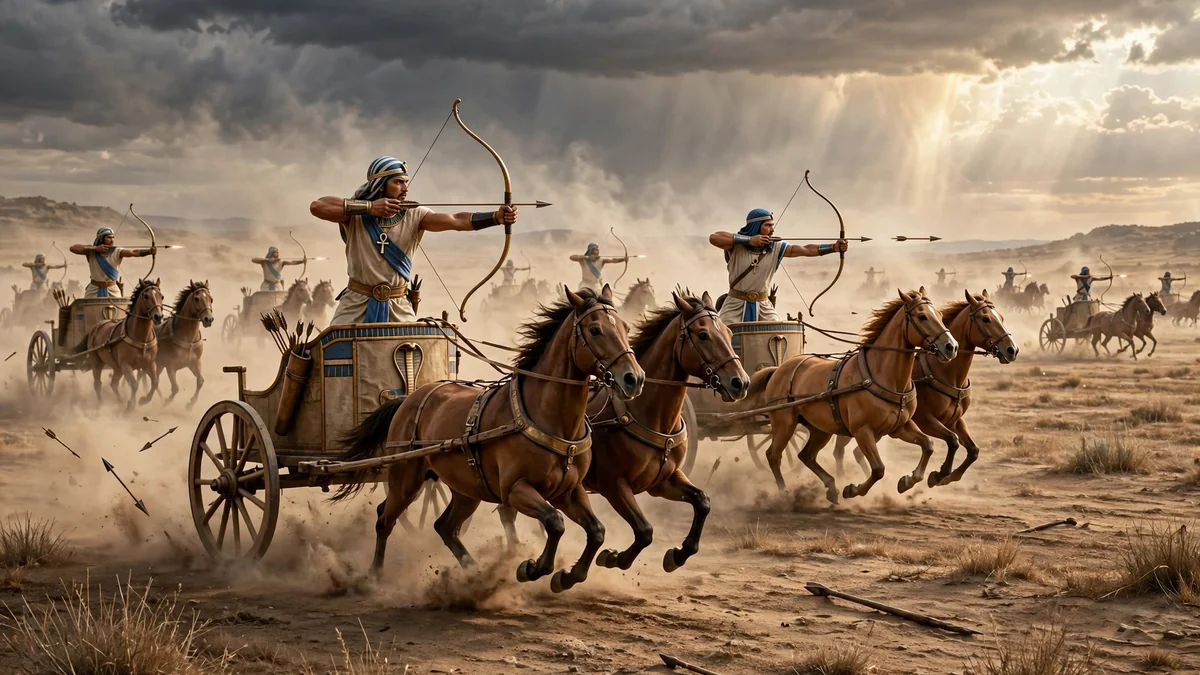
Forget heavy, clunky wagons. The Egyptian war chariot was a masterpiece of light engineering: a two-wheeled platform of bent wood and leather. It was so light a strong man could reportedly lift one. Two horses, one driver, one warrior with a bow.
Speed was the point. Egyptian chariot-makers built their vehicles lighter and faster than the heavy three-man chariots of their Hittite rivals. Instead, they traded armor for maneuverability. For example, on an open plain, a team could dart in and loose a storm of arrows. Then it would wheel away before the enemy could respond. For two centuries, this machine made Egypt the superpower of the Near East. Indeed, the story of horses in ancient Egypt is really the story of this machine.
And the horses? They weren’t the big draft animals you’d picture pulling a carriage. Early studies of the Tell el-Abqain warhorse describe a medium-sized breed. It was built for speed and agility — more athlete than workhorse. Breeders selected and trained these animals for one job: going very fast, in formation, while arrows flew.
Meet the Warhorse of Tell el-Abqain
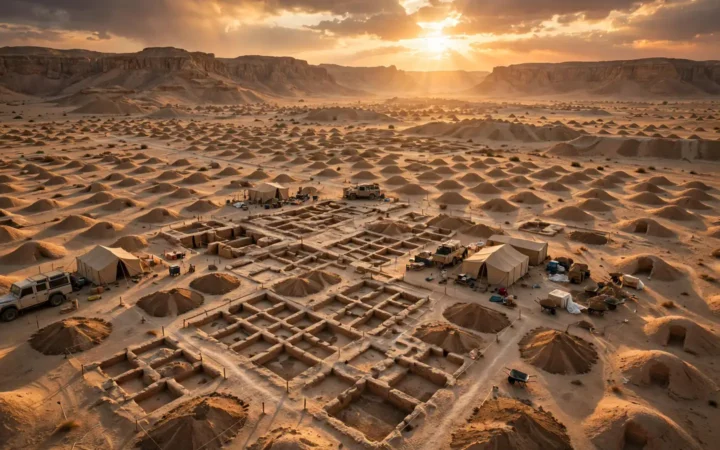
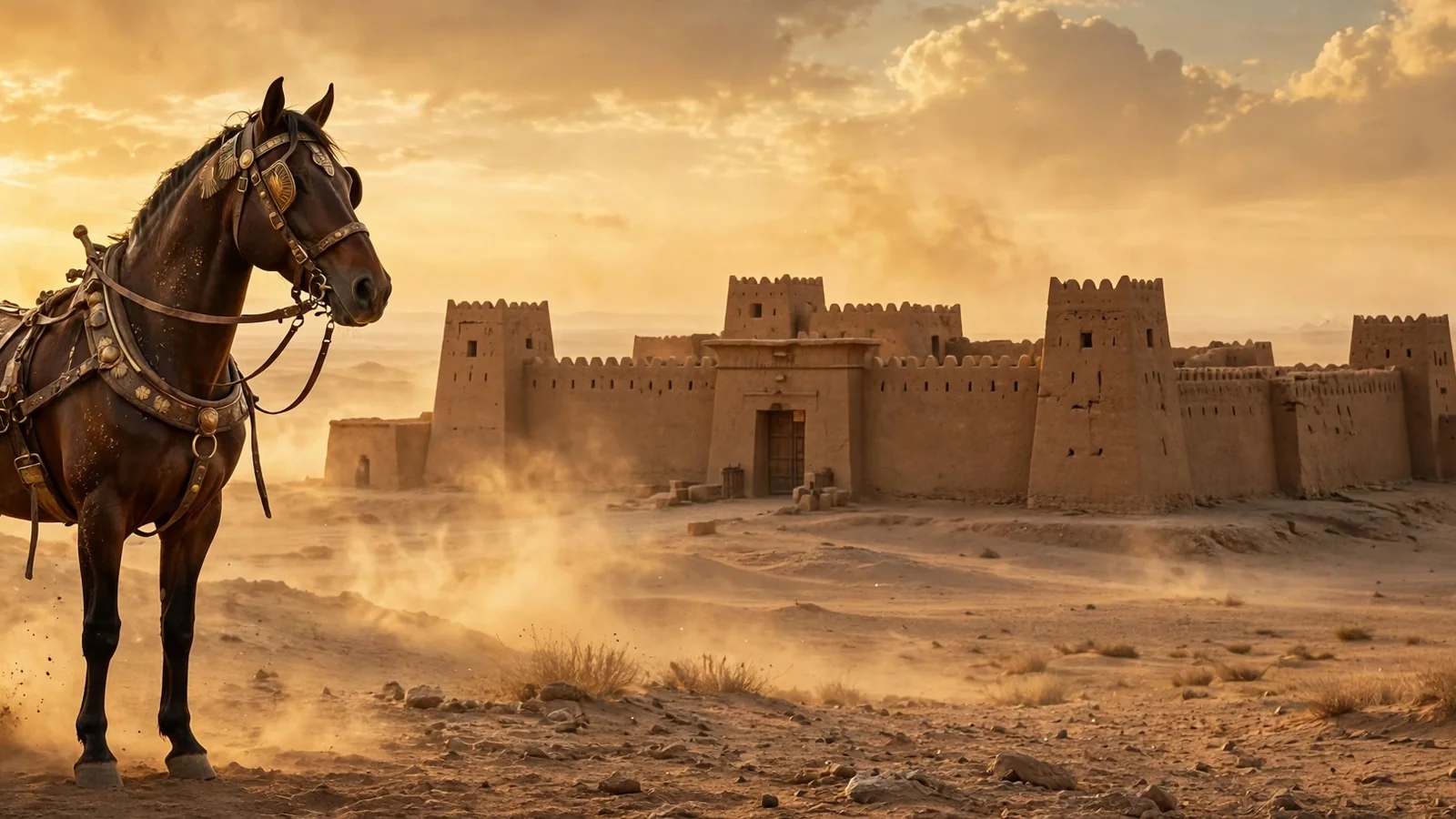
Now back to that September 2026 announcement. Egypt’s Ministry of Tourism and Antiquities revealed the latest finds from Tell el-Abqain. This New Kingdom fortress in the Beheira province of the northwestern Delta, first unearthed in 2024, had turned up far more than walls and weapons.
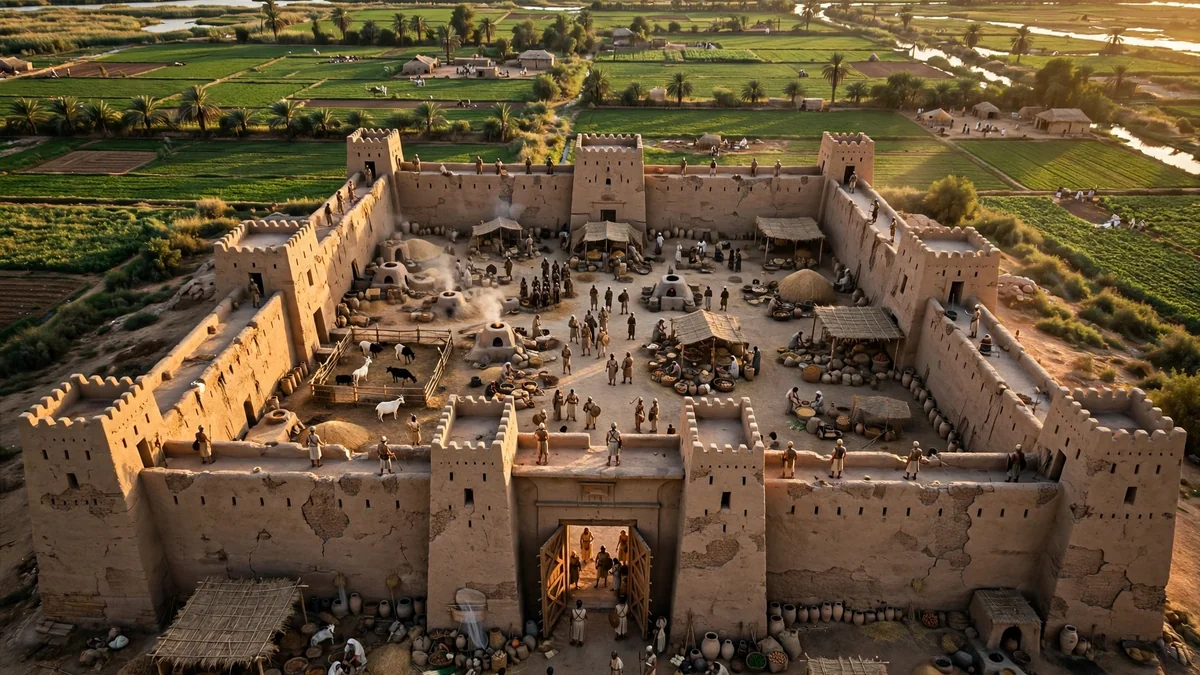
The fortress sat on the “western military road,” the defensive line guarding Egypt’s most exposed border against Libyan tribes. It belonged to the garrison chain maintained under Ramesses II and Merneptah, both named in inscriptions at the site. In fact, an earlier season even turned up a bronze sword engraved with Ramesses II’s own cartouche.
But the headline find wasn’t a weapon. It was the horse.
Excavators found the young male’s skeleton complete and intact, head deliberately aligned — laid to rest with intention, not dumped. A few meters away lay cylindrical pieces of alabaster and limestone, believed to be decorative fittings from a chariot harness. The picture is unmistakable: a warhorse honored with a ceremonial burial, harness fittings and all.
Around him, the dig revealed the fortress as a living town, not just a barracks. It had a main street nearly four meters wide, grain silos, cylindrical pottery ovens, and jars still holding charred wheat three thousand years old. In addition, a limestone stela showed a prisoner with bound hands, his clothing marking him as Libyan.
Soldiers ate, slept, baked bread, and prayed here — and when a valued warhorse died, they buried him with honors. Ultimately, it’s one of the most touching chapters in the whole story of horses in ancient Egypt. He was not a weapon, but a comrade.
Kadesh: Six Thousand Chariots, One Very Famous Team
If horses in ancient Egypt have a defining moment, it’s the Battle of Kadesh. Around 1274 BCE, Ramesses II faced the Hittite Empire in what’s now Syria. Some five to six thousand chariots took the field: the largest chariot battle in recorded history.
The Egyptian version — carved across Ramesses II’s temples in the famous Poem of Pentaur — reads like an action movie. Ambushed and abandoned, the pharaoh supposedly prayed to Amun and charged the entire Hittite army alone. Hittite records, however, describe a draw. Modern historians side with the Hittites.
But here’s the detail that sticks with me: mid-propaganda, the poem pauses to name the pharaoh’s horses. The poem calls his Kadesh team Victory in Thebes and Mut is Satisfied. These were horses of the great stable of User-Maat-Re Setep-en-Re, Ramesses II’s throne name. After all, you don’t carve your horses’ names into a war memorial unless those horses meant something to you.
Want the full story of the pharaoh behind that battle? Our profile of Ramesses II, the pharaoh they keep digging up covers Kadesh and the peace treaty that followed. It also covers the 2026 statue discovery that made him whole again.
How Horses in Ancient Egypt Became Royal Status Symbols
Chariot horses were ruinously expensive. Breeding, feeding, training, and equipping a team took land, grain, skilled grooms, and bronze fittings. As a result, the chariot corps became an aristocratic club. Where horses in ancient Egypt were concerned, ownership put you in the inner circle of New Kingdom power.
At the very top sat the pharaoh’s own stables. The “great stable” of the Kadesh poem wasn’t poetry — it was an institution. Inscriptions name royal horses, and tomb art paints them pulling the king’s chariot. When priests buried Tutankhamun, they placed dismantled chariots in his tomb. After all, a king without his chariot in the afterlife was unthinkable. See them in our tour of Tutankhamun’s treasures.
The prestige trickled down. Meanwhile, nobles commissioned tomb paintings of themselves in chariots, and officers rose through the chariotry. And the pattern held even in death — an earlier Tell el-Abqain season found a ceremonial cow burial too. Thus, important animals got important funerals. That was simply how Egypt worked.
Feeding, Training, and Spoiling a Warhorse
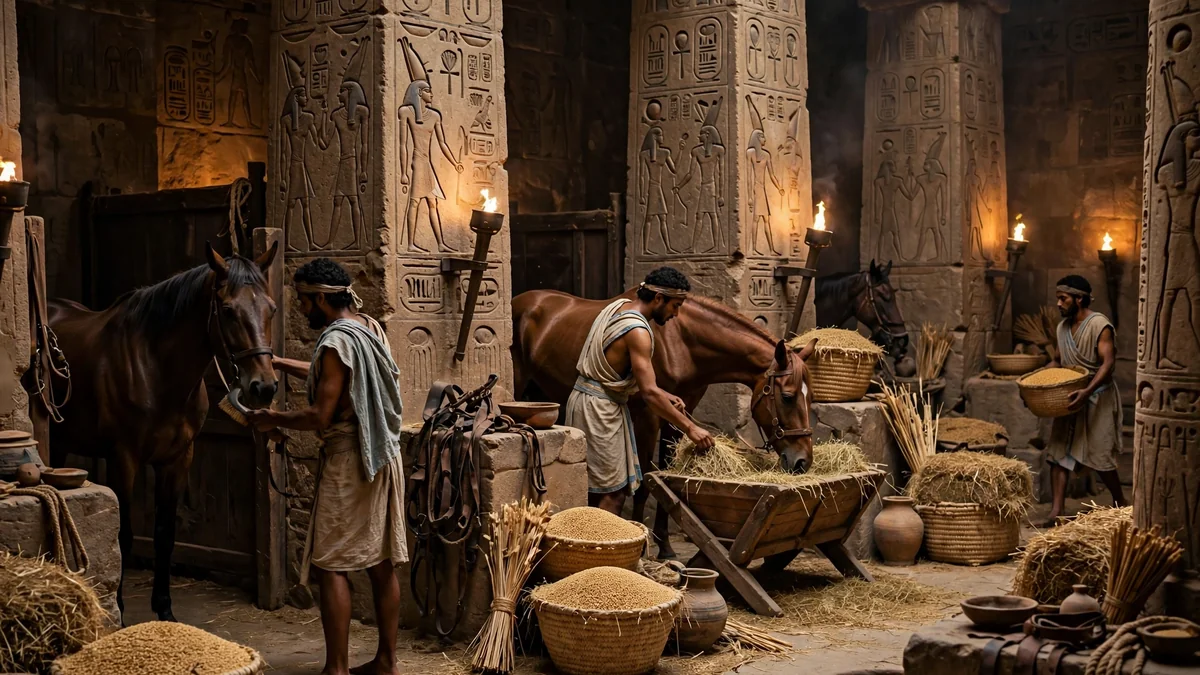
What did it take to keep a Bronze Age warhorse in fighting shape? Indeed, those Tell el-Abqain silos and charred wheat stores weren’t just feeding soldiers. For instance, a chariot horse ate like an athlete — rich barley rations, far beyond a donkey’s fare. Consequently, feeding a stable of them was a serious line item in any fortress budget.
Training was the real investment. A chariot horse had to gallop straight while another ran at its shoulder. It had to answer voice and reins at full speed, and hold formation while arrows flew around it. Trainers paired teams young and drilled them until the two animals moved like one. A mismatched pair could flip a chariot, while a good pair was worth nearly its weight in gold.
Then the gear. The alabaster and limestone fittings beside the Tell el-Abqain horse weren’t just functional — they were decorative status objects. In addition, bronze bits, leather straps, and inlaid yokes made a fully equipped team a walking display of wealth. No wonder they buried the horse with his harness. He’d earned it.
Horses in Ancient Egypt After the New Kingdom
The New Kingdom ended around 1070 BCE, but horses in ancient Egypt were just getting started. Instead, they’d woven themselves too deeply into warfare, prestige, and royal imagery to fade away.
In the centuries that followed, the chariot slowly lost its battlefield edge. Meanwhile, infantry tactics evolved, and other powers fielded true cavalry. But the horse only grew in importance. Libyan dynasties, Kushite kings, Persians, and Ptolemies all prized Egyptian-bred horses. Eventually, by the Greco-Roman period, racing and cavalry were fixtures of Egyptian life.
The through-line is remarkable. Around 1650 BCE, the horse was a feared foreign import. At Kadesh, it became the engine of empire. And in 2026, an honored burial made headlines. For three thousand years, horses in ancient Egypt stood at the center of power. The people of Tell el-Abqain buried the young stallion like a soldier. To those who knew him, that’s exactly what he was.
Questions People Actually Ask
Were there horses in ancient Egypt originally?
No. Horses aren’t native to Egypt — they arrived with the Hyksos around 1650 BCE, during the Second Intermediate Period. Before that, Egyptians used donkeys.
What were horses used for in ancient Egypt?
Overwhelmingly war chariots and royal prestige. Chariot teams were the elite strike force of the New Kingdom army. Owning horses marked you as nobility — later, also hunting, riding, and racing.
What was discovered at Tell el-Abqain in 2026?
In September 2026, Egypt’s antiquities ministry announced the ceremonial burial of a young male warhorse. His skeleton was intact, his head deliberately positioned, and chariot-harness fittings lay nearby — inside a 3,000-year-old New Kingdom fortress in the Nile Delta’s Beheira province.
How big was the Battle of Kadesh?
Some 5,000 to 6,000 chariots took part — the largest chariot battle in recorded history, fought c. 1274 BCE between Ramesses II’s Egypt and the Hittite Empire near Kadesh in modern Syria.
What were Ramesses II’s horses called?
According to the Poem of Pentaur inscribed on his temples, the poem names his Kadesh chariot team Victory in Thebes and Mut is Satisfied — horses of the pharaoh’s great stable.
Did ancient Egyptians bury animals with honors?
Yes, regularly. The same fortress yielded an earlier ceremonial cow burial. In fact, Egypt’s tradition of sacred animal burials — cats, crocodiles, ibises — is one of the best-documented in the ancient world. Our guide to ancient Egyptian mummification explains how seriously they took the afterlife, for people and animals alike.
The Horse That History Finally Noticed
Three thousand years ago, in a mudbrick fortress on Egypt’s western frontier, somebody lost a good horse. But they refused to treat him like livestock. First, they laid him out straight, set his head with care, and left his harness fittings beside him. Then the fortress crumbled, the Delta mud swallowed it all, and everyone forgot. Until September 2026.
People remember empires for pharaohs and battles, but they ran on quieter loyalties. For example, a groom knew his horse’s moods. Similarly, a driver trusted his team at full gallop. Finally, a garrison buried its warhorse like a comrade. Kings alone don’t make history. Sometimes the animals they rode in on make it.
Want more of this world? Walk the Valley of the Kings where the chariot-owning elite were buried. See where it all happened on our map of ancient Egypt. Or meet the pharaoh whose horses had their own names in our Ramesses II story.