
The Bones Sat in Storage for a Century. The Wounds Were Still There.
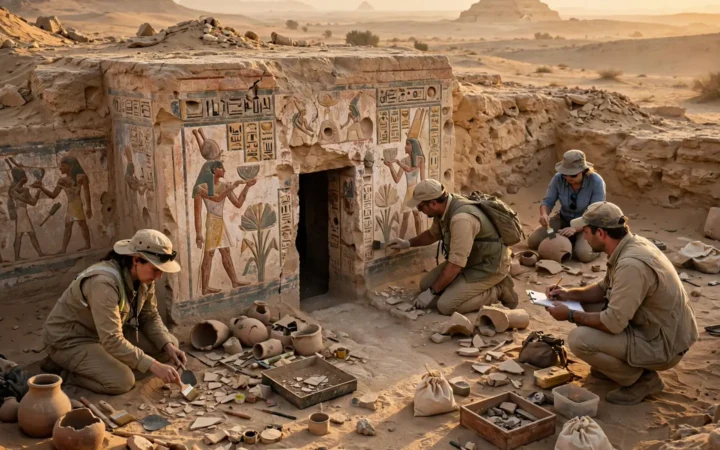
In 1920s Abydos, archaeologist Flinders Petrie kept finding something that didn’t add up. Around the tombs of Egypt’s very first pharaohs — the kings who unified the country some 5,000 years ago — lay hundreds of smaller graves. Too many people. Buried too close together. Buried, he suspected, at the same time.
Petrie came to a conclusion he couldn’t prove: these people hadn’t died of old age. They’d been killed — sacrificed to serve their king in the afterlife. But the bones showed no wounds, no cause of death, no proof. The case went cold for a hundred years.
Then, in October 2026, a bioarchaeologist did what Petrie couldn’t. Dr. Roselyn Campbell of Purdue University took 46 of those same skulls — dug up in the 1920s, shipped to the United Kingdom — and examined them with modern forensic methods. Her finding rewrote a century of doubt: 18 of the 46 skulls showed fatal trauma. Blows to the head. One, a chopping wound to the eye.
Human sacrifice in ancient Egypt was never supposed to be real. Textbooks have long insisted the Egyptians were above it — that unlike some of their neighbors, they didn’t kill people for their gods or their kings. Petrie thought otherwise, and for a hundred years his hunch sat in footnotes. Now the bones themselves have spoken.
✍️ Write YOUR Name in Real Hieroglyphics
See how the ancient Egyptians would have written your name — free interactive tool.
Try It Now →Quick Facts: Human Sacrifice in Ancient Egypt
- Where: Umm el-Qaab, the royal cemetery at Abydos in Upper Egypt
- When: First Dynasty, roughly 3100–2900 BCE — some 500 years before the Great Pyramid was built
- Who died: Retainers — court officials, servants, and artisans of the royal household
- The 2026 proof: 18 of 46 examined skulls (39%) show fatal head trauma; study by Dr. Roselyn Campbell, published October 2026 in Frontiers in Environmental Archaeology
- How long suspected: Since the 1920s, when Flinders Petrie first excavated the subsidiary graves
- How it ended: Within a few centuries, human victims were replaced by ushabti figurines — small servant statues meant to work in the afterlife
A 1920s Dig, a 2026 Autopsy
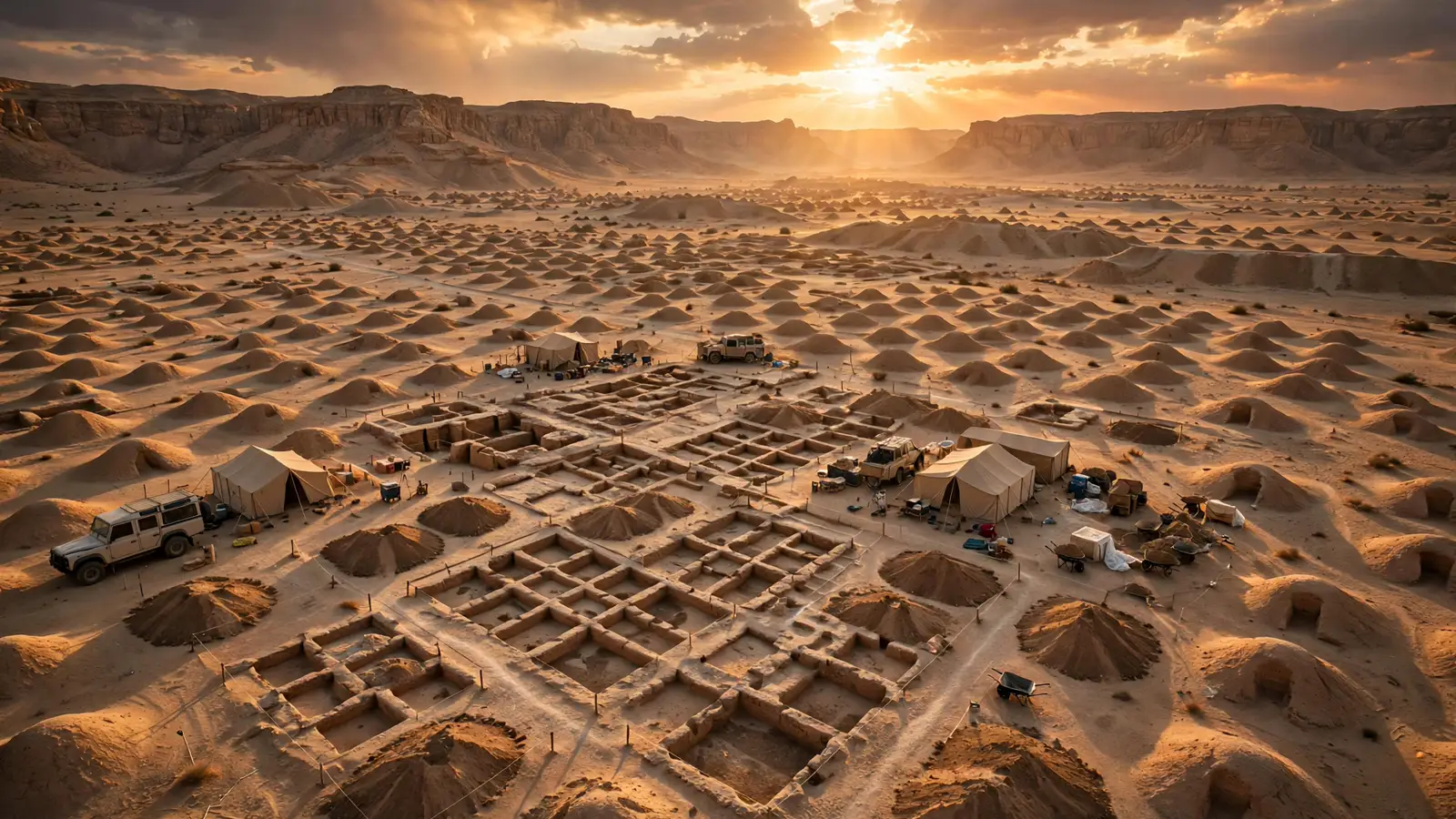
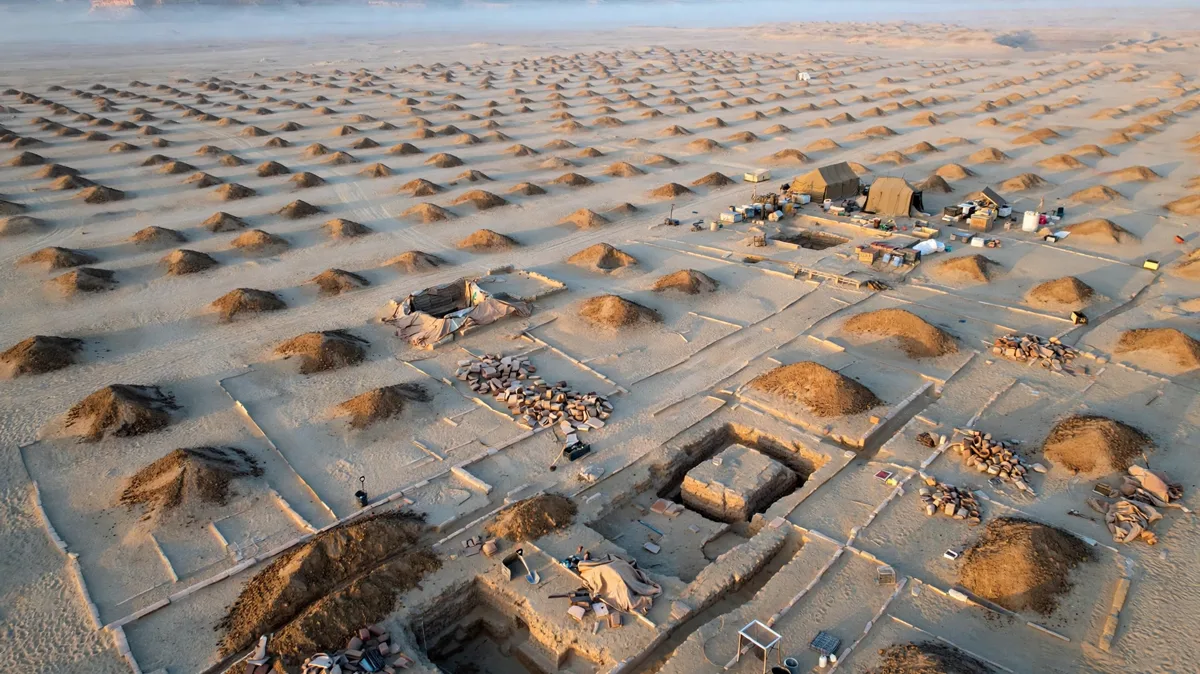
In the 1920s, Petrie’s team uncovered the tombs of the First Dynasty at Abydos — and around them, cluster after cluster of subsidiary burials. The numbers were staggering: one king, Aha, had more than 30 retainers buried beside him. Another, Djer, had hundreds. Many of the small graves bore stelae naming their occupants and listing their titles: stewards, craftsmen, even a doctor.
Petrie’s logic was simple and hard to argue with: hundreds of people don’t just happen to die in the same place at the same time. But without physical evidence of violence, the theory stayed stuck as a suspicion — an uncomfortable one for an Egyptology that liked its Egyptians civilized.
Fast forward a century. Campbell reassessed the skulls at the University of Cambridge, combining skeletal evidence with burial records and old excavation photographs. Modern forensics saw what 1920s eyes missed: linear fractures — the signature of blunt-force trauma — capable of causing rapid unconsciousness, internal bleeding, and death. A few skulls bore sharp-force marks too, including the chopping wound near one eye.
The October 2026 study was careful about its limits. Only 46 skulls survived out of hundreds of burials, and the sample can’t prove every retainer was killed. But for 39% of them, the verdict stands: deliberately killed by blows to the head. A century later, human sacrifice in ancient Egypt moved from suspicion to forensic evidence.
What Human Sacrifice in Ancient Egypt Actually Meant
“Human sacrifice” covers very different things across the ancient world. The Aztecs sacrificed captives to feed the sun. What happened at Abydos was something else entirely: retainer sacrifice — the killing of household or court members so they could continue serving a dead ruler in the afterlife.
The logic, grim as it is, was internally consistent. If the afterlife is a mirror of this life — and for early Egyptians, it absolutely was — then a king still needs his staff. The tomb complex wasn’t just a burial; it was a whole royal household, relocated into eternity. For why the body had to survive for any of this to work, see our guide to ancient Egyptian mummification.
But Campbell flags a second motive that’s harder to romanticize. Retainer sacrifice, she notes, “can also be a visceral display of the ruler’s power.” If the king’s authority doesn’t end at death, your life was never really yours. That’s what makes human sacrifice in ancient Egypt so unsettling: it wasn’t only religion. It was a message.
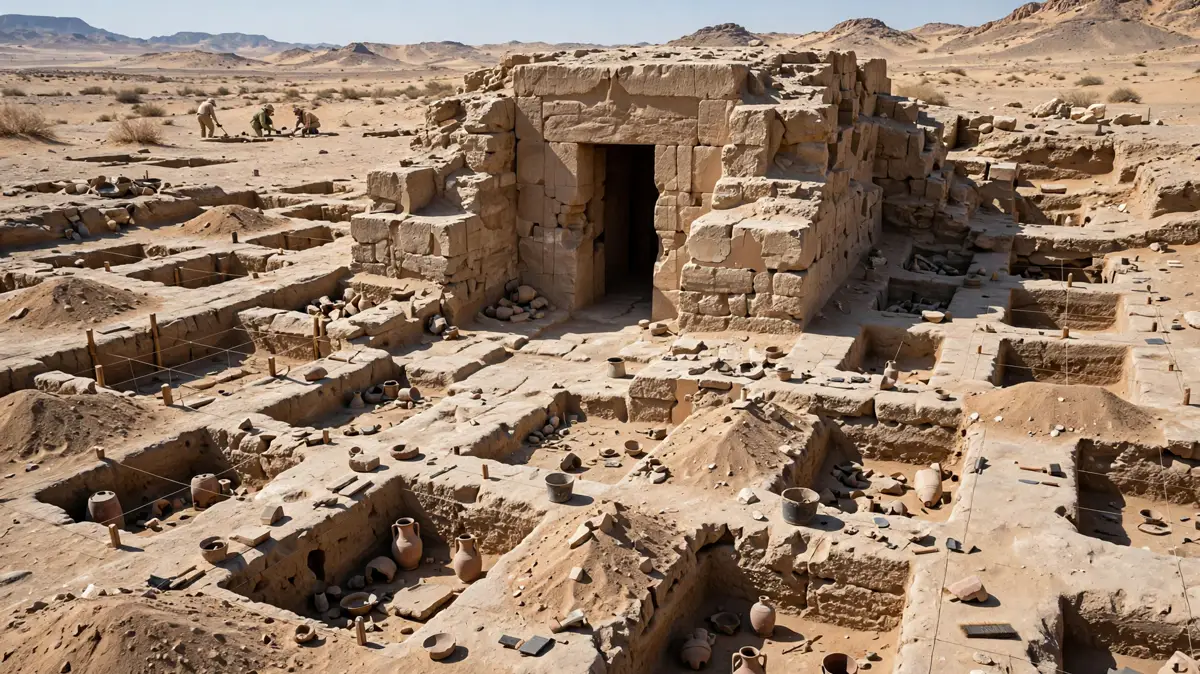
Umm el-Qaab: Where Egypt’s First Kings Sleep
Abydos was the cult center of Osiris, god of the dead — the holiest burial ground in Egypt for the next three thousand years. But the First Dynasty kings were there first, around 3000 BCE, when unified Egypt was brand new and everything was an experiment: kingship itself, writing, divine rule.
The royal cemetery at Umm el-Qaab held the tomb complexes of the early kings — chamber tombs, ritual enclosures, and the ring of subsidiary burials. The founding generation of the Egyptian state was still working out what a king is entitled to take with him. Our map of ancient Egypt shows Abydos in Upper Egypt — far from the later Delta power centers, but at the heart of the earliest kingdom.
Who Were the Sacrificed? Not Slaves — Courtiers
The retainers at Abydos weren’t anonymous victims dragged from the fields. Many graves were marked with stelae naming them and listing their titles — stewards, administrators, craftspeople. Some graves held dwarfs, who occupied a special, valued place in the royal court.
Campbell put it well: these retainers are “mostly relegated to footnotes in the grander narrative,” even though they were buried around royalty. She wanted to know who they were — “Who were these people and how did they view the ruler and their own role in his or her life and death?” Nobody can fully answer that yet.
Consider the artisans — the people who built the tomb, carved the stelae, made the pottery. Killing your craftsmen is economically insane, which is why it reads as a statement. Human sacrifice in ancient Egypt was a claim about what kingship is: total, absolute, extending beyond the grave. Our article on the religion of ancient Egypt traces how that divine-king idea hardened over the centuries that followed.
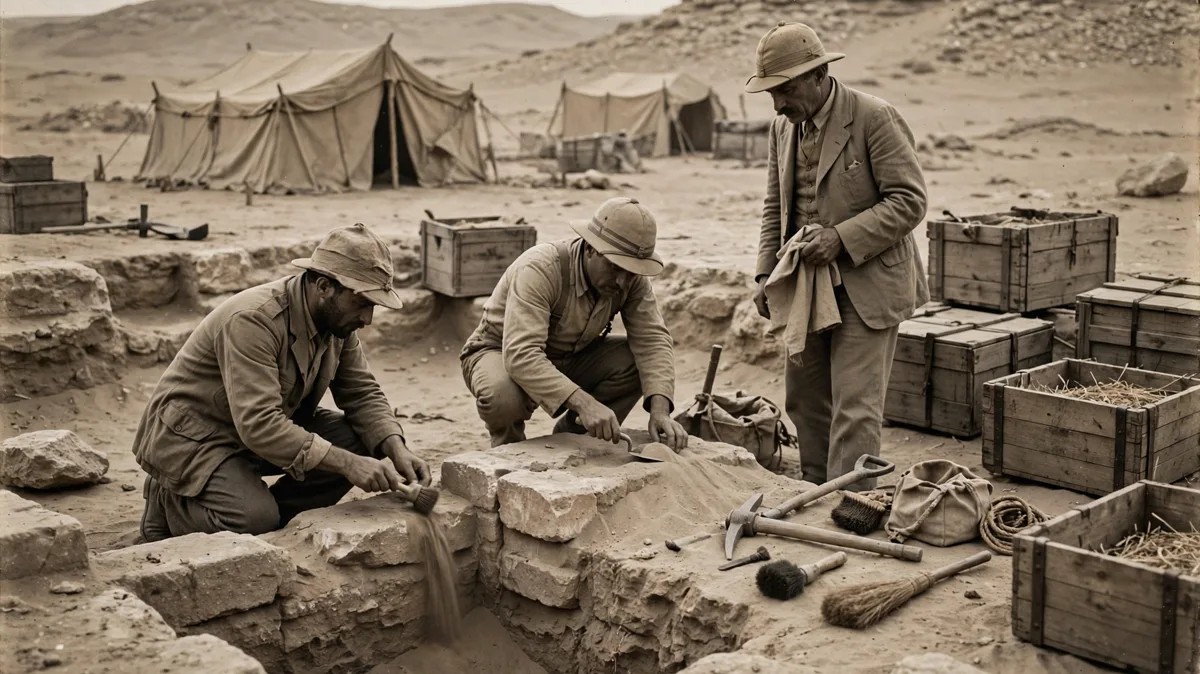
Why Did Human Sacrifice in Ancient Egypt Happen?
Nobody wrote down the reason, but three theories dominate.
1. The afterlife economy. The king needs servants where he’s going, and early Egyptian religion hadn’t yet developed the workarounds — servant figurines, painted workers — that later let people substitute objects for humans. When you haven’t invented the loophole yet, you pay in lives.
2. The power display. Campbell’s own framing: sacrificing hundreds of your own household is the loudest possible announcement that the state owns everything, including death. For a brand-new monarchy cementing its authority, that’s a message with a long reach.
3. The founding generation went furthest. The First Dynasty was inventing kingship from scratch, and when a system is new, the first version is usually the most extreme. Later generations, living inside an established tradition, dialed it back.
Did Anyone Volunteer?
This is the question that makes the whole thing complicated. Campbell herself raises it: “Some retainers might have volunteered to die to achieve eternal life or honor; others may have been chosen or even forced.”
Sit with that a moment. If you genuinely believe the king is a god, that the afterlife is real, and that serving him there is the highest honor — is dying at his burial a murder or a privilege? Some may have seen it as the ultimate promotion. Others were surely given no say.
The bones can’t tell us who walked willingly. The forensics can only tell us the deaths were violent — blows to the head, not peaceful poisonings. However anyone felt beforehand, the method was brutal.
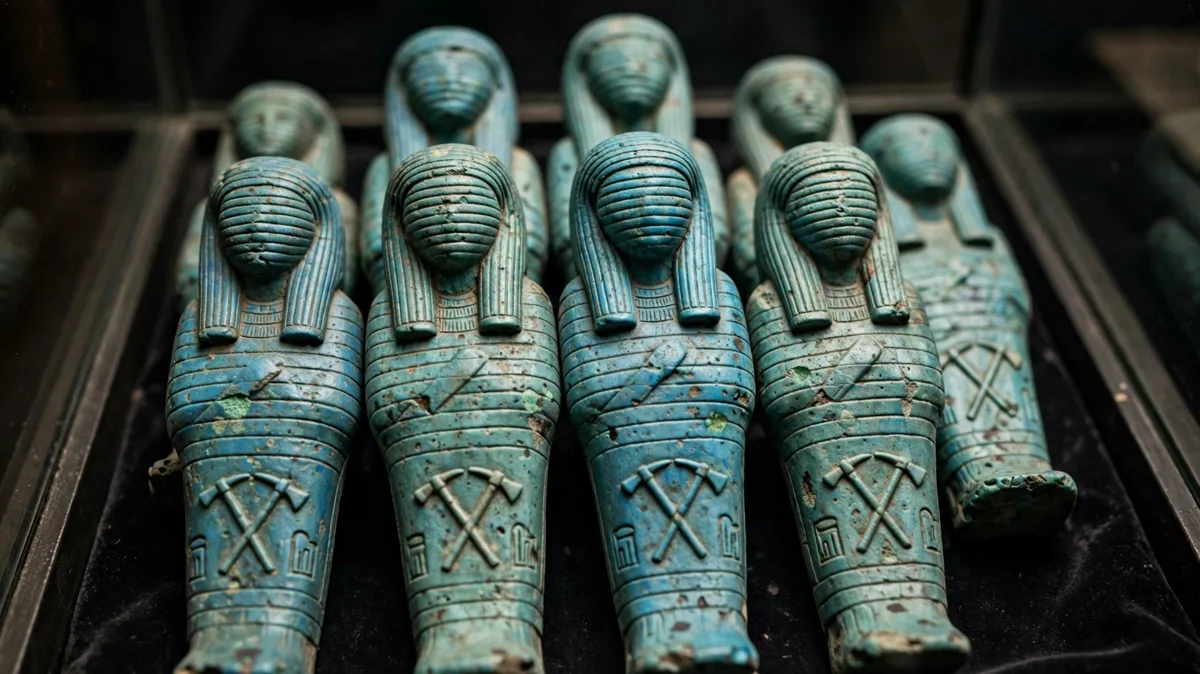
How Human Sacrifice in Ancient Egypt Finally Ended
Here’s the good news, such as it is: it didn’t last. By the end of the First Dynasty, the subsidiary burials shrink and then vanish. What changed was the invention of the substitute.
The Egyptians got very good at replacing people with things. First came servant statues, then painted workers on tomb walls, and eventually the famous ushabti figurines: little inscribed figures whose job was to answer for the deceased in the afterlife. “If I’m called to labor in the Field of Reeds,” the inscription reads, in essence, “let this figurine say: here I am, I’ll do it.” Same theology, zero casualties.
It may have been moral progress — but it was also practical. A state that needs its artisans alive can’t keep burying them with every king. The theology stayed; the victims became objects. You can see the later end of that tradition in the treasures of Tutankhamun, where hundreds of ushabtis stood ready to serve the boy king — none of them human.
What the Skulls Can’t Tell Us
Campbell’s study is careful, and so should we be. The surviving sample is small — 46 skulls from burials that once held hundreds. It can’t prove every retainer was sacrificed, or settle each cause of death, or answer the volunteer question. Good archaeology lives in that discomfort.
But the default flipped. Before October 2026, “Egyptians didn’t really do human sacrifice” was the comfortable position and Petrie’s theory the awkward outlier. Now the burden of proof has moved. That, more than any single skull, is what makes this a landmark in Egyptology — and why human sacrifice in ancient Egypt is back on the table for good.
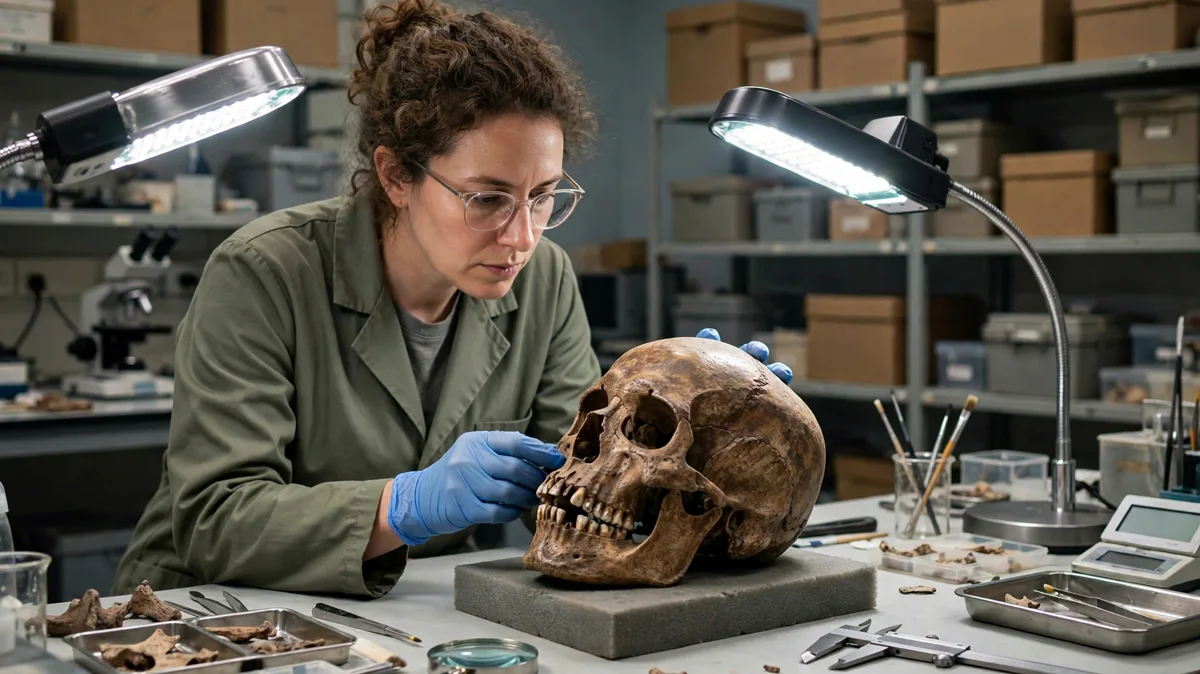
Frequently Asked Questions
Did ancient Egyptians practice human sacrifice?
Yes — at least during the First Dynasty (c. 3100–2900 BCE). A 2026 forensic study found fatal head trauma in 39% of examined skulls from Abydos, confirming what Flinders Petrie suspected in the 1920s: human sacrifice in ancient Egypt really happened. The practice died out within a few centuries.
What is retainer sacrifice?
The killing of household or court members after a ruler’s death so they can continue serving the ruler in the afterlife. It appears in several early civilizations, including Mesopotamia and Shang China. In Egypt it seems confined to the very beginning of the dynastic period.
Who was sacrificed?
Court officials, servants, artisans, and other members of the royal household — people with named graves and official titles, not anonymous captives. Their stelae at Abydos record names and positions, which is partly why the “natural causes” explanation never quite worked.
How were the victims killed?
Mostly by blows to the head — linear fractures consistent with blunt-force trauma, per the 2026 forensic analysis. A few skulls also show sharp-force injuries, including a chopping wound near one eye.
Why did it stop?
The practice was replaced by substitutes: servant statues, painted workers on tomb walls, and eventually ushabti figurines inscribed to perform labor for the deceased in the afterlife. The theology stayed; the victims became objects.
Can I visit Abydos?
Yes. Abydos is one of Egypt’s great archaeological sites — the Temple of Seti I with its famous king list, the Osireion, and the Umm el-Qaab royal cemetery. It’s less visited than Luxor or Giza, which is part of its appeal.
Why This Discovery Matters
A hundred years ago, Flinders Petrie looked at a field of small graves and saw what nobody wanted to see. He went to his grave without the proof.
The proof arrived in October 2026: 46 skulls and a forensic microscope. It confirmed that human sacrifice in ancient Egypt was real — and it corrected a comfortable story the field had told itself for a century.
The Egyptians who built the pyramids and wrote the Book of the Dead were capable of staggering beauty — and, at the very beginning of their civilization, staggering cruelty. Both are true. The skulls of Abydos just made sure we can’t forget the second part.
Want to go deeper? Start with our guide to the gods of ancient Egypt, or walk the Valley of the Kings — where, three thousand years later, pharaohs were still taking their households with them. Just not the living ones.