
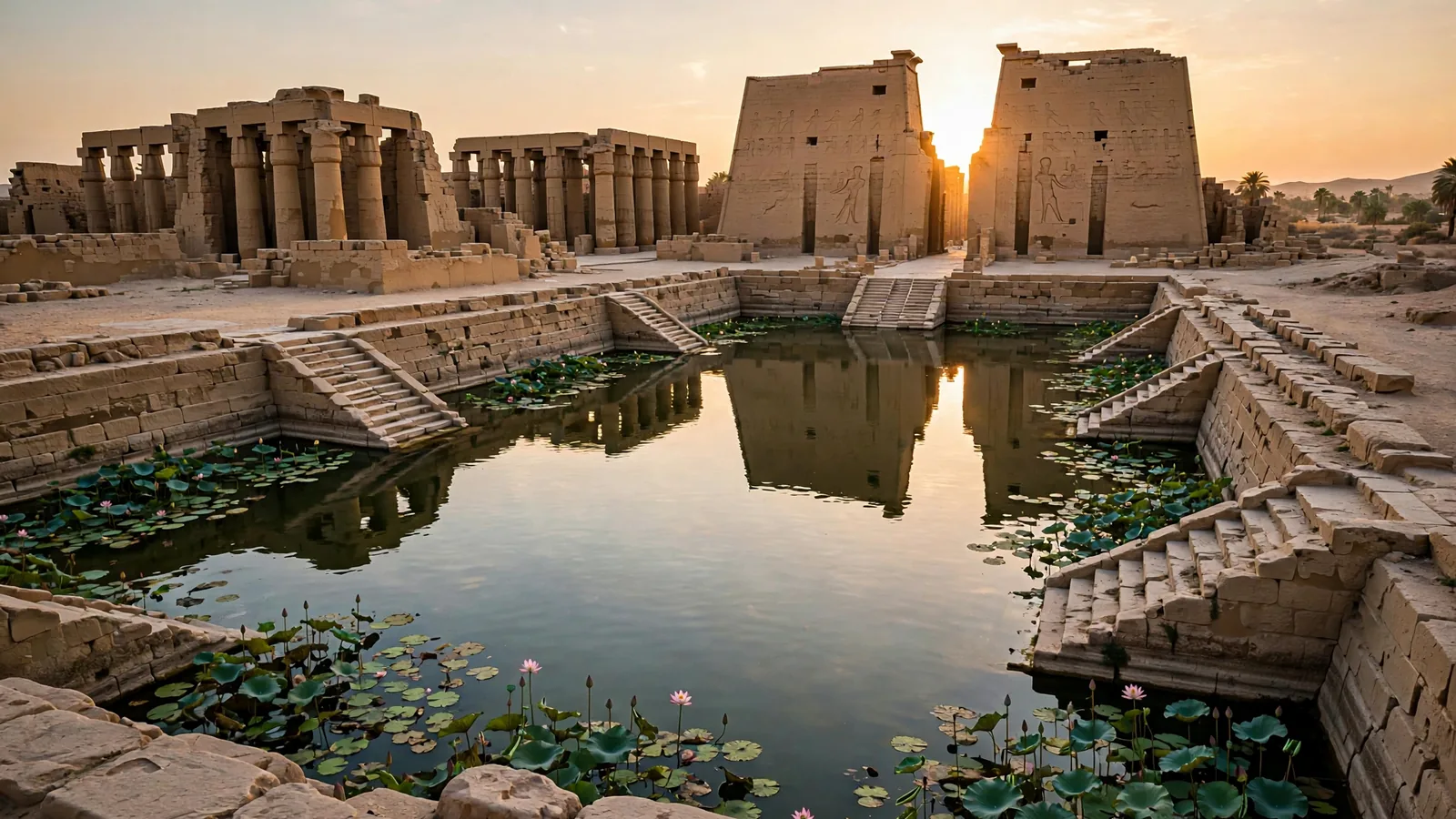
The Lake That Wasn’t Supposed to Exist
In January 2026, archaeologists at Karnak made an astonishing announcement. After more than a century of excavation, mapping, and laser-scanning, they found a lake nobody knew existed. In fact, it was a fully built, stone-structured, man-made sacred lake. Moreover, it covered over fifty square meters. In particular, it lay buried inside the Montu precinct of Egypt’s most studied temple site. Indeed, it appeared in no archive, no survey, and no photograph. For example, an Egyptian-Chinese team uncovered it after eight years of patient work. Moreover, mission head Jia Xiaobing said something remarkable. Archaeologists had never excavated a sacred lake with such systematic scientific methods before.
But the new lake is only the latest chapter of a much older story. The famous Karnak sacred lake — the great lake of Amun — measures about 120 meters long. Furthermore, it sat at the very center of temple life. Indeed, priests bathed in it several times a day. Sacred geese drifted across it. During festivals, the gods themselves sailed over its surface on golden barques. Elsewhere in Egypt, however, some sacred lakes held a less peaceful inhabitant: live crocodiles.
So this is the story of holy water in ancient Egypt — and of the lake that hid from archaeologists for a hundred years.
✍️ Write YOUR Name in Real Hieroglyphics
See how the ancient Egyptians would have written your name — free interactive tool.
Quick Facts: The Karnak Sacred Lake
- Where: The Karnak temple complex at Luxor (ancient Thebes), on the Nile’s east bank
- The great lake: About 120 × 77 meters, averaging 4 meters deep
- Traditionally dug by: Pharaoh Thutmose III, around 1450 BCE, in the precinct of Amun-Re
- What it was for: Ritual purification of priests; a living symbol of the primeval waters of creation
- Who lived in it: The sacred geese of Amun — plus, at other temples’ lakes, holy crocodiles
- The 2026 discovery: A second, previously unrecorded sacred lake in Karnak’s Montu precinct, announced January 24, 2026 — the first sacred lake ever excavated with systematic scientific methods
A Second Karnak Sacred Lake, Found in 2026
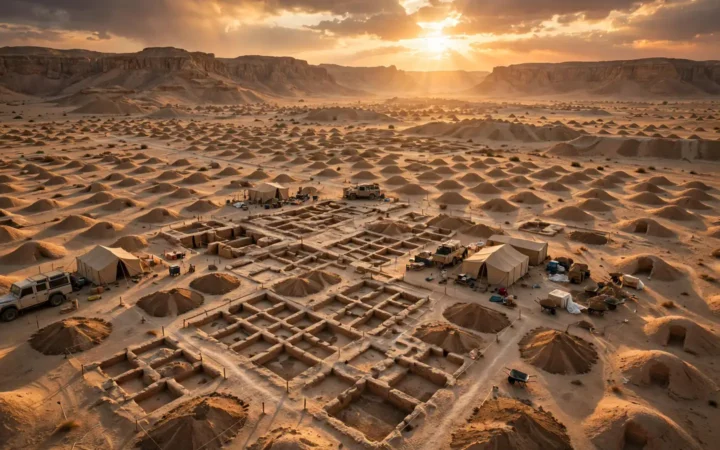
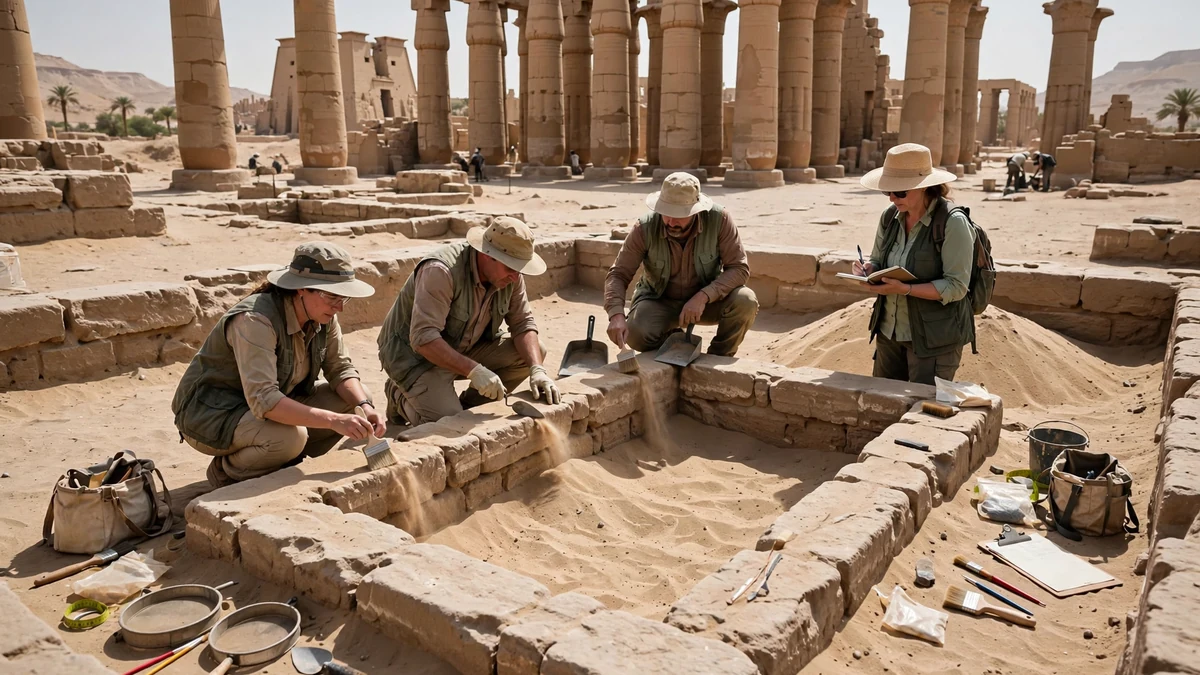
Let’s start with the news, because it’s genuinely astonishing. The Egyptian-Chinese mission brings together the Chinese Academy of Social Sciences and Egypt’s Ministry of Tourism and Antiquities. It has worked in the Montu precinct since 2018. In January 2026, the team uncovered a man-made reservoir west of the Temple of Maat. They had spent eight years clearing dense sand and debris. In fact, the reservoir covered over fifty square meters. In addition, it was well-defined and remarkably well preserved.
Here’s what made Egyptologists sit up. The lake wasn’t in the archives. Nevertheless, generations of archaeologists had worked at Karnak without recording it. The Montu precinct already had a known sacred lake. The new one lines up with it. Together they form something never seen before: two sacred lakes in a north–south alignment inside the same enclosure walls.
Jia Xiaobing called it the “Southern Sacred Lake” and stressed why it matters. Early archaeologists dug up earlier sacred lakes in the rough-and-ready days of the discipline. This lake is different. It is the first that researchers study with modern systematic excavation from the start. As a result, it can finally show researchers how builders constructed these ritual reservoirs and how priests used them.
The mission found more than water features. The same season yielded dozens of cow jaw remains. It also produced reused stone blocks. Workers had inscribed these blocks for Late Period kings and for the divine adoratrices — the powerful “God’s Wives of Amun”. In addition, the team found three chapels dedicated to Osiris with statuettes and fragments. The Montu precinct keeps giving. The new Karnak sacred lake carries a lesson with it: at Karnak, even the water can hide.
The Great Karnak Sacred Lake: Amun’s Holy Pool
Now the famous one. The great Karnak sacred lake sits in the precinct of Amun-Re, the king of the gods. It measures roughly 120 meters by 77 meters and about four meters deep. Tradition credits it to Thutmose III, around 1450 BCE. Its water has been holy for some 3,500 years.
The engineering was elegant. Builders lined the lake with stone and fitted it with stairways descending into the water. Groundwater fed it through a natural connection to the Nile. Therefore the water level stayed remarkably constant — a quiet miracle of hydrology in a desert land. Around it clustered the working machinery of the temple: storerooms, priests’ homes, and an aviary for aquatic birds. This wasn’t decoration. It was infrastructure for the sacred.
And here’s the detail that catches the imagination: the Egyptians believed the Karnak sacred lake embodied the Nun — the primeval waters. In Egyptian creation thought, all life arose from these waters. For why the Egyptians tied purity so tightly to the soul’s survival, see our guide to ancient Egyptian mummification.
Why Priests Bathed in the Karnak Sacred Lake Four Times a Day
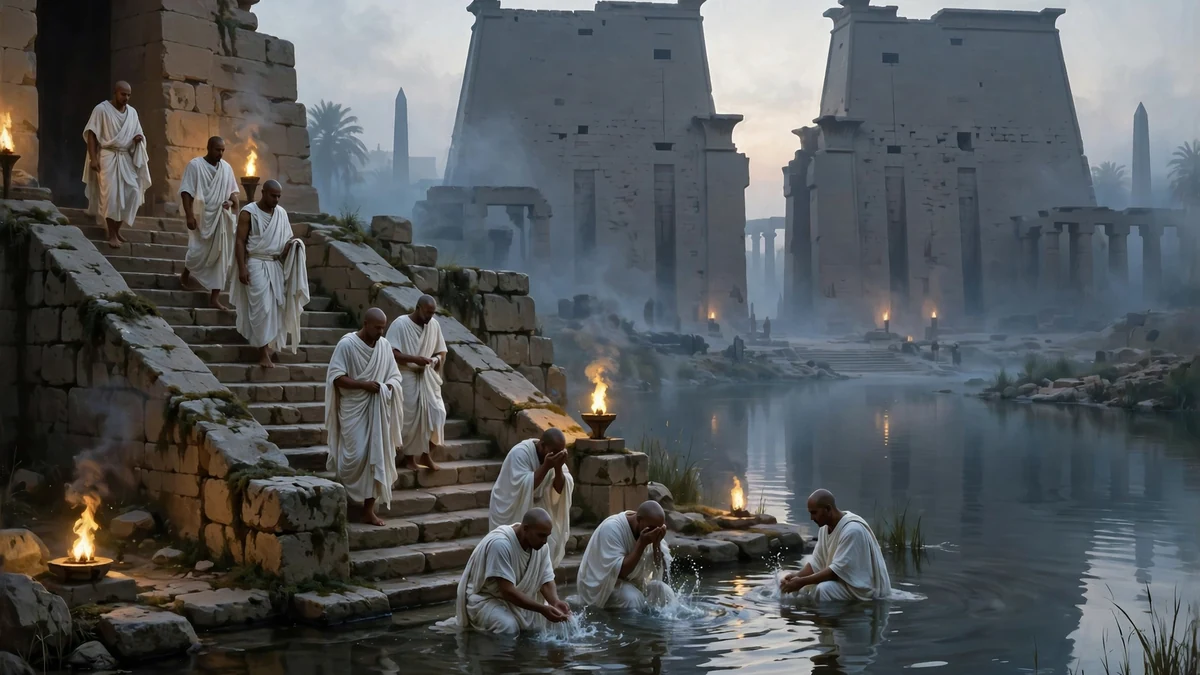
Ancient Egyptian priests didn’t just pray. They purified themselves constantly as a condition of serving the gods. A priest had to be ritually clean before entering the sanctuary or touching a god’s statue. The Karnak sacred lake renewed that purity up to four or five times a day.
Picture it. Before dawn, robed priests descend the stone stairways into still water and wash. Then they dress in fresh linen and begin the day’s rituals. The water was holy and utterly separate from daily life. Ordinary water cleaned the body, but this water cleaned the soul.
The logic was absolute. Impurity was dangerous, and approaching a god while impure could unravel the cosmic order. The temple existed to maintain that order. The Karnak sacred lake served as the gate. Every priest passed through it into sacredness, several times a day, for thousands of years. Our guide to the religion of ancient Egypt traces how that logic shaped everything the temples did.
The Geese of Amun
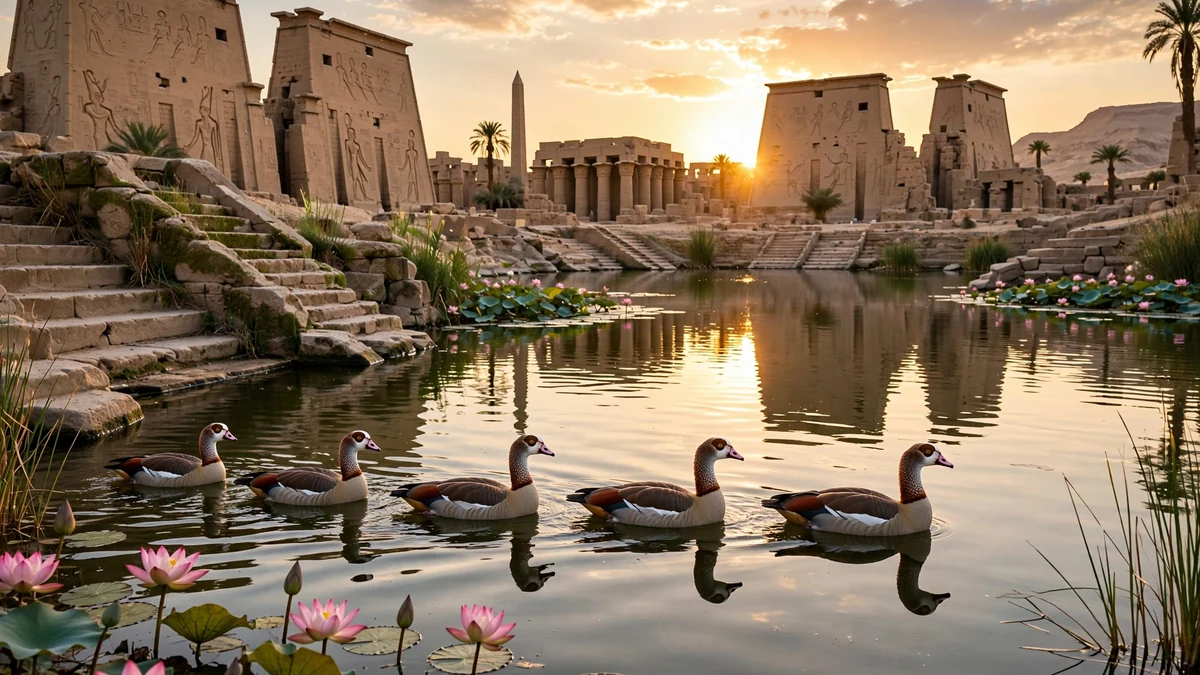
The priests weren’t the only ones in the water. The Karnak sacred lake housed the sacred geese of Amun. In fact, the goose was one of the god’s own symbols. An aviary beside the lake kept aquatic birds. The calm surface, fringed with sacred lotus, formed a little piece of the created world.
There’s a pleasing symmetry here. The lake embodied the primeval waters. The geese gliding across it served as living emblems of the god.
Just north of the lake stands a giant granite scarab. Workers dedicated it to Amenhotep III. Modern visitors circle it seven times for good luck. This is a modern custom, not an ancient one. The scarab belonged to Khepri, the rising sun. Still, the urge to draw a little holiness toward yourself is genuinely old.
When the Gods Sailed Across the Water
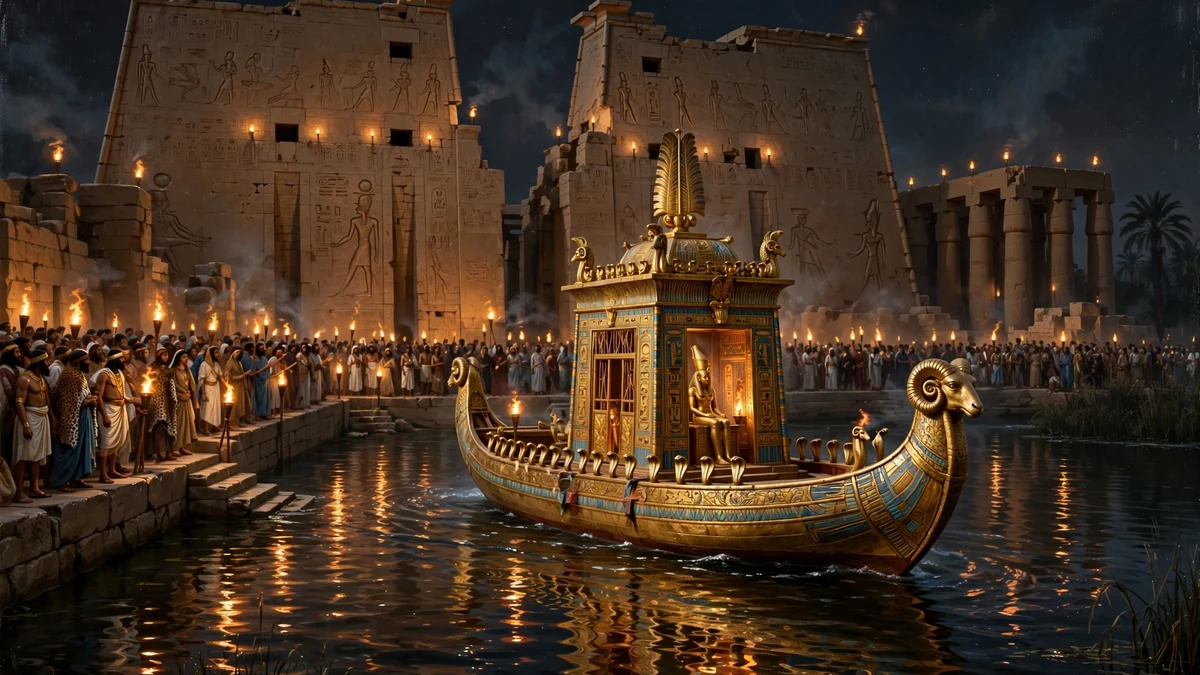
The lake wasn’t only for washing. It was a stage. During the great Opet Festival, priests floated sacred barques on the Karnak sacred lake as part of the ceremonies. The statues of Amun, Mut, and Khonsu traveled from Karnak to Luxor Temple along the Avenue of Sphinxes. Gilded boats carried the gods across black water ringed by torchlight. Finally, crowds pressed to the embankments.
Opet was about renewal. It renewed the pharaoh’s divine power, the land’s fertility, and the bond between gods and king. The barque on the lake represented the sun god’s boat on the primeval ocean. Everyone watching knew it. Our map of ancient Egypt places Karnak at the heart of Thebes, on the Nile’s east bank at Luxor.
The Karnak Sacred Lake’s Wilder Cousins: Lakes With Teeth
So far, so serene. But sacred lakes weren’t always peaceful. The Egyptians didn’t only keep geese in holy water. They also kept crocodiles.
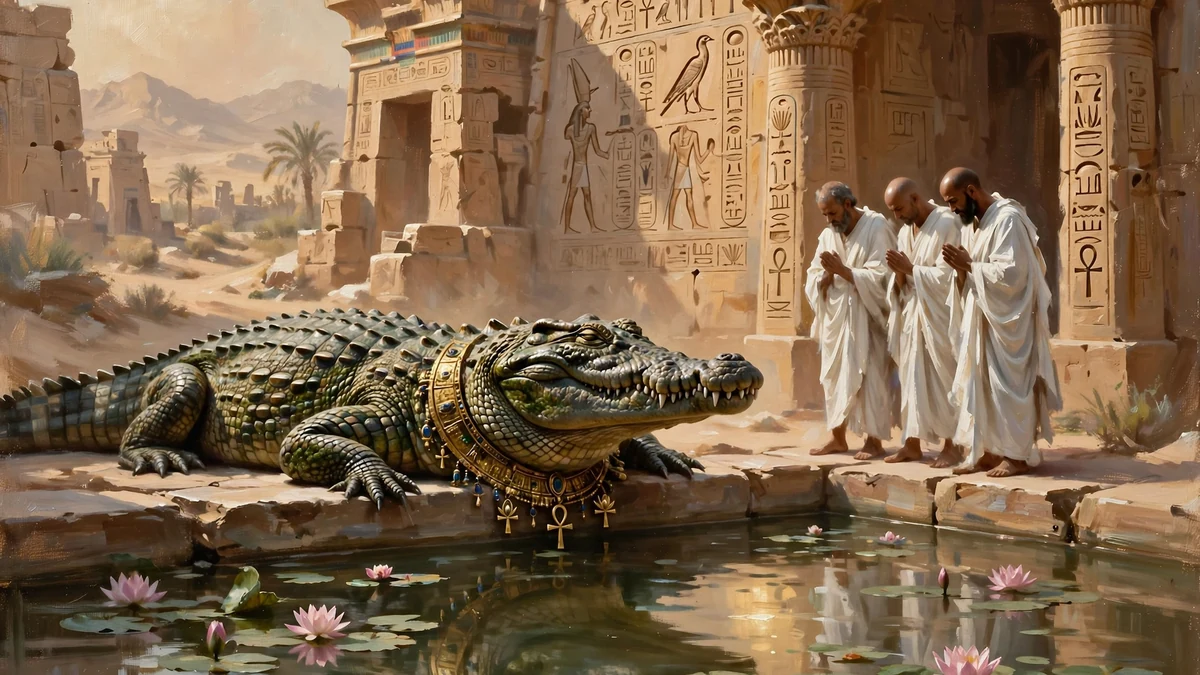
At temples of Sobek, the crocodile god, sacred lakes housed living, worshipped crocodiles. The famous case was Crocodilopolis in the Fayum. Herodotus visited there in the 5th century BCE. He described a sacred crocodile in the temple lake. Priests adorned it with gold and fed it choice morsels, and visitors did the same. Similar crocodile cults operated at Kom Ombo. There, hundreds of mummified crocodiles testify to the devotion.
The Karnak sacred lake itself was a goose lake, not a crocodile lake. The Egyptians were precise about which god got which animal. But the principle was the same. A sacred lake was a little ordered universe, and whatever lived in it embodied the god’s presence. Geese for Amun. Crocodiles for Sobek. In short, the water made them holy either way.
Why the Sacred Lakes Still Matter
Here’s what the January 2026 discovery really proved: Karnak isn’t finished. The greatest temple complex of the ancient world still hid an entire lake in one of its precincts. Montu’s precinct concealed fifty square meters of sacred water from a century of archaeologists. So what else is down there?
The new Southern Sacred Lake pairs with its older twin. Together they form a north–south alignment nobody had ever documented. This may yet reshape what scholars think about ritual space at Karnak. Researchers are still studying the first systematically excavated sacred lake in history. It lies in the ground right now. The holy water of Amun isn’t done speaking.
Frequently Asked Questions
What was the sacred lake of Karnak used for?
Primarily ritual purification — priests bathed in the Karnak sacred lake several times a day before serving the gods. The lake also symbolized the primeval waters of creation. It hosted the sacred geese of Amun. In addition, it served as a ceremonial waterway when divine barques sailed across it during festivals.
How big is the sacred lake at Karnak?
The great lake in the precinct of Amun-Re is about 120 by 77 meters. It averages around 4 meters deep. This makes it the largest sacred lake of its kind in Egypt. Builders stone-lined it and cut stairways into the water. Priests’ homes, storerooms, and an aviary ringed it.
Who built the Karnak sacred lake?
Tradition credits the great lake to Pharaoh Thutmose III, around 1450 BCE. Published reports have not yet firmly dated the newly discovered “Southern Sacred Lake” in the Montu precinct (announced January 2026).
What did the 2026 Karnak sacred lake discovery find?
The Egyptian-Chinese mission announced it in January 2026. It is a previously unrecorded sacred lake in Karnak’s Montu precinct. It covers over 50 square meters west of the Temple of Maat. With the precinct’s previously known lake, it forms a unique north–south twin-lake layout. It is the first sacred lake in Egyptian archaeology to undergo fully systematic scientific excavation. The same season also yielded cow jaw remains, reused Late Period stone blocks, and three Osiris chapels with statuettes.
Did sacred lakes have crocodiles in them?
Some did. At temples of Sobek the crocodile god, priests kept live sacred crocodiles in temple lakes. Crocodilopolis in the Fayum was the most notable example. They adorned the animals with gold and fed them. Karnak’s great lake was instead home to the sacred geese of Amun. Each god’s lake hosted that god’s sacred animal.
Can I visit the sacred lake at Karnak?
Yes. The Karnak temple complex at Luxor is open to visitors. The great sacred lake is one of its most atmospheric corners. The giant scarab of Amenhotep III stands nearby. The newly discovered Montu precinct lake is an active excavation area, so access there is limited.
The Water Remembers
Three and a half millennia ago, priests descended stone stairs into still water at dawn. They sought to make themselves worthy of the gods. Geese drifted past. On festival nights, golden barques carried Amun across the black surface while the crowds watched. And in January 2026, a lake nobody had ever recorded rose out of the sand. It reminded us that Karnak still keeps secrets. The holy water of ancient Egypt isn’t just history. Researchers are still discovering it.
Want to go deeper? Meet Amun and the gods of ancient Egypt. Explore the religion that made the lakes holy. Read about the 3,000-year-old tomb of Paser discovered near Luxor. Or trace the purification rituals behind mummification. Finally, try writing your own name in hieroglyphics.