
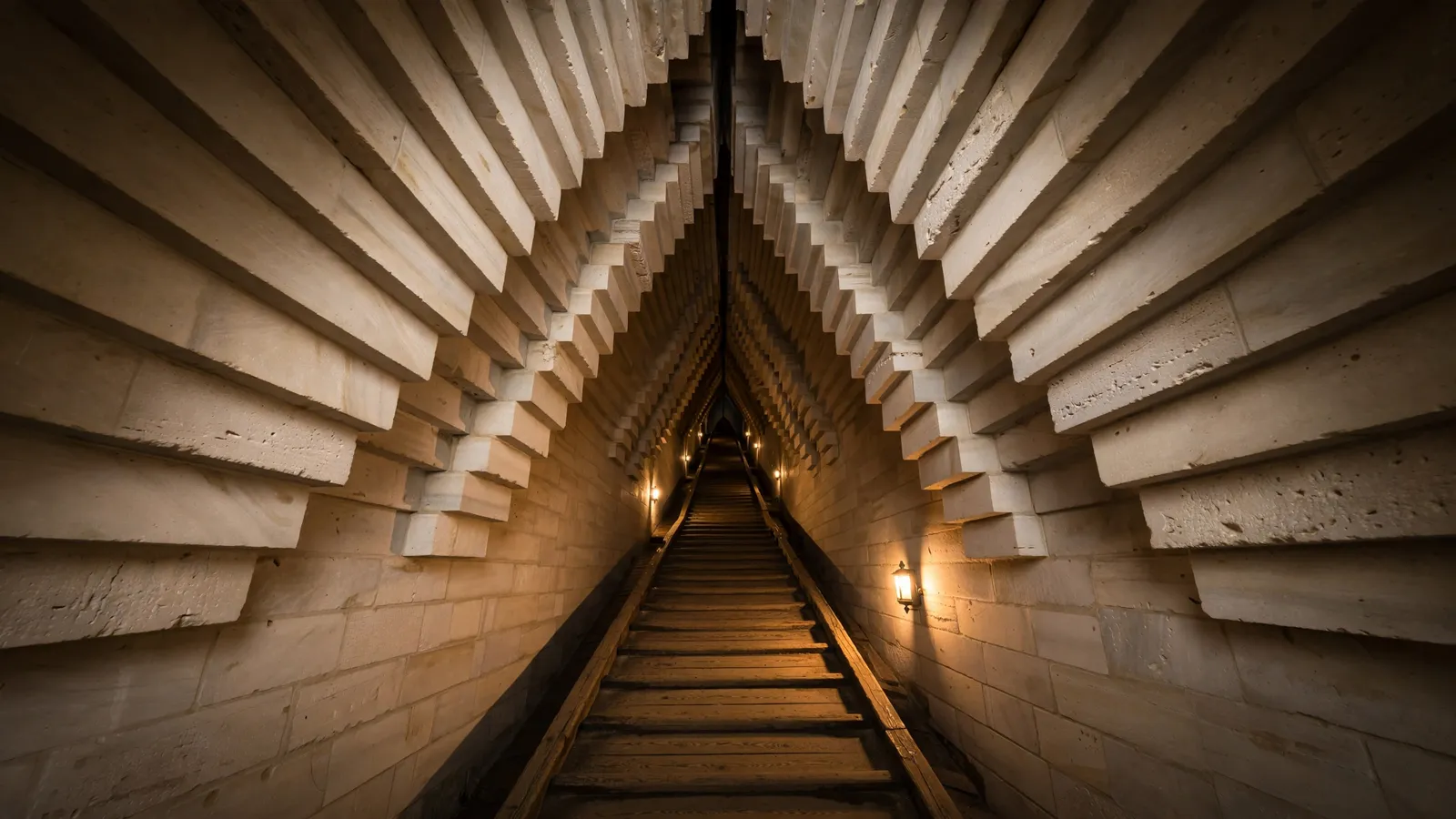
In 2023 a team pushed an endoscope through a narrow gap in the north face of the Great Pyramid and switched on a light. On the screen was a corridor roughly nine metres long with a vaulted ceiling of stacked limestone blocks.
Nobody had seen it in four and a half thousand years.
What makes that discovery worth taking seriously — and separates it from the steady stream of pyramid claims online — is how it was found and what happened afterwards. It was detected by cosmic-ray particles, confirmed by three independent physical methods, and published in journals where other researchers could check the work.
In brief: The Great Pyramid contains three known chambers — the King’s Chamber, the Queen’s Chamber, and an unfinished subterranean chamber — linked by corridors and the Grand Gallery. Two additional voids were detected using muon imaging between 2016 and 2023. No burial, treasure, or inscription describing the pyramid’s purpose has ever been found inside.
Myth Versus Evidence
| What is usually said | What the evidence shows |
|---|---|
| Satellite radar found a huge hidden city under Giza | That 2022 paper was retracted. Retraction is the strongest signal a journal can give that a result did not hold |
| The pyramid is full of passages and chambers | Three known rooms and a few corridors inside roughly 2.3 million blocks |
| Treasure was removed by archaeologists | It was already empty when al-Ma’mun forced entry in the ninth century AD |
| A queen was buried in the Queen’s Chamber | A nineteenth-century misnomer. No queen was buried there and none was intended |
| The voids are just speculation | Both were found by muon imaging, one was photographed with an endoscope, and it was reconfirmed in 2025 by three unrelated physical methods |
What Is Actually Inside
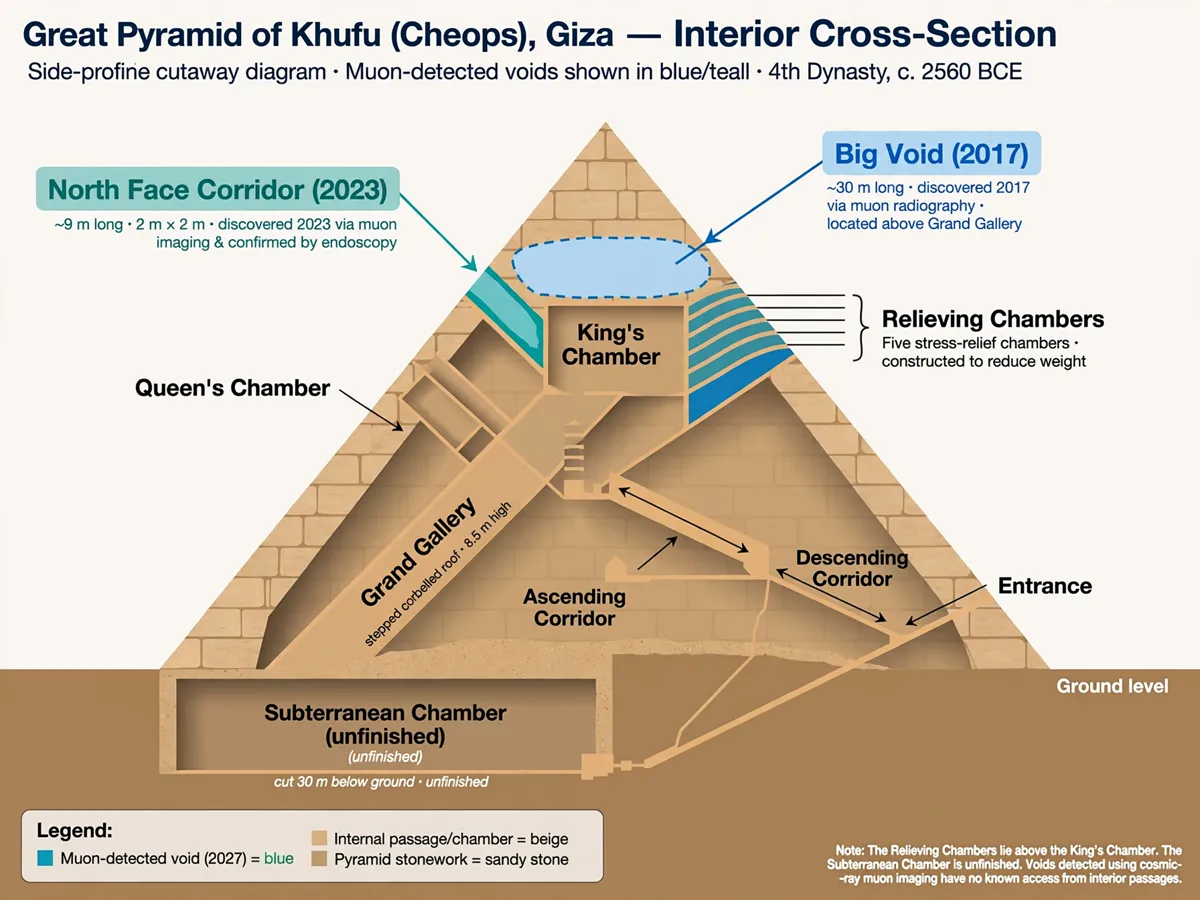
The interior is smaller and stranger than most people expect. There is no labyrinth. The known spaces amount to three rooms and a handful of passages inside a structure of roughly 2.3 million blocks.
The interior at a glance
| Space | Size | Contents |
|---|---|---|
| Subterranean Chamber | Cut into bedrock | Unfinished, abandoned |
| Queen’s Chamber | Gabled limestone room | Empty. Two shafts ending in sealed slabs |
| Grand Gallery | 47 m long, 8.6 m high | Empty. Purpose unresolved |
| King’s Chamber | 10.5 × 5.2 m, red granite | One empty, lidless sarcophagus |
| Relieving chambers | Five stacked compartments | Work-gang graffiti naming Khufu |
| Big Void (2017) | At least 30 m long | Unentered |
| North Face Corridor (2023) | 9 m long, 2 × 2 m | Imaged, not entered |
The Descending Corridor and Subterranean Chamber
From the original entrance a corridor runs downward at a constant angle for about a hundred metres, cutting through the masonry and then into the bedrock beneath.
It ends in a rough chamber cut into the rock. The floor is uneven and the walls are unfinished. Work here appears to have been abandoned.
Why is unknown. The usual reading is a change of plan during construction, though nothing records the decision.
The Queen’s Chamber
The name is a nineteenth-century mistake and has stuck. No queen was buried here and there is no evidence one was intended to be.
It is a limestone room with a pointed gabled ceiling and a niche cut into the east wall. It was found empty.
Two narrow shafts lead from it into the body of the pyramid. Unlike the shafts in the King’s Chamber, they do not reach the outside — they stop, and in 1993 a robot sent up one of them found a small limestone slab fitted with two copper pins. A later robot drilled through and found a second slab behind it.
What these are for is not known.
The Grand Gallery
This is the most impressive space in the building and the hardest to explain.
A corridor roughly 47 metres long rises at 26 degrees, with a ceiling about 8.6 metres high. The walls are corbelled — each course of stone projects slightly further inward than the one below, narrowing the gap until slabs can bridge it.
Nothing about this required such height. A simple passage would have served to reach the burial chamber. Proposals include a storage space for the granite plugging blocks used to seal the ascending corridor after burial, or a structural solution to distributing load. Neither is settled.
The King’s Chamber
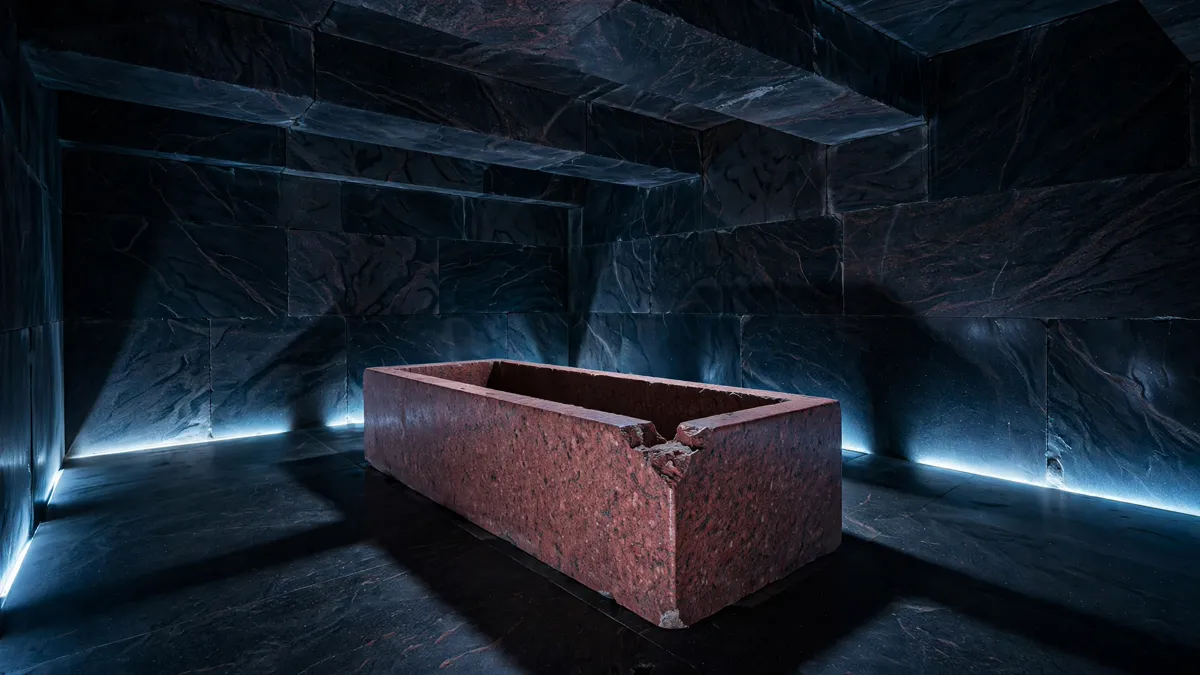
Built entirely from red granite brought from Aswan, roughly 900 kilometres upriver. The chamber is about 10.5 by 5.2 metres with a flat ceiling of nine granite beams, the largest weighing an estimated fifty to eighty tonnes.
It contains a single granite sarcophagus, lidless and empty.
One detail is worth pausing on: the sarcophagus is wider than the ascending corridor. It could not have been carried in after the pyramid was finished. It was placed during construction and the building was raised around it.
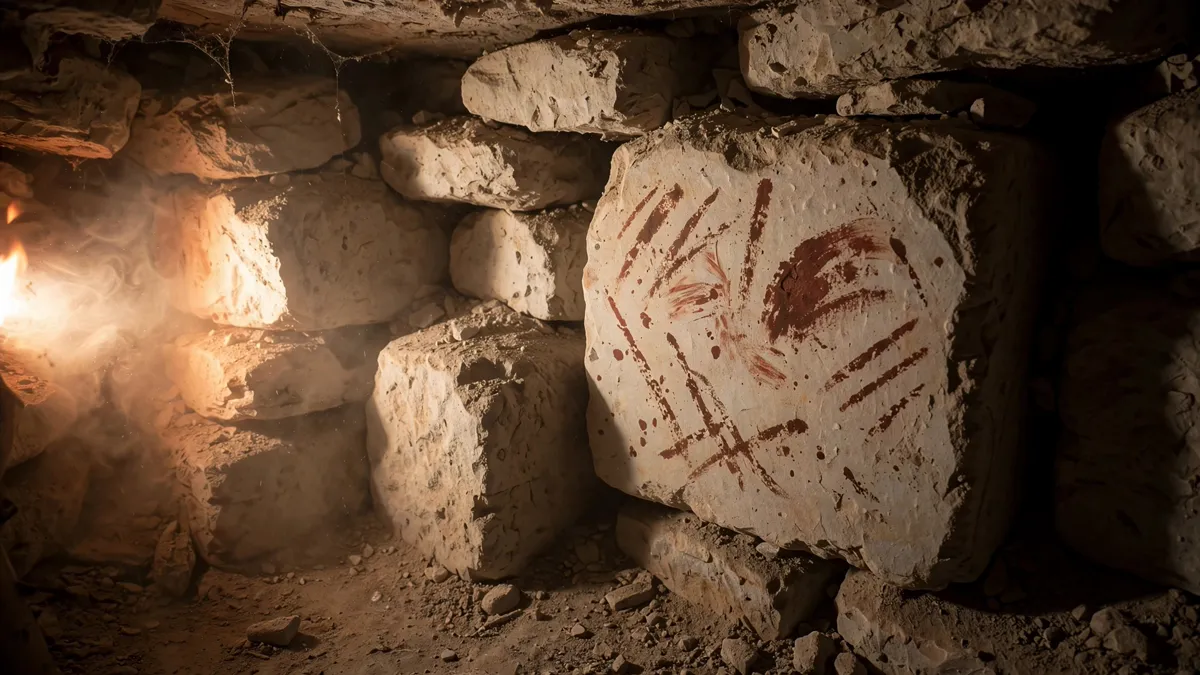
Above the ceiling are five stacked compartments, usually called relieving chambers, presumably intended to distribute the weight of the masonry above. These are the only place inside the pyramid where writing survives — red ochre marks left by work gangs, including a crew name referencing Khufu. They are graffiti, not inscriptions, and they are the strongest internal evidence tying the monument to him.
How the whole structure was raised is covered in our article on how the pyramids were built, and the timeline in our piece on how long it took.
The Voids Found by Cosmic Rays
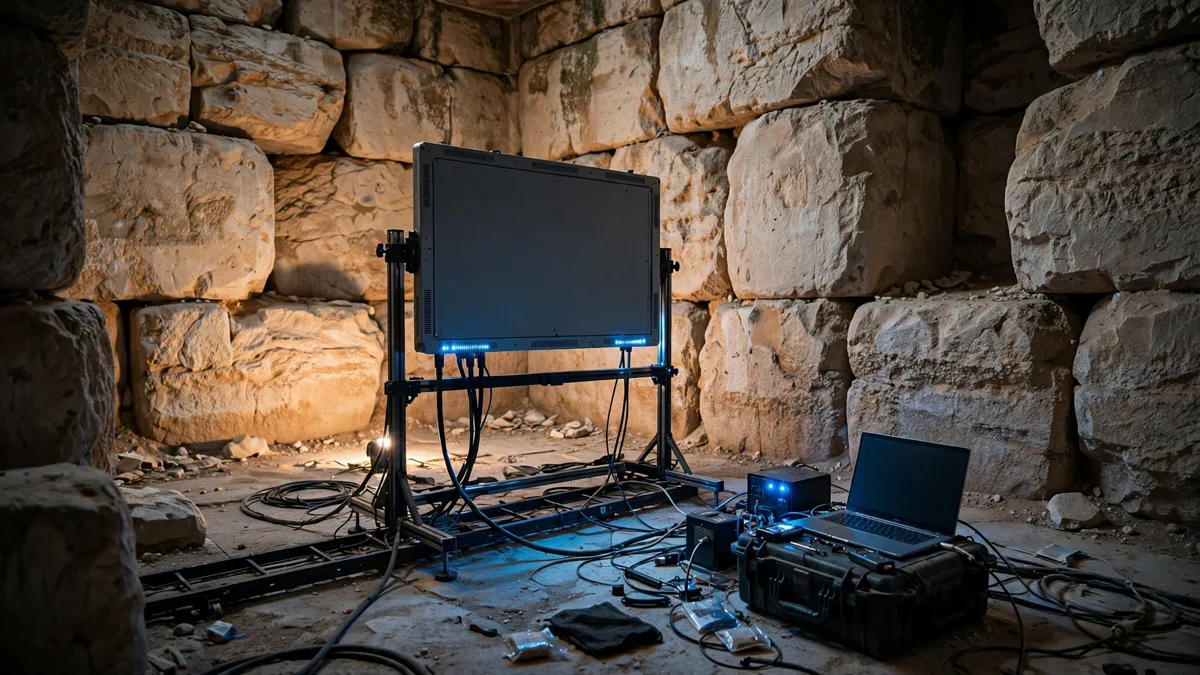
Muons are subatomic particles produced when cosmic rays strike the upper atmosphere. They pass through solid rock, but stone absorbs more of them than air does.
Place detectors inside and around a structure, count the muons arriving from each direction over months, and the pattern reveals where the stone is thinner. No drilling required.
The ScanPyramids project, a collaboration including Cairo University, has applied this to the Great Pyramid since 2015.
The Big Void, 2017
Three independent muon teams using different detector technologies found the same anomaly: a large space above the Grand Gallery, at least thirty metres long.
The result was published in Nature. Its purpose is unknown. Candidates include a construction feature such as a ramp space or an additional relieving structure. Nobody has been inside it.
The North Face Corridor, 2023
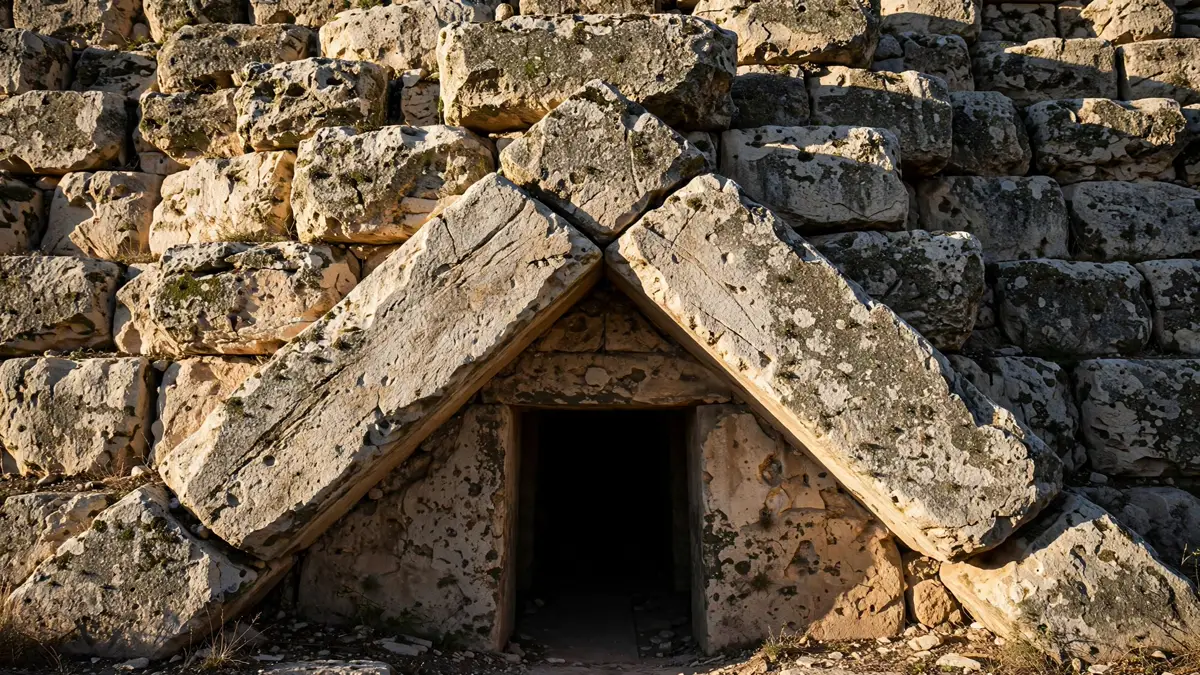
A second anomaly behind the chevron blocks on the north face was confirmed as a corridor roughly nine metres long and two metres square, with a vaulted ceiling.
This one was verified visually. An endoscope inserted through an existing joint returned the first images of the space, and the findings were published in Nature Communications.
In 2025 the corridor was independently confirmed again using ground-penetrating radar, ultrasonic testing and electrical resistivity tomography — three physical methods with no relation to muon imaging, published in Scientific Reports.
Its function is also unknown. The leading suggestion is that it relieves weight above the original entrance.
Real Evidence Versus the Retracted Study
This distinction is the most useful thing in this article, because online the two get treated as the same kind of news.
In 2022 a paper claimed that satellite radar had revealed extensive hidden structures beneath the Giza plateau. It circulated widely.
It was subsequently retracted. Retraction is the strongest signal a journal can give that a result did not hold up. Yet the claims from it are still repeated, usually without mention of what happened to the paper.
Compare that with the muon work. The Big Void was found by three separate teams using three different detector types. The North Face Corridor was found by muons, seen with a camera, and then confirmed by three unrelated physical techniques. Every stage was published where specialists could examine it.
How to tell them apart
Three questions handle most cases.
- Where was it published? A named journal means other researchers can check it. A video or press release means nobody has.
- Has it been independently confirmed? One method finding something is a lead. Several methods agreeing is evidence.
- Who is making the claim, and are they named? Real work carries author names and institutions.
Claims about chambers under the Sphinx, hidden cities beneath Giza, or machinery inside the pyramid consistently fail all three. The same pattern appears in claims about the Great Sphinx.
The Empty Sarcophagus
Khufu’s body has never been found. Neither has any burial equipment from the Great Pyramid.
The pyramid was entered in antiquity. Arab accounts describe the caliph al-Ma’mun forcing a passage in the ninth century AD and finding the interior already empty, and there is evidence of earlier intrusion.
So the simplest explanation is robbery, probably in the First Intermediate Period when central authority collapsed. That is what happened to almost every royal burial in Egypt.
A minority view holds that Khufu was never buried here at all. There is no positive evidence for that, and the sarcophagus built into the chamber argues against it.
What is genuinely striking is the absence of decoration. Later royal tombs are covered in funerary texts. The Great Pyramid’s interior is bare — no scenes, no spells, no name of the owner except work-gang marks hidden above the ceiling.
What We Know and What We Don’t
Established by evidence
- Three known chambers: King’s, Queen’s, and an unfinished subterranean chamber
- The King’s Chamber is red granite with an empty, lidless sarcophagus
- The sarcophagus is too wide for the corridor and was installed during construction
- Work-gang graffiti above the King’s Chamber references Khufu
- A large void above the Grand Gallery was detected by three muon teams and published in 2017
- A nine-metre corridor behind the north face was imaged in 2023 and reconfirmed by three other methods in 2025
- No body, burial goods or decorative inscription has ever been found inside
Still unresolved
- What the Big Void was for, and whether anything is in it
- Why the subterranean chamber was abandoned
- What the copper-pinned slabs in the Queen’s Chamber shafts are
- Why the Grand Gallery needed to be so large
- When the pyramid was robbed, and by whom
Frequently Asked Questions
What is inside the Great Pyramid?
Three chambers — the King’s Chamber, the Queen’s Chamber and an unfinished subterranean chamber — connected by corridors and the Grand Gallery. The King’s Chamber holds an empty granite sarcophagus. Two additional voids have been detected but not entered.
Was anything found inside the Great Pyramid?
No body, treasure or burial equipment. The pyramid was already empty when the caliph al-Ma’mun forced entry in the ninth century AD. The only writing inside is red ochre work-gang graffiti in the compartments above the King’s Chamber.
What is the Big Void in the Great Pyramid?
A space at least thirty metres long above the Grand Gallery, detected in 2017 by three independent muon-imaging teams and published in Nature. Its purpose is unknown and nobody has been inside it.
How do scientists find hidden chambers without digging?
Muon imaging. Cosmic rays produce particles that pass through stone, but stone absorbs more of them than air. Counting how many arrive from each direction over months reveals where the material is thinner, mapping voids without any drilling.
Why is it called the Queen’s Chamber?
A misnomer from early European exploration. No queen was buried there and there is no evidence one was intended to be. The name has simply persisted.
Are there secret rooms under the Great Pyramid?
Nothing has been demonstrated. A 2022 paper claiming satellite radar had revealed large hidden structures beneath Giza was retracted. The confirmed voids are inside the pyramid’s masonry, not beneath the plateau, and were found by published, independently verified methods.
Conclusion
The inside of the Great Pyramid is not what the outside suggests. Three bare rooms, a vast corbelled gallery nobody can fully explain, a sarcophagus that was walled in before the building was finished, and no body.
The genuinely new information is coming from physics rather than excavation — particles from space mapping cavities in stone without anyone touching it.
And two of those cavities are still sealed.
Sources and Further Reading
- Morishima, K. et al. (2017). “Discovery of a big void in Khufu’s Pyramid by observation of cosmic-ray muons.” Nature.
- Procureur, S. et al. (2023). “Precise characterization of a corridor-shaped structure in Khufu’s Pyramid by observation of cosmic-ray muons.” Nature Communications.
- ScanPyramids / HIP Institute — project documentation and imaging results.
- Lehner, M., The Complete Pyramids — standard reference for the internal architecture.