
The Mummies That Got Tongues of Gold
In late 2022, an Egyptian archaeological mission working in the Nile Delta pried open tombs near the town of Quesna and found something that stops you cold. Several mummies, two thousand years in the ground, with tongues of solid gold where their own tongues used to be.
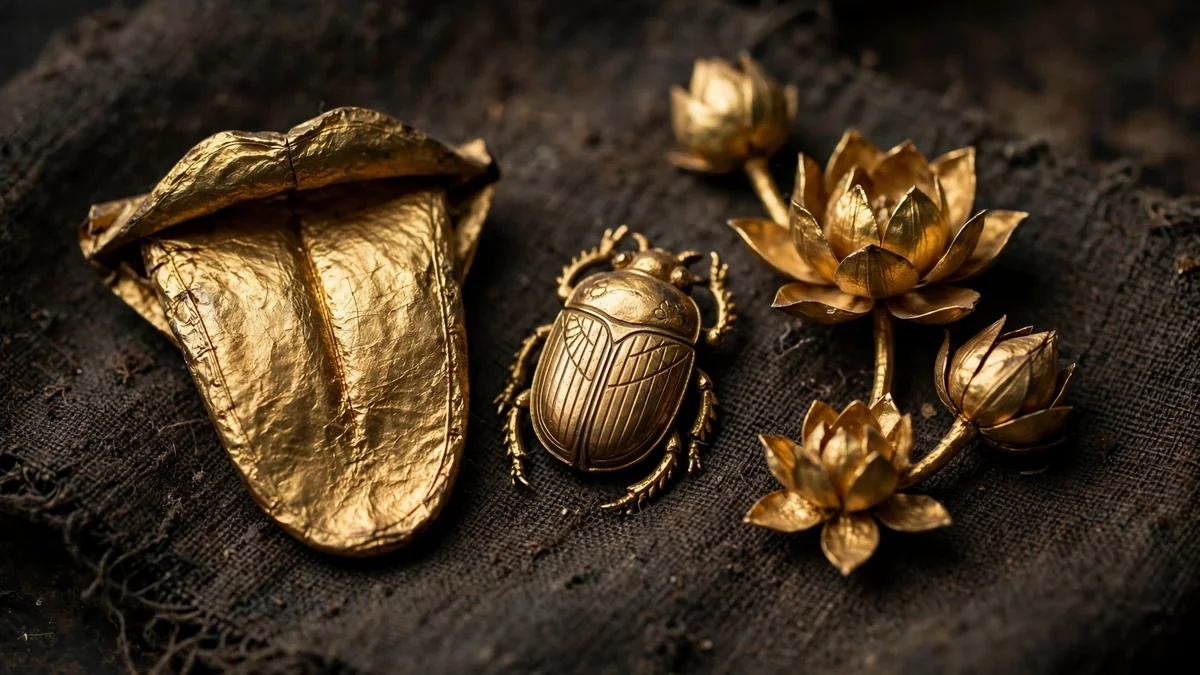
Not jewelry. Not decoration on the coffin. Actual tongues — thin sheets of gold foil, cut into the shape of a human tongue — tucked inside the mouths of the dead.
Why? The answer takes you straight into the strangest, most beautiful corner of the Egyptian afterlife: a place they called the Silent Land, where the dead were expected to say nothing at all — unless they came equipped to speak.
These are the golden tongued mummies of ancient Egypt. And over the past few years, archaeologists have been finding them faster than ever.
✍️ Write YOUR Name in Real Hieroglyphics
See how the ancient Egyptians would have written your name — free interactive tool.
Try It Now →Golden Tongued Mummies: The Quick Facts
- What they are: thin gold-foil amulets shaped like human tongues, placed inside the mouths of mummies
- When: mostly the Greco-Roman period of Egypt — roughly 332 BCE through the Roman era
- Why: so the dead could speak in the afterlife — above all, so they could address Osiris, judge of the underworld
- Where found: Taposiris Magna near Alexandria (2021), Oxyrhynchus in Middle Egypt (2021), Quesna in the Delta (2022)
- The underworld’s nickname: the Egyptians called it “the Silent Land” — and Osiris himself “the Lord of Silence”
- Why gold: Egyptians believed the flesh of the gods was made of gold — a golden tongue was a step toward becoming divine
Quesna, 2022: Golden Tongued Mummies in the Delta
The find that put mummies with golden tongues back in the headlines came from an unlikely place: Quesna (sometimes spelled Quweisna), a modest city in the Menufia Governorate, about 56 kilometers north of Cairo. Its necropolis, discovered in 1989, had been used and reused for centuries — and a new extension of the dig was about to pay off.
Dr. Mostafa Waziri, then secretary-general of Egypt’s Supreme Council of Antiquities, announced that the mission had uncovered several mummies with gold plaques in the shape of tongues in their mouths. In a few cases, layers of gold were found bonded directly to the bone, beneath the linen wrappings.
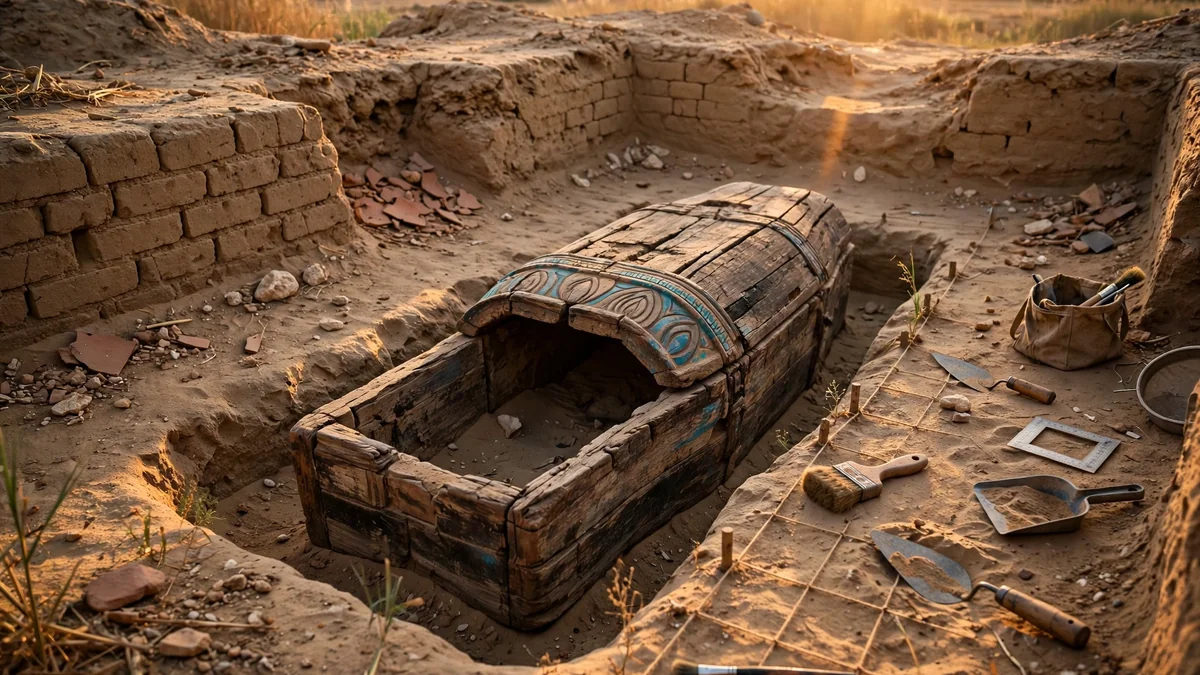
The tombs themselves were unusual: built of fresh, unfired mudbrick, and used across three eras — Egypt’s Late Period (664–332 BCE), the Ptolemaic dynasty (323–30 BCE), and the Roman Empire. Around the mummies lay wooden coffins and grave goods: necklaces, pottery, funerary amulets, and gold ornaments shaped like scarabs and lotus flowers.
Salima Ikram, the distinguished Egyptologist at the American University in Cairo, called the gold tongues “a hallmark of the later Graeco-Roman period funerary preparations, when golden tongues, and sometimes even ‘eyes,’ were placed on embalmed bodies.” This wasn’t a one-off quirk. It was standard practice, at least for a while.
Taposiris Magna: The First Golden Tongued Mummy
The first golden tongued mummy of the current wave made the news in early 2021 — and it came with a whiff of Cleopatra.
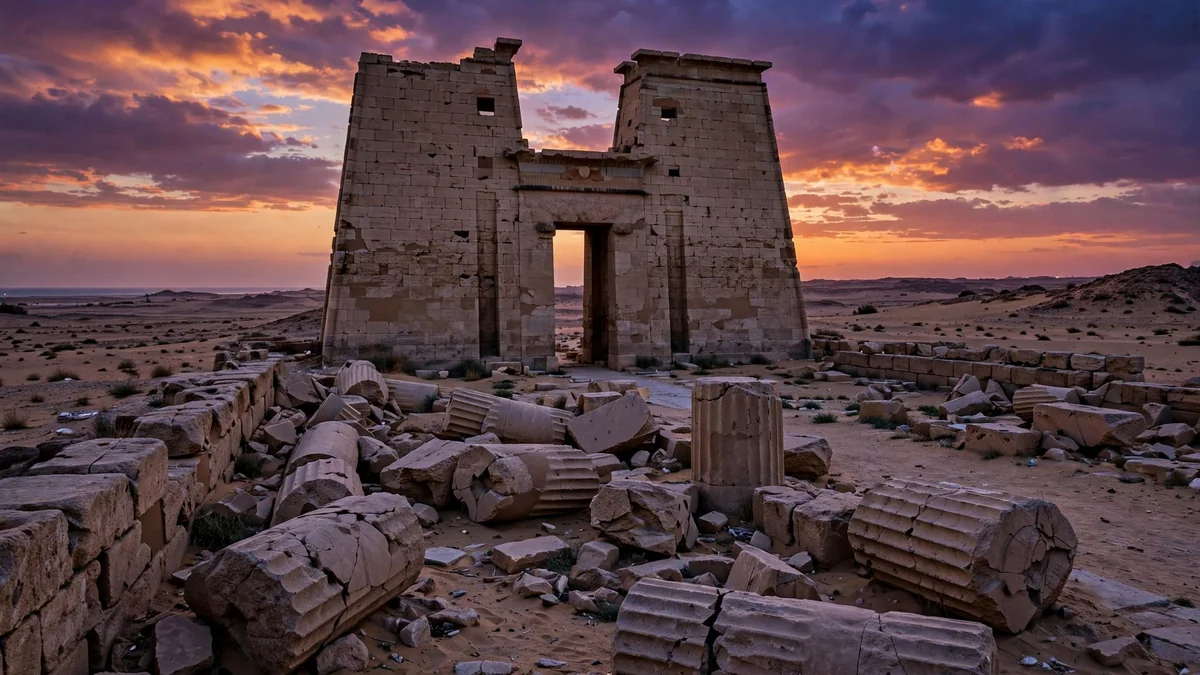
An Egyptian-Dominican mission led by Dr. Kathleen Martinez was digging at the temple of Taposiris Magna, on the outskirts of Alexandria, in the hunt for the tomb of Cleopatra. What they found instead were 16 rock-cut tombs from Egypt’s Greco-Roman period — and inside one of them, a skull with a gleaming, tongue-shaped ornament of gold foil framed in its jaw.
Egypt’s Ministry of Tourism and Antiquities explained the thinking: the tongue-shaped amulet was placed in the deceased’s mouth “to ensure they could speak in the afterlife” — so they could converse with Osiris on the journey through the underworld. The tongue was gold foil, nothing more — but to the embalmers who placed it there, it was a passport.
The same tombs held mummies wrapped in gilded cartonnage — plastered layers of linen painted and stuccoed — plus a female burial mask, a golden diadem, and eight sculpted marble masks.
This wasn’t unprecedented. Dr. Jennifer Houser Wegner, curator of Egyptian artifacts at the Penn Museum in Philadelphia — where several golden tongues are housed — noted that golden tongues had been found in Egyptian remains before. “For the Egyptians, gold was a material that had qualities of everlastingness,” she said. “It never tarnished. It always shone brilliantly.”
A Man, a Woman, and a Child at Oxyrhynchus
At the end of 2021, the golden tongues turned up again — this time far south of the Delta, at the ancient city of Oxyrhynchus (modern El-Bahnasa), about 200 kilometers south of Cairo.
Archaeologists from the University of Barcelona opened two tombs there and found three mummies inside: a man, a woman, and a three-year-old child. All three had gold where their tongues should have been — thin gold foil, placed by embalmers more than 2,500 years ago.
That date matters. It pushes the practice further back than the Greco-Roman burials at Taposiris Magna and Quesna. It wasn’t a late fad — it was part of a long-running tradition of equipping the dead for the life to come.
Golden Tongued Mummies and the Flesh of the Gods
To understand the practice, you have to understand what gold meant to an Egyptian.
Gold didn’t tarnish. It didn’t corrode. Buried for three thousand years, it comes up shining. To people who watched everything else rot, that looked like eternity made visible — and the Egyptians took the idea literally. Their gods, they said, had flesh of gold and bones of silver.
So a golden tongue wasn’t just a fancy prosthetic. It was transformation. Ikram put it plainly: the gold tongues and gold eyes were “manifestations of the transformation of the deceased into divine beings.” By placing gold in the mouth, the embalmers were rebuilding the dead person, piece by piece, out of the stuff gods were made of.
And the idea went back long before the golden tongues. In pharaonic times, gold had been molded to encase the fingers and toes of dead rulers — Tutankhamun’s gold funerary mask is the famous example of the same impulse. The tongue was just the most intimate version: the one body part the dead absolutely needed in working order.
Speaking in the Silent Land
Here’s the part that makes this practice genuinely moving, once you sit with it.
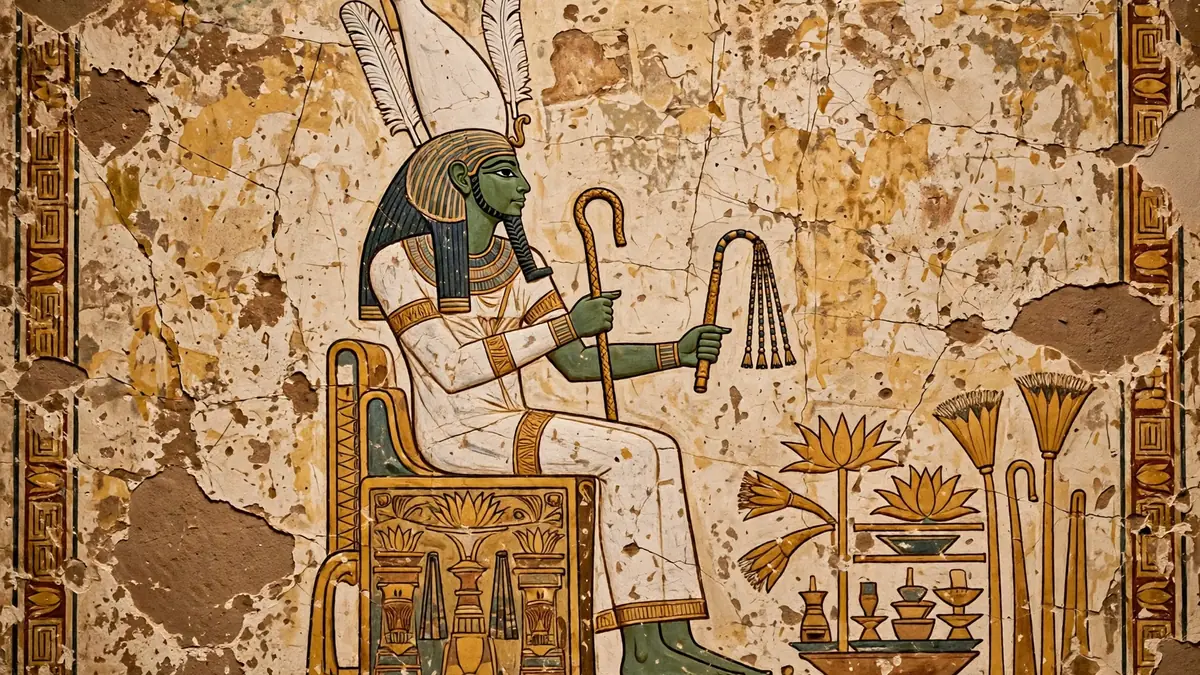
The Egyptian underworld had a nickname: the Silent Land. Its ruler, Osiris, was called the Lord of Silence. The dead passed through it quietly — judged, weighed, examined — and the one thing they desperately needed to do there was speak.
When a soul arrived before the court of Osiris, it had to make its case. Our guide to the Book of the Dead walks through the ceremony: the deceased recites the Negative Confession — 42 declarations of innocence — before Osiris and his assessors. Imagine standing before the gods of everything and being unable to get a word out. The golden tongue was insurance against exactly that.
The Egyptian ministry’s own phrasing was simple: the amulets were placed “to ensure they could speak in the afterlife before the Osirian court.” Not metaphorically. Literally. The dead would need to talk, and the living wanted to make sure they could.
The Final Test: The Weighing of the Heart
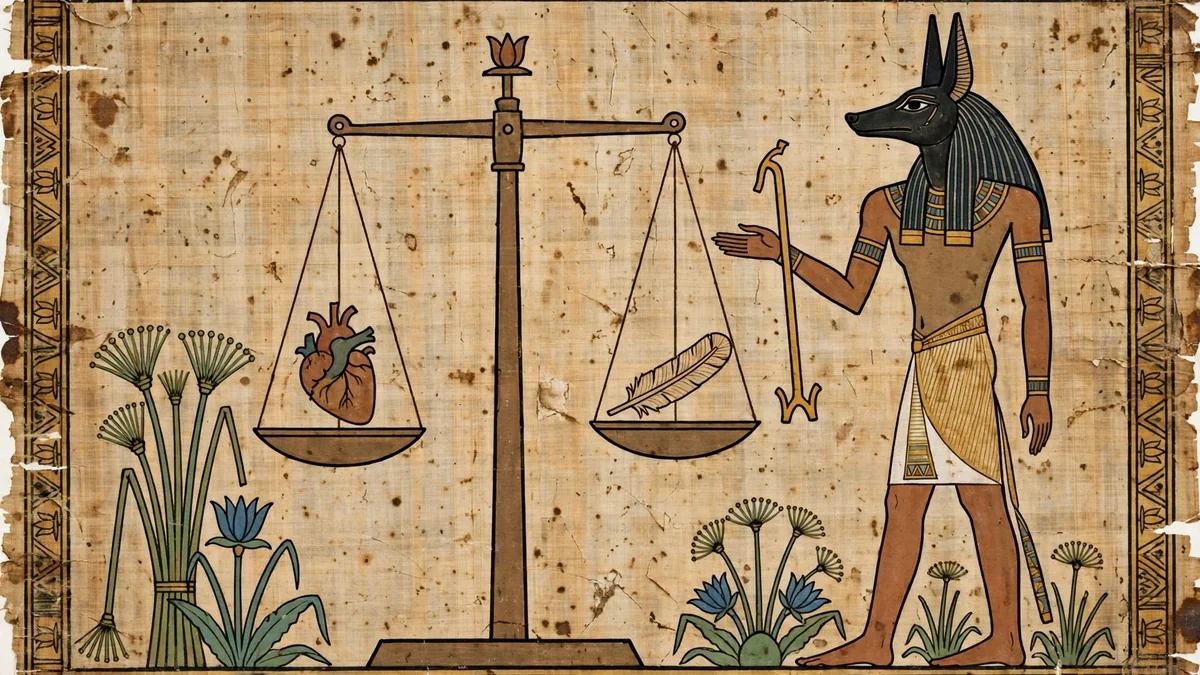
All of this leads to the most famous scene in Egyptian religion — and the moment the golden tongue was really for. In the Hall of Two Truths, the heart of the deceased was weighed against the feather of Maat, goddess of truth. If it balanced, the soul was declared “true of voice” — justified — and welcomed into the afterlife. If it sank, it was devoured by Ammit, the monster waiting by the scales, and the soul died a second, final death.
“True of voice.” Even the verdict was about speaking. The whole judgment was a trial, and trials need testimony. A gold tongue, fashioned from the flesh of the gods, was the dead person’s guarantee that when the moment came, the words would be there.
For more on the gods who presided over all of this, see our guide to the ancient Egyptian gods — and how the embalmers prepared bodies for the journey in our mummification walkthrough.
How the Embalmers Actually Did It
From what the excavations show, the golden tongues were thin pieces of gold foil, cut or shaped into a tongue form — light enough to sit in the mouth, delicate enough that most have survived only as fragments. The Quesna finds were “poorly preserved golden plaques,” in the ministry’s phrasing; gold survives, but foil is foil.
They were placed during the wrapping stage, when the embalmer was layering linen around the body — a standard part of Greco-Roman funerary preparation, alongside gilded cartonnage, gold-leafed amulets, and sometimes gold eyes. At Quesna, the embalmers went further on some bodies, bonding gold directly onto the bone beneath the wrappings.
It was skilled, deliberate work — and it wasn’t cheap. Gold foil, gold scarabs, gold lotus ornaments, gilded cartonnage: these were people whose families could afford to equip them properly for eternity.
Questions People Actually Ask
What were the golden tongues made of?
Thin gold foil, cut into the shape of a human tongue. At Quesna, archaeologists also found gold bonded directly onto the bones of some mummies, beneath the linen wrappings.
Why did ancient Egyptians put gold tongues in mummies?
So the dead could speak in the afterlife — specifically, so they could address Osiris, lord of the underworld, and plead their case before the divine court. The Egyptian underworld was called “the Silent Land,” and the tongue gave the dead a voice there.
How old are the golden tongued mummies?
Most date to Egypt’s Greco-Roman period — roughly 2,000 years old. The three mummies found at Oxyrhynchus in 2021 (a man, a woman, and a child) are older, at more than 2,500 years.
Where have golden tongued mummies been found?
At Taposiris Magna near Alexandria (2021), at Oxyrhynchus in Middle Egypt (2021), and at Quesna in the Nile Delta (2022). Earlier examples also exist in museum collections — the Penn Museum in Philadelphia houses several.
Did pharaohs like Tutankhamun have golden tongues?
Not exactly. Gold body coverings go back much further — Tutankhamun had a solid-gold funerary mask, and gold was molded around the fingers and toes of dead rulers. But tongue-shaped gold amulets specifically are a hallmark of the later Greco-Roman period.
Are archaeologists still finding golden tongued mummies?
Yes. The 2021–2022 cluster of discoveries — Taposiris Magna, Oxyrhynchus, then Quesna — came from active excavations, and digs across Egypt are ongoing. More golden tongues are almost certainly still in the ground. Curious about the latest digs? Our Luxor tomb discovery story covers 2026’s newest find.
What the Golden Tongues Tell Us
Strip away the gold and the headlines, and the golden tongued mummies tell you something simple about the people who made them: they were terrified of being silenced.
The Egyptians believed that after death you would stand before gods and be judged — and that judgment required words. So they took gold, the one material they believed never died, and shaped it into the one thing the dead could not afford to lose: a voice.
A golden tongue is a small thing, but it carries the whole Egyptian wager — that death isn’t the end of the conversation, as long as you’re prepared to speak.
Want to keep exploring? Walk through how bodies were prepared in our guide to mummification, read the spells the dead carried with them in the Book of the Dead, or see what else is coming out of the ground in the 2026 Luxor tomb discovery.