
Ancient Egyptian history lasted about 3,000 years, longer than the time that separates us from the Roman Empire. To make sense of it, historians divide it into three great “kingdoms,” periods when Egypt was united under strong kings, separated by “intermediate periods” of division and crisis.
The Old Kingdom built the pyramids. The Middle Kingdom rebuilt the country after collapse and produced its classic literature. The New Kingdom created an empire and gave us the most famous pharaohs: Hatshepsut, Akhenaten, Tutankhamun and Ramesses II. Here is what made each kingdom different, who ruled them and why each one came to an end.
The Three Kingdoms at a Glance
- Old Kingdom: about 2686–2181 BC (Dynasties 3–6). The Age of the Pyramids. Capital: Memphis.
- Middle Kingdom: about 2055–1650 BC (Dynasties 11–13). Reunification, strong central government and classic literature. Capitals: Thebes, then Itjtawy.
- New Kingdom: about 1550–1069 BC (Dynasties 18–20). Egypt’s empire and golden age. Capitals: Thebes and Memphis, later Pi-Ramesses.
- In between: the First Intermediate Period (about 2181–2055 BC) and the Second Intermediate Period (about 1650–1550 BC), times of division.
- Before and after: the Early Dynastic Period (from about 3100 BC) came before; the Third Intermediate, Late and Ptolemaic periods came after, until Rome took over in 30 BC.
All dates before about 700 BC are approximate, and different books give slightly different numbers. The dates here follow the widely used Oxford History of Ancient Egypt.
The Old Kingdom (about 2686–2181 BC): The Age of the Pyramids
The Old Kingdom began about four centuries after Egypt was first united around 3100 BC. Its kings ruled from Memphis, near modern Cairo, and they had something no earlier ruler had: the power to organize tens of thousands of workers, vast amounts of grain and stone, and a skilled bureaucracy of scribes. They used it to build the pyramids.
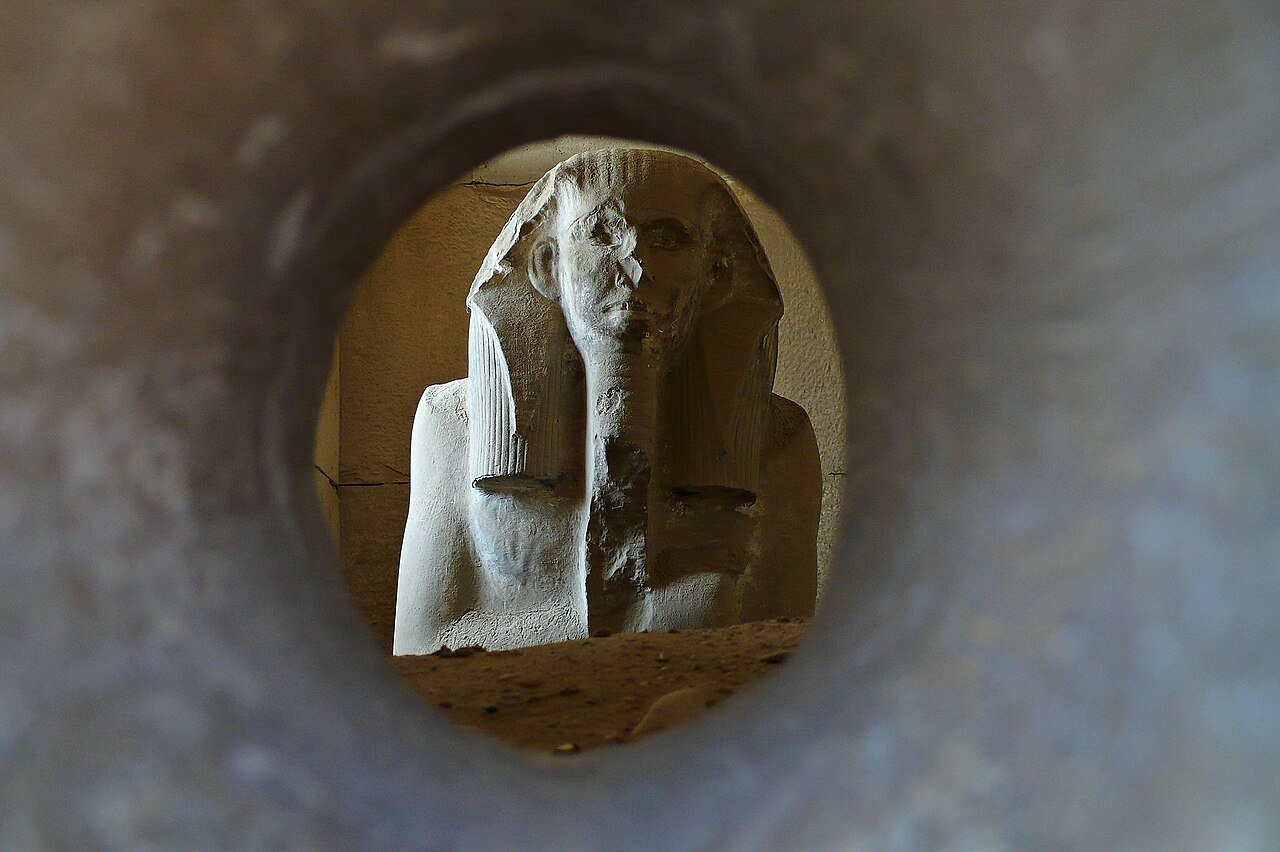
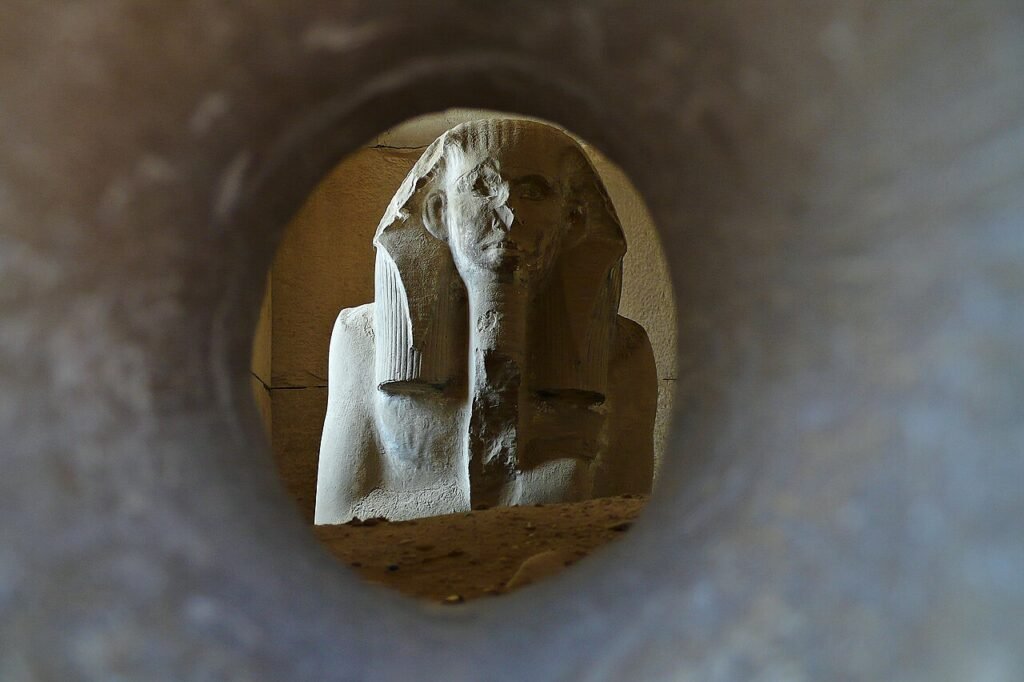
- Djoser (about 2670 BC) and his architect Imhotep built the Step Pyramid at Saqqara, the first large stone building in the world.
- Sneferu experimented with the Bent Pyramid and the Red Pyramid at Dahshur, the first true smooth-sided pyramid.
- Khufu built the Great Pyramid of Giza around 2560 BC, followed by his successors Khafre, who probably built the Great Sphinx, and Menkaure.
- In the 5th Dynasty, kings built sun temples to Ra, and at the end of the dynasty Unas carved the Pyramid Texts, the oldest religious writings in the world, inside his pyramid.
The pharaoh was seen as a god on earth, and the entire country was organized around his needs in this life and the next. Learn more in our guides to how the pyramids were built and the Great Sphinx of Giza.
Why the Old Kingdom ended
Over time, provincial governors (nomarchs) grew rich and powerful, and royal authority weakened. The 6th Dynasty king Pepi II is traditionally said to have reigned for more than 60 years, leaving a weak succession. Around 2200 BC, a period of drought and low Nile floods seems to have caused famine. Central government broke down, and Egypt entered the First Intermediate Period, when rival dynasties at Herakleopolis in the north and Thebes in the south fought for control.
The Middle Kingdom (about 2055–1650 BC): Egypt Reborn
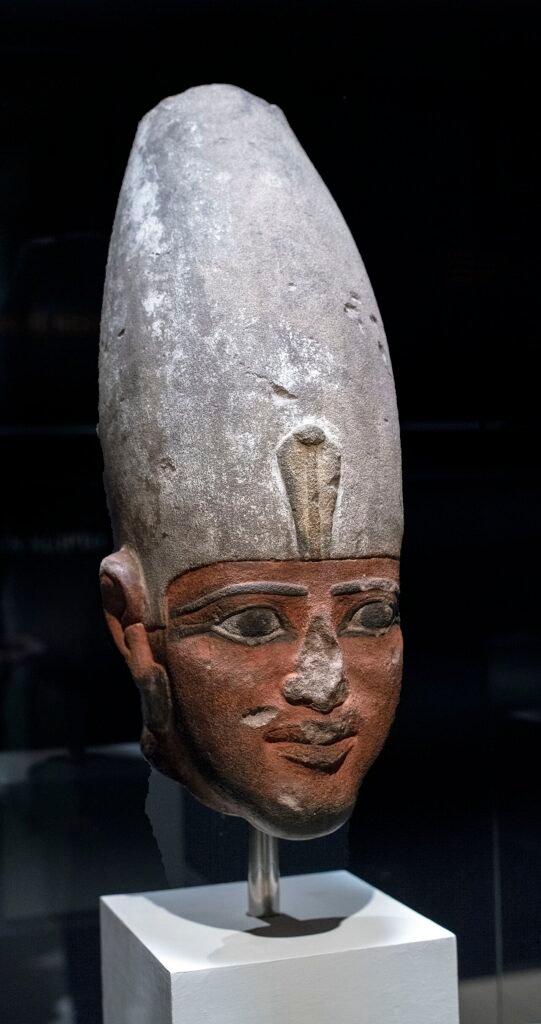
Around 2055 BC, the Theban king Mentuhotep II defeated his northern rivals and reunited Egypt, beginning the Middle Kingdom. The next dynasty, the 12th, founded by Amenemhat I, moved the capital north to a new city called Itjtawy near the Fayum and became one of the most stable and successful in Egyptian history.
Highlights of the Middle Kingdom include:
- Strong government. Kings such as Senusret III reduced the power of the provincial nobles and reorganized the administration.
- Expansion into Nubia. A chain of massive mud-brick forts, such as Buhen, guarded the southern border and the gold routes.
- Great building works. Kings drained and farmed the Fayum, and Amenemhat III built a famous temple complex the Greeks later called the Labyrinth.
- Classic literature. Stories such as The Tale of Sinuhe and the wisdom texts written in this era were copied by Egyptian students for a thousand years.
- Afterlife for more people. The Coffin Texts, painted on the coffins of officials, made spells once reserved for kings available to wealthier Egyptians, the forerunner of the Book of the Dead.
The last ruler of the 12th Dynasty, Sobekneferu, is one of the first women confirmed to have ruled Egypt as king.
Why the Middle Kingdom ended
The 13th Dynasty saw many short reigns and a gradual loss of control. Meanwhile, people from western Asia had been settling in the Nile Delta for generations. Around 1650 BC, their leaders, known to the Egyptians as the heqa khasut, “rulers of foreign lands,” and to us as the Hyksos, took control of northern Egypt from their capital Avaris. This began the Second Intermediate Period, with the Hyksos in the north and an Egyptian dynasty at Thebes in the south.
The New Kingdom (about 1550–1069 BC): Empire and Golden Age
The Theban kings fought back. After the deaths of Seqenenre Tao, whose mummy shows terrible battle wounds, and his son Kamose, Ahmose I drove the Hyksos out around 1550 BC and founded the 18th Dynasty. The New Kingdom that followed was Egypt’s richest and most powerful age.
Egypt now had a professional army with horses and chariots, technology learned from the Hyksos. Its kings pushed north into Syria and south deep into Nubia, creating an empire. Gold, tribute and captives flowed into Egypt, and much of the wealth went to the temple of Amun at Karnak.
The New Kingdom produced Egypt’s most famous rulers:
- Hatshepsut (about 1473–1458 BC), the female pharaoh who sent an expedition to the land of Punt and built her temple at Deir el-Bahari.
- Thutmose III, her stepson, Egypt’s greatest military king, who fought around 17 campaigns in the Near East.
- Amenhotep III, whose long, peaceful reign was a high point of wealth and art.
- Akhenaten, who abandoned the traditional gods for the Aten, the sun disk, and built a new capital at Amarna, with his queen Nefertiti.
- Tutankhamun, the boy king who restored the old gods and whose intact tomb made him famous.
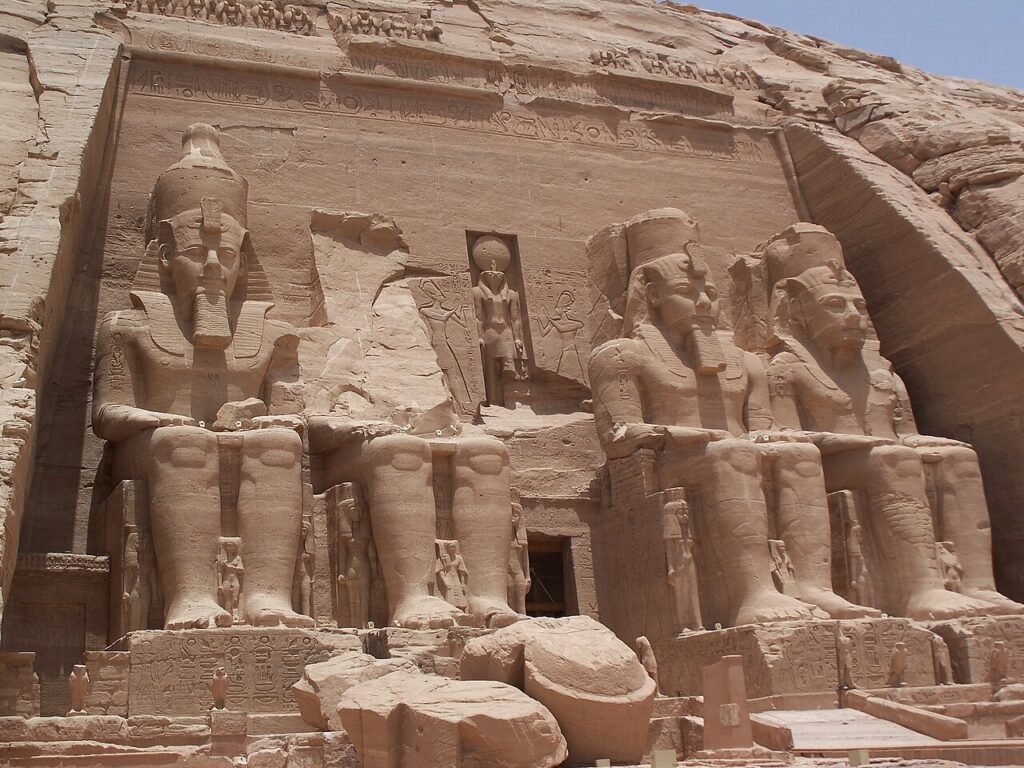
- Ramesses II (about 1279–1213 BC), who fought the Hittites at the Battle of Kadesh, signed one of history’s first peace treaties and built Abu Simbel.
- Ramesses III, who defended Egypt against the invading “Sea Peoples” around 1177 BC.
Kings of the New Kingdom were buried in hidden rock-cut tombs in the Valley of the Kings, rather than in pyramids.
Why the New Kingdom ended
Under the later Ramesside kings, Egypt faced foreign invasions, the loss of its empire, rising prices, tomb robberies and strikes by royal workmen. At the same time, the high priests of Amun at Thebes grew enormously powerful. By about 1069 BC, Egypt was effectively split, with kings ruling the north from Tanis and the priests of Amun controlling the south. This began the Third Intermediate Period.
Old vs Middle vs New Kingdom: Key Differences
| Old Kingdom | Middle Kingdom | New Kingdom | |
|---|---|---|---|
| Dates | About 2686–2181 BC | About 2055–1650 BC | About 1550–1069 BC |
| Dynasties | 3–6 | 11–13 | 18–20 |
| Capital | Memphis | Thebes, then Itjtawy | Thebes, Memphis, Pi-Ramesses |
| Famous rulers | Djoser, Sneferu, Khufu, Khafre | Mentuhotep II, Senusret III, Amenemhat III | Hatshepsut, Akhenaten, Tutankhamun, Ramesses II |
| Royal burials | Pyramids | Smaller pyramids | Rock-cut tombs in the Valley of the Kings |
| Known for | The Giza pyramids, the Sphinx, Pyramid Texts | Reunification, Nubian forts, classic literature, Coffin Texts | Empire, chariots, Karnak and Luxor temples, Book of the Dead |
| Ended with | Drought and power of provincial nobles | Weak kings and Hyksos takeover | Loss of empire, economic crisis, split of the country |
What Came After the New Kingdom?
Egypt’s story did not end in 1069 BC. During the Third Intermediate Period it was ruled by several dynasties, including Libyan and Nubian kings, the “Black Pharaohs” of Kush. The Late Period (664–332 BC) saw a last revival of native Egyptian rule, interrupted by two Persian conquests. In 332 BC Alexander the Great took Egypt, and his general Ptolemy founded the Ptolemaic dynasty, which ended with the death of Cleopatra VII in 30 BC, when Egypt became a province of Rome. See the full sequence in our ancient Egypt timeline and list of Egyptian pharaohs.
Frequently Asked Questions
What are the three kingdoms of ancient Egypt?
The Old Kingdom (about 2686–2181 BC), the Middle Kingdom (about 2055–1650 BC) and the New Kingdom (about 1550–1069 BC). They were periods when Egypt was united and strong, separated by intermediate periods of division.
Which kingdom built the pyramids?
The Old Kingdom. The Step Pyramid of Djoser and the Great Pyramid of Giza were both built in the Old Kingdom, which is often called the Age of the Pyramids.
Which was the greatest kingdom of ancient Egypt?
The New Kingdom is usually considered Egypt’s golden age, when it controlled an empire and built its greatest temples. The Old Kingdom achieved the most impressive building feats with the pyramids.
What happened between the kingdoms?
Each kingdom was followed by an “intermediate period” when central government broke down and rival rulers controlled different parts of Egypt. These ended when a strong dynasty from Thebes reunited the country.
Who was the first king of the New Kingdom?
Ahmose I, who expelled the Hyksos from northern Egypt around 1550 BC and founded the 18th Dynasty.
The Bottom Line
The Old, Middle and New Kingdoms are the three peaks of ancient Egyptian civilization: the pyramid builders, the restorers and the empire builders. Each rose when Egypt was united under a strong king and fell when that unity broke apart. To explore what life was like for ordinary people across all three, read our guide to the social structure of ancient Egypt.
Sources
- Ian Shaw (ed.), The Oxford History of Ancient Egypt (Oxford University Press, 2000)
- World History Encyclopedia: Old Kingdom of Egypt
- World History Encyclopedia: Middle Kingdom of Egypt
- The Metropolitan Museum of Art: Egypt in the New Kingdom
- Encyclopaedia Britannica: Ancient Egypt