
Ancient Egyptian society is often drawn as a pyramid, and for once the cliché fits. At the very top sat one person, the pharaoh, believed to be a god on earth. Below him came a small group of nobles, priests and officials, then scribes, soldiers and skilled craftsmen. At the wide base were the farmers, who made up the great majority of Egypt’s people and grew the grain that kept everyone else alive.
This structure lasted, with changes, for nearly 3,000 years. But it was not a rigid caste system. A farmer’s son who learned to read could become a scribe, and a talented scribe could rise to the highest offices in the land. Here is how the social pyramid of ancient Egypt worked, level by level, and what life was like at each step.
Egypt’s Social Pyramid at a Glance
- Top: the pharaoh, king and living god.
- Upper class: the vizier, high priests, nobles and provincial governors (nomarchs).
- Middle: scribes, officials, priests, soldiers and skilled craftsmen.
- Base: farmers and laborers, perhaps 80% or more of the population.
- Bottom: servants and slaves, mostly prisoners of war.
- Could people move up? Yes, mainly through education as a scribe, or through the army.
- Population: estimates range from about 1–2 million in the Old Kingdom to around 3 million or more in the New Kingdom.
Why a Pyramid?
Historians use the pyramid shape because each level supported the one above it. Farmers produced food and paid taxes in grain. That surplus fed the craftsmen, soldiers, priests and officials who did not grow their own food, and it paid for the temples, tombs and palaces of the elite. At the summit, the pharaoh was responsible for keeping the whole system in balance.
The Egyptians themselves did not draw their society as a pyramid. They thought of it as a household, with the king as the head of a family that included the whole country. But the pyramid is a useful way to picture who had power, who did the work and how wealth flowed upward.
1. The Pharaoh: King and God
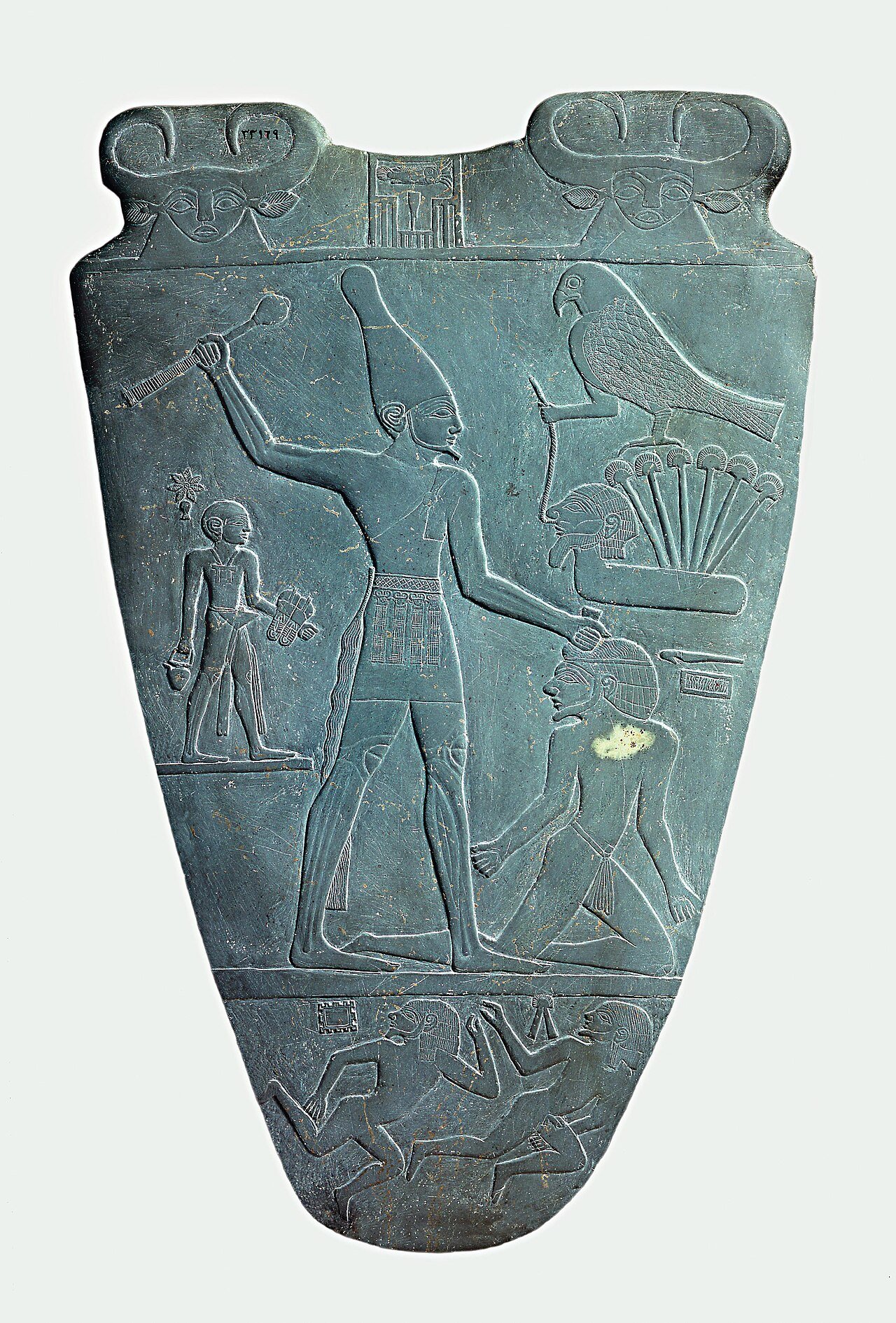
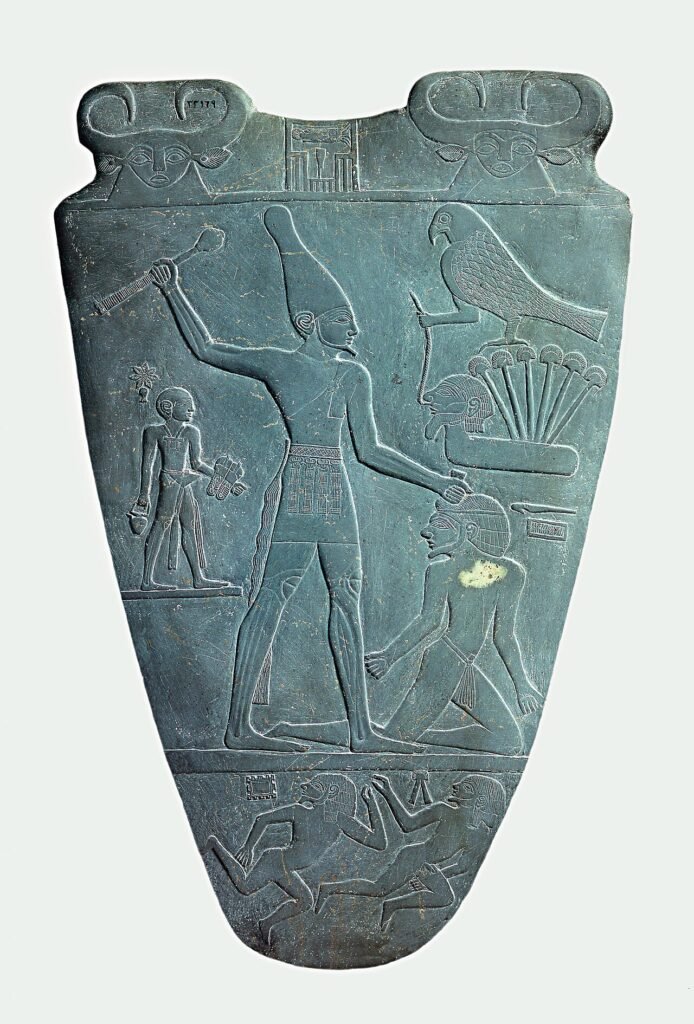
The pharaoh was the top of everything. He (and occasionally she) was the supreme ruler, the chief priest of every temple, the commander of the army and the final judge. Egyptians believed the king was the living form of the god Horus and the son of the sun god Ra. His most important duty was to maintain ma’at, the order and justice that held the universe together.
In practice, no king could run a country of millions alone. He depended on a large network of officials, priests and scribes. But in theory, all the land of Egypt and everything it produced belonged to him. To meet the kings themselves, see our list of Egyptian pharaohs.
2. The Vizier, Nobles and High Priests
Just below the king sat the most powerful people in Egypt.
- The vizier was the king’s chief minister, a kind of prime minister. He oversaw tax collection, the courts, building projects and the government offices. In the New Kingdom there were two viziers, one for Upper Egypt and one for Lower Egypt. The tomb of the vizier Rekhmire at Thebes lists his duties in detail, from hearing lawsuits to checking the water supply.
- Nobles and nomarchs governed Egypt’s 42 provinces, called nomes. They collected taxes, managed local farms and kept order. In weak periods, some became almost independent princes.
- High priests ran the great temples, which owned huge estates, herds and workshops. By the late New Kingdom, the high priests of Amun at Thebes were so wealthy that they rivaled the king himself.
These families owned large estates, lived in spacious villas and were buried in beautifully painted tombs. Much of what we know about daily life in Egypt comes from the scenes they ordered for their tomb walls. You can read more about how the state was run in our guide to the government of ancient Egypt.
3. Scribes and Officials
Scribes were the backbone of Egyptian government. Fewer than one in a hundred Egyptians could read and write, and those who could were in constant demand. Scribes recorded harvests and taxes, counted cattle, wrote letters and legal documents, kept temple accounts and supervised building work.
Being a scribe was the surest path to a comfortable life. Scribes were exempt from heavy manual labor and paid well in grain, bread and beer. Egyptian school texts made the point bluntly. One, known as the “Satire of the Trades,” urges students to study hard by mocking every other job: the smith’s fingers are like a crocodile’s skin, the fisherman lives in fear of crocodiles, the farmer is always worn out. Another lesson book, Papyrus Lansing, puts it simply: “Be a scribe! It saves you from toil.”
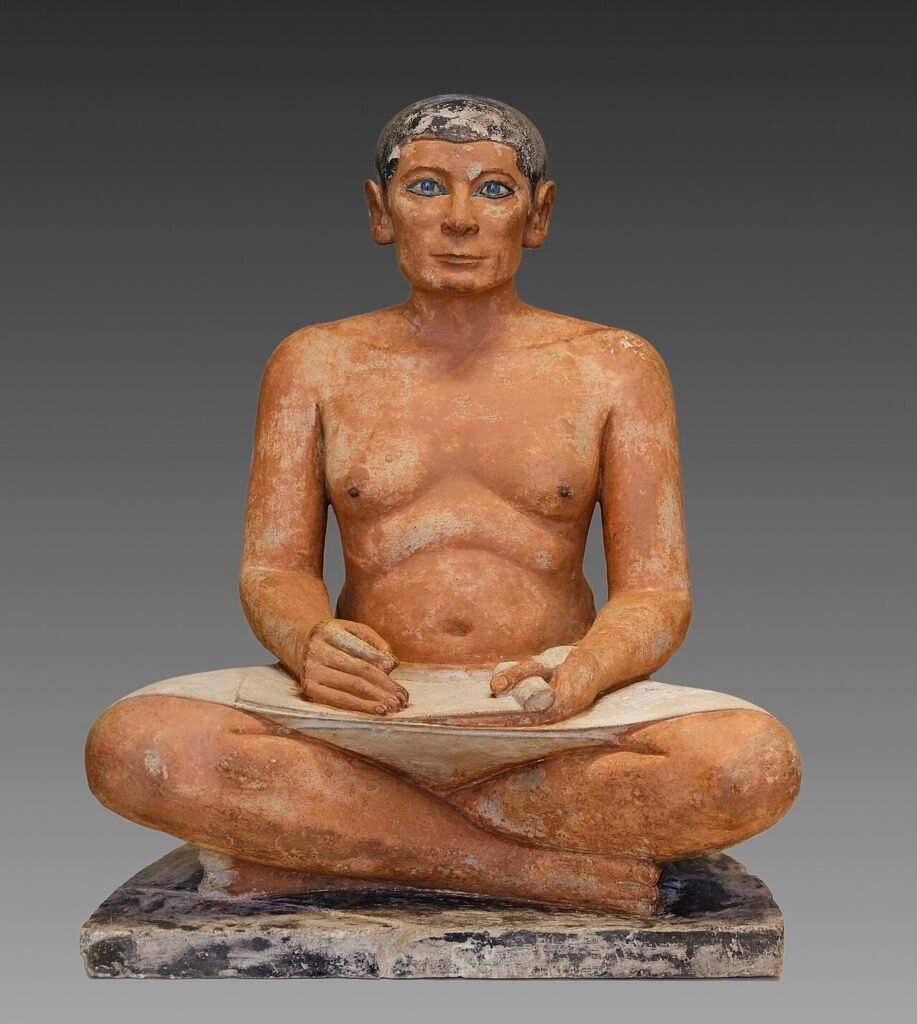
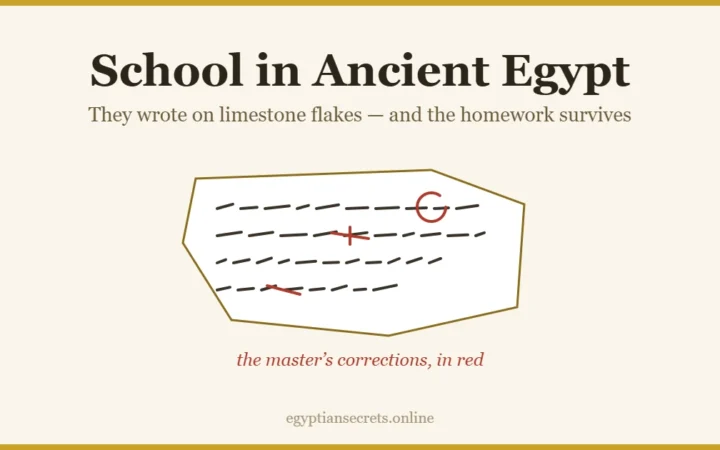
Boys, and occasionally girls, trained for years, copying texts onto pieces of pottery and wooden boards. Learn more in our article on what school was like in ancient Egypt, or try writing your own name with our hieroglyphics translator.
4. Soldiers
For much of the Old and Middle Kingdoms, Egypt had no large standing army; men were called up when needed. That changed after the Hyksos, foreign rulers, took over northern Egypt around 1650 BC. The kings who drove them out built a professional army with chariots, archers and foot soldiers, and the New Kingdom became an age of conquest.
A soldier’s life was hard and dangerous, but it offered rewards: a share of the plunder, gifts of land and gold for bravery, and the chance of promotion. Some army commanders rose to the very top. Horemheb, who began as a general, became pharaoh himself, and so did the founder of the Ramesside family, Ramesses I.
5. Craftsmen and Artisans
Egypt’s temples, tombs and palaces needed an army of skilled workers: stonemasons, sculptors, painters, carpenters, metalworkers, jewelers, potters, weavers and brewers. Most worked for the king, the temples or wealthy nobles rather than for themselves.
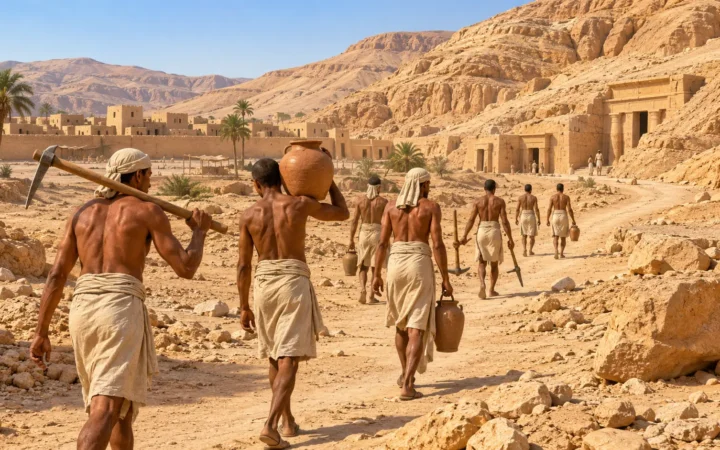
We know a great deal about one community of craftsmen because their village survived. At Deir el-Medina, near the Valley of the Kings, lived the men who cut and decorated the royal tombs. They were literate enough to leave thousands of notes, letters, accounts and complaints. They worked eight-day shifts, received regular rations of grain, and in about 1155 BC, when their pay was late, they staged the first recorded labor strike in history. Read more in our article on how ancient Egyptian workers were paid.
6. Farmers: The Base of the Pyramid
The great majority of Egyptians were farmers. Their year followed the Nile: the flood season (akhet) covered the fields with fresh, fertile mud; the growing season (peret) was spent plowing, sowing and tending emmer wheat, barley, flax and vegetables; and the harvest season (shemu) brought the crop in before the river rose again.
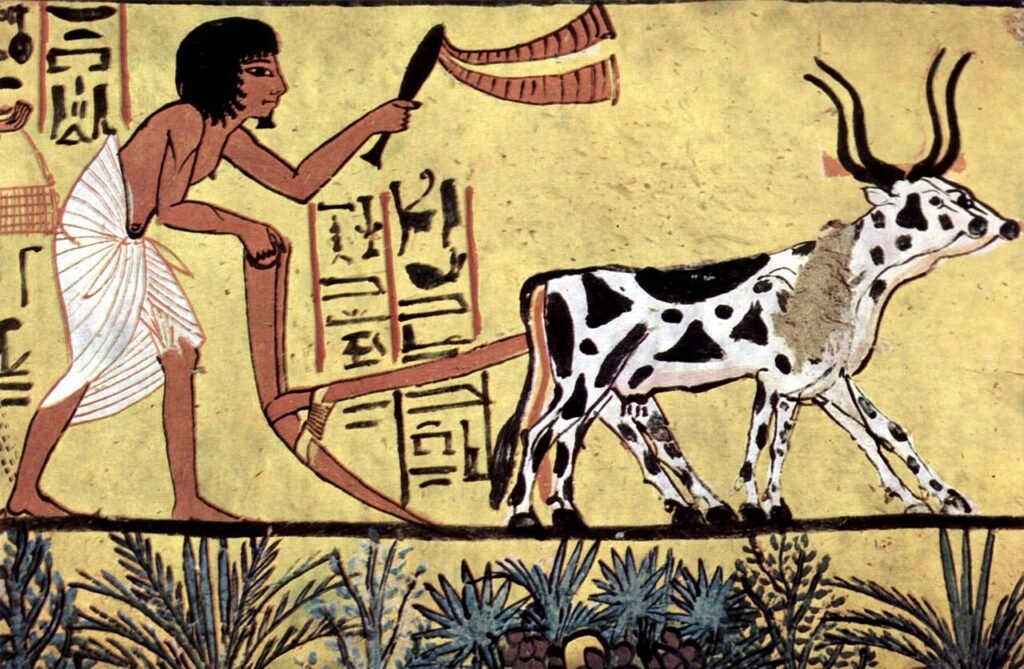
Most farmers did not own their land. They worked fields belonging to the king, the temples or nobles, and handed over a large share of the harvest as tax. Scribes measured the fields and estimated the crop in advance, and farmers who could not pay could be beaten. During the flood months, when fields were underwater, many farmers were called up for state labor, digging canals or hauling stone for royal building projects.
Contrary to the old myth, the pyramids were not built by slaves. Excavations at Giza have found the villages, bakeries and cemeteries of the workers, who were paid Egyptian laborers and were buried with honor near the king they served.
7. Servants and Slaves
At the bottom of society were servants and slaves. Slavery in ancient Egypt existed, but it looked different from the plantation slavery of later centuries. Most slaves were prisoners of war captured during foreign campaigns, especially in the New Kingdom. Others were Egyptians who sold themselves into service to pay off debts.
Slaves worked in households, temple estates, mines and quarries. Some were treated harshly, especially in the mines, but others had legal rights: they could own property, marry free people and be freed by their owners. A few former slaves and their children rose into respectable positions.
Could You Move Between Classes?
More than in many ancient societies, yes. The key was education. A clever boy from a humble family who was sent to scribal school could become an official, and officials could be promoted to the highest posts. Military service was another route up, especially in the New Kingdom.
Marriage, royal favor and luck also played a part. The architect Imhotep, who designed the first pyramid, was later honored as a god. On the other hand, most Egyptians stayed in the same occupation as their parents. Sons usually followed their fathers’ trades, and the farmer’s life was the life most people knew.
Where Did Women Fit In?
Women in ancient Egypt belonged to the same social class as their fathers or husbands, but they had more legal rights than women in most of the ancient world. They could own and inherit property, buy and sell land, sign contracts, go to court and divorce. Most women ran households and raised children, while others worked as weavers, bakers, brewers, musicians, priestesses and, in rare cases, rulers. A handful, such as Hatshepsut, ruled Egypt as pharaoh.
Frequently Asked Questions
What was the social structure of ancient Egypt?
Ancient Egyptian society was shaped like a pyramid. The pharaoh was at the top, followed by the vizier, nobles and high priests, then scribes and officials, soldiers, craftsmen, and at the base the farmers and laborers. Servants and slaves were at the bottom.
What was the largest social class in ancient Egypt?
Farmers. Most Egyptians worked the land, growing wheat, barley and flax along the Nile, and their harvests supported the rest of society through taxes.
Who was the most powerful person after the pharaoh?
The vizier, the king’s chief minister, who supervised the government, the courts and tax collection. In some periods the high priests of Amun also held enormous power.
Did ancient Egypt have slaves?
Yes, but in smaller numbers than often imagined. Most slaves were prisoners of war or people in debt, and many had legal rights. The pyramids were built mainly by paid Egyptian workers, not slaves.
Could a poor Egyptian become rich?
It was possible. Learning to read and write as a scribe was the main way to rise in society, and successful soldiers could also be rewarded with land and promotion.
The Bottom Line
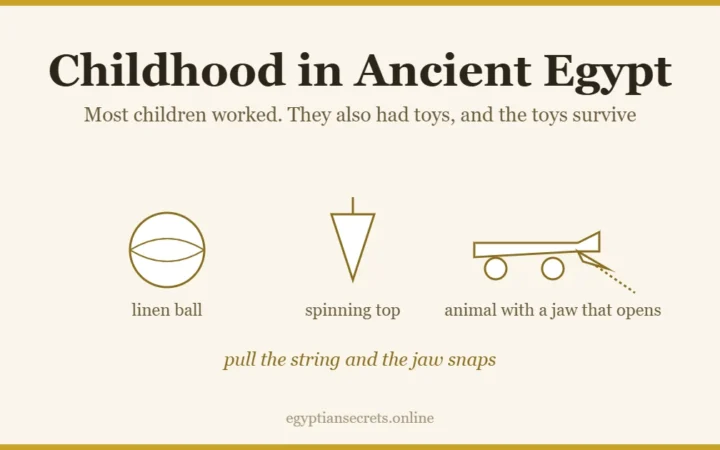
The social pyramid of ancient Egypt held together for 3,000 years because every level depended on the others. Farmers fed the nation, craftsmen built its monuments, scribes kept its records, priests served its gods and the pharaoh held the whole system in balance. To explore more of how ordinary people lived, see our guides to ancient Egyptian houses, what ancient Egyptians ate and childhood in ancient Egypt.
Sources
- Encyclopaedia Britannica: Ancient Egypt
- World History Encyclopedia: Social Structure in Ancient Egypt
- The Metropolitan Museum of Art: Egypt in the New Kingdom
- Ancient Egypt Research Associates: The Lost City of the Pyramid Builders
- Toby Wilkinson, The Rise and Fall of Ancient Egypt (Bloomsbury, 2010)