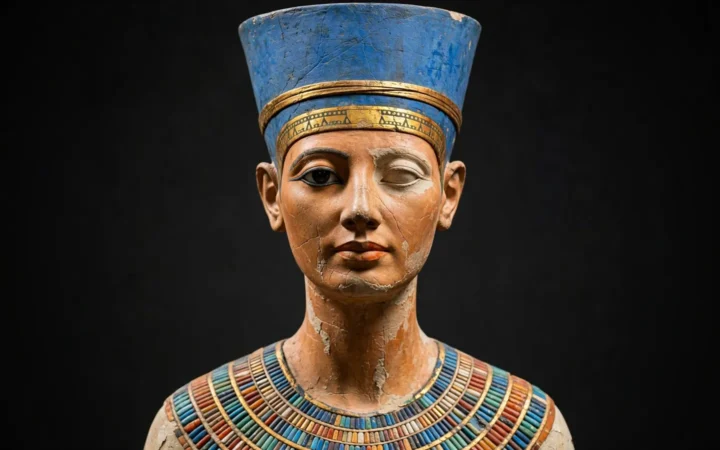

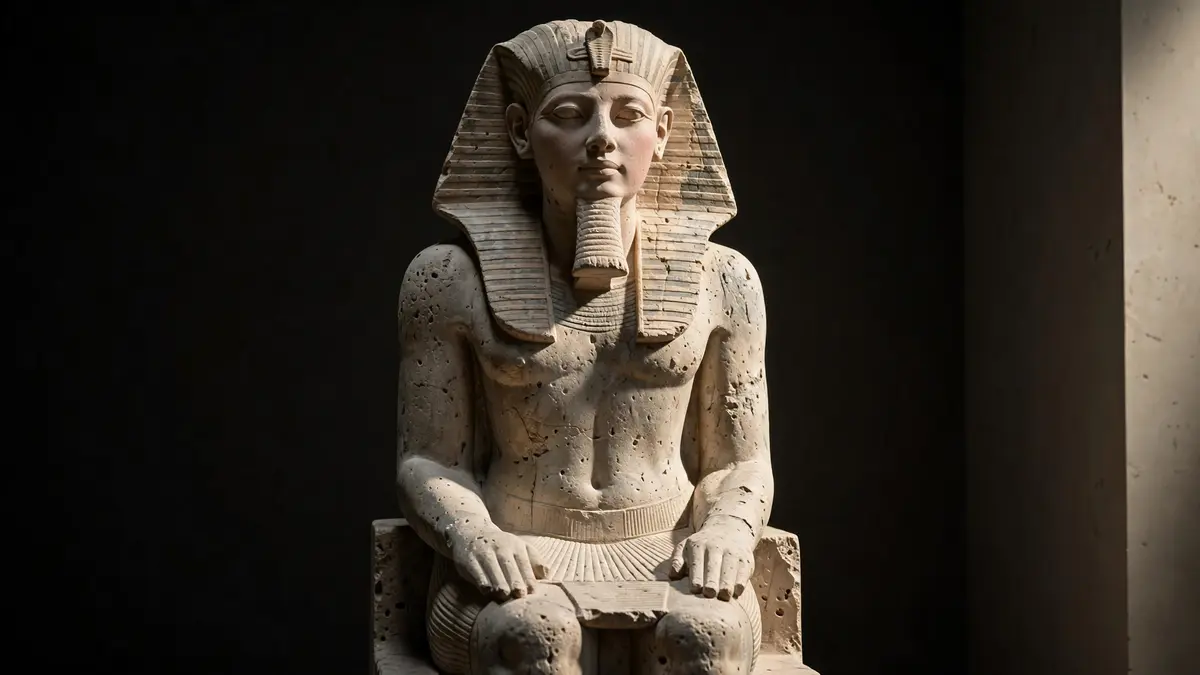
In 1927, the archaeologist Herbert Winlock stood in a quarry pit near Deir el-Bahri looking at thousands of smashed statue fragments. They were the remains of Hatshepsut — Egypt’s most successful female pharaoh — and Winlock had no doubt who was responsible.
He called the pieces maddening relics of Thutmose’s spite.
That verdict held for nearly a century. A jealous nephew, waiting decades for his aunt to die, then destroying every trace of her in a rage.
In 2025 a researcher went back to Winlock’s own unpublished notes and found the story does not hold up.
In brief: Hatshepsut ruled Egypt as pharaoh from about 1473 to 1458 BC, one of very few women to hold the title outright. After her death her name and image were erased from temple walls. New analysis of her smashed statues shows most of that damage was ritual and practical rather than vengeful.
Myth Versus Evidence
| What is usually said | What the evidence shows |
|---|---|
| Thutmose III smashed her statues out of jealous rage | Many survived intact. Most damage matches standard ritual treatment of any dead ruler, plus later reuse as building stone (Wong, Antiquity 2025) |
| He acted immediately after her death | The erasure began around twenty years into his sole reign, late in his life |
| She disguised herself as a man | The beard and kilt were the regalia of the office. Inscriptions often still use feminine grammar for her |
| She was erased from history | The attempt was real and it failed. Her temple at Deir el-Bahri is the best preserved of the three at the site |
How a Woman Became Pharaoh
Hatshepsut was the daughter of Thutmose I and the wife of her half-brother Thutmose II. When he died around 1479 BC, the heir was a small child — Thutmose III, his son by a secondary wife.
Hatshepsut became regent, which was normal. What happened next was not.
Within a few years she stopped acting as regent and took the full titulary of a king. She was crowned, given a throne name, and depicted in the kilt and false beard of a pharaoh.
This was not a disguise, and it is worth being clear about that. Egyptian art showed her with male royal regalia because pharaoh was a male office with a fixed iconography. Inscriptions frequently still use feminine grammatical forms for her. She was not pretending to be a man; she was occupying a role that had no female version.
What she actually did
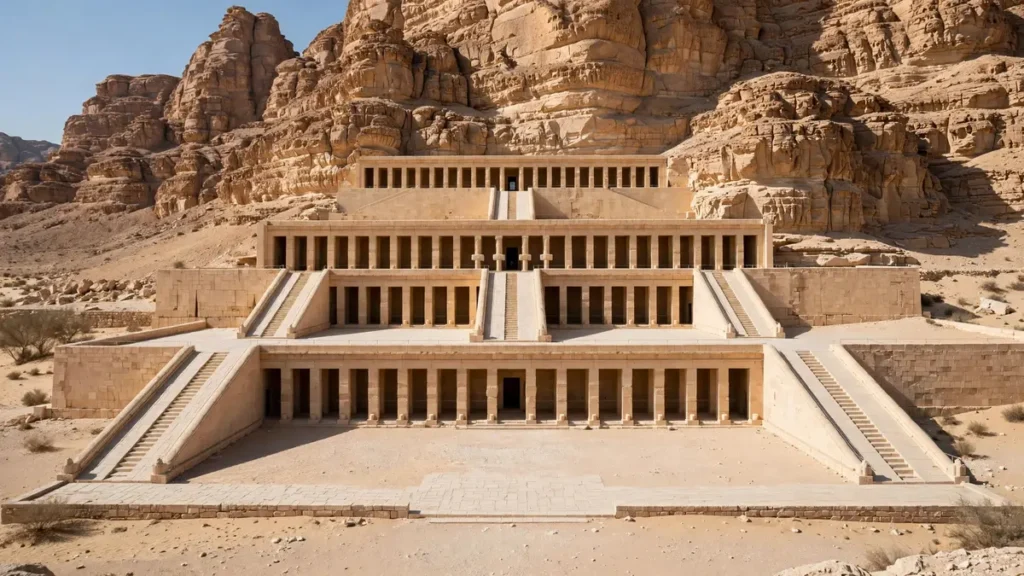
Her reign of roughly twenty years was prosperous and notably peaceful.
- Sent a major trading expedition to Punt, recorded in detail on her temple walls — ships, cargo, incense trees carried back in baskets
- Built extensively, including her mortuary temple at Deir el-Bahri, still the best preserved of the three temples there
- Restored monuments damaged during the earlier Hyksos period
- Erected obelisks at Karnak, one of which still stands
Thutmose III, meanwhile, grew up, commanded the army, and succeeded her on her death. He went on to become one of Egypt’s most effective military pharaohs.
Women who ruled Egypt as pharaoh
Hatshepsut was not unique, but the list is very short.
| Ruler | Approximate dates | Status of the evidence |
|---|---|---|
| Sobekneferu | c. 1806–1802 BC | Attested with full royal titles; reign was brief |
| Hatshepsut | c. 1473–1458 BC | Best documented. Roughly twenty years, extensive building |
| Neferneferuaten | c. 1334 BC | Ruled as pharaoh, but the identity is disputed — possibly Nefertiti |
| Tausret | c. 1191–1189 BC | Took the throne after her stepson’s death |
| Cleopatra VII | 51–30 BC | Ptolemaic, not Egyptian by descent. The last pharaoh |
The Erasure Was Real
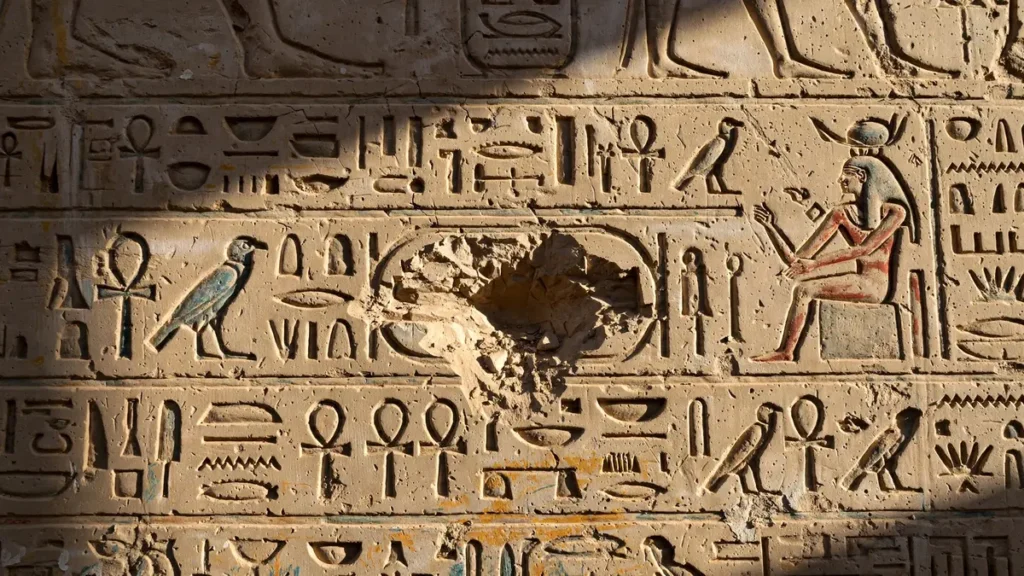
Before correcting the story, it is important to say what is not in dispute.
After Hatshepsut’s death, a systematic programme removed her name and image from temple walls. Her cartouches were chiselled out. Her figure was cut away and sometimes replaced with images of Thutmose I or II. She was left out of later king lists.
This happened. It was deliberate, and it was ordered by Thutmose III.
The Egyptian belief behind it is covered in our article on Egyptian hieroglyphs: a written name preserved a person, and erasing it was an attempt to end their existence in the afterlife. This was not vandalism. It was theology applied with a chisel.
What has been questioned is the statues — and the emotional story built on them.
The 2025 Study That Changed the Picture
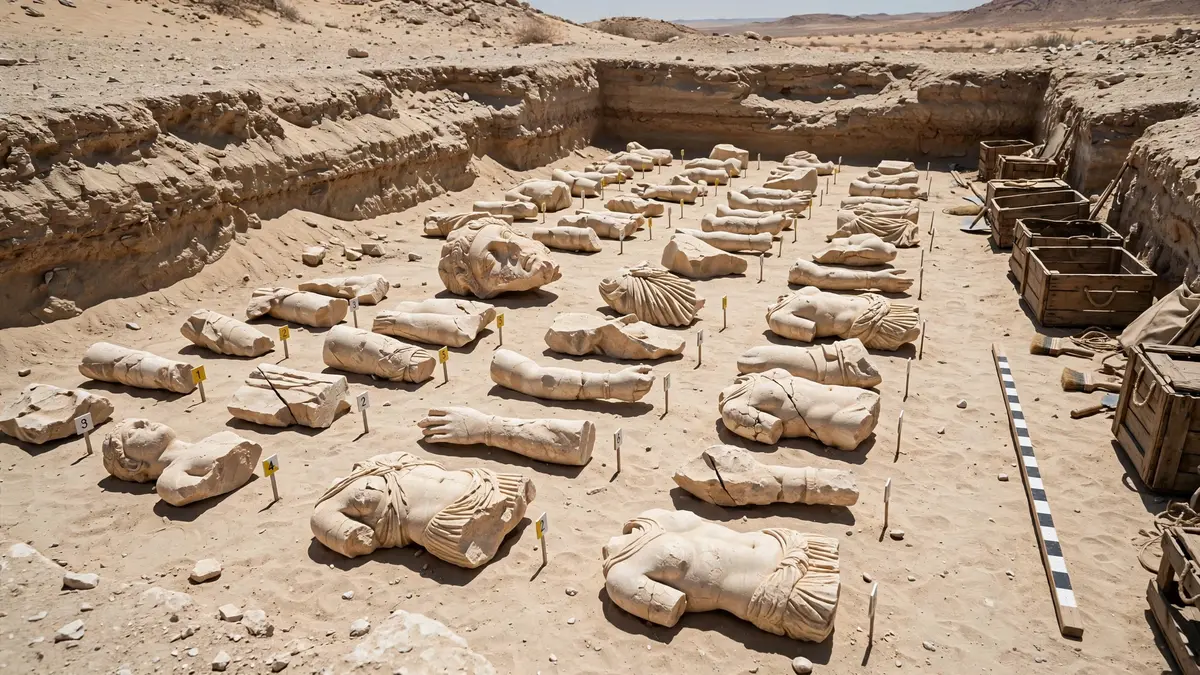
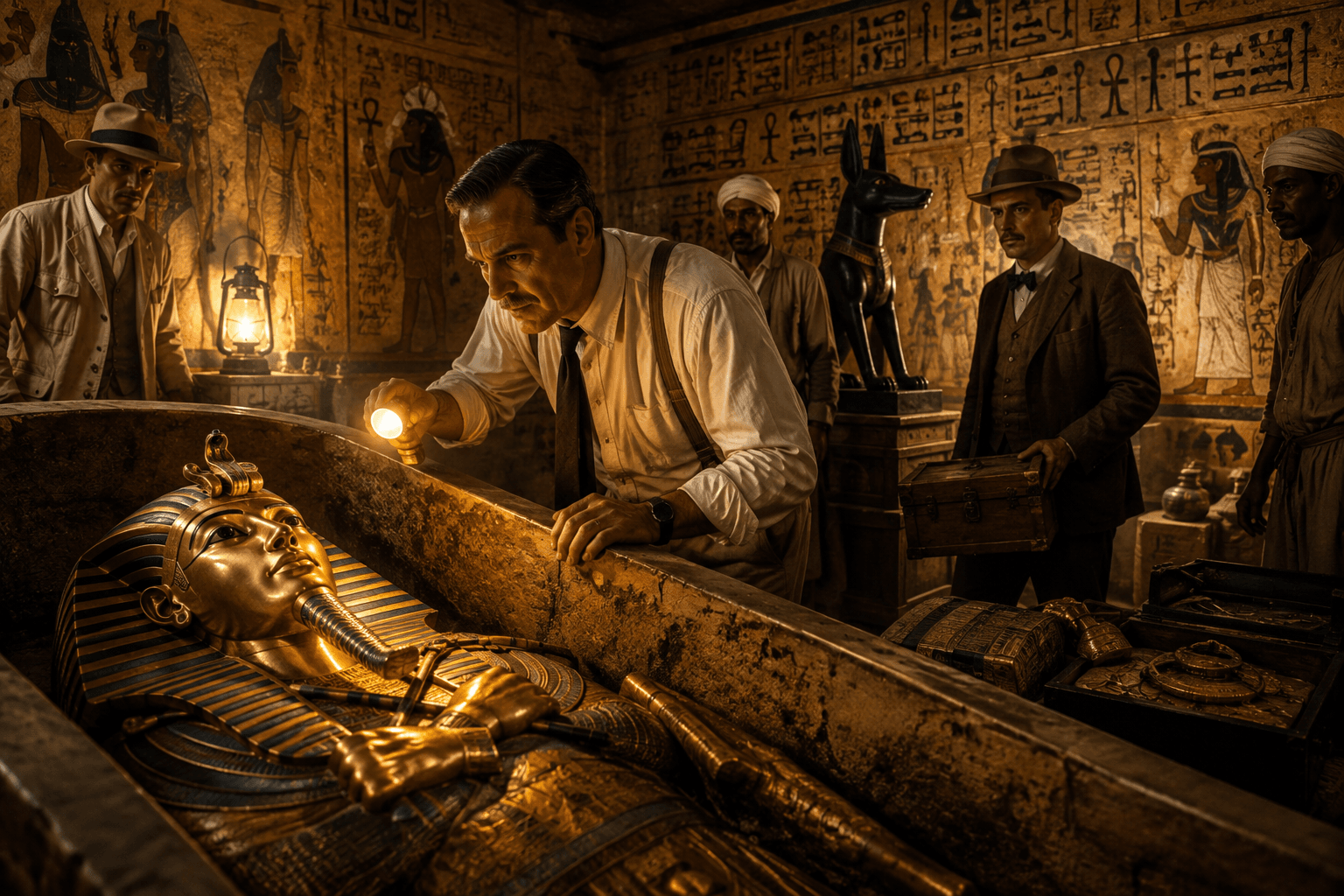
Between 1922 and 1928, a Metropolitan Museum of Art expedition led by Herbert Winlock excavated near Hatshepsut’s mortuary temple and recovered thousands of statue fragments. Winlock concluded that Thutmose III had ordered every image of her destroyed.
In 2025, Jun Yi Wong of the University of Toronto published a reassessment in the journal Antiquity. Rather than re-examining the statues alone, he went into the archive — unpublished field notes, drawings, photographs and correspondence from the original dig.
That material records exactly where each fragment was found and in what condition. It changes the reading substantially.
Three findings
Many statues were not smashed at all. A significant number survived in good condition with their faces intact. Wong’s point is blunt: the shattered visage that dominates popular writing does not describe the full corpus.
Much of the damage is standard ritual treatment. Egyptians routinely “deactivated” statues of dead rulers — breaking them at specific points to neutralise the power the image was thought to hold. This was done to Hatshepsut’s predecessors too. It signals procedure, not hatred.
A lot of the breakage came centuries later. The fragments were reused as building material and even as tools, a process continuing into the Graeco-Roman period. Damage that looked like fourteenth-century BC rage was often much later and entirely practical.
What Wong does not claim
He is careful, and the carefulness matters.
He does not argue the persecution was invented. His conclusion is that Hatshepsut did suffer a programme of erasure whose political implications were serious — but that the statue destruction was driven by ritual necessity rather than outright antipathy.
In other words: the wall erasure was targeted at her. The smashed statues were largely what happened to any dead pharaoh, plus two thousand years of people needing building stone.
So Why Was She Erased?
This remains genuinely unresolved, and the honest answer is that Egyptologists disagree.
The timing argument. The erasure did not begin immediately after her death. Evidence points to it starting roughly twenty years into Thutmose III’s sole reign — late in his life, not in the first flush of power. That is difficult to reconcile with personal rage nursed since childhood.
The succession argument. A more common current explanation is dynastic. Removing a female pharaoh from the record produced a clean male line running from Thutmose I to Thutmose III to his heir, with no awkward precedent of a woman holding the throne outright.
The precedent argument. Related, but broader: a woman ruling as king was an irregularity, and Egyptian record-keeping had a strong preference for order over accuracy. Erasing the anomaly tidied the past.
None of these is proven. What has weakened is the simplest and most satisfying version — the one about a bitter nephew.
Her Body and Her Tomb
Hatshepsut prepared KV20 in the Valley of the Kings, intending to be buried alongside her father.
The tomb was found empty of its occupants. In 2007 a mummy from the nearby tomb KV60 was proposed as hers, based on a tooth in a labelled box matching a gap in the mummy’s jaw.
The identification is widely repeated but not universally accepted. It rests on a single dental match, and specialists remain divided. Our article on ancient Egyptian mummification covers why identifying royal mummies is so difficult.
What We Know and What We Don’t
Established by evidence
- She ruled as pharaoh with full royal titulary, c. 1473–1458 BC
- Her reign was prosperous, with major building and a trading expedition to Punt
- Her name and image were systematically erased from temple walls
- The erasure was ordered by Thutmose III and began late in his sole reign
- Many of her statues survived intact; much damage was ritual or from later reuse
- She was excluded from later Egyptian king lists
Still unresolved
- Why the erasure was ordered, and why so late
- Whether the KV60 mummy is genuinely hers
- How the transition of power from regent to pharaoh actually happened
- What relationship she and Thutmose III had during the co-reign
- How Egyptians at the time understood a female king
Frequently Asked Questions
Who was Hatshepsut?
A pharaoh of Egypt’s Eighteenth Dynasty who ruled from roughly 1473 to 1458 BC. She began as regent for her young stepson Thutmose III and then took the throne in her own right, one of very few women to rule Egypt as king rather than as queen consort.
Why is Hatshepsut shown with a beard?
The false beard was part of the standard regalia of a pharaoh, an office that had no established female form. She was not disguising herself — inscriptions often still use feminine grammar for her. The imagery signalled the role, not the person.
Did Thutmose III destroy Hatshepsut’s statues out of hatred?
Probably not, according to a 2025 study by Jun Yi Wong in Antiquity. Many statues survived intact, much of the damage matches standard ritual deactivation applied to all dead rulers, and a great deal of breakage came from later reuse as building material.
Was Hatshepsut erased from history?
Her name and image were removed from temple walls and she was left out of later king lists, so the attempt was real. It failed — her mortuary temple at Deir el-Bahri survives and is among the best-preserved monuments in Egypt.
Has Hatshepsut’s mummy been found?
A mummy from tomb KV60 was identified as hers in 2007, based on a tooth found in a box bearing her name matching a gap in the jaw. The identification is widely cited but not accepted by all specialists.
What was the expedition to Punt?
A major trading voyage recorded in detail on the walls of her mortuary temple, bringing back incense, ebony, ivory and living myrrh trees. The exact location of Punt is still debated, with the Horn of Africa region the most common suggestion.
Conclusion
The story everyone knows about Hatshepsut is a revenge drama, and revenge dramas are memorable.
The evidence supports something colder. A successful twenty-year reign, then a decision taken decades later to tidy her out of the official record — probably for dynastic reasons rather than personal ones. Her statues were mostly treated the way any dead pharaoh’s statues were treated, and then quarried for stone by people who had no idea whose face they were breaking.
The erasure also failed. Her temple still stands at Deir el-Bahri, and she is now among the best-known rulers Egypt produced.
Sources and Further Reading
- Wong, J. Y. (2025). “The afterlife of Hatshepsut’s statuary.” Antiquity 99(405): 746–761. Open access via Cambridge Core.
- Antiquity — summary of the findings, with quotations from the author.
- The Art Newspaper — coverage including the role of later reuse.
- Roehrig, C. H. (ed.), Hatshepsut: From Queen to Pharaoh (Metropolitan Museum of Art) — the standard catalogue.