

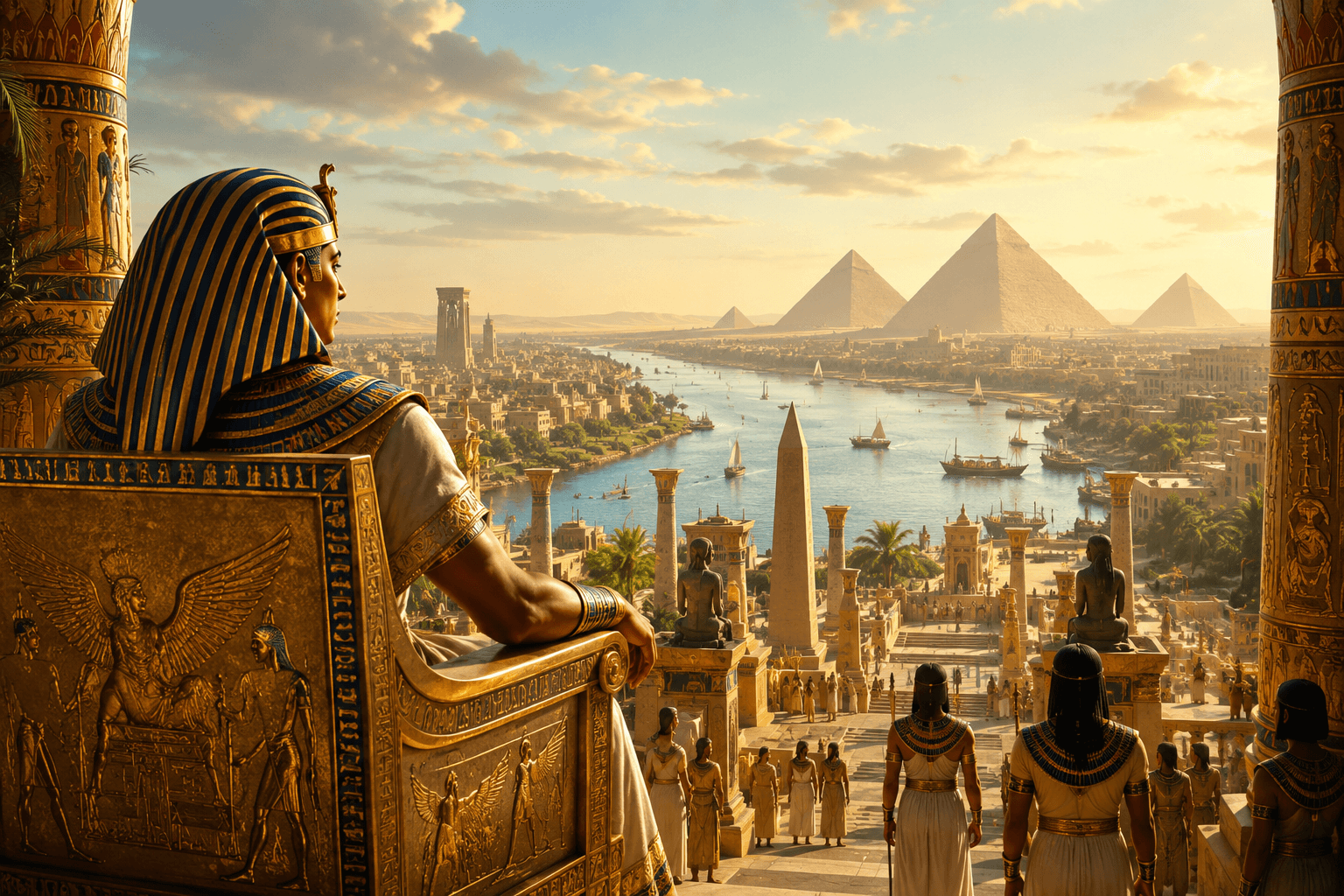
Discover how ancient Egypt government worked. Explore pharaoh power, bureaucracy, social hierarchy, and the institutions that sustained one of history’s greatest civilizations.
Introduction
Imagine you’re a common Egyptian living during the reign of a pharaoh. Someone runs up to you in the street with urgent news: the pharaoh has made a decree. Immediately, you understand this as divine will. It’s not just a ruler’s decision. It’s the word of a god.
That single moment of misunderstanding—or perhaps complete understanding, depending on your perspective—captures something essential about how ancient Egypt government actually worked.
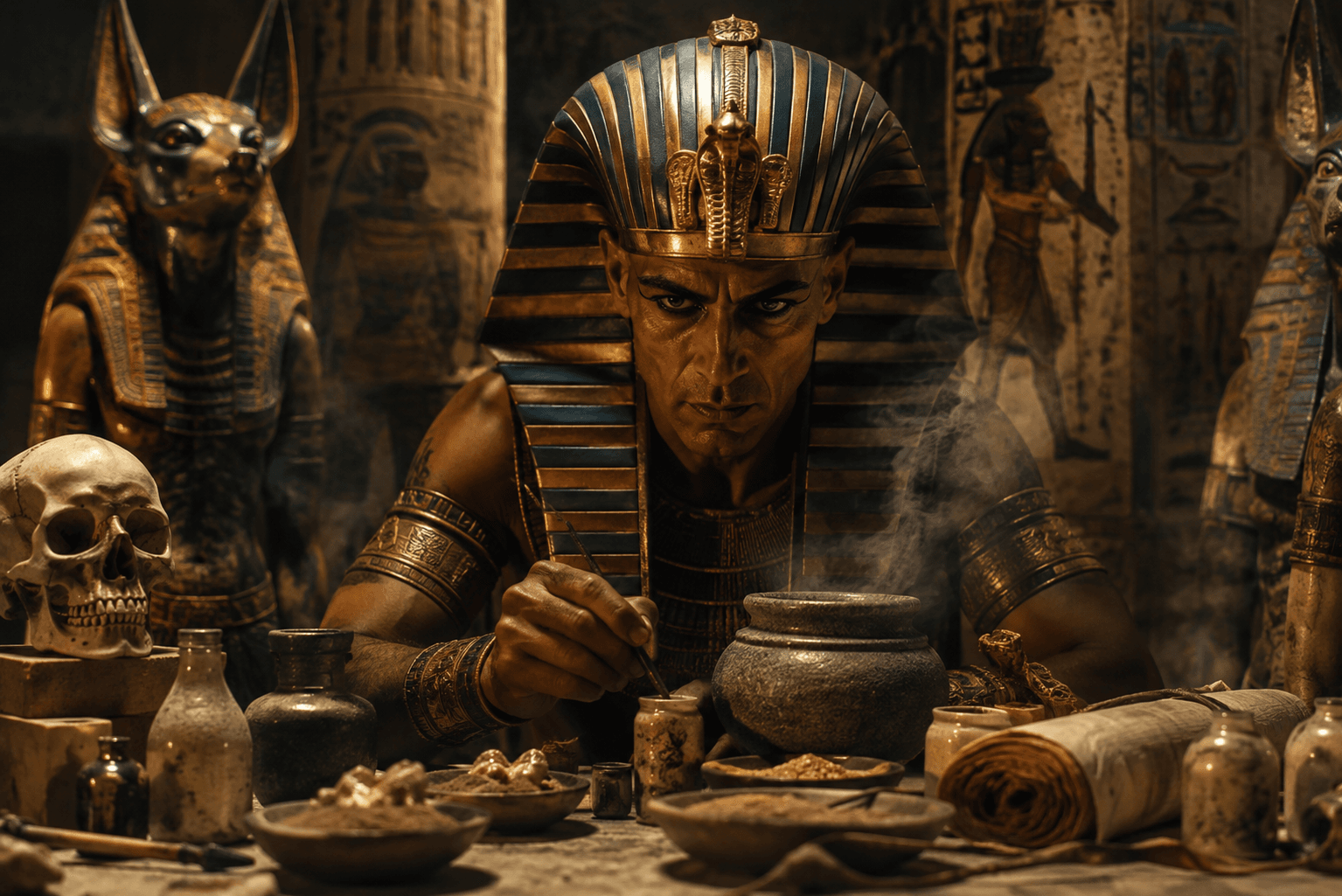
The pharaoh wasn’t just a king. He was a god. Or more precisely, he was the incarnation of Horus on earth, a bridge between the divine and human worlds. His authority didn’t come from conquest or persuasion. It came from his divine nature itself.
But here’s what’s interesting: despite the pharaoh’s seemingly absolute power, ancient Egypt government was actually quite sophisticated. There was bureaucracy. There were systems. There were institutions that outlasted individual rulers. There was organization complex enough to maintain civilization for over 3,000 years.
Understanding how ancient Egypt government actually worked means looking beyond just the pharaoh and seeing the entire system—the administration, the laws, the hierarchy, the institutions that made such a long-lasting civilization possible.
Let me walk you through how pharaohs actually ruled and how Egyptian government maintained itself.
The Pharaoh: God-King and Divine Authority
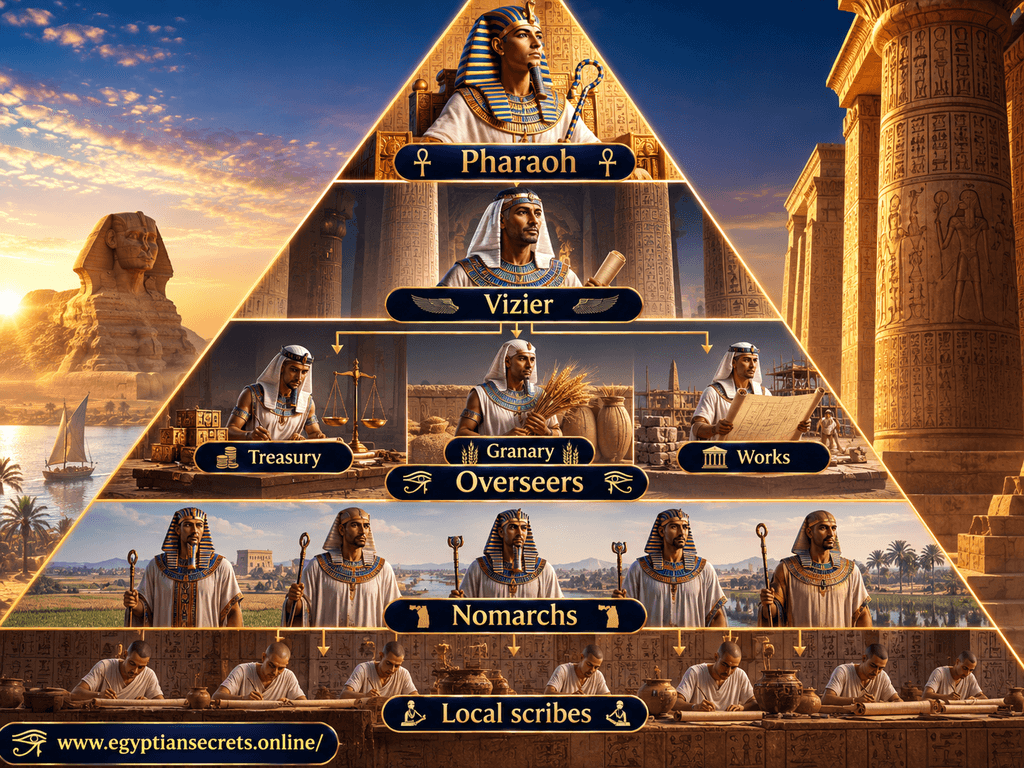
At the center of ancient Egypt government was the pharaoh. And the first thing to understand is that the pharaoh was understood as divine.
This wasn’t metaphorical. Egyptians genuinely believed the pharaoh was the incarnation of Horus on earth. The pharaoh was a god walking among humans. This gave the pharaoh’s authority a legitimacy that was essentially unquestionable from within Egyptian religious worldview.
The pharaoh’s authority derived not from military might (though pharaohs were military leaders) or from inheritance alone (though succession was usually hereditary). It derived from being divine.
This meant several things practically:
The pharaoh made laws. Not through democratic process or consultation. Through divine will. When the pharaoh decreed something, it was presumed to be the will of the gods.
The pharaoh was the high priest. Officially, the pharaoh performed religious rituals. Practically, priests conducted rituals, but the pharaoh’s authority gave spiritual validity to all religious practices.
The pharaoh controlled the military. As god-incarnate, the pharaoh’s military campaigns were understood as divine missions. Pharaohs led troops in battle personally, embodying the god Horus the warrior.
The pharaoh controlled the economy. The pharaoh owned most land. The pharaoh controlled trade. The pharaoh controlled resources.
The pharaoh had absolute control. In theory. In practice (as we’ll see), there were checks on pharaonic power through bureaucracy and priesthood.
The pharaoh’s divinity was reinforced through constant symbolism. The pharaoh wore specific crowns and regalia identifying him with gods. His image was carved in temples throughout the kingdom. His name appeared on monuments and documents. Everything reinforced the idea that this person was divine, that his authority was unquestionable, that his will was law. The gods those temples served are covered in our guide to the ancient Egyptian gods.
The Vizierate: The Pharaoh’s Most Powerful Official
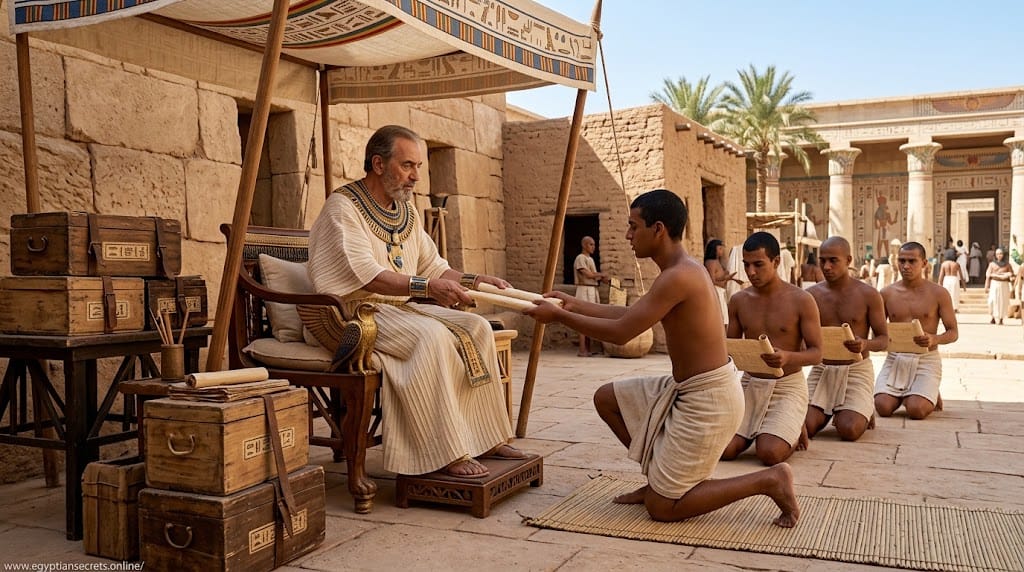
If the pharaoh was the top of the pyramid, the vizier was the second most powerful person in Egypt. The vizier was the pharaoh’s chief administrator, essentially the prime minister. See also our article on how the pyramids were built.
The vizier handled the day-to-day administration of government. The vizier oversaw:
- Tax collection and economic management
- Law enforcement and the court system
- Public works and construction projects
- Military affairs (under the pharaoh’s ultimate authority)
- Bureaucratic oversight
The vizier had real authority and power. But the vizier’s power derived entirely from the pharaoh. A pharaoh could dismiss a vizier at will. The vizier served at the pharaoh’s pleasure.
Historically, some viziers were remarkably powerful and influential. Imhotep, the vizier under Pharaoh Djoser, was so influential that he was eventually deified. But even Imhotep’s power flowed from the pharaoh’s trust and delegation.
The vizierate position represented something important about Egyptian government structure: despite the pharaoh’s theoretical absolute power, power was actually delegated to capable administrators. This delegation was necessary—one person couldn’t actually manage an entire civilization.
Also Read: Ancient Egypt Inventions
The Bureaucracy: How Egypt Actually Functioned Day-to-Day
Ancient Egypt government wasn’t actually run by the pharaoh personally making every decision. It was run by a vast bureaucracy of administrators, scribes, tax collectors, judges, and officials. The land surveys and household registers they produced are described in our article on the ancient Egypt census.
The Central Administration:
Centered in the capital (Memphis during much of Egyptian history), the central administration handled:
- Tax collection from the entire kingdom
- Regulation of trade
- Oversight of building projects
- Religious administration
- Military command
Provincial Administration:
Egypt was divided into nomes (provinces). Each nome had a governor (nomarch) appointed by the pharaoh. The nomarch administered justice, collected taxes, and enforced pharaonic decrees in the province.
Nomarchs held real power locally but answered to the central administration and ultimately to the pharaoh.
The Scribal Tradition:
Scribes were essential to Egyptian government functioning. Scribes were educated, literate officials who:
- Kept records
- Managed taxes and economic data
- Drafted decrees and laws
- Conducted correspondence
- Maintained administrative knowledge
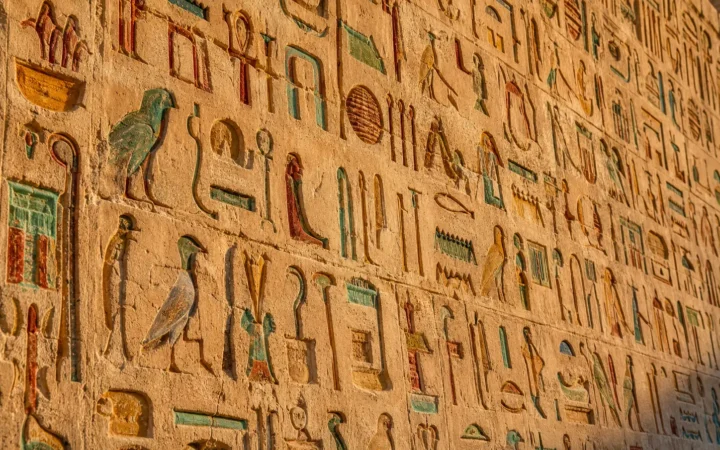
Becoming a scribe required extensive education. Scribes were respected and held positions of authority. The scribal tradition meant that knowledge and administrative processes were recorded and transmitted across generations.
The Priesthood:
Priests held significant power in Egyptian society, managing temples, conducting religious rituals, and controlling temple lands and resources. The high priest of a major temple could be as powerful as a provincial governor.
The pharaoh was the theoretical high priest, but practically, priests ran temples and managed religious affairs. This sometimes created tension between pharaonic power and priestly authority.
The Legal System: Law, Justice, and Accountability
Ancient Egypt government included a sophisticated legal system, which is remarkable for a civilization so ancient.
Laws and Justice:
Egypt had written laws (though many weren’t preserved—we know about them through references in other documents). Laws covered property disputes, inheritance, contracts, criminal matters, and religious violations.
Justice was administered through courts. Local courts (magistrates or judges) handled minor cases. More serious cases went to higher courts. Ultimately, the pharaoh was the highest court and final arbiter.
The Vizier and the Courts:
The vizier oversaw the judicial system. Judges reported to the vizier. This meant the legal system theoretically served the pharaoh’s interests, but in practice, an independent judicial logic existed.
Rights and Protections:
Remarkably, ancient Egypt seems to have had some concept of individual rights. Legal documents suggest that:
- Contracts had to be witnessed and recorded
- Property disputes could be contested in court
- Individuals had some recourse against unfair treatment
This isn’t to say ancient Egypt was egalitarian or that all people had equal rights (slavery existed, women had fewer rights than men). But compared to many ancient societies, Egypt had formal legal structures that provided some protection.
The Taxation System: How Egypt Funded Itself
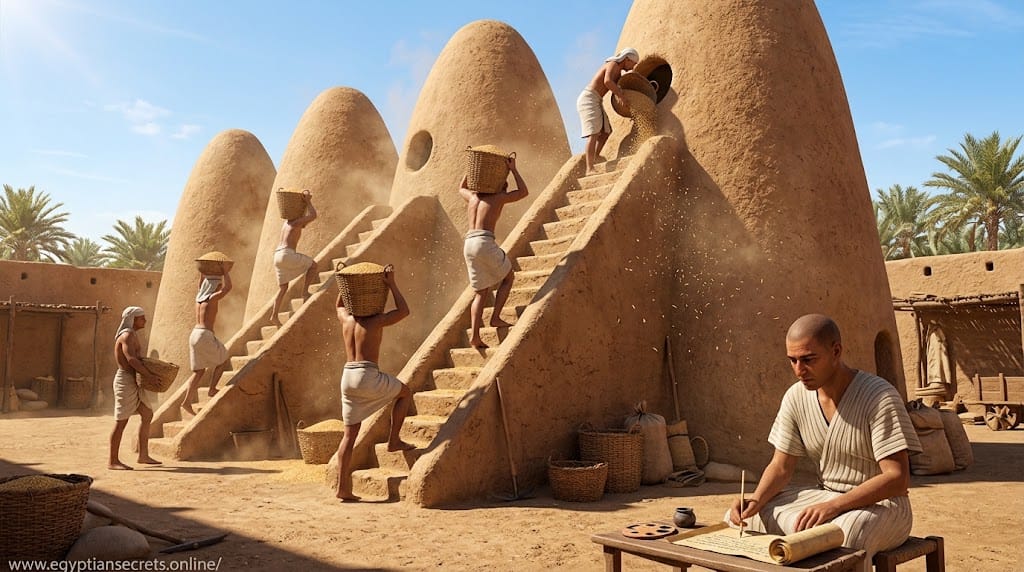
Egyptian government was funded through taxation. The taxation system was sophisticated and created the revenue for massive building projects, military operations, and administration.
Agricultural Tax:
The primary tax was on agricultural output. A percentage of each harvest went to the pharaoh (and to temples). This tax was collected by officials and stored in government granaries.
Commodity Taxes:
Various trades and commodities were taxed. Craftspeople paid taxes on their output. Merchants paid taxes on goods. Fishermen paid taxes on catches.
Labor Tax:
Sometimes people paid taxes in labor rather than goods. They would work on government projects (like pyramid construction or temple building) for a period of time.
Trade Tax:
International trade was regulated and taxed. Goods coming in or going out of Egypt were subject to taxation.
The sophistication of the taxation system meant Egypt had reliable revenue streams. This revenue funded the construction of monuments, military campaigns, and government operations.
The Military and Pharaonic Authority
The military was crucial to Egyptian government. The pharaoh was commander-in-chief, and military conquest was one of the ways pharaohs established their authority and expanded Egypt’s territory.
During the New Kingdom (when Egyptian military power was at its peak), pharaohs like Thutmose III and Ramesses II led massive military campaigns into Nubia and the Levant.
Military success was claimed as evidence of pharaonic divine power—the gods ensuring the pharaoh’s victory. Military failure created questions about the pharaoh’s divine legitimacy.
The military was organized hierarchically under the pharaoh, with commanders and generals managing specific operations.
Checks on Pharaonic Power: Reality vs. Theory
While theoretically the pharaoh had absolute power, practically there were limits:
The Priesthood:
Powerful temple priests could influence policy. In some periods, temple priests were so powerful they rivaled pharaonic authority. By the Late Period, some evidence suggests the high priest of Amun actually held more power than the pharaoh.
The Bureaucracy:
Long-established administrative systems and traditions limited how radically a pharaoh could disrupt governance. You can’t just arbitrarily change systems that manage an entire civilization.
The Nobility:
Wealthy nobles, particularly nomarchs (governors), held real power in their regions. While they answered to the pharaoh, they had independent power bases that could potentially resist pharaonic will.
Succession and Legitimacy:
While succession was usually hereditary, there could be disputes. A pharaoh needed support from priesthood and nobles to maintain legitimacy. If these groups lost confidence, the pharaoh’s position could weaken.
Women in Ancient Egypt Government
Remarkably, women could hold positions of power in ancient Egypt government, which was unusual for the ancient world.
Women could be viziers’ wives and hold influence through their husbands. Some women held official positions. Some served as judges or administrators.
Most notably, women could be pharaohs. Hatshepsut ruled as pharaoh during the New Kingdom and is one of Egypt’s most successful rulers.
This suggests that while male dominance was the norm, ancient Egypt government wasn’t rigidly gender-segregated in ways some ancient societies were.
Frequently Asked Questions
Q: What was the pharaoh’s primary source of authority?
A: Divine authority. Egyptians believed the pharaoh was the incarnation of Horus, a god on earth. This divine nature gave the pharaoh’s authority legitimacy beyond military or inherited power.
Q: How did the vizier gain power?
A: The vizier was appointed by the pharaoh and served as chief administrator. The vizier’s power came entirely from pharaonic delegation. Capable viziers became influential, but always ultimately served the pharaoh.
Q: Could the pharaoh be challenged or overthrown?
A: Theoretically no—the pharaoh was divine. Practically, if the pharaoh lost support from priesthood and nobility, his position could weaken. But outright overthrow was rare and often framed as the gods withdrawing their favor.
Q: How long did someone serve as vizier?
A: There’s no fixed term. Viziers served at the pharaoh’s pleasure. Some served for decades; others for shorter periods. A new pharaoh might appoint a new vizier immediately.
Q: What happened if someone refused to follow the pharaoh’s decree?
A: Theoretically, this was impossible—the pharaoh’s will was divine. Practically, serious consequences followed: punishment, execution, removal from position. Resistance was rare because questioning the pharaoh was essentially questioning divine will.
Q: How were officials chosen?
A: For high-level positions, the pharaoh appointed people directly (often from family or trusted nobles). For scribal and administrative positions, there was some meritocratic selection—educated, capable individuals could advance.
Q: Was ancient Egypt government stable?
A: Relatively yes. Egypt maintained governmental continuity for over 3,000 years. But there were periods of instability, civil war, and weak pharaohs. Overall, the bureaucratic structure provided continuity even when individual rulers were weak.
Q: How did ancient Egypt government compare to other ancient civilizations?
A: Egypt’s government was remarkably stable and bureaucratic compared to many ancient societies. The integration of religious authority with political power made the system more stable than pure military autocracies.
Conclusion: Government as Divine Order
What’s remarkable about ancient Egypt government is how it balanced theoretical absolute pharaonic power with practical bureaucratic administration. The pharaoh was god-incarnate, whose will was divine law. But the pharaoh didn’t actually rule through personal decree of every decision.
Instead, sophisticated bureaucratic systems delegated power to competent administrators. Scribes kept records. Judges administered justice. Officials collected taxes. The system functioned because it was institutionalized.
This balance—between the pharaoh’s theoretical absolute authority and practical delegation to bureaucracy—allowed Egypt to maintain government continuity for millennia. When individual pharaohs were weak, the system continued. When pharaohs were strong, they could accomplish great things.
That’s the genius of ancient Egypt government: it created a system that worked whether the pharaoh was brilliant or incompetent, because the bureaucratic system maintained continuity regardless.
5 Comments