
Every mythology needs a villain, and in ancient Egypt that role usually went to Set. He murdered his brother Osiris, fought his nephew Horus for the throne and ruled over storms, deserts and foreign lands, all the forces that threatened Egypt’s fragile order. By the end of Egyptian history, his statues were being smashed and his name scratched off monuments.
Yet for most of Egypt’s 3,000-year history, Set was not simply evil. He was a royal god, the patron of great pharaohs such as Seti I, and every night he stood at the front of the sun god’s boat to spear the chaos serpent Apep. Here is who Set really was, why he killed Osiris and how a protector of the gods became Egypt’s devil.
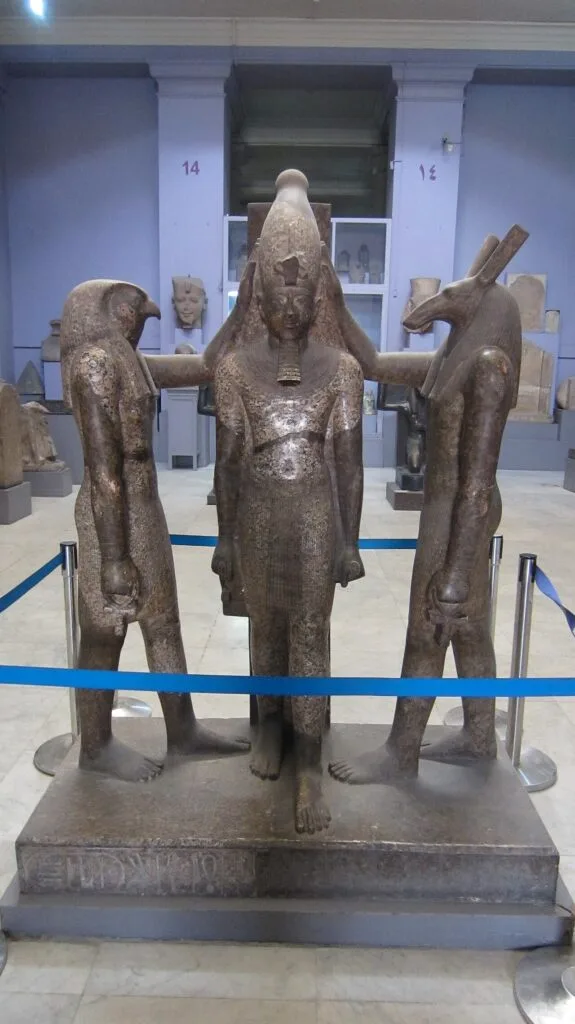
Set at a Glance
- Egyptian name: Sutekh or Setesh. “Set” or “Seth” are modern forms.
- God of: chaos, storms, the desert, foreign lands, violence and raw strength.
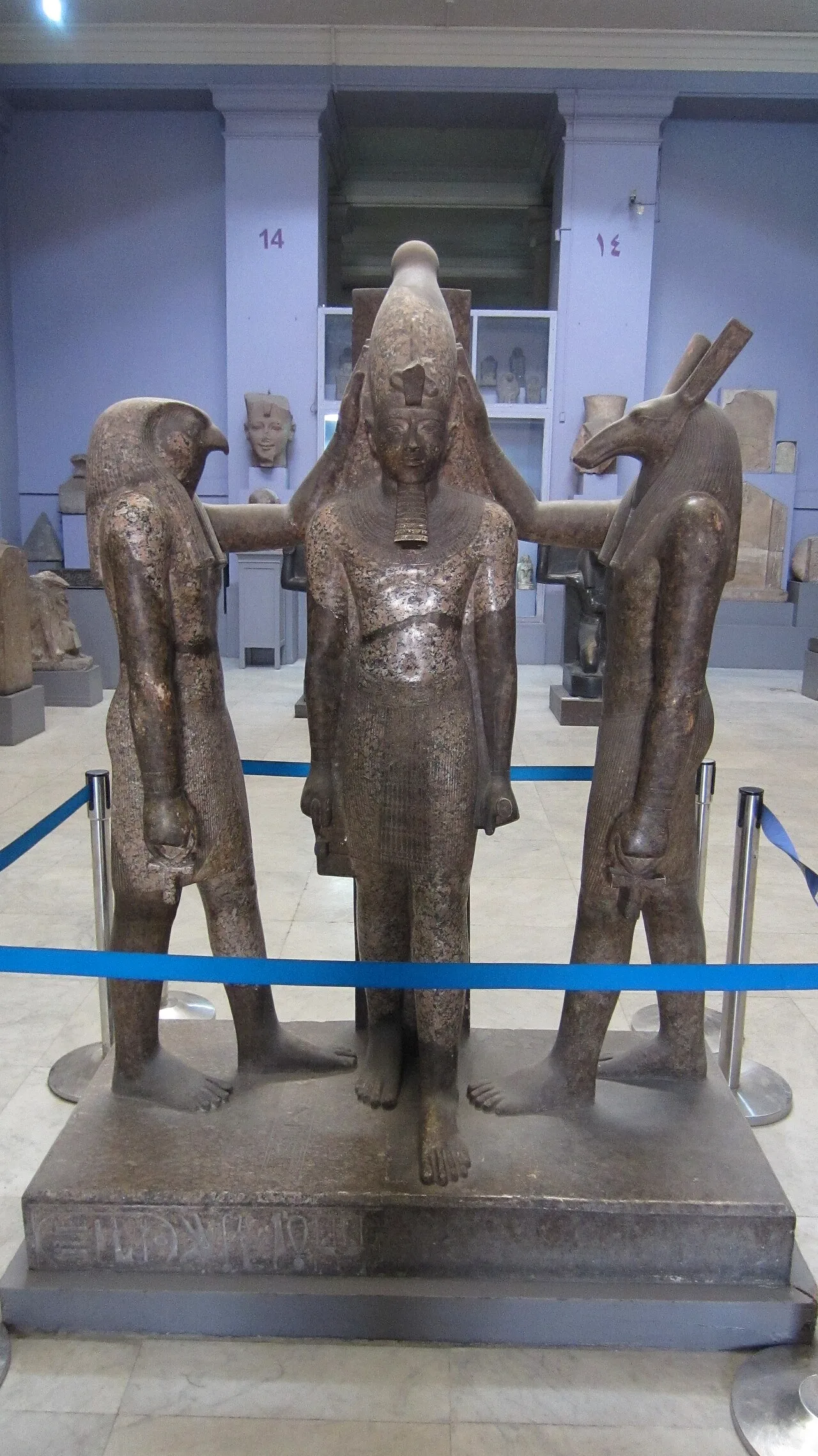
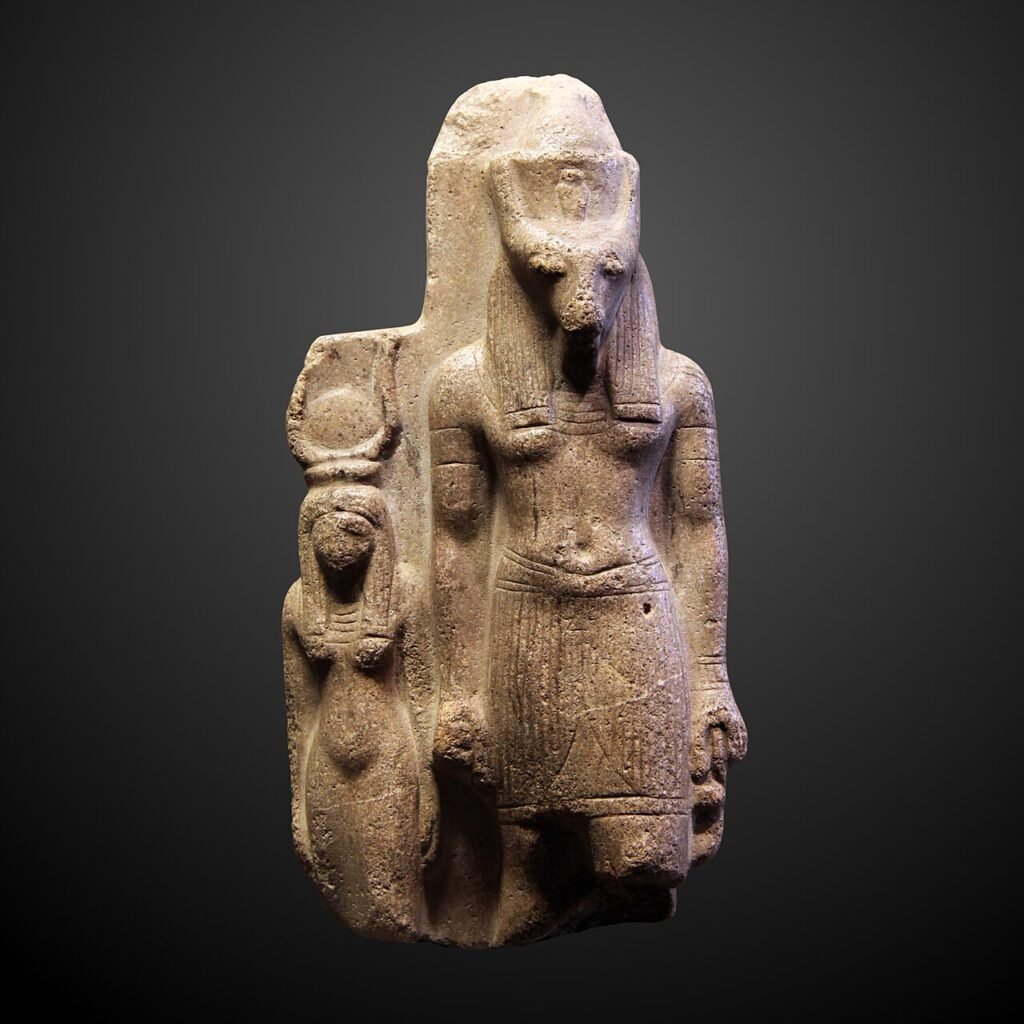
- Appearance: a man with the head of the mysterious “Set animal,” which has a long curved snout, tall square-tipped ears and an upright forked tail.
- Family: son of Geb (earth) and Nut (sky); brother of Osiris, Isis and Nephthys; husband of Nephthys. Some texts also give him foreign wives, the goddesses Anat and Astarte.
- Main cult centers: Nubt (Ombos, near modern Naqada) in Upper Egypt and Avaris in the Nile Delta.
- Sacred animals: the Set animal, plus the donkey, pig, hippopotamus and oryx.
- Greek equivalent: Typhon, the monster who fought Zeus.
- Member of: the Ennead, the nine great gods of Heliopolis.
What Was Set the God Of?
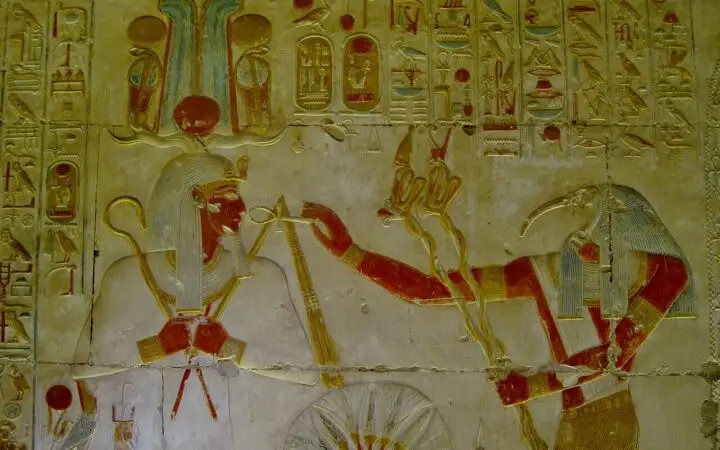
The Egyptians saw their world as a narrow green strip of order, the fertile Nile Valley, surrounded by the “Red Land”: the desert, with its sandstorms, wild animals and raiders. Set ruled that Red Land. He was the god of everything outside, sudden and violent: thunderstorms, flash floods, the burning desert wind and the foreigners who lived beyond Egypt’s borders.
That made him dangerous, but not useless. Strength and violence could be turned against Egypt’s enemies. Soldiers, desert travelers and caravan leaders prayed to Set, and kings wanted his raw power on their side in battle. To the Egyptians, chaos could not be destroyed, only controlled, and Set was the god who embodied it.
The Mysterious Set Animal
Most Egyptian gods are easy to identify: Anubis is a jackal (or rather a wild dog), Thoth an ibis, Horus a falcon. Set is the exception. His animal has a curved, downward-pointing snout, tall ears that are squared off at the top and a stiff tail that sticks straight up and splits in two at the end.
Egyptologists have argued for over a century about what it is. Suggestions include an aardvark, an okapi, a jackal, a donkey, a greyhound-like dog or an extinct animal. Most scholars now believe it is imaginary, a mixture of creatures designed to look strange and unsettling. A god of chaos, after all, should not look like anything in nature.
The Murder of Osiris
Set’s most famous act is the killing of his brother. Osiris was the good king of Egypt, who taught people farming and law. Set, jealous of his brother’s throne, decided to get rid of him.
Egyptian texts are reluctant to describe the murder directly, but they hint that Set attacked Osiris on the riverbank at a place called Nedyet and drowned him. The fullest version comes much later, from the Greek writer Plutarch around AD 100. In his telling, Set secretly measured his brother’s body and had a beautiful chest made to fit him exactly. At a banquet, he promised the chest to whoever fit inside it. When Osiris lay down, Set and 72 conspirators slammed the lid, sealed it with lead and threw it into the Nile.
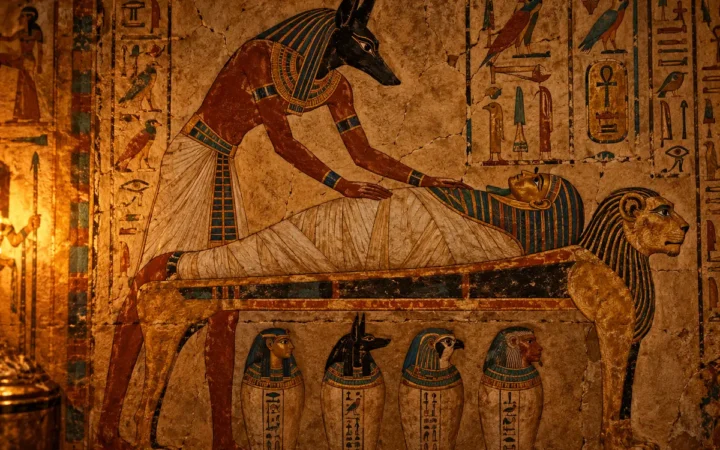
Osiris’s wife, Isis, searched until she found the body. Set then tore it into pieces, often said to be 14, and scattered them across Egypt. Isis and her sister Nephthys gathered the pieces, and with the help of Anubis they bound them together as the first mummy. Osiris came back to life long enough to father a son, Horus, and then became king of the dead.
Set vs Horus: An 80-Year Battle for the Throne
With Osiris in the underworld, the throne of Egypt was empty. Set claimed it as the strongest of the gods. Horus, son of Osiris, claimed it as his father’s heir. Their quarrel is told in a lively and often comic story called “The Contendings of Horus and Seth,” written on a papyrus about 1150 BC and now in the Chester Beatty Library in Dublin.
The gods argue for 80 years. Ra, the sun god, favors Set, while most others side with Horus. Set and Horus try to settle it by contests: they turn into hippopotamuses to see who can stay underwater longest, race in boats made of stone and play tricks on each other, some of them too crude for a family website. In one fight Set tears out Horus’s eye, which is magically restored and becomes the Eye of Horus, a symbol of healing and protection. Horus in turn injures Set.
In the end the gods write to Osiris in the underworld, who threatens to send his demons after them unless his son wins. Horus becomes king of Egypt. Set is not destroyed. In one version, Ra takes him into the sky to be his companion, where he thunders in the sky and is feared.
Set the Protector: Spearing the Serpent Apep
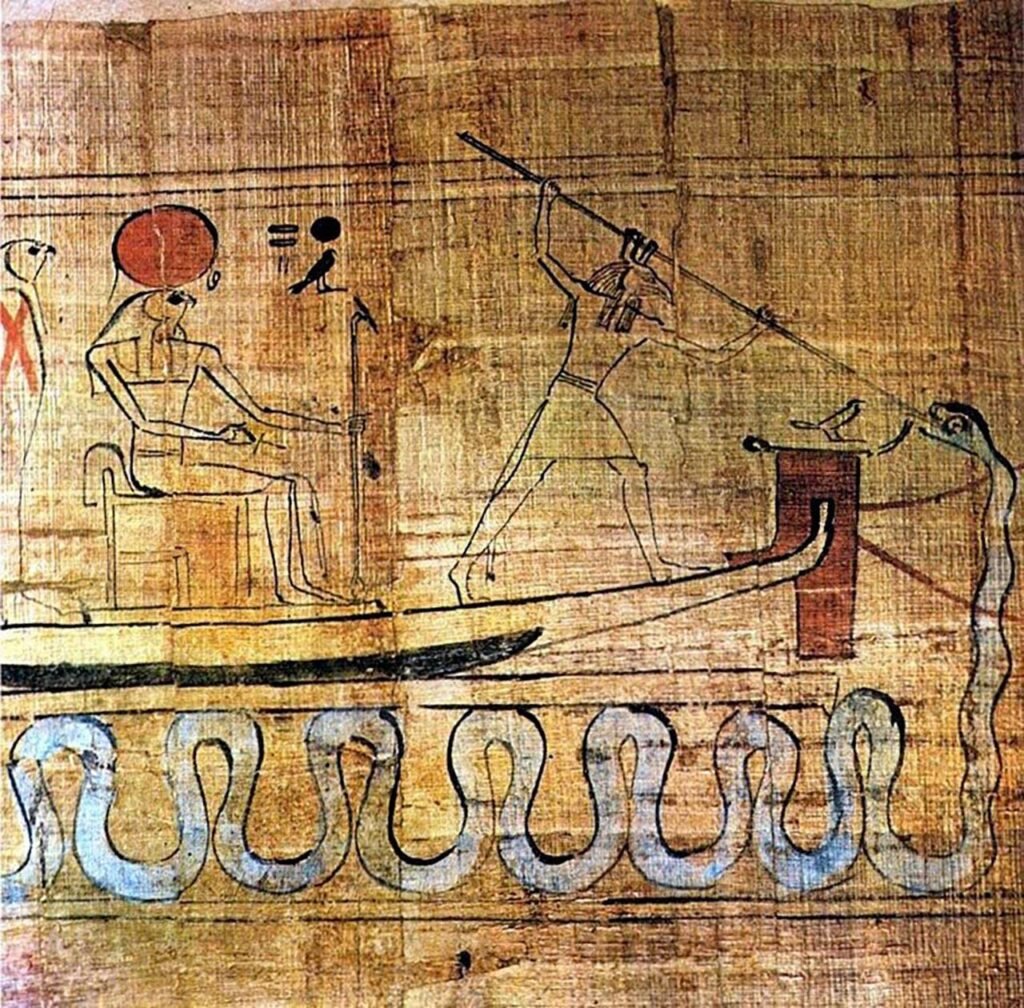
This is the side of Set most people never hear about. Every night, the Egyptians believed, the sun god Ra sailed through the underworld in his boat, and every night the giant serpent Apep tried to swallow him and end the world. Someone had to stand at the front of the boat and fight it off.
That job went to Set. Only the god of chaos was strong and violent enough to defeat the ultimate monster of chaos. Paintings and texts show him at the prow of the sun boat, spear raised, stabbing Apep so that the sun could rise again in the morning. In this role, Set was not Egypt’s enemy at all. He was one of its greatest defenders.
Set and the Pharaohs
Because the king of Egypt ruled both the ordered Nile Valley and the wild lands around it, early kings saw themselves as both Horus and Set. The queen’s title was “she who sees Horus and Set.” Around 2700 BC, the Second Dynasty king Peribsen even replaced the Horus falcon on his royal name with the Set animal, and his successor Khasekhemwy used both.
In the 1600s BC, the Hyksos, foreign rulers who controlled northern Egypt, made Set their main god at their capital, Avaris, linking him with the Near Eastern storm god Baal. Later, the Ramesside kings of the 19th Dynasty, whose family came from the same area, honored him openly. Seti I‘s name means “man of Set,” and his son Ramesses II named one of the four divisions of his army after Set at the Battle of Kadesh.
How Set Became the Villain
Set’s reputation collapsed in the first millennium BC. Egypt was repeatedly invaded by Assyrians, Persians and others, and as the god of foreigners, Set began to be blamed for the country’s misfortunes. Osiris, meanwhile, had become the most beloved god in Egypt, and his murderer could hardly stay popular.
Temples stopped honoring Set in most places. His figures on older monuments were attacked, and in some reliefs the Set animal was recarved as another god. In rituals he was cursed as the enemy of Osiris and Horus, and animals linked to him, such as the donkey, were ritually killed. The Greeks equated him with Typhon, the monster who fought Zeus, which sealed his image as a demon. Only in a few desert oases, such as Dakhla, was he still worshipped as a god of the oasis in Roman times.
Villain or Protector?
The honest answer is both. For the Egyptians, the universe depended on balance between order (Ma’at) and chaos. Set was chaos personified, and chaos was frightening, but it was also a source of strength that the gods themselves needed. He murdered a king and fought a rightful heir, yet he also defended the sun every night. Only later, in a troubled age, did Egyptians turn him into a pure villain.
If you want to see where Set fits among the other gods, start with our guide to the ancient Egyptian gods, the Egyptian gods family tree and our profile of Thoth, who judged the quarrel between Set and Horus in some versions of the myth.
Frequently Asked Questions
Is Set evil in Egyptian mythology?
Not originally. For most of Egyptian history, Set was a dangerous but respected god of chaos and strength who protected the sun god from the serpent Apep. He was turned into an evil figure mainly after about 1000 BC, when foreign invasions made the god of foreigners unpopular.
Why did Set kill Osiris?
The myths say Set was jealous of his brother, who ruled Egypt as a wise and beloved king. By killing Osiris, Set hoped to take the throne for himself.
What animal is Set?
Set has the head of the “Set animal,” a creature with a curved snout, tall square-topped ears and a forked tail. No one knows which real animal, if any, it represents, and many Egyptologists think it is imaginary.
Who is Set’s wife?
Set’s wife was the goddess Nephthys, his sister. Some later texts also pair him with the foreign goddesses Anat and Astarte.
Who won, Set or Horus?
Horus won. After an 80-year dispute, the gods awarded the throne of Egypt to Horus, son of Osiris, and every pharaoh after that was seen as a living Horus.
Sources
- Encyclopaedia Britannica: Seth, Egyptian god
- World History Encyclopedia: Set
- World History Encyclopedia: Ancient Egyptian Religion
- Chester Beatty Library, Dublin (home of the Contendings of Horus and Seth papyrus)
- Richard H. Wilkinson, The Complete Gods and Goddesses of Ancient Egypt (Thames & Hudson, 2003)